


SaaS billing and revenue are breaking because they were built on assumptions that no longer hold.
Legacy platforms assume stable pricing, fixed contracts, and clean handoffs between billing, collections, and revenue, but those assumptions collapse when usage becomes central to how companies monetize their products. While usage-based pricing aligns value with consumption, it introduces operational complexity because usage data typically lives outside finance systems and moves through brittle integrations or spreadsheets. As a result, billing teams spend more time reconciling usage before invoicing and accounting teams layer on manual adjustments at close.
The root problem is fragmentation: contracts, usage events, billing, and revenue all live in separate systems, creating delays, risk, and manual work across the usage-to-revenue lifecycle.
Today, we’re excited to announce that we’re closing the loop between usage-based billing and revenue. Modern revenue requires a unified platform that treats usage as structured financial data from the start, powering both accurate billing upstream and compliant, automated revenue recognition downstream.
Unlock faster and more accurate billing and revenue
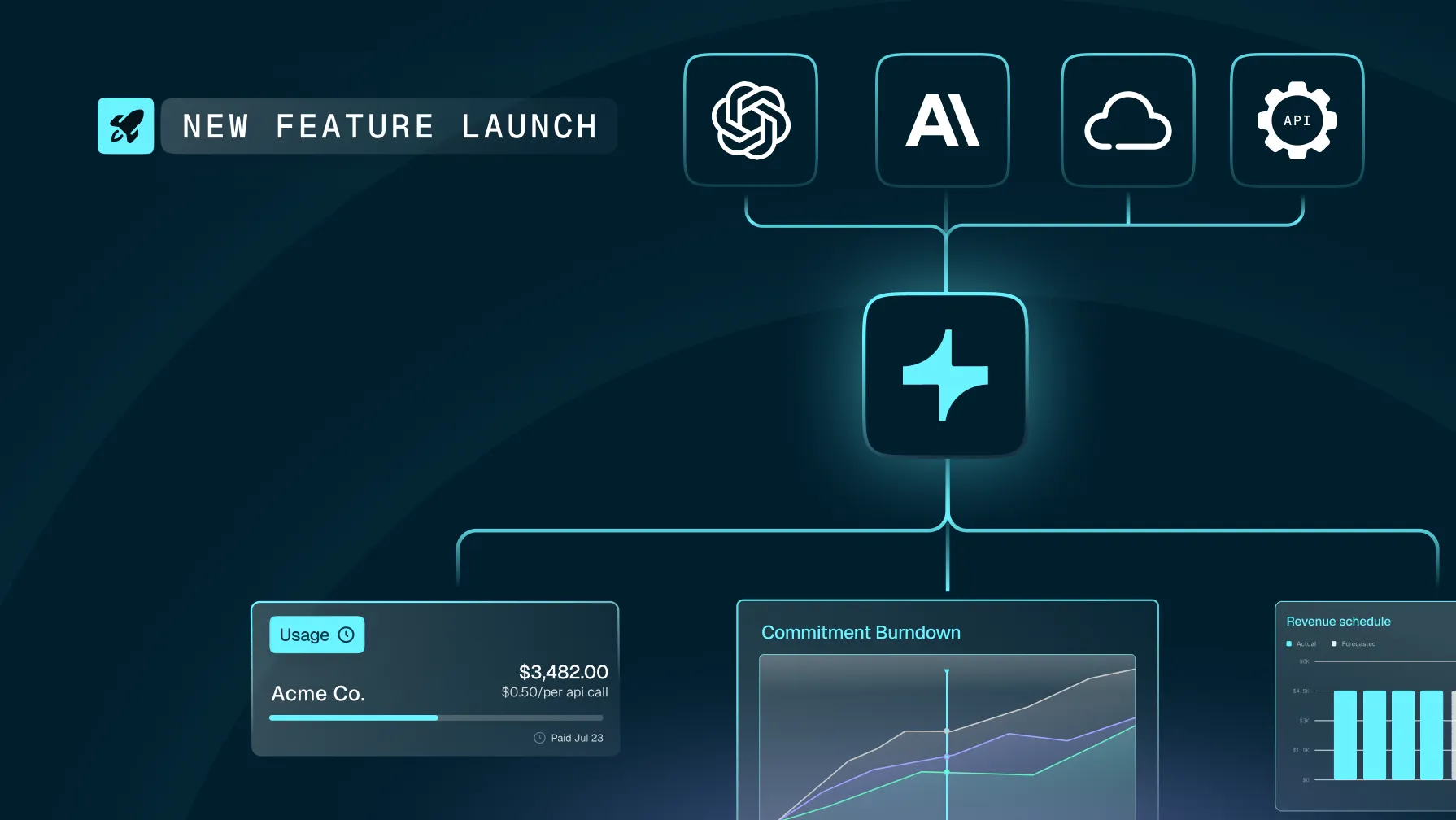
Tabs brings usage commitments directly into the contract as structured, system-level data, giving controllers and accounting teams a real-time, reliable view of what’s been committed, consumed, and remaining at a per-product level. This matters because in a usage-based world, commitments are no longer static: as customers consume across products, commitments are constantly burning down and directly shaping both billing and revenue.
When commitments live outside the system, accounting teams are forced into manual reconciliation just to understand what’s happening. By structuring commitments upfront, teams can validate billing in real time, trust their numbers at every stage, and eliminate last-minute cleanup at close.
Drive business growth with clear, centralized visibility into consumption patterns
Tabs automatically tracks usage consumption and commitment burndown across the full contract lifecycle as usage is ingested, with every revenue number fully traceable back to the underlying usage event, invoice, product, and customer. Within the Contract view, teams can instantly see total committed amounts, cumulative consumption, and remaining balances, all updated in real time.
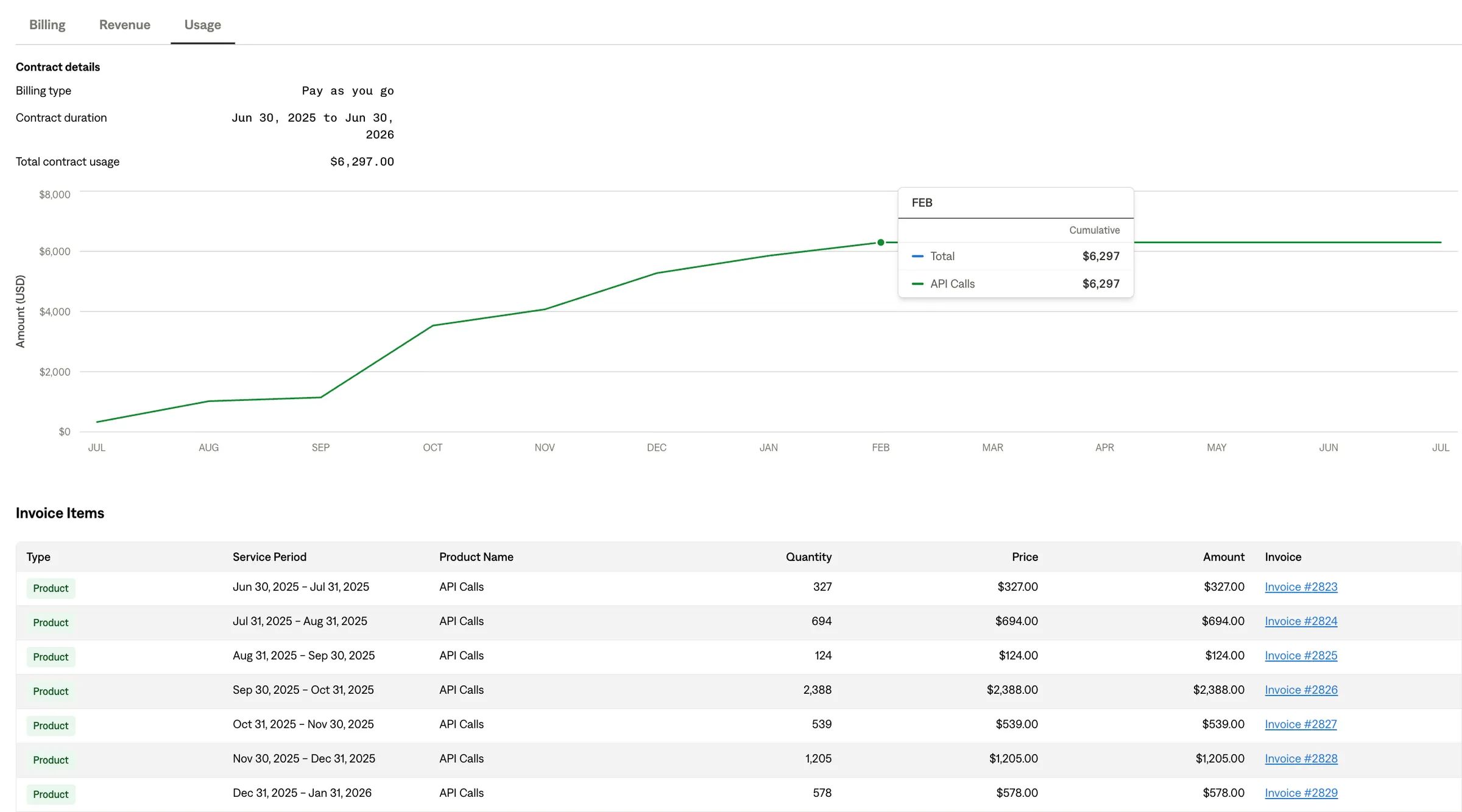
The result is audit-ready, explainable revenue without manual reconciliation, plus clear visibility into customer consumption patterns, so finance can close with confidence and go-to-market teams can drive smarter renewals and expansion.
We’ll continue expanding our usage reporting capabilities to support more advanced use cases, including a new Revenue Agent that lets users query and analyze usage in real time. Stay tuned!
Automate accurate, ASC 606-compliant usage-based revenue recognition
The biggest unlock comes at revenue.
With this release, Tabs automates revenue recognition across pay-as-you-go, committed, and prepaid usage models, aligned with ASC 606 and grounded in actual consumption. By configuring performance obligations directly within the contract in Tabs, teams establish the rules that govern how revenue is earned, unlocking automated, compliant revenue schedules downstream.
This means:
- Revenue schedules update automatically as usage is consumed
- No forced straight-lining when usage patterns don’t reflect it
- Reduced manual corrections or spreadsheet-driven compliance work
Revenue recognition runs in parallel with billing – powered by the same contract terms and usage data – but reflecting when revenue is truly earned.
Billing was the first step…
In the past few months, we’ve been working to solve a critical problem: turning usage into scheduled invoices that are accurate and explainable. That required structuring usage as core financial data and not just an accounting afterthought.
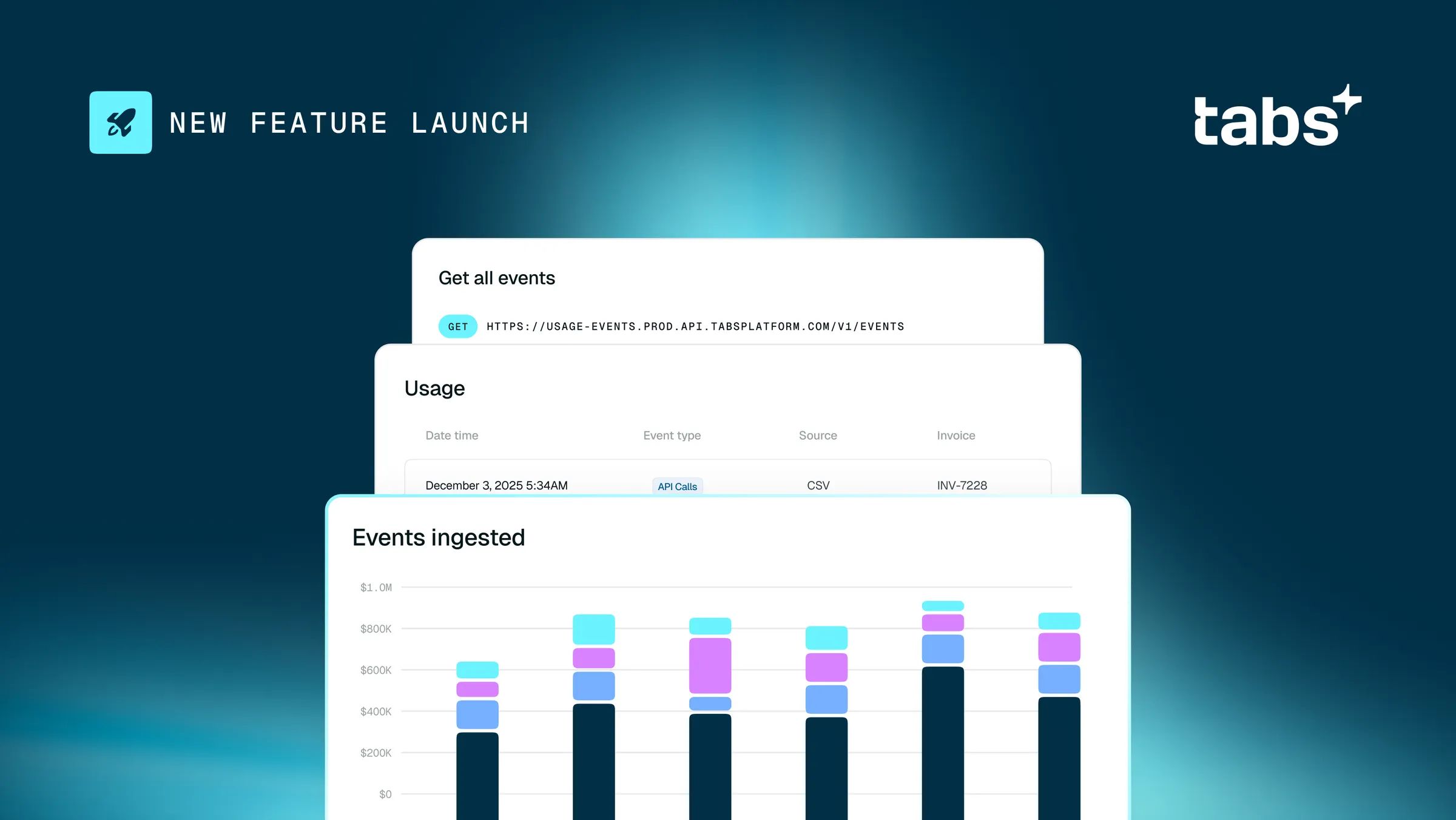
Last December, we introduced our real-time usage engine to power usage-based billing at scale. This engine gives engineering teams a high-throughput, low-friction way to send metered usage into Tabs and gives finance teams full control over pricing and billing schedules.
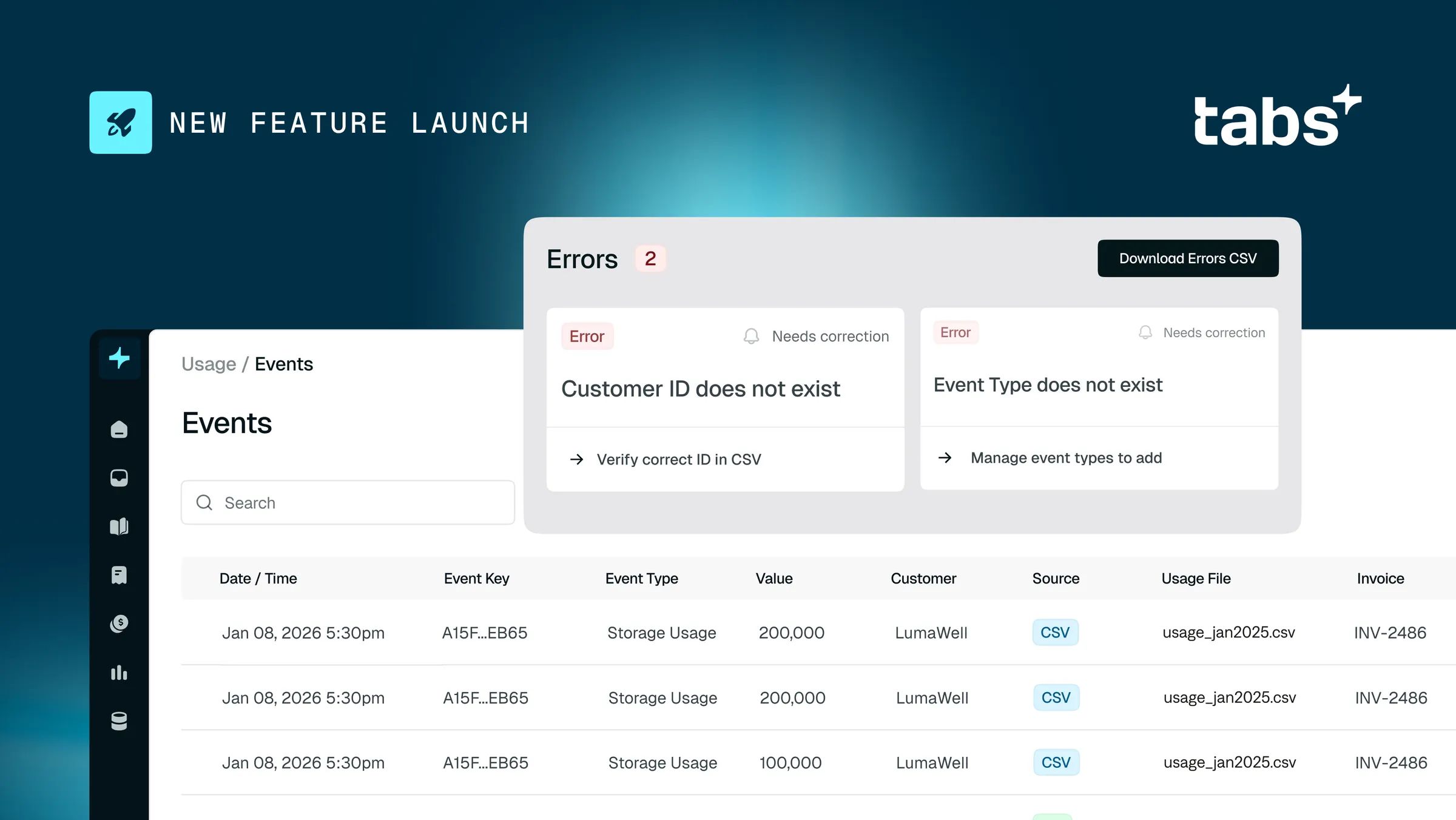
In January, we built on that foundation to help finance teams move faster, with an improved CSV upload experience and full usage event–to–invoice traceability. But billing is only part of the journey.
Once usage is invoiced for, finance still needs to answer challenging downstream questions:
- How does this customer’s usage interact with their commitments for the service period?
- How much revenue should we recognize this month and why?
- What’s been consumed, what’s remaining, and what changed?
Usage doesn’t end at invoice sent and payment collected - it has to flow cleanly into revenue. By unifying usage commitments, consumption, billing, and compliant revenue recognition into a single automated platform, finance teams can close faster with confidence from contract signed to revenue earned with Tabs.
Supporting usage shouldn't stop at billing. Now neither does your system.
We believe this marks a meaningful shift in how usage-based businesses can operate: with fewer handoffs, fewer external dependencies, and far less manual work holding everything together.
If you’re looking to simplify your usage-based billing and revenue process, let’s chat!