





Revenue recognition rules for B2B: A practical guide
Revenue recognition in B2B determines how your financials look to investors, auditors, and your board. This guide breaks down ASC 606 and IFRS 15 requirements, walks through the five-step model with practical examples, and shows how to apply these revenue recognition rules consistently across subscription, usage-based, and other complex bundled pricing models.
What are revenue recognition rules?
Revenue recognition rules are the accounting guidelines that tell you exactly when to record income on your financial statements. The core principle is simple: you record revenue when you've actually earned it—not when cash hits your bank account. This matters because it determines how your financials look to investors, auditors, and your board.
For B2B companies, these rules get complicated fast. Deloitte notes that ASC 606 requires greater judgment than legacy guidance, resulting in higher ongoing costs. Your contracts include subscription fees, usage-based pricing, implementation services, and milestone payments—often bundled together. The governing standards are ASC 606 in the United States and IFRS 15 internationally, and both use the same five-step model to determine when revenue counts.
To recognize revenue, you must meet three criteria:
- Earned: You've fulfilled your promise to the customer
- Measurable: You can reliably calculate the amount
- Collectible: You reasonably expect to receive payment
This is where most finance teams struggle. According to an EY survey, 88 percent of organizations found getting required data for disclosures challenging. Contracts live in PDFs, email threads, and CRM attachments. Pricing logic lives in someone's head. And the connection between what you promised and what you can recognize requires manual interpretation that doesn't scale.
Tabs approaches this differently. Rather than just extracting contract data, Tabs uses AI models to interpret key terms in context. The platform then translates complex billing structures into billing workflows and Revenue Recognition schedules, with configurable review and approval controls.
Automate ASC 606 from contracts—see a demo
Why revenue recognition rules matter for B2B finance
Getting revenue recognition wrong creates real consequences:
- Restatements damage credibility with investors.
- Audit delays extend your close cycles.
- Misstated revenue distorts your cash-flow projections and makes board reporting unreliable.
For B2B companies with multi-element contracts, the margin for error is razor thin. A single misclassified performance obligation can cascade into months of incorrect revenue. And when auditors start asking questions, you need documentation that traces every dollar from contract signature to journal entry.
The challenge is applying these revenue recognition rules consistently across hundreds of contracts with different terms, pricing models, and delivery schedules. Manual processes break down while spreadsheets introduce errors. Finance teams spend their time on data entry instead of strategic work.
ASC 606 and IFRS 15 revenue recognition standards
ASC 606 compliance and IFRS 15 are the two major standards. The Financial Accounting Standards Board (FASB) created ASC 606 for U.S. companies, while the International Accounting Standards Board (IASB) developed IFRS 15 for international entities. Both replaced older, industry-specific guidance with a single principles-based framework.
The good news: both standards use the same five-step model. The differences are minor—primarily how they treat collectability thresholds. That said, KPMG notes that the IASB acknowledges some areas of IFRS 15 remain challenging to apply in practice. For multinational B2B companies, this convergence means you can apply consistent logic across subsidiaries.
| Aspect | ASC 606 | IFRS 15 |
|---|---|---|
| Issuing body | FASB | IASB |
| Applies to | U.S. GAAP reporters | IFRS reporters globally |
| Core framework | Five-step model | Five-step model |
The five-step revenue recognition model
Every customer contract must pass through five steps before you can record revenue. This framework applies whether you're selling annual subscriptions, seat-based licenses, usage-based APIs, or bundled software with implementation services.
Step 1: Identify the contract with the customer
A contract is a legally enforceable agreement with clear payment terms and commercial substance. Under ASC 606, a contract exists when both parties have approved it, you can identify each party's rights, payment terms are clear, and collection is probable.
For B2B companies, the challenge is that contracts often live in scattered locations—PDFs attached to emails, documents in your CRM, or amendments buried in Slack threads. Before you can apply any accounting rules, you need to actually find and structure this data.
Tabs sits downstream of your CRM and configure, price, quote (CPQ) systems, automatically ingesting signed contracts and extracting the relevant terms. But extraction alone isn't enough. Tabs adds commercial context by classifying clauses like a 90-day opt-out or a billing ramp and mapping them to your Revenue Recognition policy. That way, your revenue schedule reflects the contract you actually signed.
Step 2: Identify distinct performance obligations
A performance obligation is a promise to deliver a distinct good or service. "Distinct" means the customer can benefit from it on its own, and it's separately identifiable from other promises in the contract.
This step determines how many pieces you'll split your revenue into. Consider these scenarios:
- Combined obligation: A highly customized software license requiring proprietary implementation is typically one obligation—the customer can't benefit from the software without the implementation
- Distinct obligations: A standard software-as-a-service (SaaS) platform bundled with optional training represents two obligations—the customer could use the software without the training
Getting this wrong means recognizing revenue on the wrong timeline. If you treat two obligations as one, you might defer revenue longer than necessary—or recognize it too early.
Step 3: Determine the transaction price
The transaction price is the amount you expect to receive in exchange for your goods or services. For simple contracts, this is straightforward. For B2B deals with escalators, tiered pricing, usage caps, and SLA credits, it requires careful calculation.
You must account for:
- Variable consideration: Discounts, rebates, and performance penalties that could change the final amount
- Significant financing: If payment terms extend beyond one year, you adjust for the time value of money
- Non-cash consideration: Equity or barter arrangements must be measured at fair value
If your contract includes a service-level agreement (SLA) with potential refunds for downtime, that's variable consideration. You estimate the impact and reduce your transaction price from day one, not when the refund actually happens.
Step 4: Allocate the transaction price
Once you know the total price, you allocate it across each distinct performance obligation based on standalone selling prices. The standalone selling price is what you'd charge if you sold that item by itself.
This gets tricky with bundled deals. If you discount your implementation services to win a competitive deal, you can't just assign the entire discount to implementation. You spread it proportionally across all obligations.
Accountants typically use three methods:
- Adjusted market assessment: Estimate what customers in your market would pay
- Expected cost plus margin: Calculate your costs and add an appropriate margin
- Residual approach: Subtract known standalone prices from the total (restricted under ASC 606)
Step 5: Recognize revenue when obligations are satisfied
You recognize revenue when control transfers to the customer. Control means the customer can direct the use of the asset and obtain its benefits. This happens either at a point in time or over time.
- Point in time: Used for perpetual licenses or hardware—revenue recognized upon delivery
- Over time: Used for SaaS subscriptions and ongoing services—revenue recognized as the customer receives benefits
For a 12-month SaaS subscription paid upfront, you record the payment as deferred revenue and recognize it ratably each month. For usage-based pricing, you recognize revenue as consumption occurs.
Revenue recognition examples for SaaS and bundled contracts
Theory matters, but application is where finance teams struggle. Here's how the five-step model applies to common B2B scenarios:
Annual SaaS subscription: Customer pays $120,000 upfront for 12 months. You record the full amount as deferred revenue, then recognize $10,000 each month as the service is delivered.
Bundled implementation: Customer buys a $50,000 license and $10,000 in implementation services at a combined $45,000. You allocate the $45,000 proportionally based on standalone prices, recognizing each as obligations are satisfied.
Usage-based pricing with committed minimums: Customer commits to $5,000 monthly minimum plus overages. You recognize the minimum ratably; overages are recognized as usage occurs.
Contract modification: Customer upgrades mid-term. If the upgrade adds distinct services at standalone prices, treat it as a new contract. If it changes existing scope, adjust recognition on a cumulative catch-up basis.
Revenue recognition compliance for public and private companies
ASC 606 applies to all U.S. Generally Accepted Accounting Principles (GAAP) reporters—public and private. The revenue recognition rules are identical. What differs is disclosure requirements.
Public companies face extensive disclosure rules, quarterly reporting deadlines, and Sarbanes-Oxley (SOX) controls. Private companies have fewer mandatory disclosures but cannot ignore the core rules. And if you're preparing for fundraising or acquisition, investors will scrutinize your revenue recognition during due diligence.
Auditors expect to see:
- Documented revenue policy: Written procedures for each revenue stream
- Consistent application: Same treatment for similar transactions
- Audit trail: Complete documentation from contract to journal entry
The companies that close fastest aren't just following the rules. They have systems that enforce them automatically and generate the documentation auditors need.
Speed is table stakes. Audit-grade traceability is the differentiator.
Revenue recognition software and automation for ASC 606 compliance
Manual revenue recognition doesn't scale.
Why it matters: If your contract volume and pricing complexity grow faster than your controls, you'll feel it in audit requests, close delays, and restatement risk.
As contract volume grows and pricing models get more complex, spreadsheet-based processes become a liability. You need systems that can ingest contracts, identify obligations, calculate allocations, and generate compliant journal entries—with automation where it's repeatable and controls where judgment is required.
When evaluating revenue recognition software, look for:
- Contract ingestion: Automatically extract terms from signed agreements
- Obligation identification: Map contract elements to distinct performance obligations
- Allocation engine: Calculate standalone selling prices and allocate transaction price
- Journal entry generation: Create ASC 606-compliant entries that sync to your ERP
- Audit trail: Log every decision from contract to recognized revenue
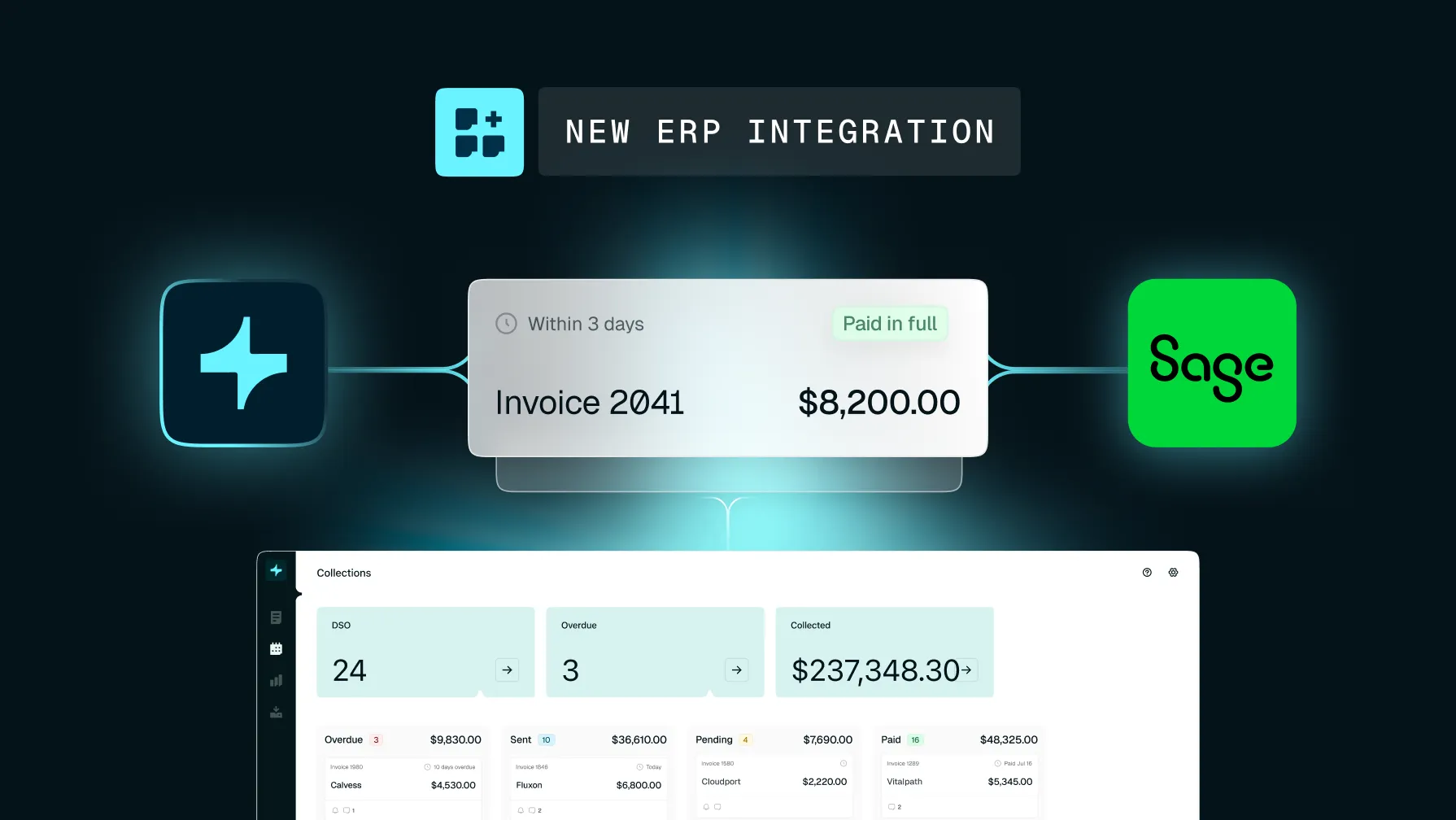
Tabs integrates with finance systems like NetSuite, QuickBooks, and Sage Intacct. But what sets Tabs apart is the commercial context. Tabs doesn't just extract dates and dollar amounts. It uses AI agents to extract and classify contract terms, then applies your billing and Revenue Recognition policies to produce accurate billing workflows and revenue schedules.
Frequently asked questions
Do private companies using cash accounting need to follow ASC 606?
ASC 606 applies only to accrual-basis GAAP reporters. If you use cash accounting, you're not subject to ASC 606. However, transitioning to GAAP for fundraising or acquisition means adopting the standard.
How does ASC 606 apply to usage-based pricing with committed minimums?
Committed minimums are recognized ratably over the contract term—a common pattern in hybrid billing models that combine fixed and variable components. Overages are recognized as usage occurs. Variable consideration rules apply when future usage is uncertain.
What contract data is required to automate ASC 606 revenue recognition rules?
Automation across your contract-to-cash process requires structured contract terms, billing records, and payment history—plus commercial context that connects what was signed to how you bill and recognize revenue. The challenge is pulling those inputs from PDFs and disconnected systems. This is why Tabs ingests signed contracts downstream of CRM and CPQ and maintains a unified customer record.
Tabs can automate Revenue Recognition from signed contracts—without rebuilding your CRM or CPQ.