




AI can read contracts, understand pricing language, and make sense of vague inputs like “for recent invoices.” That part is no longer novel.
The hard part of billing and revenue finance is what comes after.
Invoices have to be calculated correctly. Payments have to apply consistently. Mid-cycle changes cannot introduce surprises. Billing and revenue platforms need to produce the same answer every time, or they cannot be trusted.Speed without determinism is not automation. It is risk.
That requirement shaped how we built Tabs.
AI interprets intent. Tabs ensures the outcome is accurate.
Even with that separation, we quickly realized the real limitation wasn’t intelligence. It was billing and revenue living in two systems that needed to work together, but didn’t.
Where billing and revenue start to break
Most billing and revenue platforms were designed as record systems, not systems of intelligence.
Contracts, invoices, payments, usage, credits, and communications were all stored in separate places. Each data point and object exists in silos, but the platform never sees how they relate.
Humans bridge those gaps manually with spreadsheets and reconciliation work. Software usually cannot.
When data is fragmented, automation only works in clean, predictable cases. The moment something is unclear, someone has to step in to reconcile, adjust, or fix it. Not because AI cannot read the data. Because the system does not understand how the data connects. That’s the problem the Commercial Graph was built to solve.
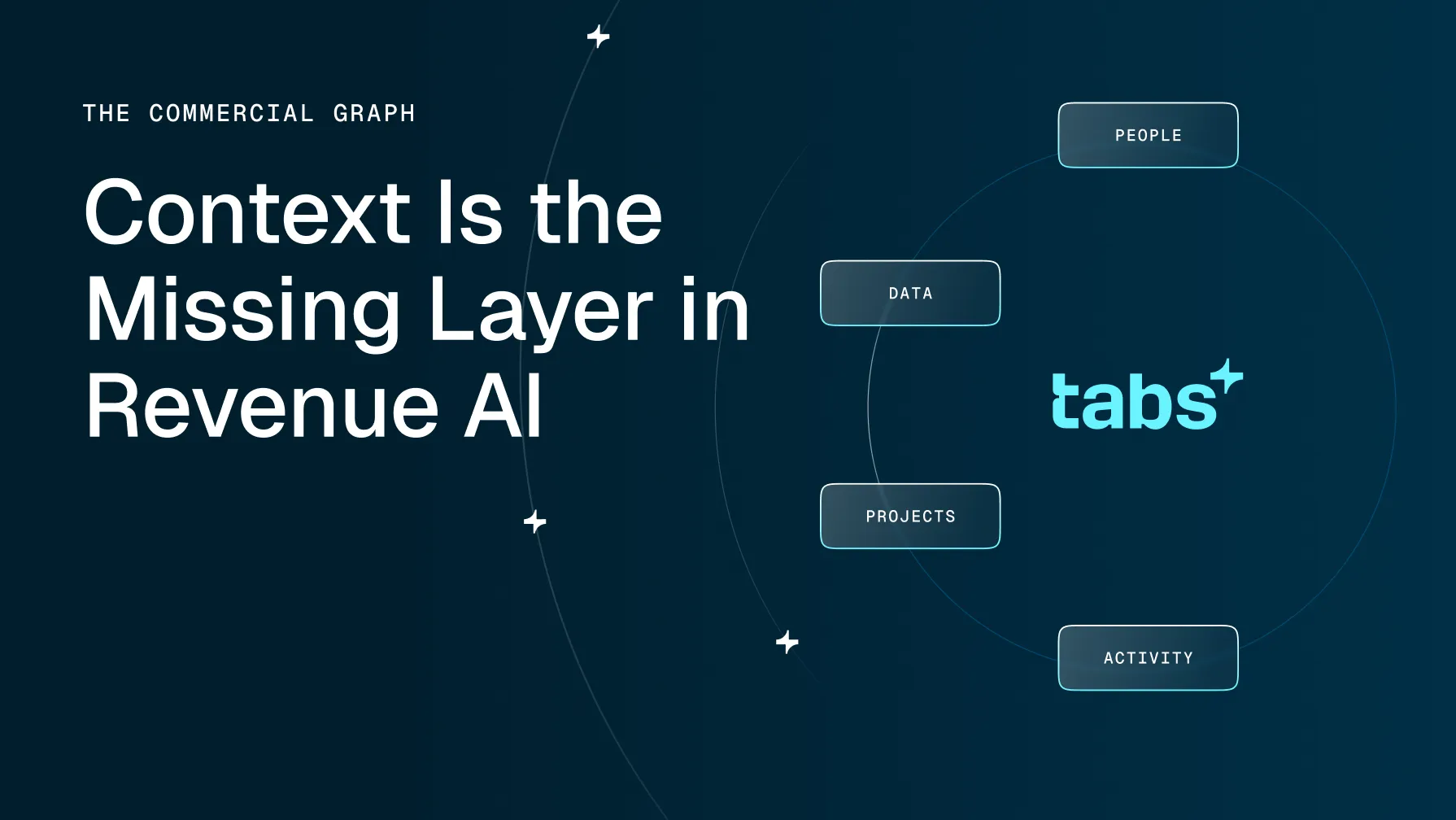
The Commercial Graph: Revenue as a Context Graph
The Commercial Graph is how Tabs represents revenue as a connected platform rather than a set of disconnected records.
Customers, contracts, invoices, payments, usage, credits, and communications are explicitly linked. Each relationship carries context: pricing logic, contract history, payment behavior, adjustments, and credits.
Because everything is connected, the system can evaluate the full picture before taking action.
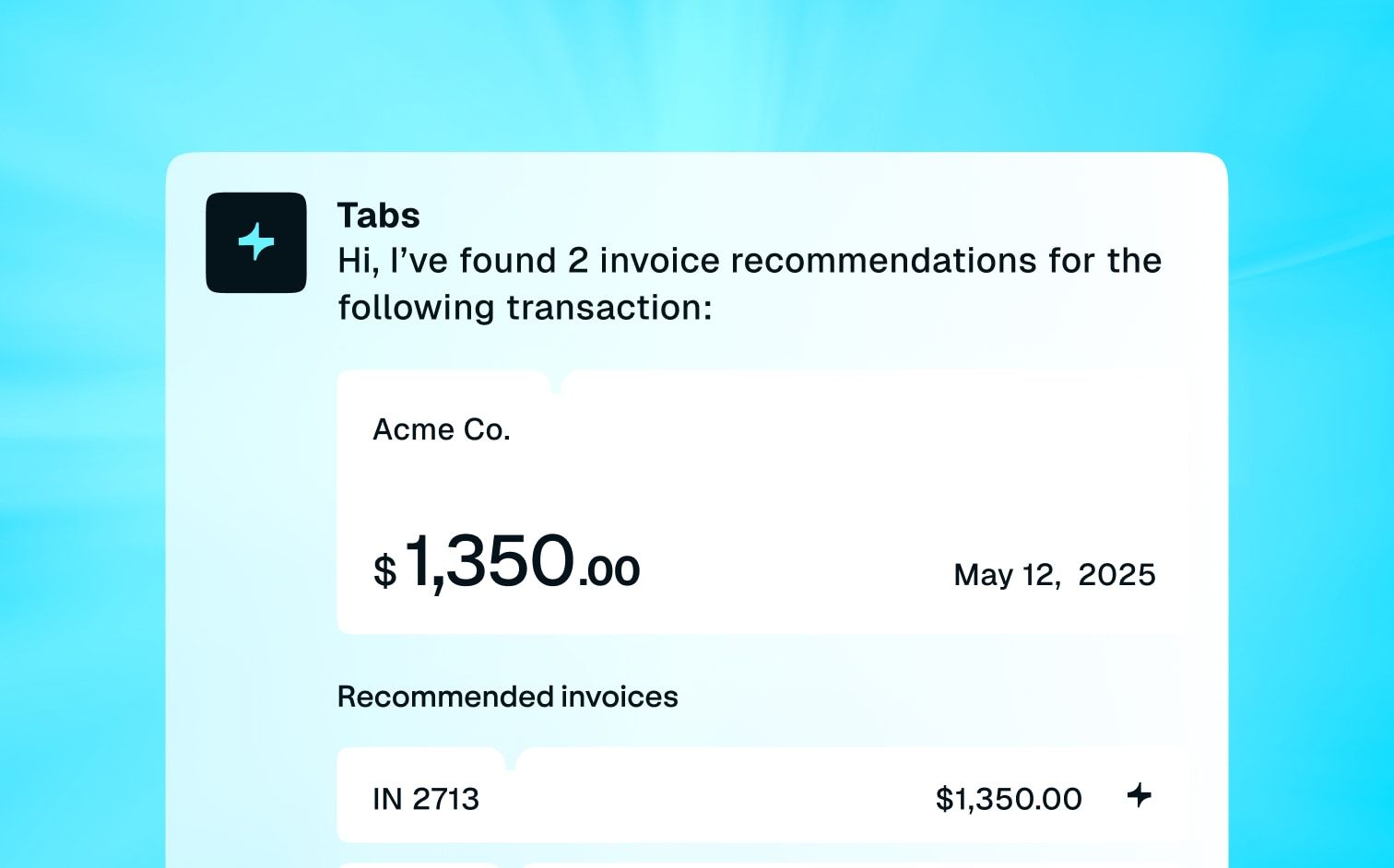
When a payment arrives with an unclear remittance note, Tabs looks at active contracts, outstanding invoices, historical payment behavior, and existing credits before applying cash. AI interprets what the payment is likely intended for. Tabs ensures the result is applied correctly and consistently.
The Commercial Graph gives AI clear boundaries.
Instead of trying to make one model do everything, Tabs uses AI where interpretation is needed and relies on strict system rules where accuracy matters. Agents are narrow and purposeful. They operate within a shared understanding of how billing and revenue flows, update the system as they act, and trigger the next step reliably.
This is why Tabs can deliver speed without sacrificing control and accuracy. The system moves quickly because it understands relationships, not because it takes shortcuts.
Every automated action also carries a confidence score. High-confidence actions run automatically. Ambiguous cases route to humans. Those decisions feed back into the system, allowing automation to expand safely over time.
The Result
A connected billing and revenue platform that makes it possible to:
- Turn contracts into invoices in minutes
- Reconcile payments with unclear notes automatically
- Handle mid-cycle changes without manual rework
- Tailor collections outreach to the actual customer relationship
These outcomes don’t come from a single model or a single feature. They come from giving AI a complete, connected view of revenue data and enforcing correctness where it matters.
AI alone doesn’t automate billing and revenue.
A connected commercial graph does.
Download our AI Whitepaper to learn more.