





AI invoice generators promise to eliminate manual data entry, but most tools stop at filling in templates and miss the billing logic that actually matters. This guide breaks down how AI-powered invoicing works, what features to prioritize, and how modern revenue automation platforms translate contract terms into accurate, audit-ready invoices.
What is an AI invoice generator?
An AI invoice generator is software that uses machine learning to automatically create invoices from your data. It extracts client details, calculates totals, applies taxes, and formats professional documents—all without manual data entry.
For freelancers and small businesses, this means typing a simple prompt and getting a finished PDF. But for B2B finance teams, the definition needs to go deeper.
B2B invoices don't come from simple prompts. They come from complex contracts with custom terms, usage-based pricing, milestone payments, and multi-year agreements. The real challenge isn't creating a document. It's accurately translating what's in a signed contract into billable line items that align with your Revenue Recognition requirements under ASC 606.
This is where most AI invoice generators fall short. They can fill in fields on a template, but they can't reliably model the commercial context in your contracts. For example, they may miss an escalator that starts in month 13, misapply overage charges after a usage threshold, or fail to trigger a milestone invoice when acceptance is documented.
Modern revenue automation platforms like Tabs approach this differently. Instead of only extracting fields, Tabs uses trained models to identify billing-relevant terms (rates, thresholds, escalators, milestones) and map them into billing logic and workflows you can review and approve. The difference matters when you're managing hundreds of contracts with varying terms—and when your auditors ask how you calculated that invoice.
How to create an invoice with AI
The process of generating invoices with AI depends entirely on your billing complexity. Here's how modern finance teams approach it.
Select the right tool for your billing model
Free online invoice generators work fine for simple, one-off invoices. You enter client details, add line items, and download a PDF.
But if you're billing for subscriptions, usage-based pricing, or hybrid models, you need something more sophisticated. You need a platform that can read your contracts, understand your pricing logic, and generate invoices that reflect what you actually agreed to with your customer.
Why it matters: The wrong tool creates more work downstream—manual corrections, reconciliation headaches, and audit questions you can't easily answer.
Import contract and client data
AI-powered platforms pull information directly from your source documents. This includes PDFs, Word documents, and records from your CRM.
For B2B companies, this means automatically extracting:
- Pricing schedules: Base fees, tiered rates, and volume discounts
- Billing frequencies: Monthly, quarterly, annual, or custom cycles
- Custom clauses: Escalators, caps, minimums, and overage terms
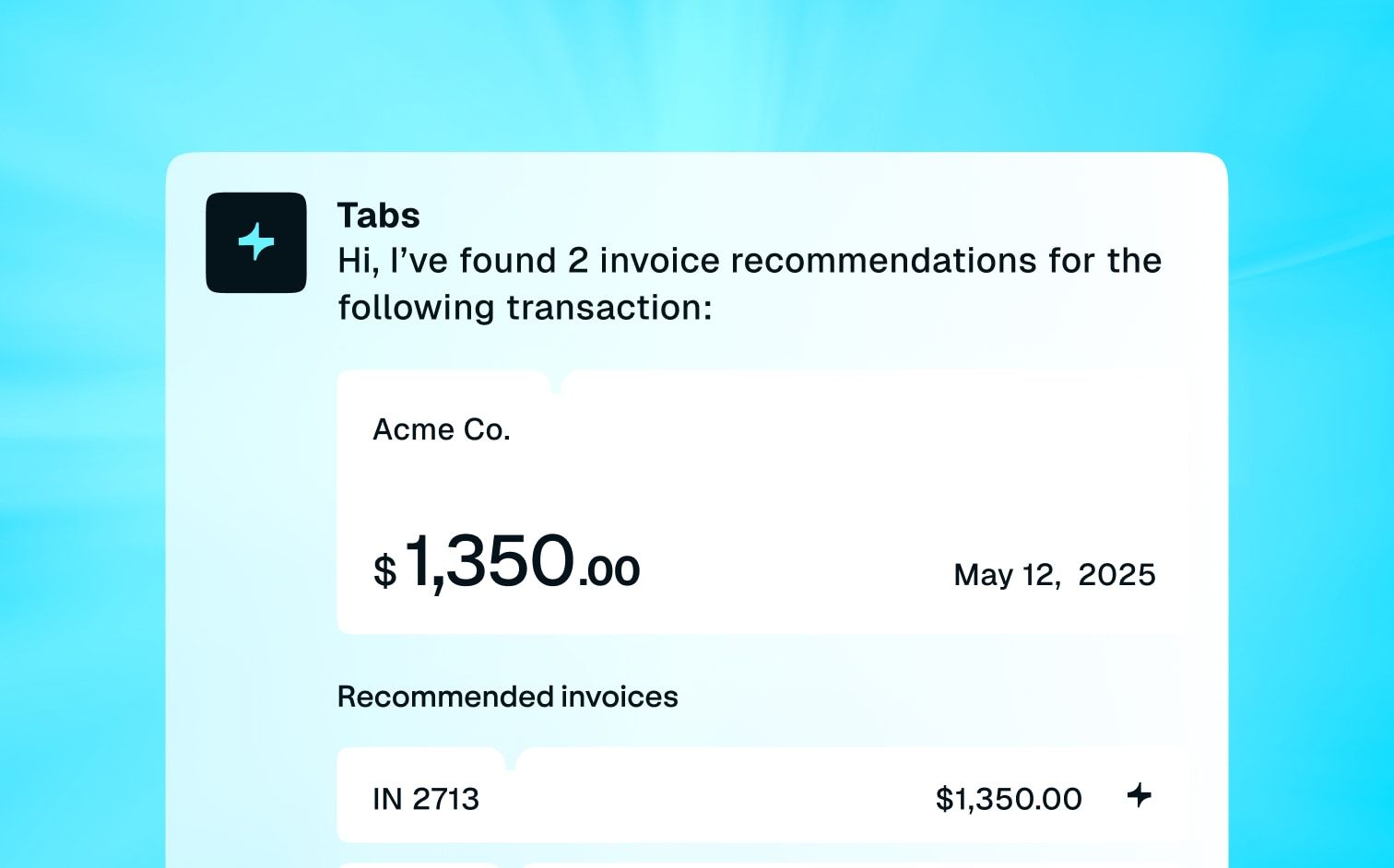
Tabs uses AI to extract these terms from signed contracts and structure them for billing. Your team can skip most manual PDF review and re-keying, while exceptions and ambiguous clauses get flagged for review before anything is billed.
Why it matters: Manual data entry is where errors start. Automating this step eliminates the gap between what's signed and what's billed.
Review line items and calculations
Even with automation, human review matters for complex invoices. The system calculates totals, applies your configured tax logic, and flags outliers (for example, unexpected rate changes, missing PO numbers, or usage spikes) for review.
Your team reviews the output before approval. This is especially important for invoices with milestone payments, tiered pricing, or usage-based charges where the calculation logic is more complex.
Why it matters: Automation handles the heavy lifting, but finance teams retain control over what goes out the door.
Send and track payment
Modern platforms track what happens after the invoice is sent.
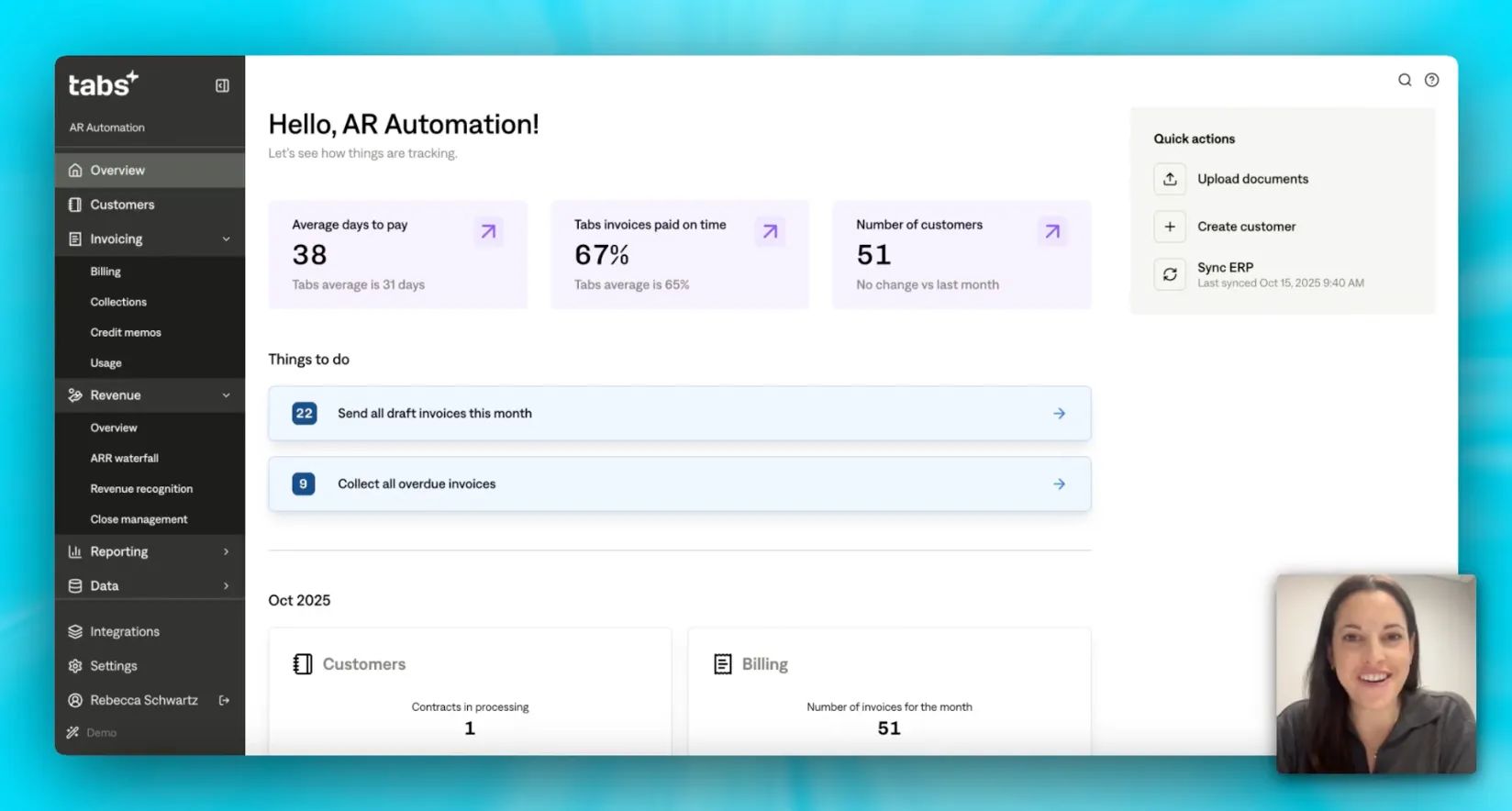
Invoices can go out immediately via email with embedded payment links. You can track invoice status—sent, delivered, paid, or overdue—and monitor engagement signals. If payment is late, automated reminders trigger based on rules you define.
Why it matters: Visibility into invoice status eliminates the "did they get it?" guessing game and accelerates your collections process.
Benefits of AI invoice generators
Why should finance leaders care about automating invoice generation? According to PwC, nearly nine in 10 CFOs say implementing tech to improve capabilities is a priority. The benefits compound across your entire contract-to-cash process.
Eliminate manual work and reduce errors
Manual invoice creation is slow and error-prone, costing $10 to $15 per invoice on average. Someone reads a contract, interprets the terms, enters data into a billing system, and hopes they got it right.
AI eliminates this re-keying. It pulls data directly from source documents, so there's no opportunity for transcription errors. No more typos in invoice numbers. No more miscalculated totals. No more invoices that don't match contract terms.
Your finance team stops spending hours on data entry and starts focusing on work that actually requires human judgment—a shift 49% of CFOs cite as their top talent priority.
Get paid faster
Speed matters. The faster you invoice, the faster you get paid.
When invoices go out the moment a contract is signed—or the moment a usage threshold is crossed—you shorten the time between earning revenue and collecting cash. Embedded payment links remove friction from the payment process. Automated reminders ensure nothing slips through the cracks.
The result is lower Days Sales Outstanding (DSO) and healthier cash flow.
Build an audit-ready foundation
Every invoice generated by AI ties back to its source. You can trace exactly which contract terms produced which line items, when the invoice was created, who approved it, and when it was paid.
This audit trail isn't just nice to have. It's essential for ASC 606 compliance, where you need to demonstrate that revenue recognition aligns with your billing events and contract terms.
When auditors ask questions, you have answers—documented, traceable, and defensible.
Turn contracts into accurate invoices with Tabs
Core features in AI invoice generators
Not every tool is built for B2B complexity. Here's what to look for when evaluating an AI invoice generator for your finance stack.
Contract data extraction
The foundation of intelligent invoicing is the ability to read and interpret contracts. Basic tools use optical character recognition (OCR) to pull text from PDFs. More sophisticated platforms use natural language processing to understand what that text means.
Tabs goes further by adding commercial context. It doesn't just extract a number—it classifies what the number represents (for example, a base fee with an annual escalator, or a per-unit rate that applies after a minimum commitment) and maps that classification into billing logic.
Support for complex billing models
B2B pricing isn't simple. You might have customers on pure subscriptions, others on seat-based or usage-based pricing, and others on hybrid models that combine multiple approaches.
Your invoice generator needs to handle:
- Recurring invoices: Automated billing on monthly, quarterly, or annual cycles
- Usage-based billing: Charges calculated from actual consumption data
- Hybrid models: Combinations of fixed fees and variable charges
- Milestone billing: Invoices triggered by deliverable acceptance or project phases
If your tool can't handle your pricing model natively, you'll end up building workarounds. And workarounds break.
Automated collections and payment tracking
Invoice generation is only half the job. You also need to collect.
Look for platforms that include automated dunning workflows. These prebuilt reminder sequences trigger based on invoice status and payment behavior. Real-time tracking shows you exactly where every invoice stands: sent, opened, paid, or overdue.
This visibility lets you intervene early when payments are at risk, rather than discovering problems at month-end.
ERP and CRM integrations
Your invoice generator doesn't exist in isolation. It needs to connect to your CRM (where deals close), your ERP (where revenue is recognized), and your payment processors (where cash is collected).
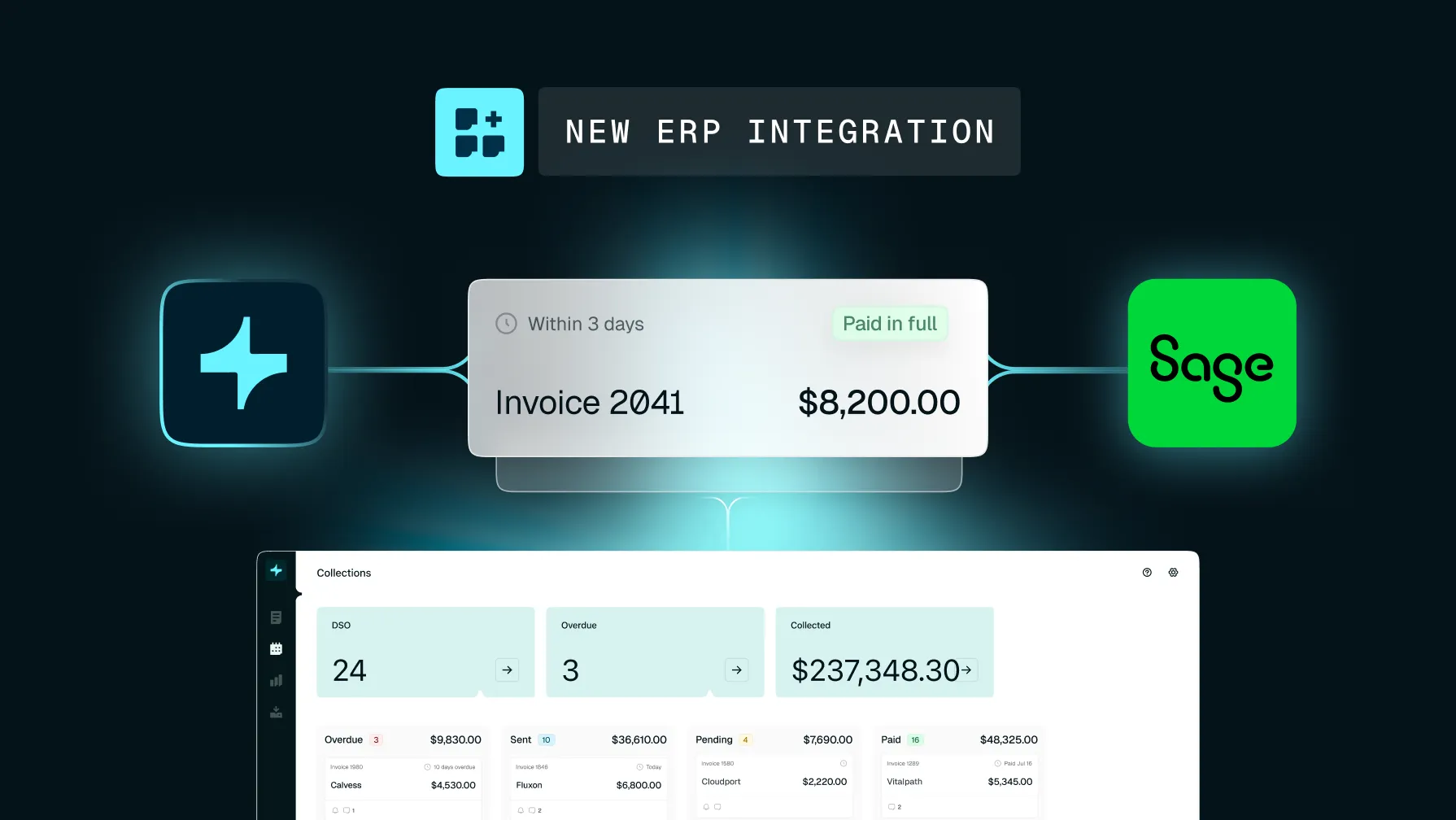
Robust APIs ensure data flows smoothly between systems. Native integrations with platforms like QuickBooks, NetSuite, and Sage Intacct eliminate manual data transfer and keep your systems in sync.
| Feature | Basic AI generators | B2B revenue platforms |
|---|---|---|
| Invoice creation | ✓ | ✓ |
| Contract data extraction | Limited | ✓ |
| Usage-based billing | ✗ | ✓ |
| ERP integrations | Limited | ✓ |
| Revenue recognition | ✗ | ✓ |
| Automated collections | ✗ | ✓ |
Brand and customize AI invoices
Professional presentation matters when you're billing enterprise customers. Your invoices should look like they come from your company, not from a generic template.
Customization options to look for:
- Brand identity: Your logo, colors, and typography applied consistently
- Custom fields: PO numbers, project codes, cost center references, and other data your customers require
- Template flexibility: Different formats for different customer segments or billing models
B2B invoices often have specific requirements. Your customer's AP team might need a PO number in a specific location, or a breakdown of charges by cost center. The ability to customize ensures your invoices meet these requirements without manual formatting.
How Tabs generates invoices from contracts
Most AI invoice generators stop at creating a document. Tabs starts where your contracts end.
Why this matters: For B2B finance teams, the real challenge isn't formatting an invoice. It's ensuring that invoice accurately reflects complex contract terms—pricing tiers, usage thresholds, milestone payments, renewal clauses, and everything else buried in your agreements.
Tabs is built specifically for this challenge. Here's how it works:
- AI-powered contract ingestion: Tabs reads signed contracts and extracts billing terms automatically. Your team can reduce manual PDF review dramatically, while ambiguous or nonstandard language gets routed for finance (and, when needed, legal) review before billing rules are finalized.
- Commercial context understanding: The AI doesn't just pull data—it interprets pricing structures, escalation clauses, and billing frequencies. It understands that "annual escalator of 3%" means next year's invoice should be higher, and it builds that logic into your billing workflow.
- Native support for complex models: Subscriptions, usage-based billing, hybrid models, and milestone payments are supported natively, typically with minimal configuration. And for edge cases, you can review and adjust the billing logic before invoices go out.
- Seamless ERP sync: Invoices flow directly to QuickBooks, NetSuite, or Sage Intacct with complete audit trails. Revenue recognition stays aligned with billing events.
The result is a system where contracts become invoices automatically—accurately, consistently, and with full traceability from signature to cash collection.
Frequently asked questions
Can an AI invoice generator pull billing terms directly from signed PDF contracts?
Yes, advanced platforms use AI to extract terms from signed contracts in PDF, Word, or other formats. Tabs captures pricing schedules, billing frequencies, and custom clauses automatically. This eliminates the manual review that typically burdens finance teams after a deal closes.
How do automated payment reminders help B2B companies reduce days sales outstanding?
Automated reminders trigger before and after invoice due dates based on rules you define. Combined with embedded payment links that let customers pay directly from the invoice, these workflows accelerate collection without requiring manual follow-up from your AR team.
Does an AI invoice generator handle ASC 606 revenue recognition requirements?
Basic generators create invoices but don't address revenue recognition. B2B-focused platforms like Tabs connect invoicing directly to compliant ASC 606 workflows, ensuring that revenue is recognized accurately based on contract terms and billing events—with the audit trail to prove it.