





Most AI for RevOps conversations focus on pipeline and lead scoring, but revenue doesn't hit your books until it's billed, collected, and recognized. This guide shows finance and accounting teams at B2B companies how to extend automation through the full contract-to-cash lifecycle. We'll cover AI use cases, implementation strategies, and the finance-first approach that turns signed contracts into accurate invoices and compliant Revenue Recognition.
What is AI for RevOps?
Revenue operations (RevOps) is the function that aligns sales, marketing, customer success, and finance around a shared revenue goal. AI for RevOps means using artificial intelligence to execute tasks across the revenue lifecycle—not just to surface insights, but to actually do the work.
Most conversations about AI for RevOps focus on the top of the funnel. Lead scoring. Pipeline forecasting. CRM enrichment. But they miss the critical downstream processes where revenue actually gets recognized and collected.
Here's the problem: revenue isn't real until it's invoiced, collected, and recognized. And that's where most RevOps AI initiatives fall short.
Tabs approaches AI for RevOps differently. Rather than just extracting data from contracts, Tabs uses AI-powered models to infer commercial context from signed agreements. The agents, trained on your business context, translates complex terms into accurate billing workflows and Revenue Recognition processes downstream of your CRM and CPQ.
Core RevOps functions AI can automate:
- Sales: Pipeline forecasting, deal prioritization, CRM hygiene
- Marketing: Lead scoring, attribution, audience segmentation
- Customer success: Churn prediction, renewal orchestration
- Finance: Contract-to-cash automation, invoicing, Revenue Recognition, and collections
The finance layer is where most RevOps stacks break down. And it's where AI can have the most immediate impact on cash flow.
Benefits of AI for RevOps
The value of AI compounds when it operates across the full revenue lifecycle. According to PwC's 2025 Global AI Jobs Barometer, productivity growth has nearly quadrupled in industries most exposed to AI. These benefits become most visible when automation extends through finance operations, where cash actually lands.
Reduce manual work
RevOps teams spend most of their time on administrative tasks rather than strategic analysis. AI automates much of the repetitive work: data entry, CRM updates, invoice generation, and payment reconciliation—so your team can focus on exceptions.
Speed is a given Cleanliness is the differentiator.
Tabs automates signed-contract ingestion, invoice creation, and collections workflows. Instead of downloading PDFs and copy-pasting terms into spreadsheets, your team can focus on exceptions and strategy. Accounting Standards Codification 606 (ASC 606) compliance requires meticulous tracking of performance obligations over time. Doing this manually across hundreds of contracts invites audit risk and exhausts your accounting team.
Why it matters: Every hour spent on manual data entry is an hour not spent on cash forecasting or strategic planning. Deloitte's Q4 2025 CFO Signals survey found that 49% of CFOs cite automating processes to free employees for higher-value work as their leading finance talent priority.
Unify revenue data
Fragmented data across CRM, billing, ERP, and spreadsheets creates massive blind spots. Sales teams live in the CRM. Finance teams live in the ERP. When these systems don't speak the same language, you lose visibility into what's actually happening with your revenue.
Tabs creates a single source of truth by connecting your CRM, CPQ, billing system, and ERP to normalize revenue data in real time.
Tabs solves this through the Commercial Graph—an intelligent customer record that unifies contracts, usage data, payments, and terms. When both sales and finance operate from the same commercial reality, you eliminate the friction that slows down cash flow.
Why it matters: You can't automate what you can't see. Unified data is the foundation for everything else.
Improve decision-making
Clean, unified data enables better forecasting, faster close cycles, and more accurate Revenue Recognition. But AI goes further than reporting what happened. It surfaces anomalies, flags risks, and recommends next actions based on trained models.
Can your current stack answer complex revenue questions in under 5 minutes?
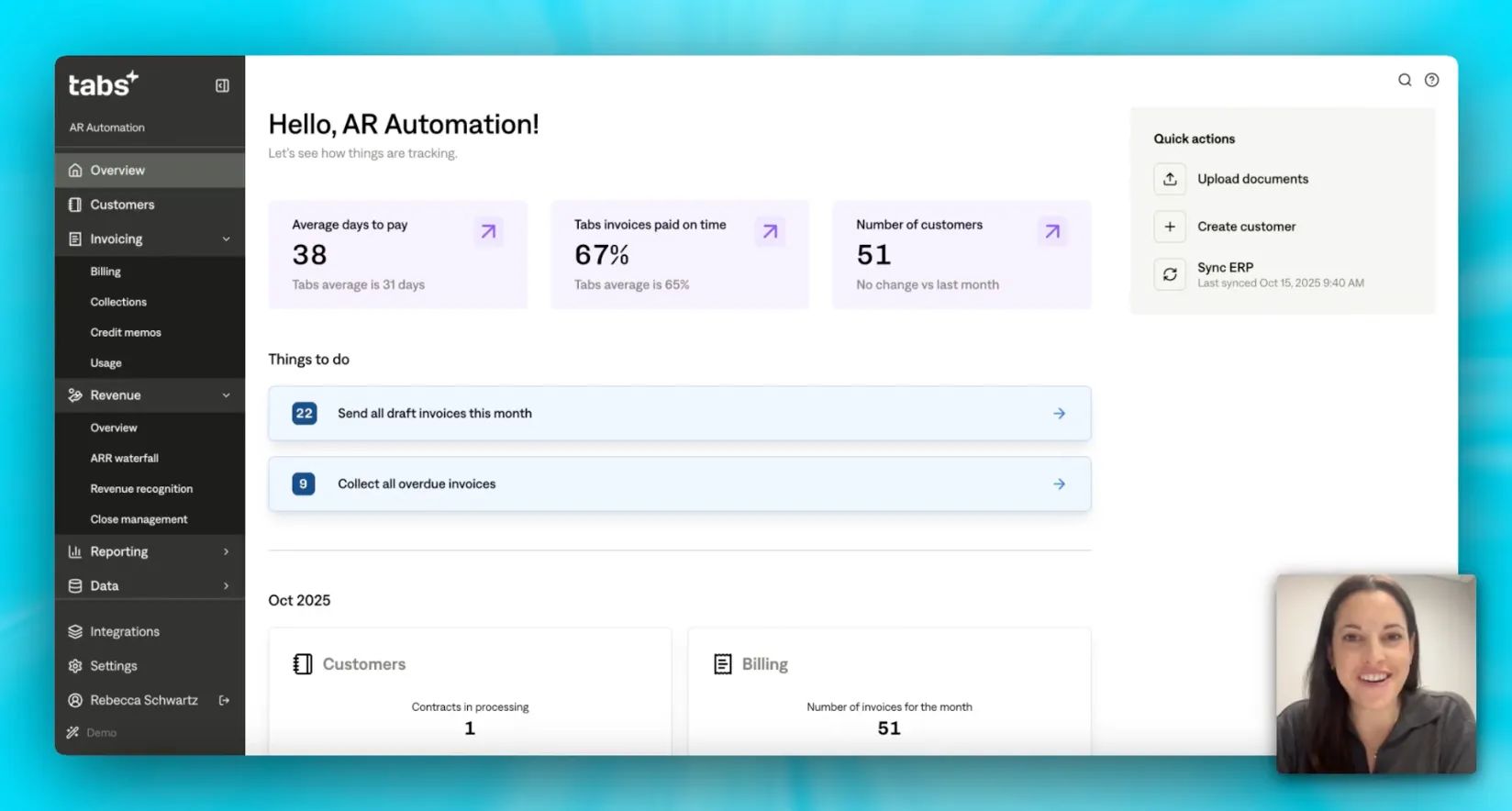
Tabs provides real-time visibility into annual recurring revenue (ARR), cash, accounts receivable (AR) balance, and renewals. You get complete transparency into what's been invoiced, collected, and recognized. Modern revenue automation platforms like Tabs don't just show when invoices are due—they forecast when cash will actually land, based on historical payment behavior and contract terms.
Why it matters: When you know which customers consistently pay late, you can adjust future contract terms accordingly.
Automate contract-to-cash—see a demo
Why AI initiatives in RevOps stall
Many organizations struggle to realize AI's potential in their revenue operations. PwC's 2026 AI Performance study found that 74% of AI's economic value is captured by just 20% of organizations. Understanding these blockers helps you avoid costly implementation failures.
Disconnected data across systems
AI is only as good as the data it operates on. When contract terms live in PDFs, pricing logic exists in people's heads, and usage data is scattered across tools, AI cannot deliver accurate outputs.
Most organizations end up with a patchwork finance stack assembled reactively over time. Sales adds custom fields in the CRM that finance's billing system can't read. This forces accounting teams to manually interpret what sales actually sold.
You cannot automate a broken data model.
Why it matters: Schema drift between systems creates a gap that no amount of AI can bridge without clean data foundations.
Inconsistent processes at scale
Process variance undermines AI's ability to automate reliably. When different reps handle contracts differently, or custom terms get treated as one-offs, exceptions become normalized.
AI needs standardized workflows to execute consistently. Without process discipline, automation simply scales your existing errors faster.
Symptoms of inconsistent processes:
- Book closes drag on for weeks due to manual reconciliation
- Manual overrides become normalized across the finance stack
- Forecasts lose credibility with leadership and board members
- Billing errors increase churn risk and damage customer trust
- Audit prep becomes a fire drill every quarter
Why it matters: Finance teams are rightfully skeptical of generic automation that lacks audit-grade transparency.
AI use cases across the revenue lifecycle
AI applies differently to each RevOps function. Understanding these use cases helps you identify where automation can have the most immediate impact.
Why this matters: Most AI for RevOps processes focuses on sales and marketing. But revenue doesn't hit your books until it's billed, collected, and recognized. Finance-first automation closes the loop.
Sales pipeline and deal management
Sales teams use AI for pipeline forecasting, deal risk scoring, and CRM enrichment. These tools analyze historical data to provide next-best-action recommendations for reps.
While these upstream use cases are valuable, they only represent the beginning of the revenue journey. What happens after the deal closes matters just as much.
Why it matters: Pipeline intelligence is only useful if it translates into accurate downstream billing.
Marketing ROI and audience segmentation
Marketing departments leverage AI for attribution, lead scoring, and audience segmentation. These models help identify which campaigns drive the highest-quality pipeline.
This ensures go-to-market teams focus their budget on the most profitable channels. But marketing's job ends when the lead converts. Finance's job is just beginning.
Why it matters: Marketing ROI calculations depend on accurate revenue data flowing back from finance systems.
Customer success churn and renewal orchestration
Customer success teams rely on AI for predicting churn, prioritizing renewal outreach, and identifying expansion opportunities. The models analyze product usage and engagement metrics to flag accounts at risk.
This creates a critical handoff point. Customer success insights must flow into finance for accurate renewal invoicing and revenue forecasting.
Why it matters: Renewal predictions are worthless if finance can't operationalize them into accurate invoices.
Finance contract-to-cash and revenue integrity
Finance operations represent the most critical—yet underserved—area for RevOps automation. This is where Tabs focuses.
AI transforms finance through automatic contract ingestion that captures terms directly from signed agreements. Tabs handles subscription, usage-based, seat-based, and hybrid billing models natively without requiring custom code.
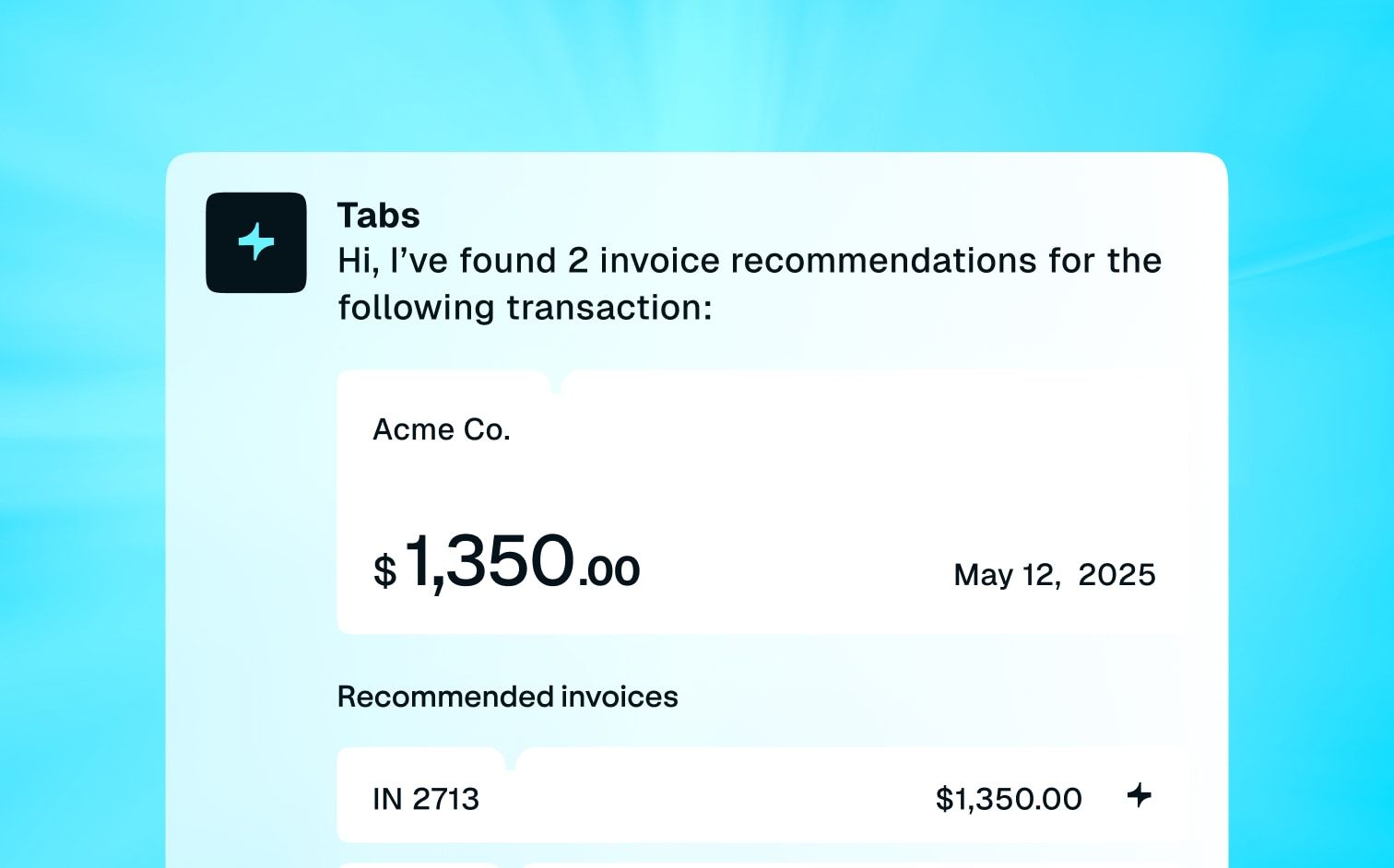
The AI doesn't just extract contract data. It uses trained models to map contract terms to billing workflows. Pricing ramps, credits, true-ups, and renewals are operationalized consistently. This commercial context is what separates true Revenue Automation from generic document processing tools.
Specific finance automation capabilities:
- Contract ingestion: AI parses PDFs, Word documents, and emails to extract billing terms automatically
- Invoice generation: Creates accurate invoices based on contract terms without manual intervention
- Collections automation: Sends reminders, embeds payment links, flags overdue balances
- Revenue Recognition: Applies ASC 606 rules based on contract and billing data
- Cash forecasting: Predicts when cash will land based on payment behavior and contract terms
Why it matters: When you operationalize signed contracts intelligently, you slash days sales outstanding (DSO) and eliminate revenue leakage.
How to implement AI for RevOps
Implementing AI requires a structured approach that prioritizes clean data and clear processes. The goal isn't to replace your existing tools—it's to make them work together intelligently.
TLDR: Start with data, standardize processes, choose a platform that connects your stack, and iterate based on results.
Prioritize data and governance
Successful AI implementation starts with clean, structured data. Audit your existing data sources. Establish ownership. Create governance policies before deploying AI.
Without strict access controls and data hygiene, automation will simply scale your existing errors.
Tabs addresses one of the hardest data problems through AI-powered contract ingestion—extracting structured terms from unstructured contract documents. This ensures your downstream billing and Revenue Recognition processes are built on accurate, verified data.
Why it matters: Garbage in, garbage out. Data quality determines automation quality.
Standardize workflows and processes
Document and standardize your revenue workflows before automating them. AI amplifies existing processes—whether they're efficient or broken.
Identify the highest-impact, most repetitive workflows to automate first. For most companies, that's invoicing and collections.
Many teams still rely on spreadsheets for complex calculations. That's fine for early-stage companies, but it breaks down at scale. If a sales rep offers a 3-month ramp period, finance needs a standardized way to bill for it. You cannot rely on tribal knowledge to manage your company's cash flow.
Why it matters: Standardization creates the predictable environment where AI can thrive.
Develop a unified platform strategy
Avoid buying isolated revops tools that create new data silos. Look for platforms that integrate with your existing CRM, ERP, and finance systems.
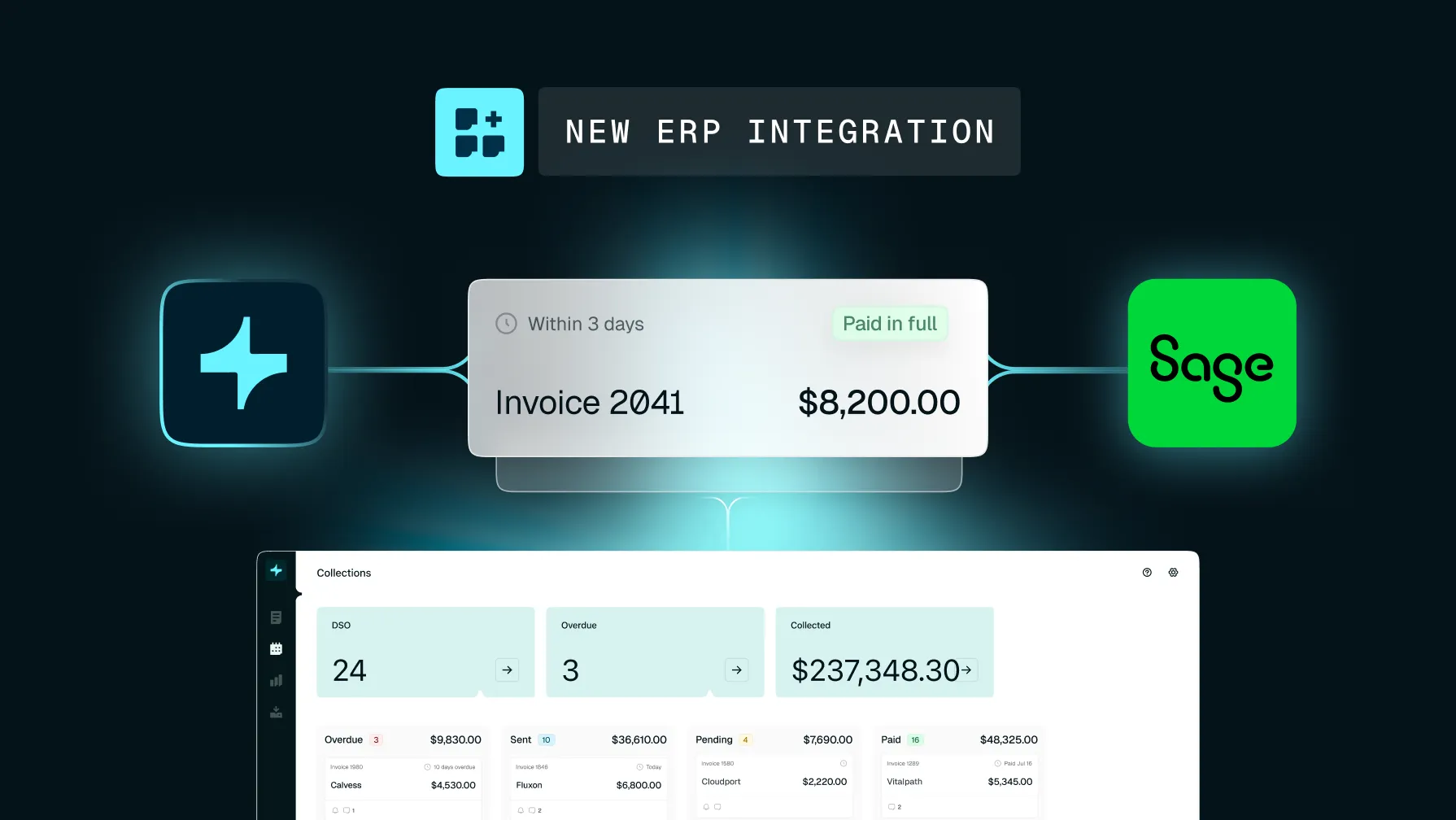
Tabs offers native integrations with QuickBooks, Oracle NetSuite, Sage Intacct, and major CRM systems. It acts as the intelligent layer that connects and orchestrates the finance stack without forcing you to replace existing tools.
| Approach | Pros | Cons |
|---|---|---|
| Point solutions | Fast to deploy, specialized functionality | Creates new silos, requires manual reconciliation |
| All-in-one ERP | Single vendor, unified data model | Slow to implement, rigid workflows, expensive |
| Integration platform (iPaaS) | Connects existing tools | No native intelligence, requires custom logic |
| Revenue Automation (Tabs) | Connects systems with commercial context, AI-native | Requires commitment to process standardization |
Why it matters: Your platform choice determines whether AI creates clarity or chaos.
Test and iterate pilots
Start with a focused pilot—one billing model, one customer segment, one workflow—before scaling across the organization. Measure impact on specific metrics: close time, DSO, error rates.
Use initial results to build internal buy-in and refine your approach. Unlike legacy billing systems that take 9–12 months to implement, many teams go live on Tabs in <30 days—depending on data readiness and workflow complexity.
Why it matters: Small wins build momentum for larger transformation.
FAQ
How does AI for RevOps differ from traditional automation tools?
Traditional automation follows static rules—if X happens, do Y. AI for RevOps uses trained models to handle variability, interpret unstructured data like contracts, and make contextual decisions based on commercial terms rather than rigid logic.
What should finance teams automate first with AI?
Start with contract ingestion and invoice generation. These high-volume, repetitive tasks have clear inputs and outputs, making them ideal candidates for AI automation with measurable impact on close time and accuracy.
How long does it take to implement AI-powered revenue automation?
Implementation timelines vary based on data quality and process standardization. Legacy billing systems typically take 9–12 months. Modern AI-native platforms like Tabs can go live in <30 days when data foundations are solid.