





Revenue- specific expertise
The skills that make each agent an expert in its domain. Each agent is purpose-built for a specific area of revenue work, from interpreting contracts and managing collections to applying revrec rules.


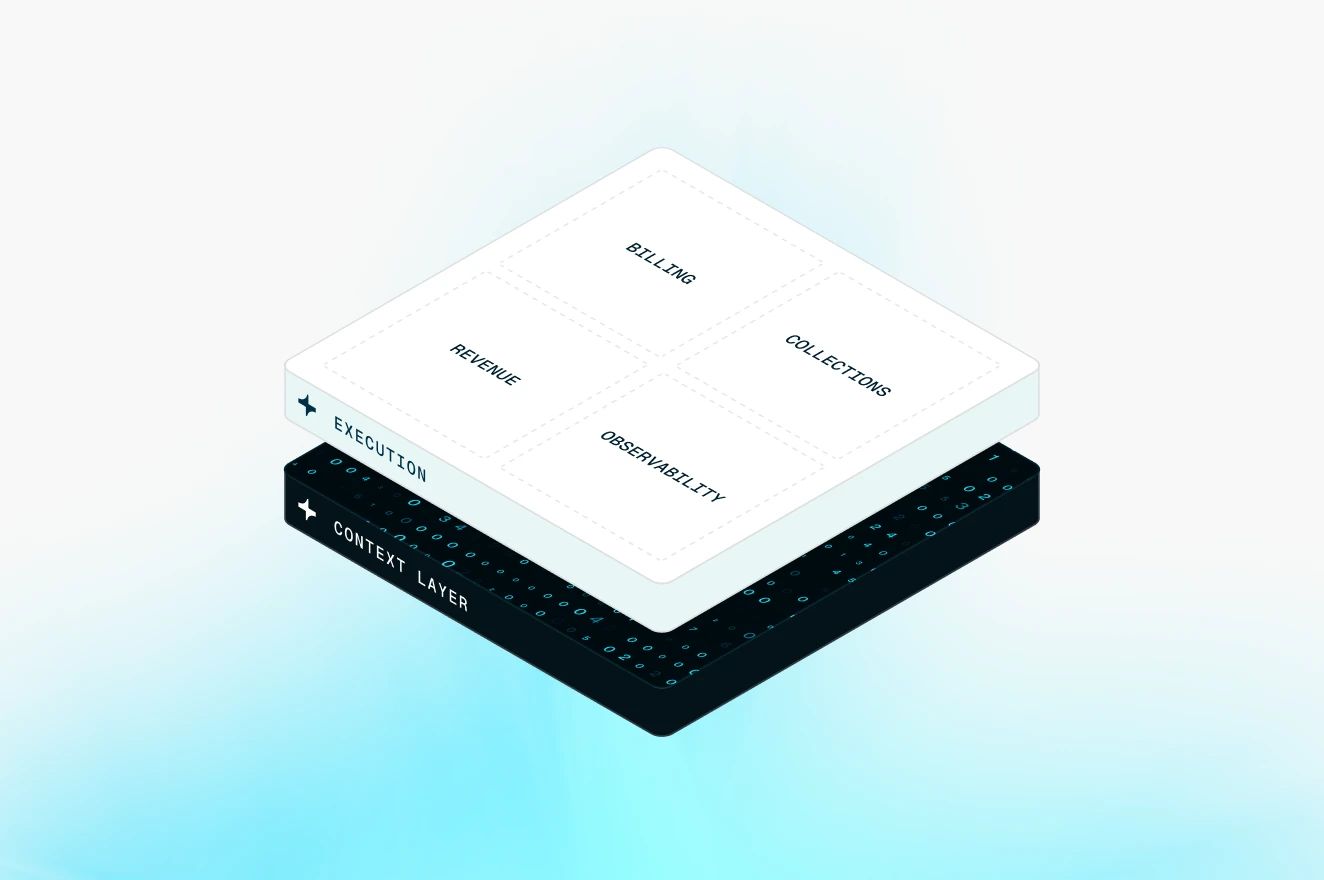
Give AI the context of your business. Tabs’ Commercial Graph connects customers, contracts, pricing, payments, and revenue into context that software and agents can act on.

Turn intelligence into action. Tabs connects billing, collections, payments, and revenue into workflows that act on intelligence - not just surface answers or recommendations.
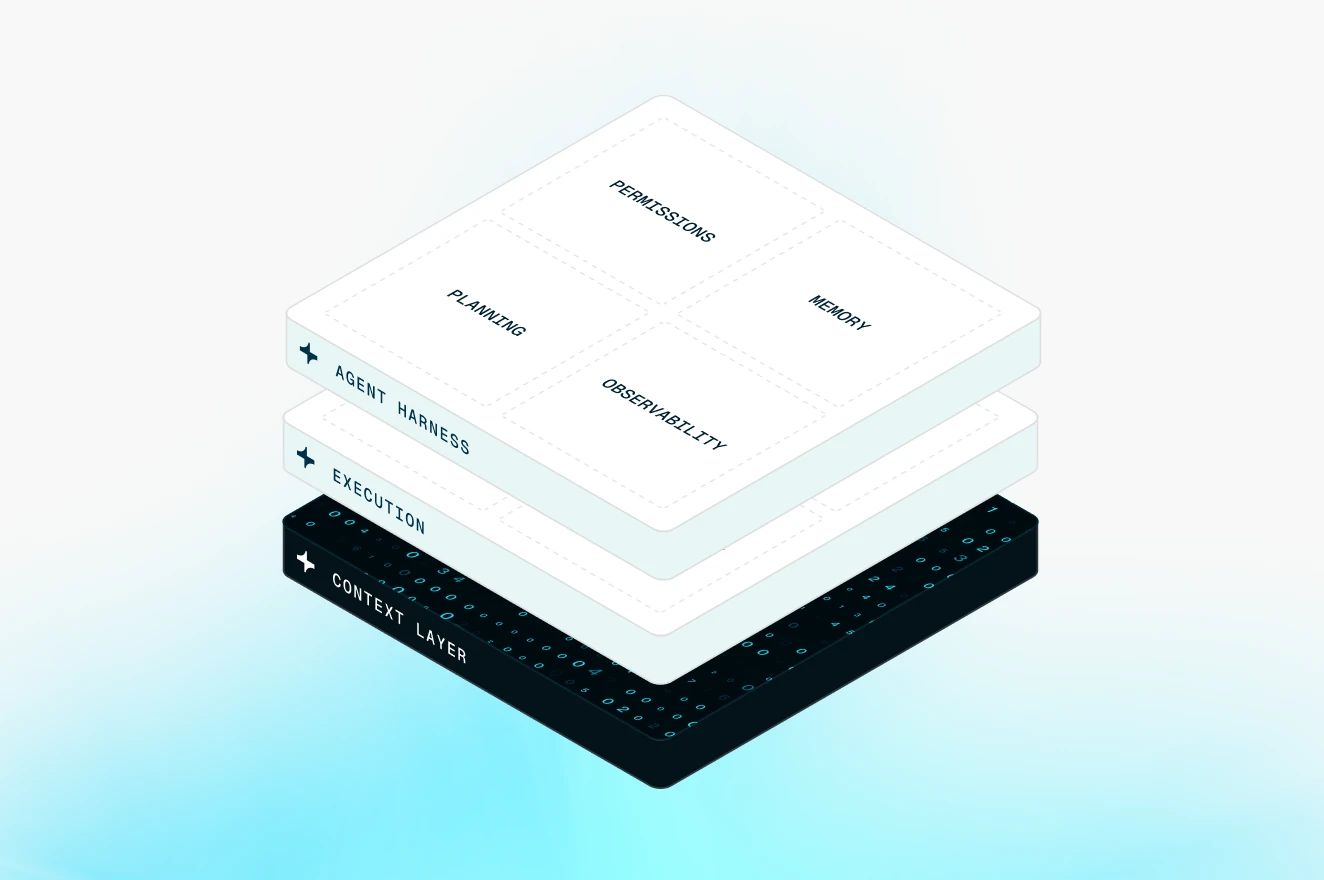
Give agents the infrastructure to operate. Tabs turns general-purpose LLMs into controlled revenue agents with permissions, memory, tools, oversight, and guardrails.
Put specialized agents to work. Tabs agents combine business context with tools to execute complex revenue work - turning intelligence into controlled, auditable action.
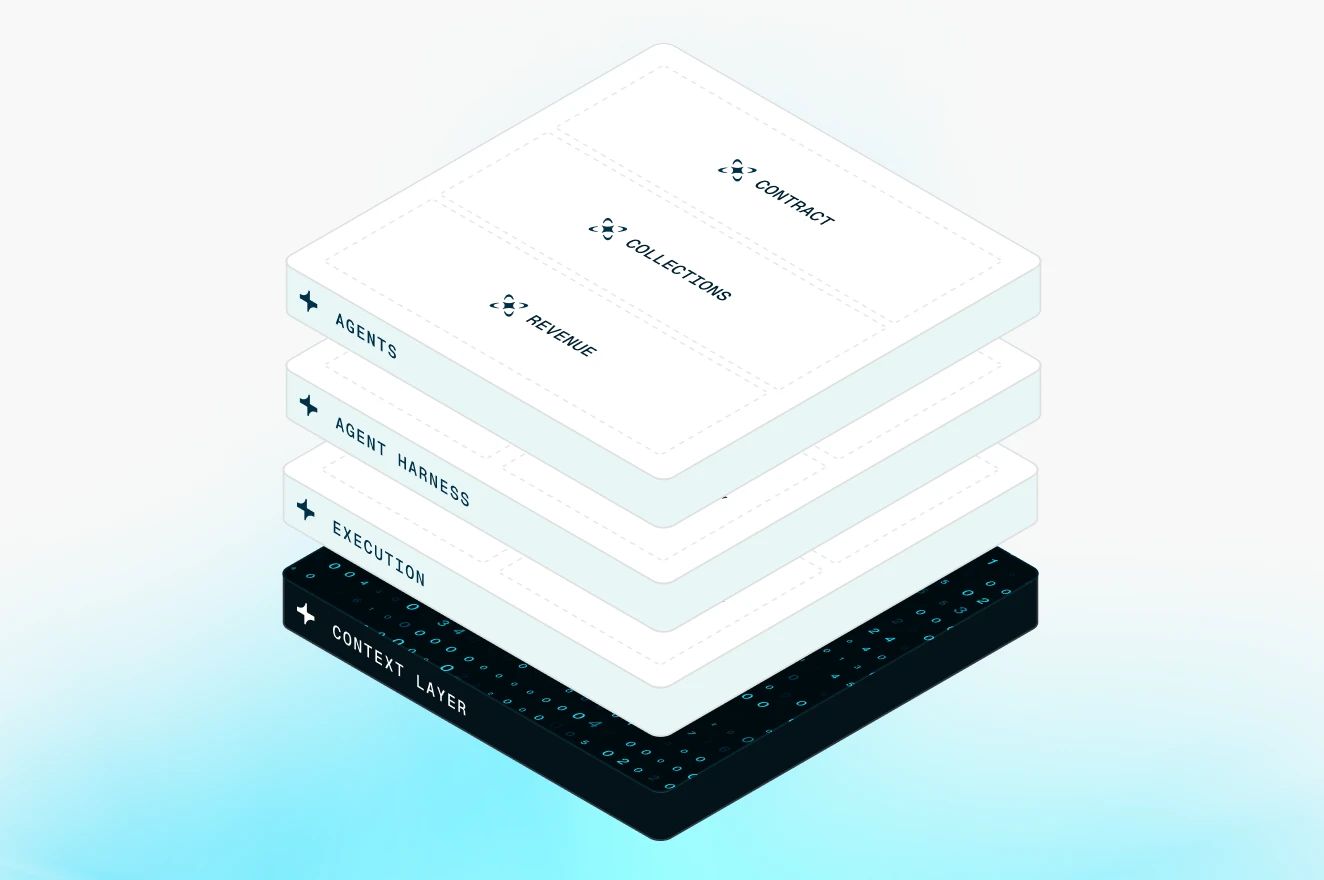
The skills that make each agent an expert in its domain. Each agent is purpose-built for a specific area of revenue work, from interpreting contracts and managing collections to applying revrec rules.
Every interaction makes the system more useful. Customer history, contract terms, pricing, policies, exceptions stay with the business. Agents start with what Tabs already knows instead of starting from scratch.
Everything your agents need to work from the full picture. APIs, MCP connections, source systems, documents, and third-party services feed into the commercial context Tabs agents use to understand and execute the work.

From standard agreements to usage-based pricing, renewals, and non-standard terms, Contract Agent processes contract data at scale while learning how your business works and measuring accuracy over time.
Train it on your own contracts and corrections so it learns your unique terms, structures, and patterns—building on that knowledge as new pricing models, products, and contract types are introduced.
Classify and process contracts in bulk, extracting the terms that drive billing and revenue so finance can rely on accurate contract data through amendments, renewals, revenue recognition, and close.
Track accuracy by contract and field as pricing models, products, and contract structures evolve, so finance can stay confident in how Contract Agent processes agreements.
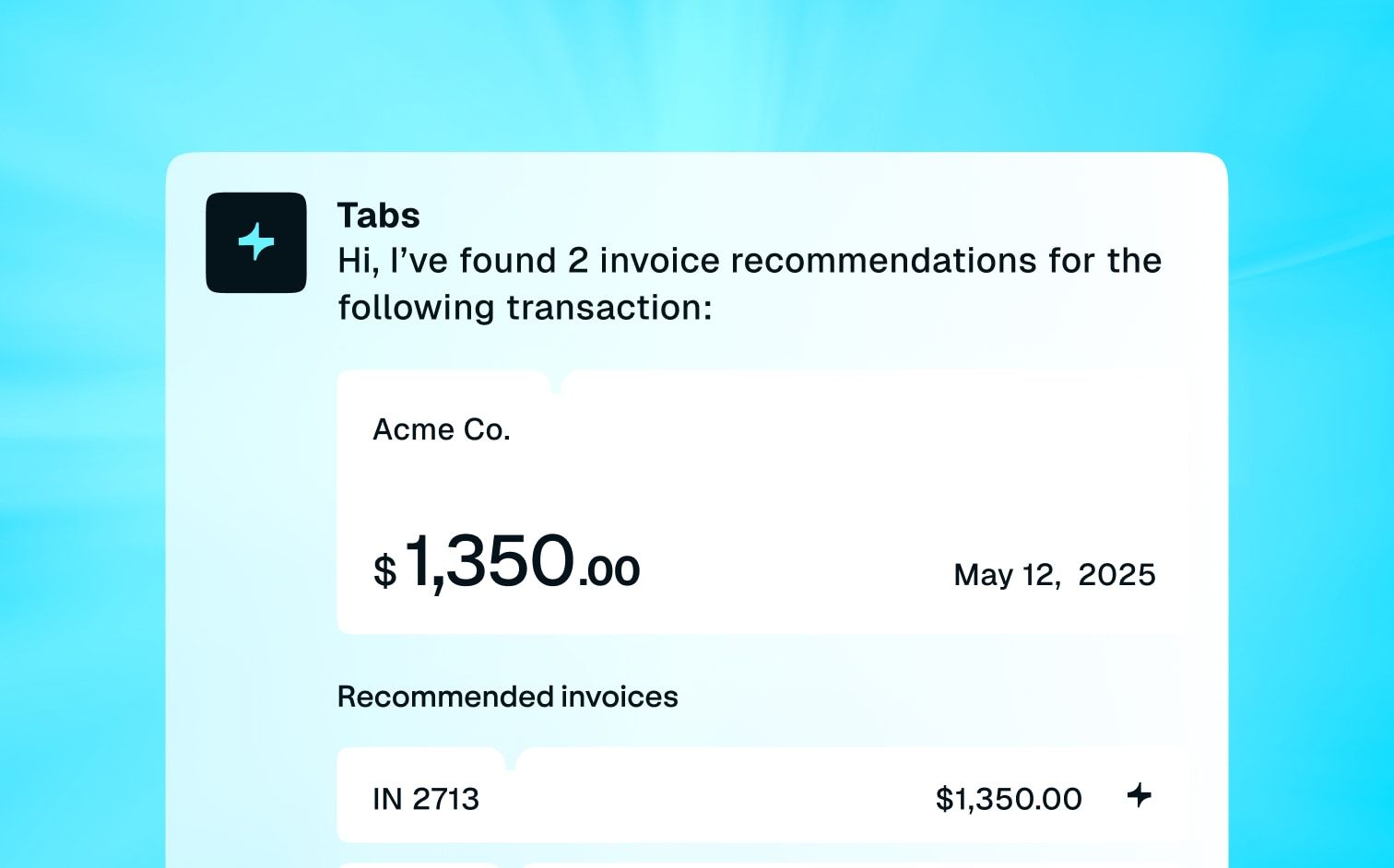
Tabs submits invoices to buyer AP portals, tracks their status, and surfaces rejections and disputes—giving Collections Agent the context to follow up based on what’s actually happening with each invoice.
Set up each buyer portal once, then let Tabs submit invoices automatically as they’re issued—without finance logging in, uploading invoices, and tracking submissions by hand.
See submission status, rejections, and disputes as they happen, so finance can resolve issues earlier instead of discovering them after an invoice is already overdue.
Bring portal status into Collections Agent so every follow-up reflects what’s actually happening with the invoice—from accepted or pending to disputed or rejected.
Revenue Agent automates complex revenue recognition from contracts and usage through schedules, journal entries, reconciliation, and audit—while keeping the accounting behind every number visible.
Apply SSP methodology, allocate transaction price, and recognize subscription, usage-based, and hybrid revenue without rebuilding the accounting logic in spreadsheets.
Trace schedules, deferred revenue rollforwards, adjustments, and journal entries back to the contracts and activity that drove them, so finance can reconcile balances with confidence.
Keep methodology, approvals, supporting conclusions, and source detail connected to the accounting, so finance has the context needed for close, review, and audit.
With Tabs' APIs and MCP, build agents, create custom workflows, and give external AI access the same commercial context that powers Tabs.
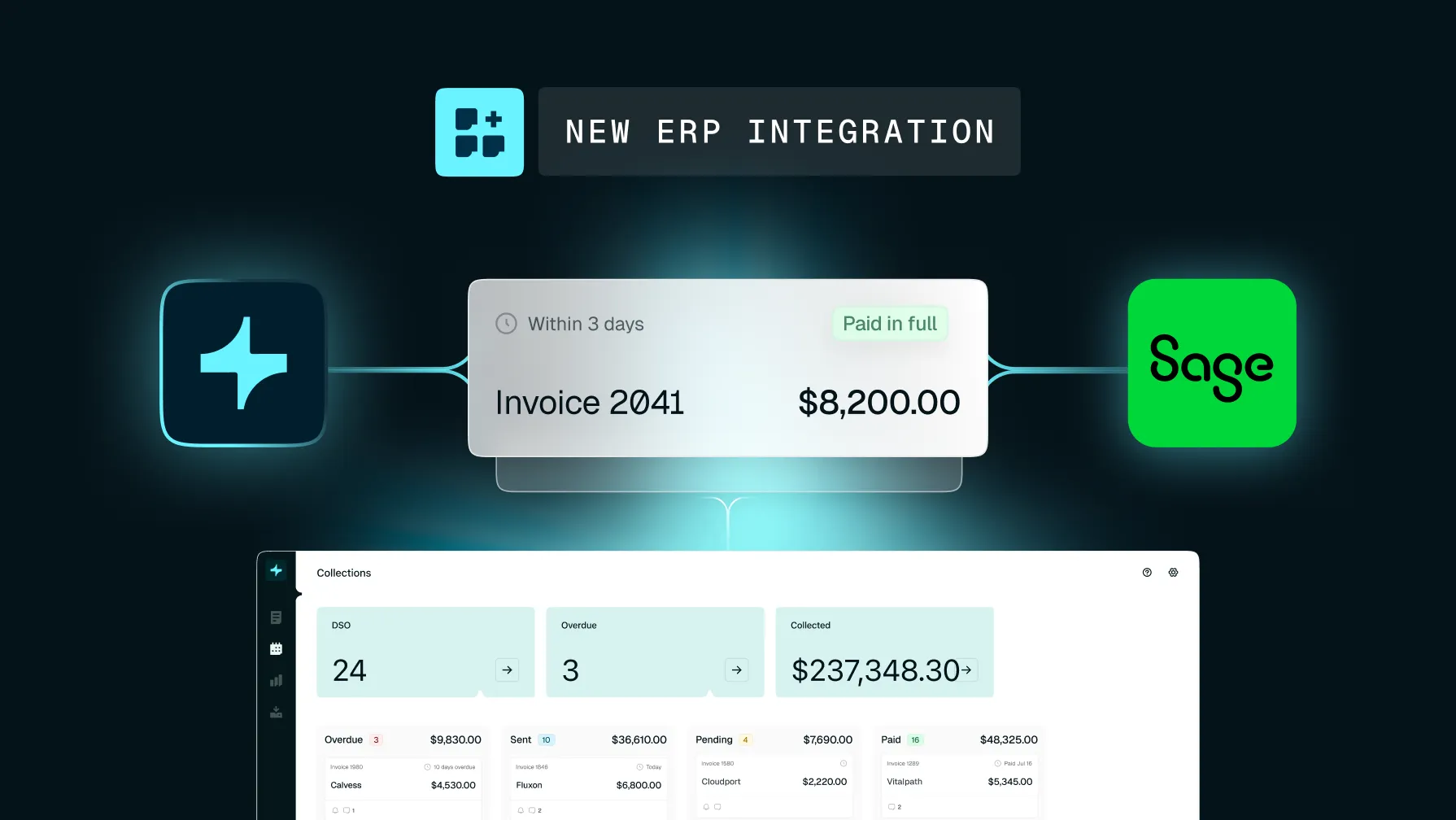
Connect Tabs to the systems your team already uses and automate the workflows unique to your business.
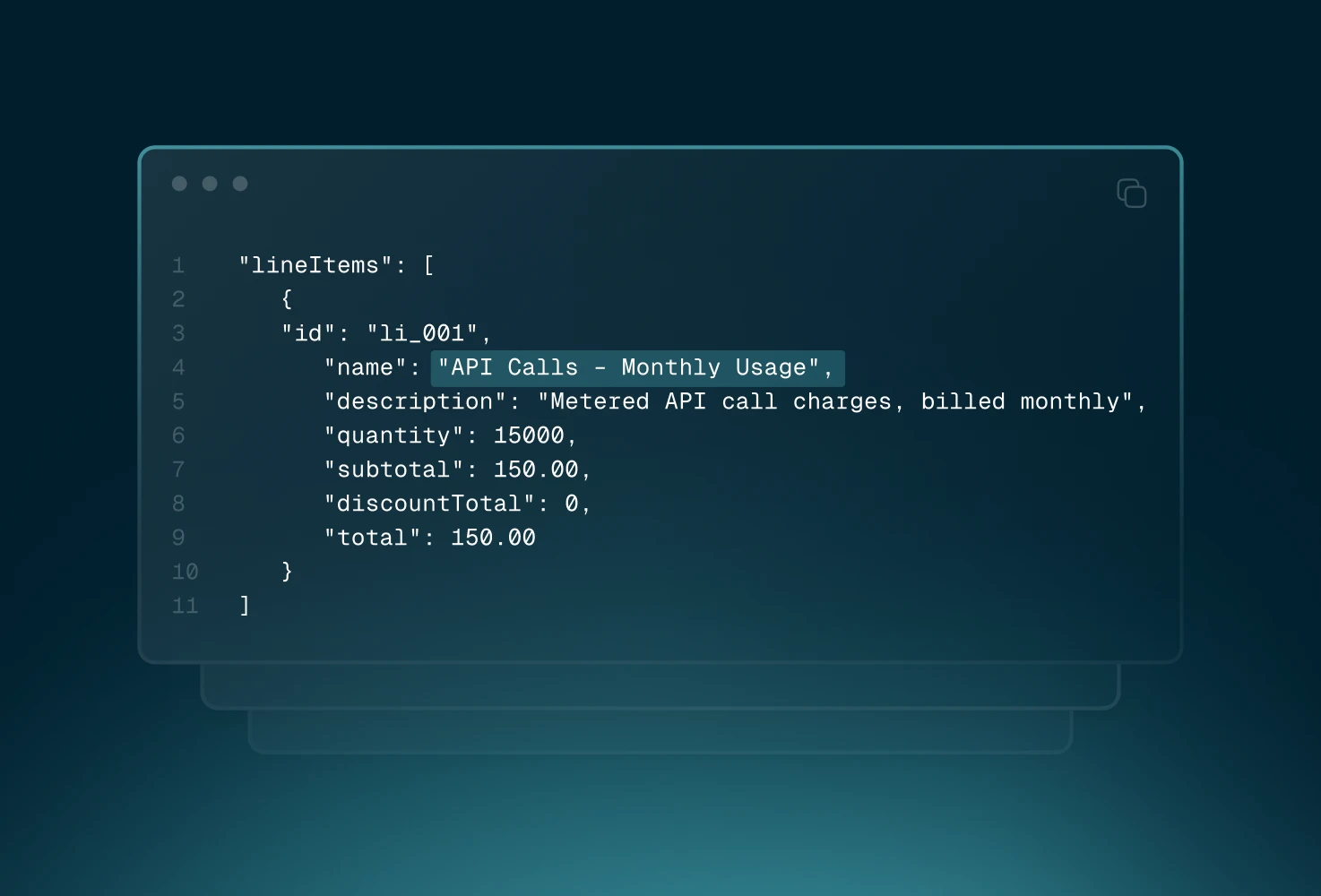
Give external AI access to the same customer, contract, invoice, payment, and revenue context that powers Tabs.
Connect your CRM and CPQ workflows to Tabs using our seat-based amendment endpoints. When a rep sells or removes seats, the change flows straight into Tabs automatically, keeping billing in sync with sales in real time.
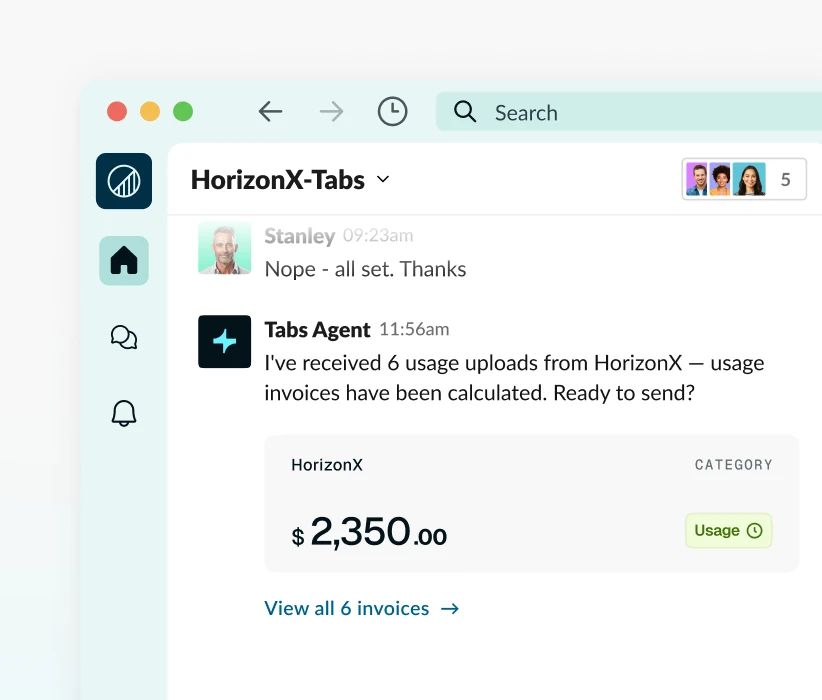
Build a bot on the Tabs API that lets your sales reps pull up a customer's invoice without leaving Slack. Drop in a CRM record ID, and the bot fetches the invoice from Tabs in seconds, no finance ping required.
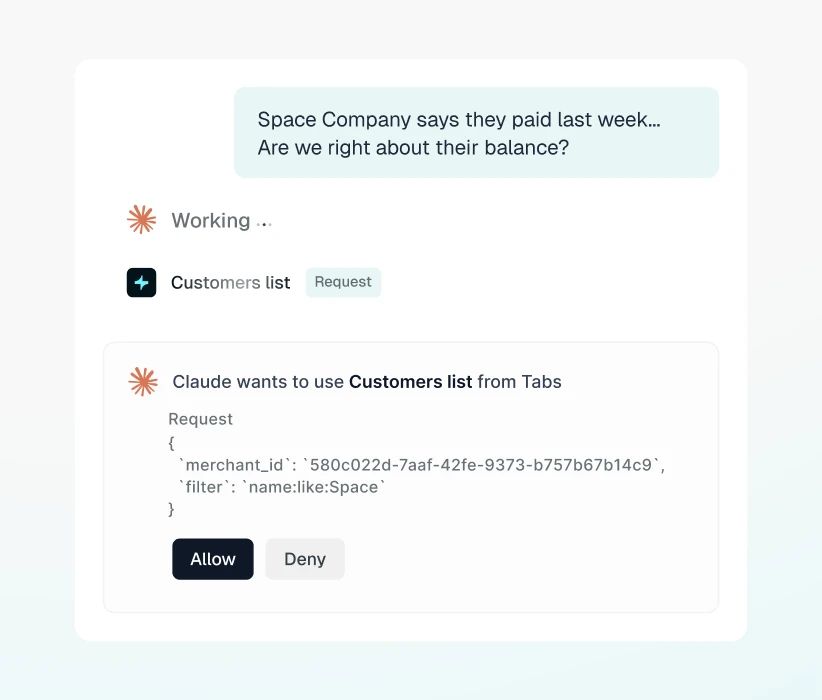
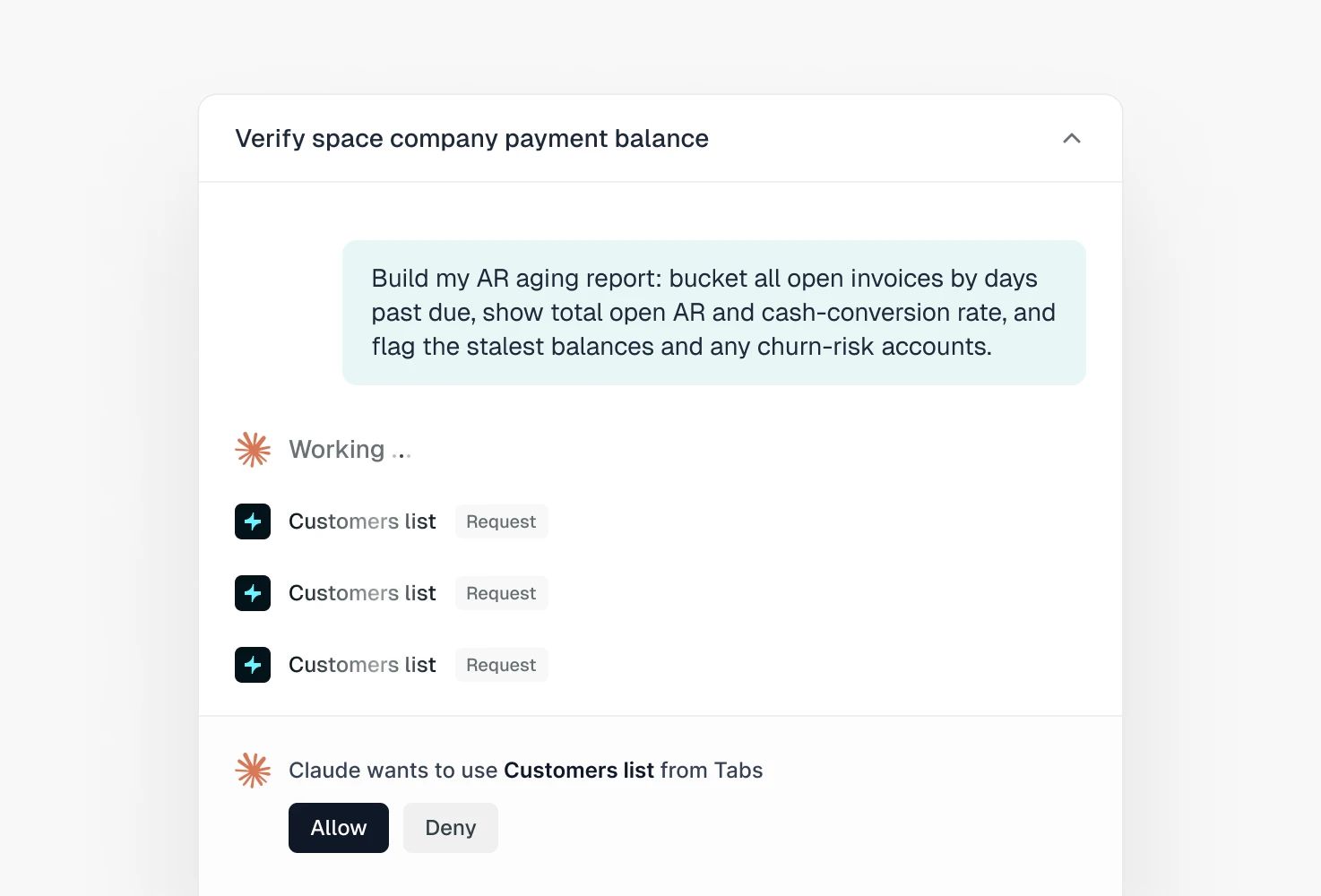
Use Tabs' ARR reporting through Claude to build the metrics your board reviews each month. Live data flows straight into Claude, turning hours of manual prep into minutes.
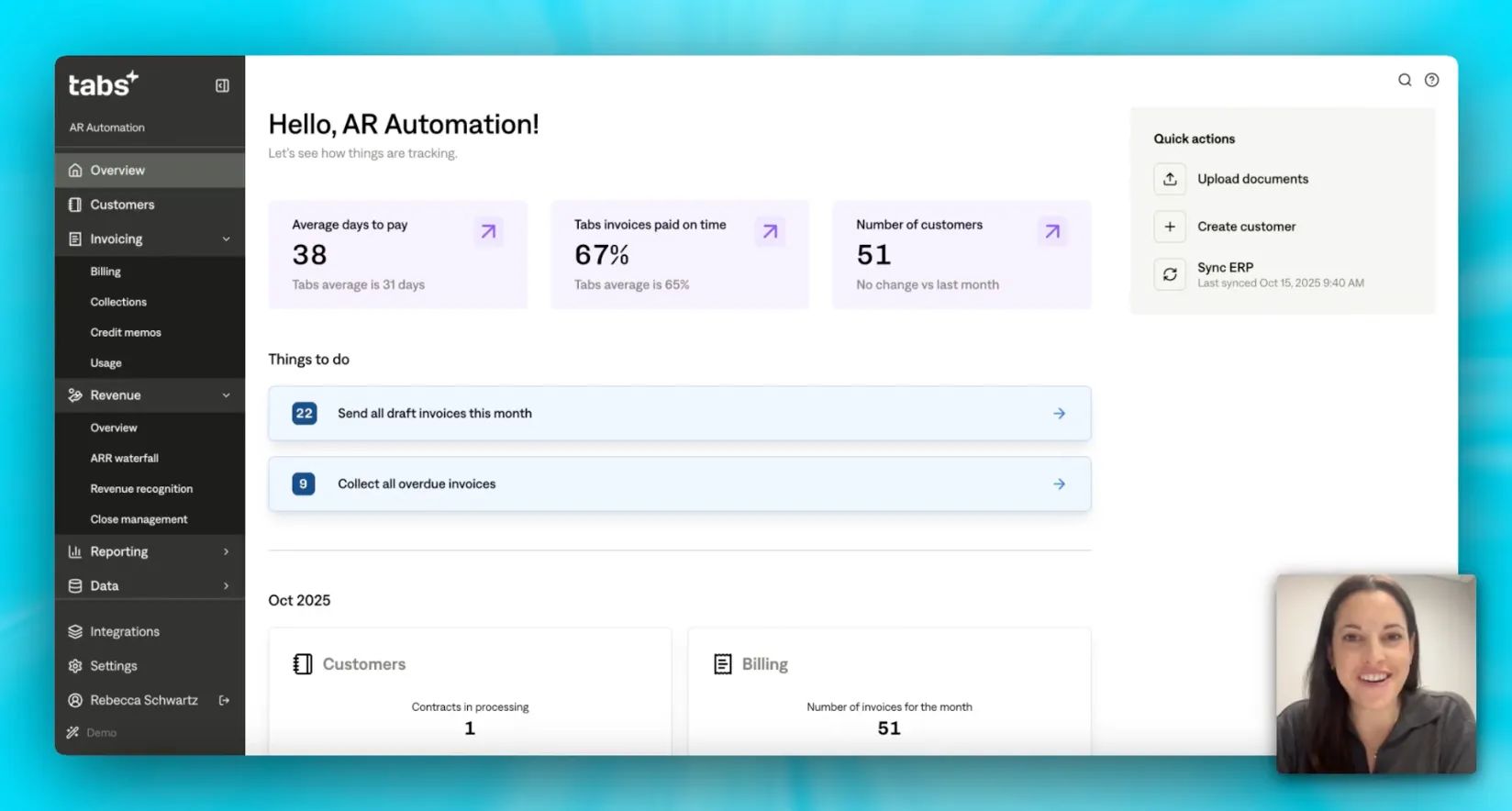
Tabs is evolving from a revenue platform into the system that connects the data, context, workflows, applications, and agents required to run revenue. Instead of managing revenue one workflow at a time, Tabs gives people, software, and agents a shared understanding of the business so they can operate across the revenue lifecycle as one system.
Revenue is becoming more dynamic as companies adopt usage, credits, commitments, consumption, outcomes, and hybrid pricing models. Products change, usage changes, pricing changes, and even the unit of value can change. Static systems and disconnected workflows were not designed for that level of variability. Revenue increasingly needs a system that can keep up as the business changes.
LLMs provide powerful general intelligence, but revenue work requires much more than reasoning or generation. AI needs business context, domain-specific logic, permissions, controls, auditability, integrations, and the ability to operate safely across financial workflows. The model is one component; the value comes from the system around it.
No. Especially in finance, the goal is to automate repeatable work while keeping humans involved where judgment, approval, or accountability is required.
Revenue work requires deep domain specialization. Tabs agents are designed around specific revenue jobs rather than generic prompts. Because they operate from shared business context and revenue infrastructure, they can understand the work they are performing, take the right actions, and operate with the controls finance requires. The agents are an important part of the AI OS, but they are not the entire OS.