

Inside the Commercial Graph
Finance teams need two things: accuracy and scale. The numbers must be right, even as pricing models grow more dynamic and operational complexity increases.
Automation has helped. Invoices can be generated, payments matched, and collections workflows triggered automatically. But automation alone does not ensure consistency.
When contracts evolve mid-cycle, usage fluctuates, or payments apply across multiple invoices, accuracy depends on how those changes connect. If those relationships are not built into the system itself, automation simply accelerates transactions while finance teams reconcile the gaps.
Revenue systems need structure.
The Commercial Graph: context as infrastructure
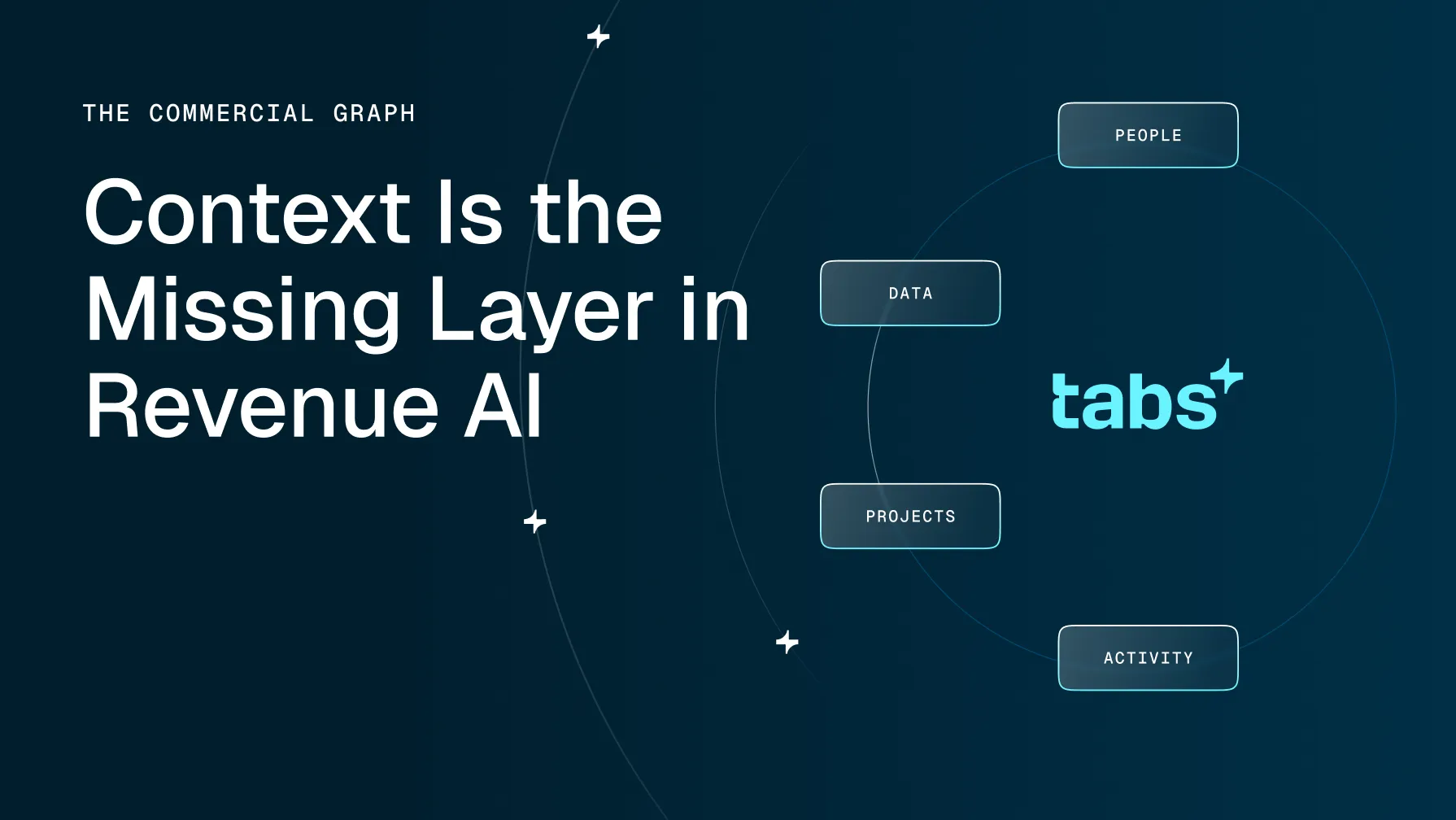
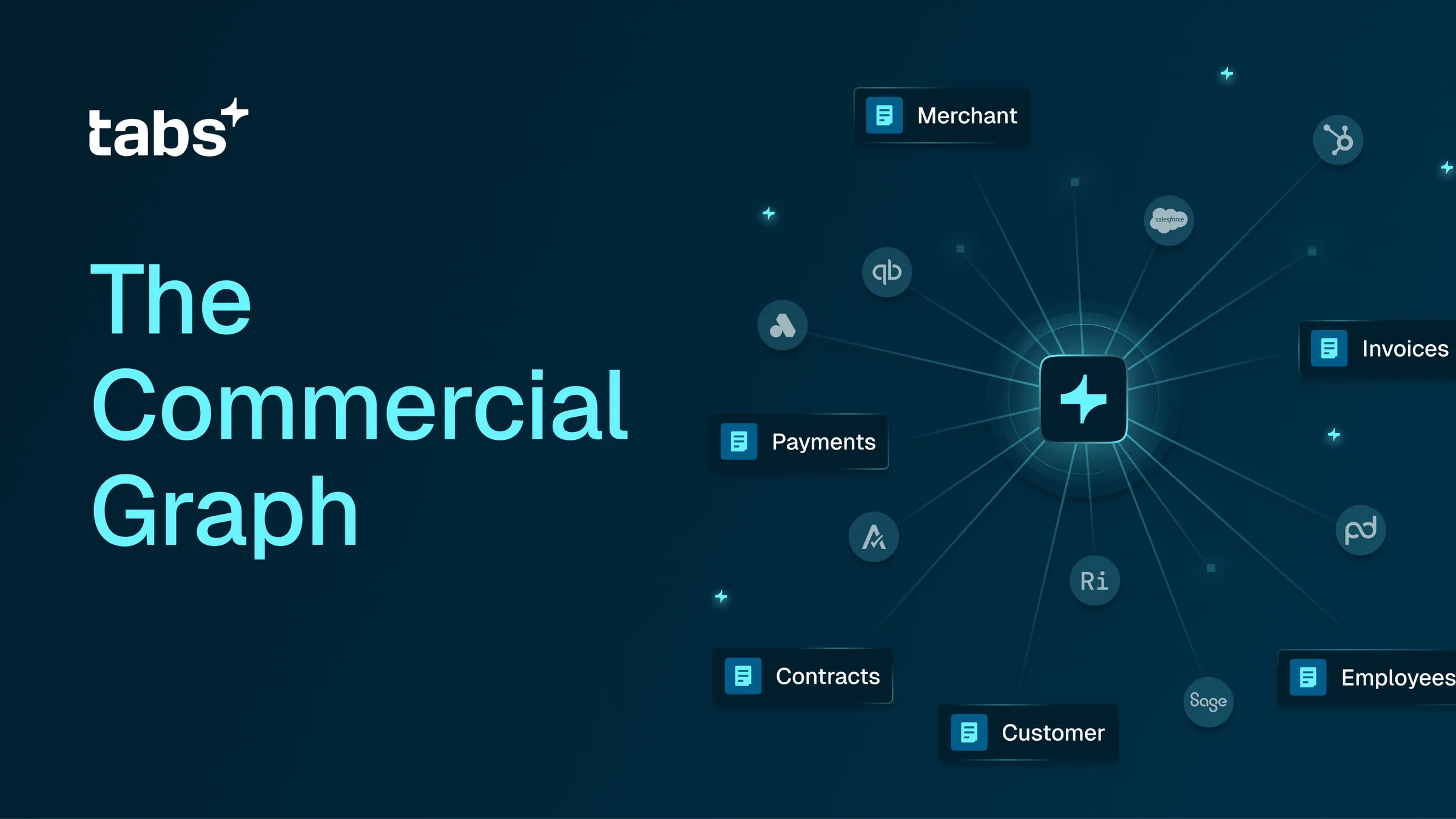
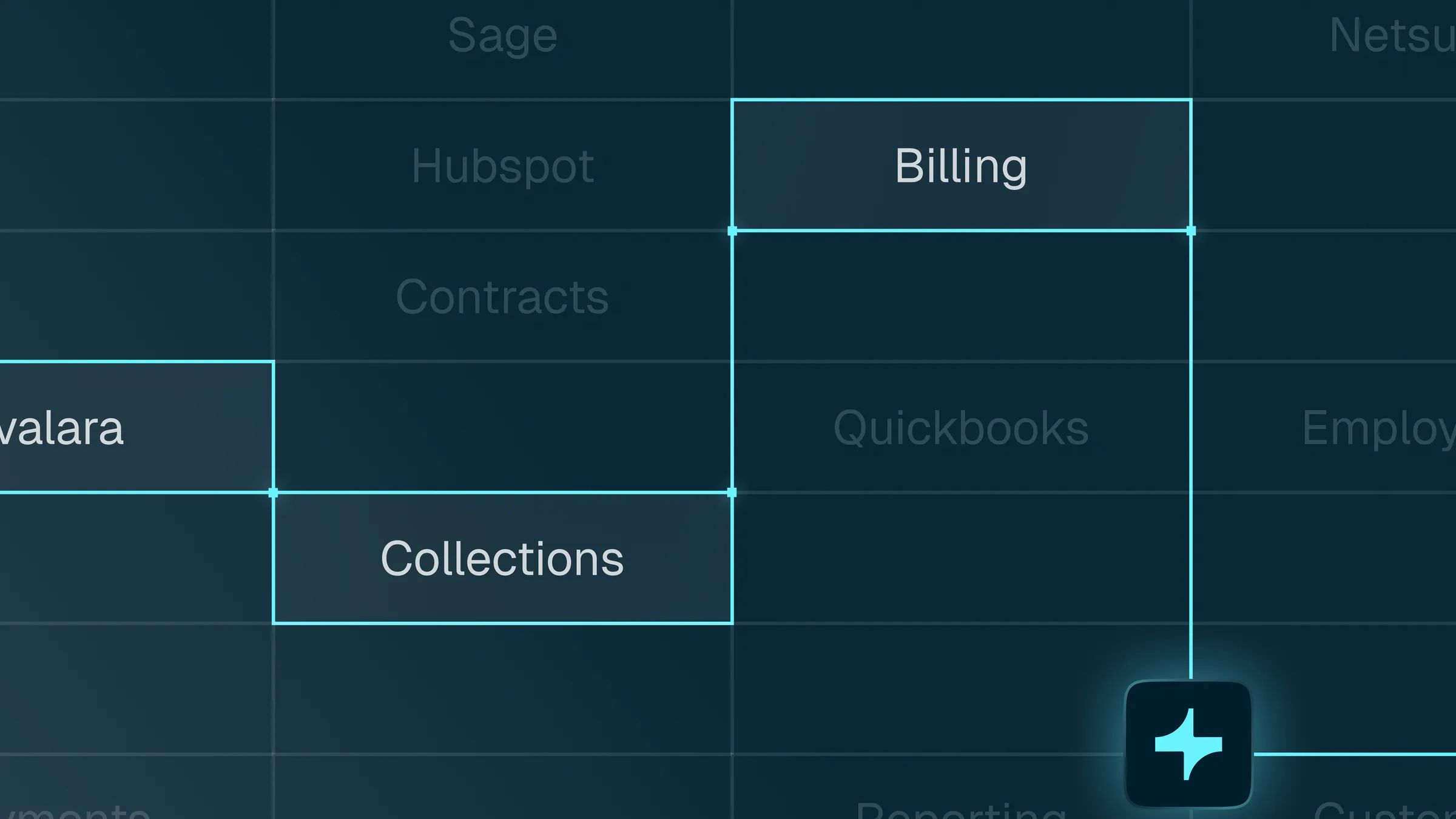
The Commercial Graph is Tabs’ foundation for structuring billing and revenue.
It is a context graph that embeds how contracts, pricing terms, usage, invoices, payments, credits, and revenue schedules connect over time directly into the platform. Instead of relying on conditional rules to recreate relationships between records, those relationships are part of how revenue is structured from the start.
To see why that matters, consider an AI company that charges a platform fee plus usage based pricing tied to API calls.
- On day one, the contract defines a base subscription and a committed volume at a negotiated rate.
- Two months later, usage accelerates. The customer exceeds their commitment and renegotiates pricing midcycle. The new rate takes effect immediately.
- In Tabs, that amendment updates the same structured account. The system understands when pricing changed and applies the correct rate to usage before and after the effective date.
- Invoices automatically reflect the right terms and revenue schedules adjust automatically.
Later, the customer makes a partial payment across multiple invoices.
Because pricing, usage, invoices, balances, and revenue reporting are connected within the Commercial Graph, that payment updates the full account consistently.
The Commercial Graph embeds context into the foundation of the platform. Nothing needs to be reconstructed. That is what structure enables.
Enabling speed, control, and accuracy
Most automation in billing and revenue is conditional. It works when inputs match expectations and breaks when they do not, leaving finance teams to reconcile the result.
Because the Commercial Graph preserves how revenue elements connect over time, automation operates against a consistent understanding of the account. Pricing changes, amendments, and payment activity flow through billing and reporting without introducing ambiguity.
As pricing grows more dynamic, structure reduces reconciliation and limits the surface area for error.
Speed improves because workflows do not require cleanup. Control improves because changes remain coherent across modules. Accuracy holds because the commercial lifecycle stays intact as it evolves.
Agents grounded in the Commercial Graph
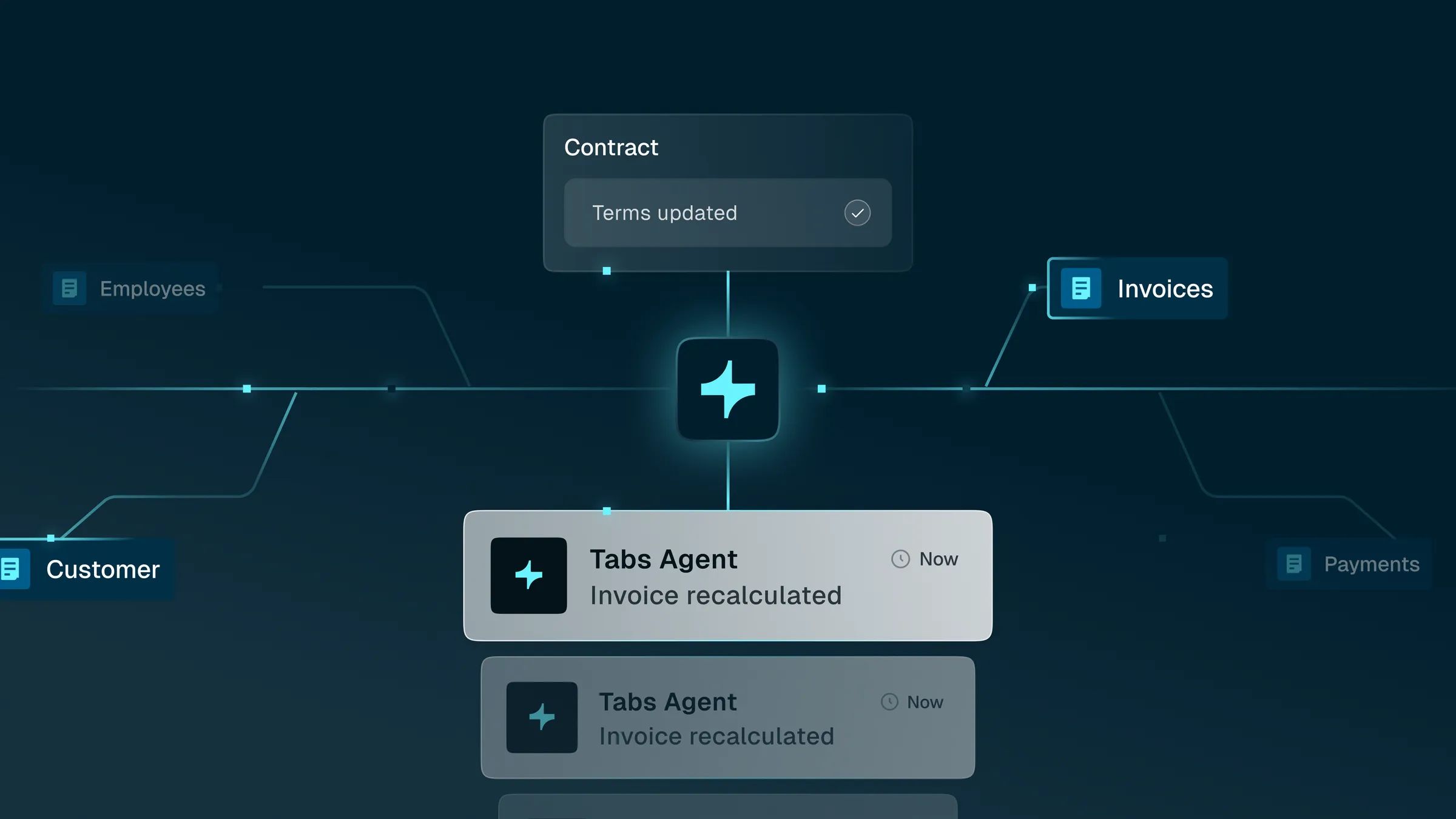
Agents that act purely from prompts can interpret inputs and generate outputs, but they do not retain a structured understanding of how contracts, pricing, invoices, payments, and revenue schedules relate over time. Each action stands alone, which limits how far automation can safely extend.
At Tabs, agents operate within the Commercial Graph.
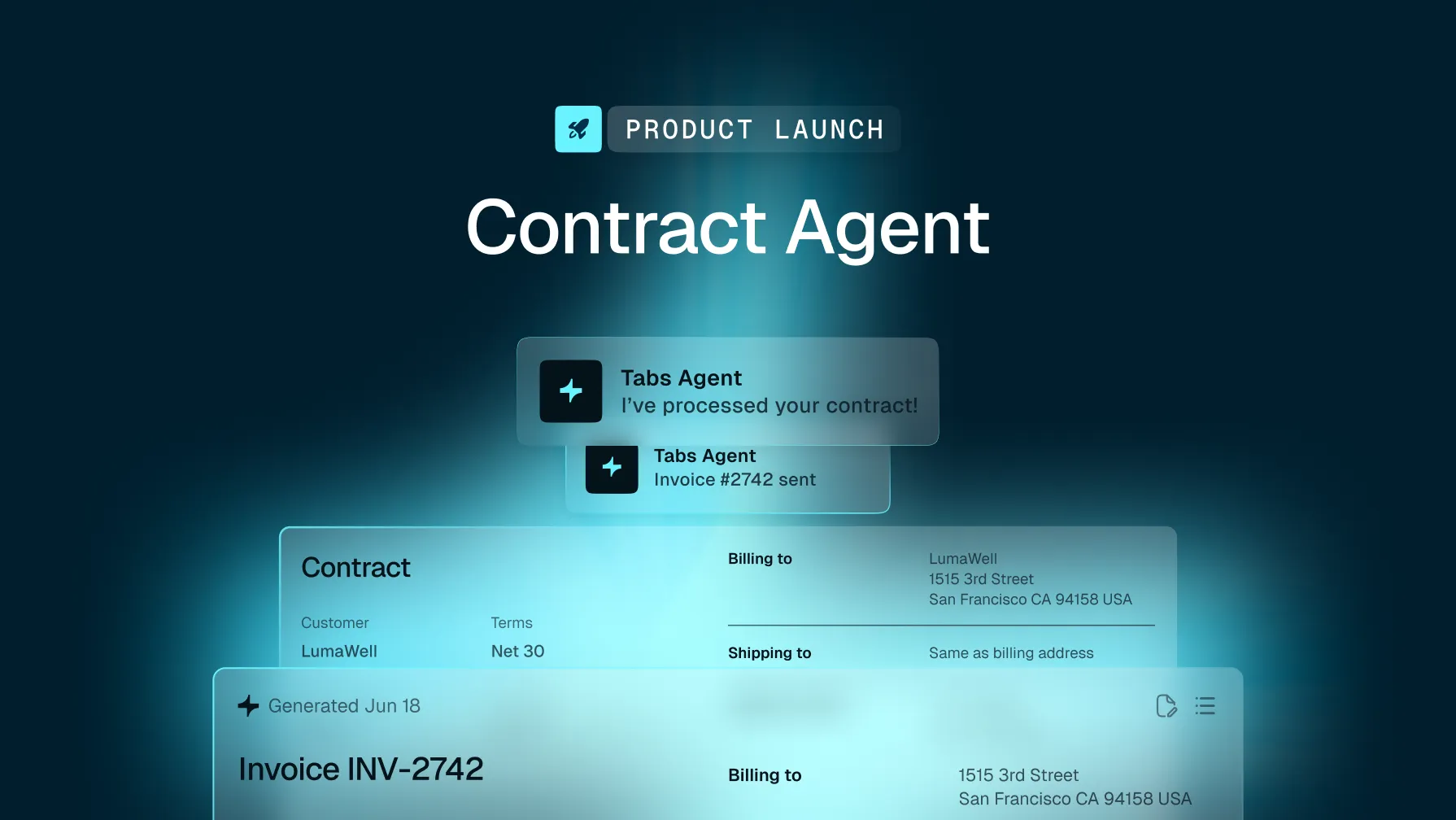
Contract Agent, for example, extracts and interprets contractual terms during calibration. Finance teams define how pricing, billing details, and revenue treatment should be applied, and those interpretations become part of the structured account itself. They are not stored as temporary overrides.
When future contracts are processed, the agent applies that calibrated logic within the same connected framework that drives billing, balances, and revenue schedules.
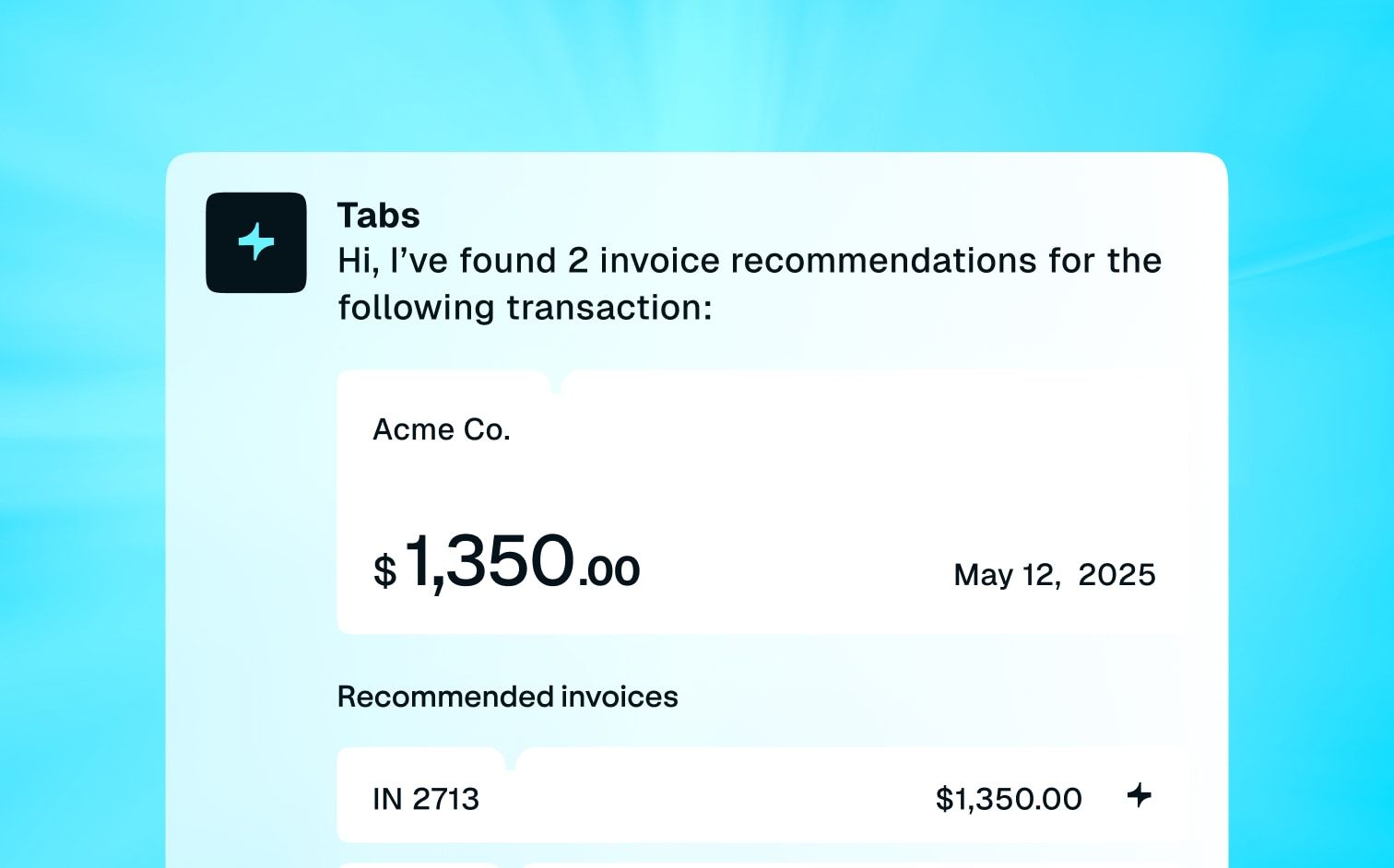
The same principle extends across billing, revenue, and collections workflows. Agent decisions update the structured representation of the account rather than creating parallel rules that must later be reconciled.
Intelligence becomes cumulative. It is integrated into the structure that governs how revenue evolves.
The next phase of AI in billing and revenue
Billing and revenue systems are moving beyond task-level automation. Generating invoices or matching payments is no longer the differentiator. What matters is whether a platform can preserve consistency as pricing evolves and contracts change over time. The next generation of revenue systems will be defined not by how much they automate, but by how well they maintain the integrity of the commercial relationship beneath that automation. The Commercial Graph is Tabs’ approach to that shift, embedding structure into the foundation of the platform so automation can scale without sacrificing trust.