





Most financial reporting tools weren't built for the complexity of modern B2B billing. This guide breaks down the seven categories of tools that finance teams actually need to manage usage-based, hybrid, and subscription models. Here's how they fit together to deliver accurate reporting without the manual work.
What are financial reporting tools?
Financial reporting tools are software that consolidates financial data into accurate reports — income statements, balance sheets, and cash flow statements — automating the manual spreadsheet work of copying numbers between systems and reconciling data across them.
But here's the problem: most financial reporting software was built for simple businesses. Flat-rate subscriptions. Clean annual contracts. Predictable revenue. If you're running usage-based pricing, hybrid billing models, or multi-entity operations, generic tools break down fast.
Modern finance teams need more than a system of record. They need a system of intelligence — one that understands the commercial context of your contracts and translates terms into accurate billing workflows and revenue recognition processes.
Why financial reporting tools matter for B2B finance teams
Manual reconciliation. Delayed closes. Audit prep nightmares. These are the symptoms of a fragmented finance stack.
When your contract terms live in PDFs, billing logic lives in spreadsheets, and revenue recognition lives in someone's head, your reports are only as good as your weakest link. And for B2B companies with complex billing models, that weak link shows up everywhere.
Your financial reports are only as strong as the system translating signed contract terms into billing and Revenue Recognition.
- Revenue leakage: Billing errors and delayed invoicing mean money left on the table.
- Blind spots: You can't see or calculate ARR, collections status, or deferred revenue in real time.
- Wasted time: Your finance team spends hours on data entry instead of strategic work.
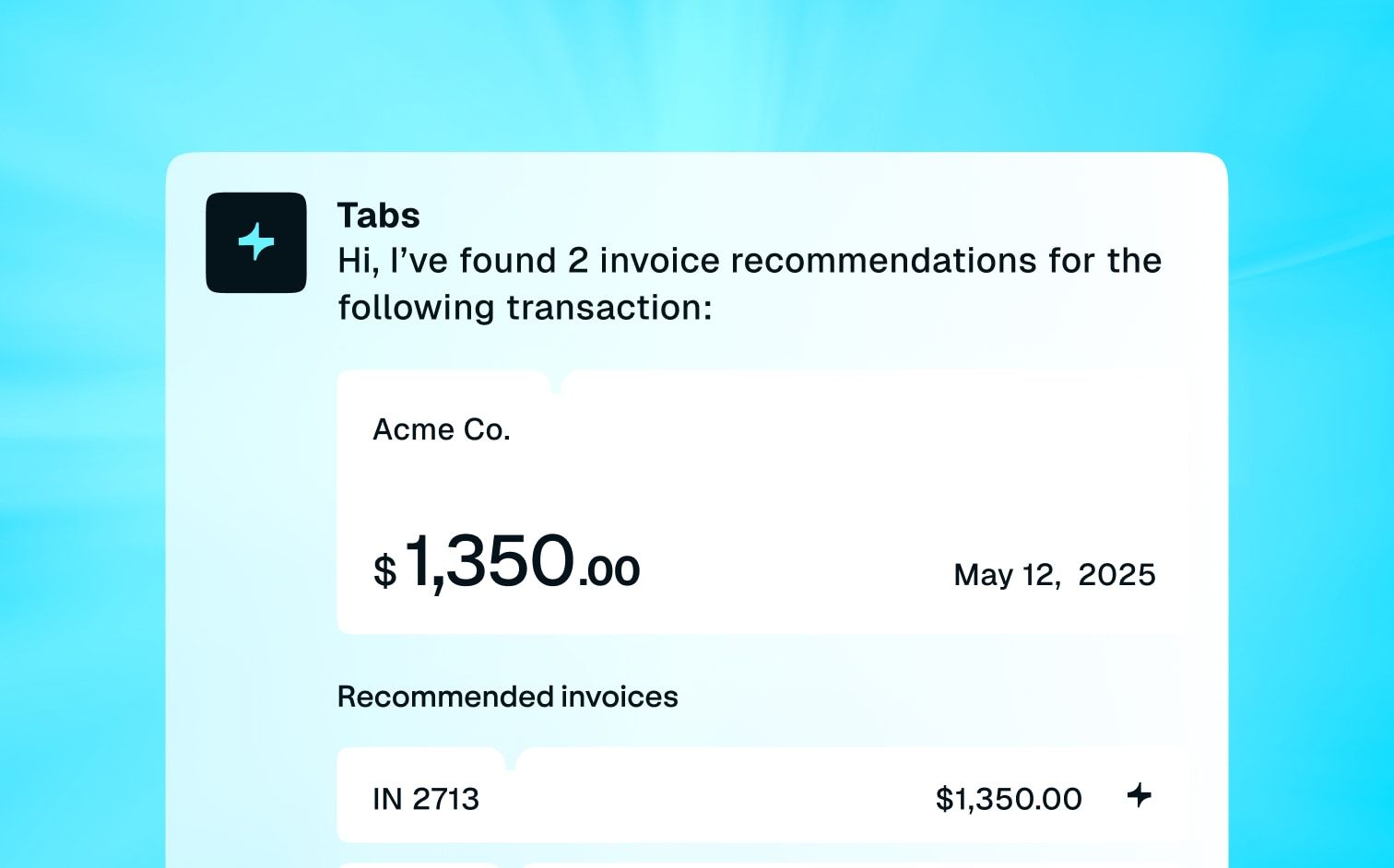
This is where revenue automation platforms like Tabs stand apart. Unlike tools that simply aggregate data, Tabs uses AI to extract terms directly from signed contracts and translate them into billing workflows — with far less manual re-keying. Instead of relying on static rules alone, Tabs applies trained models to map contract language (pricing, ramp terms, usage tiers, milestones, and payment schedules) to the right invoicing and Revenue Recognition logic for usage-based, milestone-based, and hybrid models.
Automate contract-to-cash with Tabs
Core features finance teams need in financial reporting tools
Not all financial reporting tools are created equal. If you're managing complex usage-based API billing, you need specific capabilities that go beyond basic bookkeeping.
Automated data consolidation and sync
Your reporting tools should connect directly to your ERP, CRM, billing systems, and banks. This eliminates re-keying and reduces errors. But the best platforms don't just move data. They normalize and validate it against your pricing logic in real time.
Why it matters: Clean data in means clean revenue out. No more chasing discrepancies at month-end.
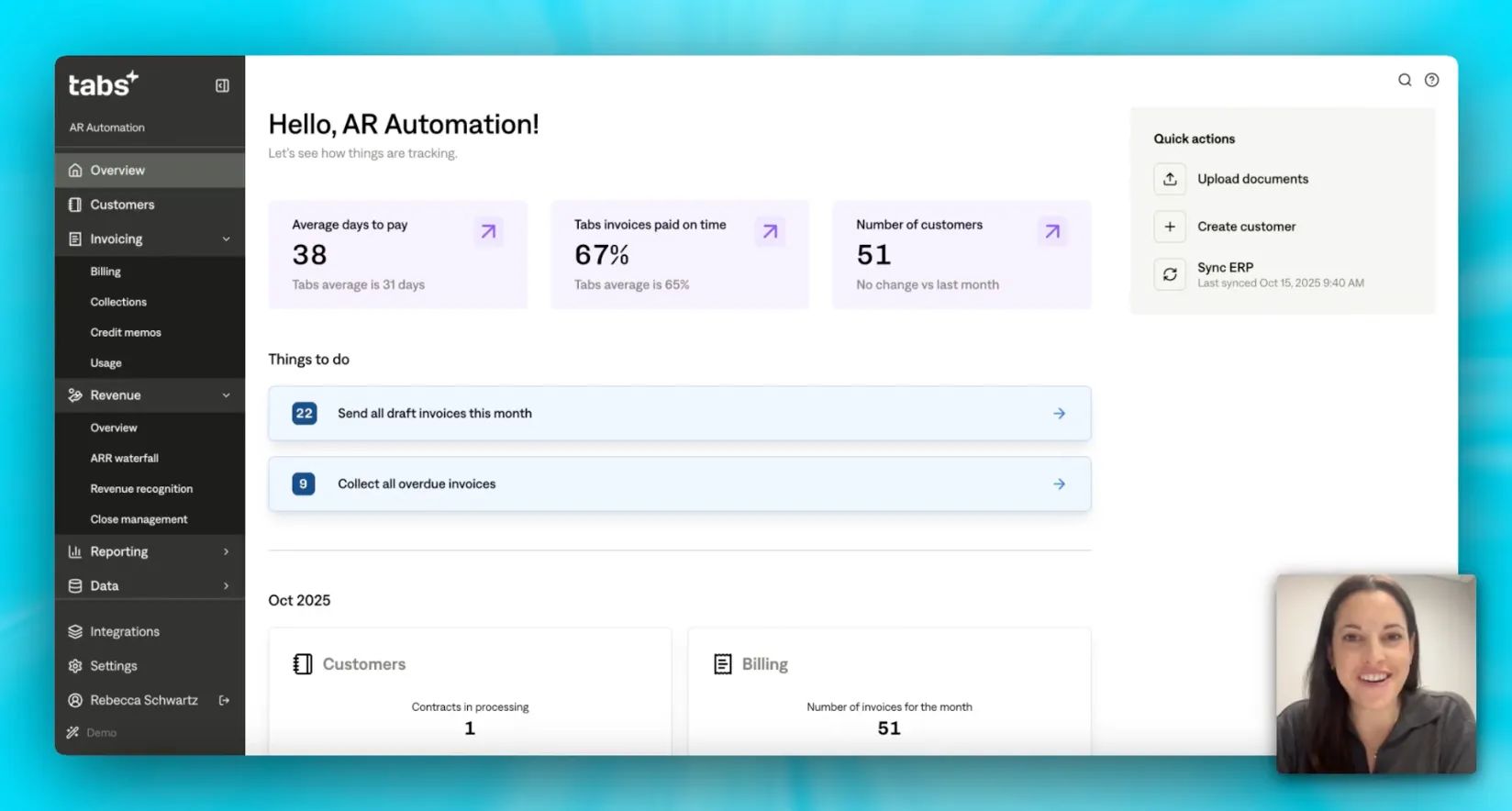
Real-time dashboards and KPIs
Static monthly reports aren't enough anymore. You need on-demand visibility into the metrics that matter:
- Annual recurring revenue (ARR) and monthly recurring revenue (MRR) trends: Track subscription growth and contraction as it happens.
- Days Sales Outstanding (DSO): Monitor how quickly customers pay.
- Accounts receivable (AR) aging: Identify at-risk accounts before they become write-offs.
- Revenue recognized vs. deferred: Stay compliant without spreadsheet gymnastics.
Why it matters: When the board asks a question, you need the answer in minutes — not days.
Multi-entity and multi-currency support
Growing B2B companies often operate across subsidiaries, geographies, and currencies. Your reporting tools must consolidate financials across these structures while handling currency translation and intercompany eliminations automatically.
Why it matters: Manual consolidation doesn't scale. And errors compound across entities.
Audit trails and compliance controls
Every transaction, adjustment, and override should be logged and accessible. System and Organization Controls (SOC) 2 compliance, role-based access, and segregation of duties are table stakes for enterprise-grade finance stacks.
Why it matters: Auditors want traceability. So should you.
How to choose financial reporting tools for complex billing
The right choice depends on your company size, billing complexity, existing tech stack, and growth trajectory. Ask these questions before you commit:
- Integration scope: Does it connect natively to your ERP, CRM, and billing systems?
- Billing model support: Can it handle subscription, seat-based, usage-based, and hybrid models without custom development?
- Implementation timeline: How long to go live, and what resources are required?
- Total cost of ownership: Beyond license fees, what are implementation, training, and maintenance costs?
- Compliance and security: Is it SOC 2 compliant with enterprise-grade controls?
The 7 financial reporting tools that handle complex billing
TL;DR: If you're dealing with Usage-Based Billing or hybrid contracts, you'll usually need multiple tools — ERP for the general ledger, BI for visibility, close management for controls, and a Revenue Automation layer to operationalize signed contracts upstream of reporting.
Finance teams typically need a combination of specialized tools working together. Each category serves a distinct function in the modern finance stack.
Revenue automation platform for contract to cash
Best for: B2B finance teams operationalizing signed contracts into billing, collections, and revenue recognition across usage-based and hybrid models.
This category handles the full lifecycle from signed contract to collected cash — invoicing, collections, and revenue recognition. Tabs sits here, using AI to extract contract terms and generate accurate invoices with minimal manual re-keying — while keeping an approval layer for exceptions and edge cases.
What sets Tabs apart isn't just automation. It's commercial context. Tabs uses trained models to interpret contract language and translate it into the right billing schedules, invoice logic, and Revenue Recognition entries for complex billing models — usage-based, milestone-based, and hybrid.
Unlike the typical stack described above, Tabs consolidates these functions into a single system, bridging contract interpretation, billing execution, and revenue reporting and recognition without requiring multiple disconnected tools.
FP&A platform for board-ready reporting
Best for: Budgeting, forecasting, scenario modeling, and board reporting.
Financial planning and analysis tools focus on budgeting, forecasting, scenario modeling, and board reporting. Examples include Anaplan, Vena, and Workday Adaptive Planning. These complement revenue automation by providing strategic planning capabilities.
ERP accounting system for the general ledger
Best for: Serving as the system of record for the general ledger and core accounting.
ERPs like NetSuite, QuickBooks, and Sage Intacct serve as the system of record for your general ledger and core accounting. They're essential — but they often lack native support for complex billing models. They need upstream automation to feed them clean data.
BI and dashboard platform for executive visibility
Best for: Ad hoc analysis and executive dashboards on top of clean data.
Tools like Tableau, Power BI, and Looker visualize data across your organization. They're powerful for ad hoc analysis — but they require clean upstream data to be useful. Garbage in, garbage out.
AR and collections software for cash acceleration
Best for: Reducing DSO through automated reminders, payment portals, and dunning.
These tools focus on accounts receivable — automated reminders, payment portals, dunning workflows. They can reduce DSO, but they work best when integrated with your billing and revenue automation systems.
Close management software for audit-ready controls
Best for: Orchestrating the month-end close with task tracking and reconciliation.
Close management tools like FloQast or BlackLine help orchestrate the month-end close with task tracking and reconciliation workflows. They're valuable for compliance — but they don't address upstream billing complexity.
Spreadsheets and add-ons for flexible analysis
Best for: Ad-hoc analysis and edge cases that need manual flexibility.
Spreadsheets remain essential for ad-hoc analysis and edge cases. The goal isn't to eliminate them. It's to reduce reliance on spreadsheets for repetitive, error-prone tasks while preserving their flexibility for strategic work.
Pricing and total cost of ownership for financial reporting tools
License fees are just one component of your investment. Finance leaders need to budget for the complete lifecycle.
License and user fees
Pricing models vary — per-user, per-entity, transaction-based, or flat platform fees. Usage-based pricing is becoming more common in this category too. Clarify what triggers a price increase before signing.
Implementation and integration
Upfront costs often include professional services, data migration, integration development, and training. Implementation timelines vary dramatically and can become a hidden cost driver if projects stall.
Ongoing operations and change management
Budget for maintenance, support, upgrades, and the internal resources required to manage the system. Tools requiring heavy customization often carry higher long-term costs.
Financial reporting trends shaping modern finance
The landscape is evolving to meet the demands of complex B2B business models. According to EY, 86% of financial controllers expect their role to change significantly within five years. McKinsey found, 44% of CFOs now use generative AI for five or more use cases, up from just 7% the previous year.
- Real-time and continuous close: Moving from monthly cycles to near-continuous reporting.
- Cloud-native platforms: Shifting from on-premises to cloud for scalability.
- AI-powered automation: Using trained models to extract data, detect anomalies, and automate reconciliation. 87% of CFOs expect AI to be extremely or very important to finance operations in 2026, per Deloitte.
- Embedded analytics: Building reporting directly into operational systems.
How Tabs replaces fragmented reporting workflows
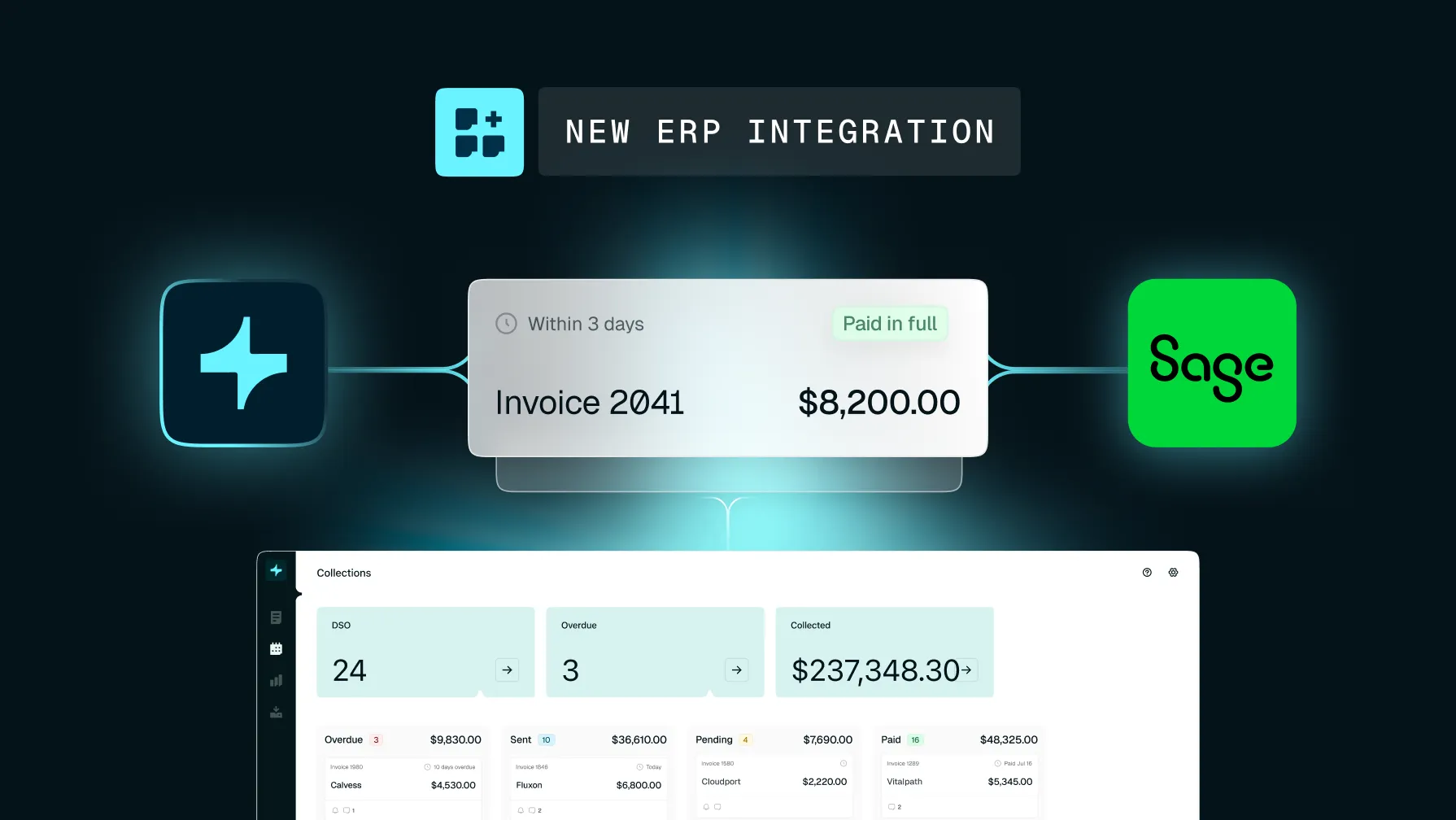
Tabs unifies the contract-to-cash process so finance teams can trust their numbers. It sits downstream of your CRM and CPQ, operationalizing signed contracts into billing workflows and Revenue Recognition — then feeding clean, structured data into your ERP and reporting tools.
AI contract ingestion for clean inputs
Tabs uses AI to parse contract terms from signed contract files — PDFs and Word documents, including executed order forms forwarded as attachments. It extracts billing clauses, pricing structures, and payment terms automatically. This isn't generic document extraction. Tabs AI agents identify the clauses that drive billing and Revenue Recognition (pricing, true-ups, milestones, service periods, and payment terms) and map them into actionable billing logic.
Automated invoicing for usage and hybrid models
Tabs generates invoices directly from contract terms automatically. It supports subscription, usage-based, and hybrid billing models out of the box for common scenarios, providing configurable rules and approvals to handle edge cases without heavyweight custom builds.
Revenue recognition for ASC 606 compliance
Tabs automates Revenue Recognition based on contract and billing data, supporting Accounting Standards Codification 606 (ASC 606). It handles deferred revenue, milestone recognition, and multi-element arrangements with audit-grade transparency.
Real-time reporting for ARR and AR
Because Tabs is the system of intelligence for billing and revenue, your reports reflect actual contract terms and live collection status. No stale snapshots. No disconnected exports.
Tabs can help you go live in <30 days.
Frequently asked questions
What data should financial reporting tools sync with NetSuite or QuickBooks?
Your tools should sync invoice data, payment receipts, revenue recognition entries, and customer master data. This eliminates manual journal entries and ensures your general ledger reflects actual contract terms.
How do modern tools automate ASC 606 revenue recognition?
They link contract terms directly to performance obligations and generate compliant entries automatically. The best platforms maintain complete audit trails from contract signature to journal entry.
Which revenue metrics should B2B finance teams track in real time?
Focus on ARR, MRR, DSO, AR aging, cash collected, and revenue recognized versus deferred. These metrics indicate business health and require real-time visibility for accurate forecasting.
What are the financial reporting tools?
They're software that consolidates financial data into accurate income statements, balance sheets, and cash flow statements. Companies with complex billing typically need several working together — an ERP for the general ledger, BI for visibility, close management for controls, and a revenue automation layer for signed contracts.
Can financial reporting tools handle usage-based and hybrid billing?
Most generic reporting tools can't handle these models natively. A revenue automation layer translates signed contract terms into the right billing and revenue recognition logic for usage-based and hybrid models, then feeds clean data downstream.
What's the difference between financial reporting software and an ERP?
An ERP is the system of record for your general ledger, while reporting and revenue automation tools feed it clean, structured data and add real-time visibility. They work together rather than replacing each other.