




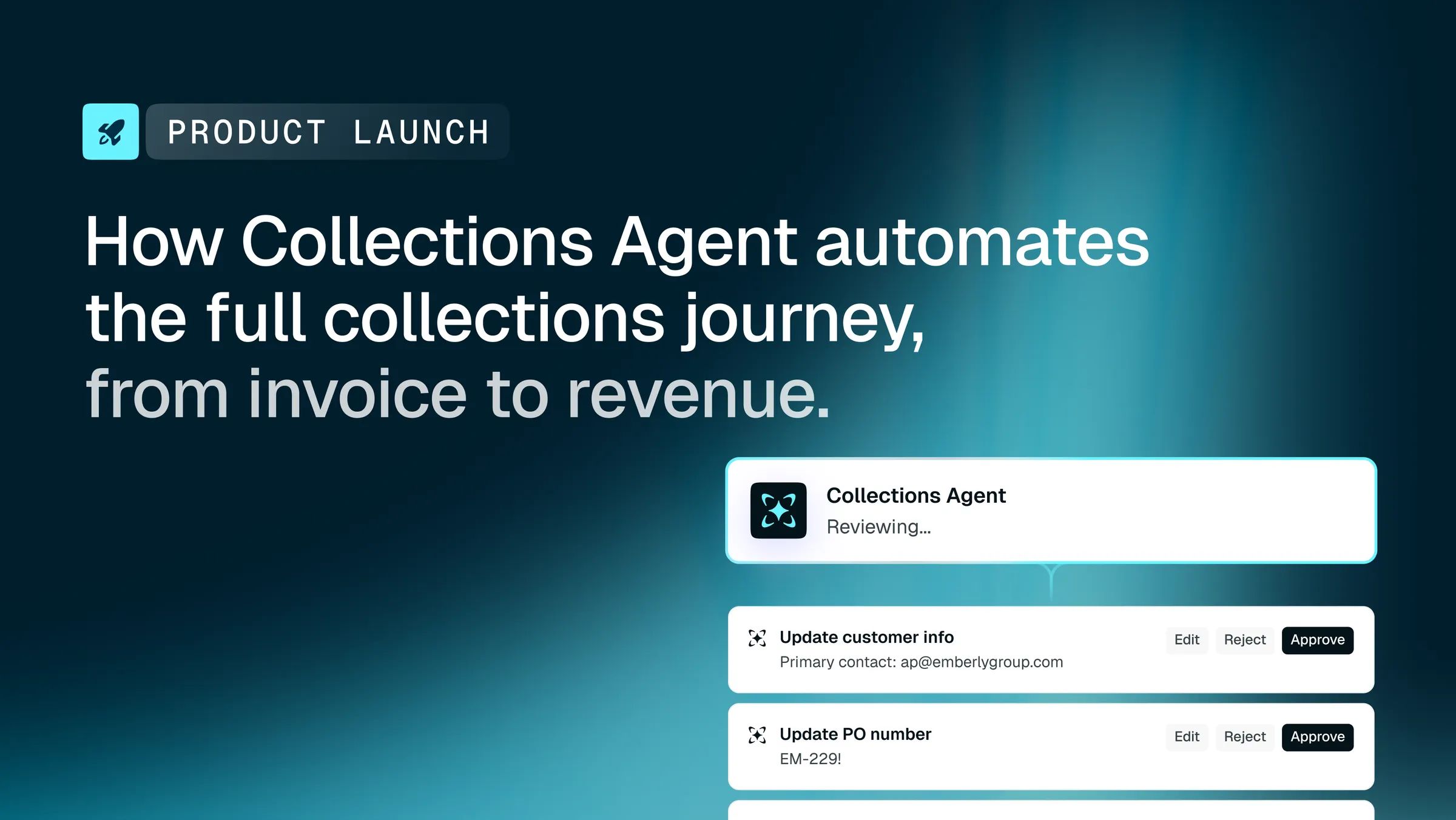
Get paid faster with less manual work
Collections gets harder as your business grows. It’s often a manual process and as a result has always meant unpredictable payment timing, hours spent chasing payments and reconciling by hand, and forecasts that are always one step behind.
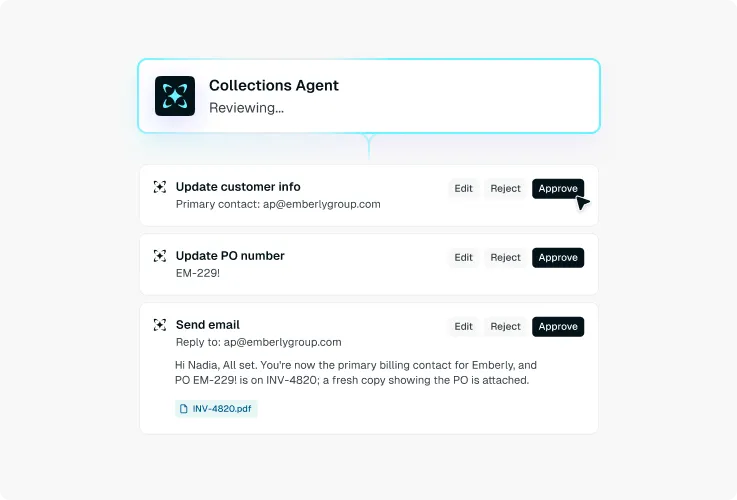
This August, Collections Agent makes it significantly easier to get paid faster. When customers reply to invoices with questions, disputes, or payment updates, Collections Agent reads every reply, understands the full account context, and acts on it automatically. Every account is visible in one place, with a plain-language summary of what's happening and the action needed. And if a proposed action needs a change, your team describes it and the agent updates the draft instantly.
The compounding cost of manual collections
At early stages, manual collections feel manageable. A spreadsheet tracks what is overdue. Follow-ups go out when someone remembers. Payments get matched by hand at the end of the month.
As customer volume grows, every manual touchpoint adds up. More customers means more invoices, more follow-ups, more exceptions, and more time spent reconciling payments that should have matched automatically. What took an hour a week becomes a day. A small DSO problem becomes a cash flow problem. And because collections data lives outside billing and revenue recognition, the numbers are always slightly behind, which means forecasting is too.
By the time it feels broken, close takes longer, revenue numbers require manual correction, and the team that should be focused on strategic work is still chasing payments.
How Tabs automates complex collections from invoice to revenue
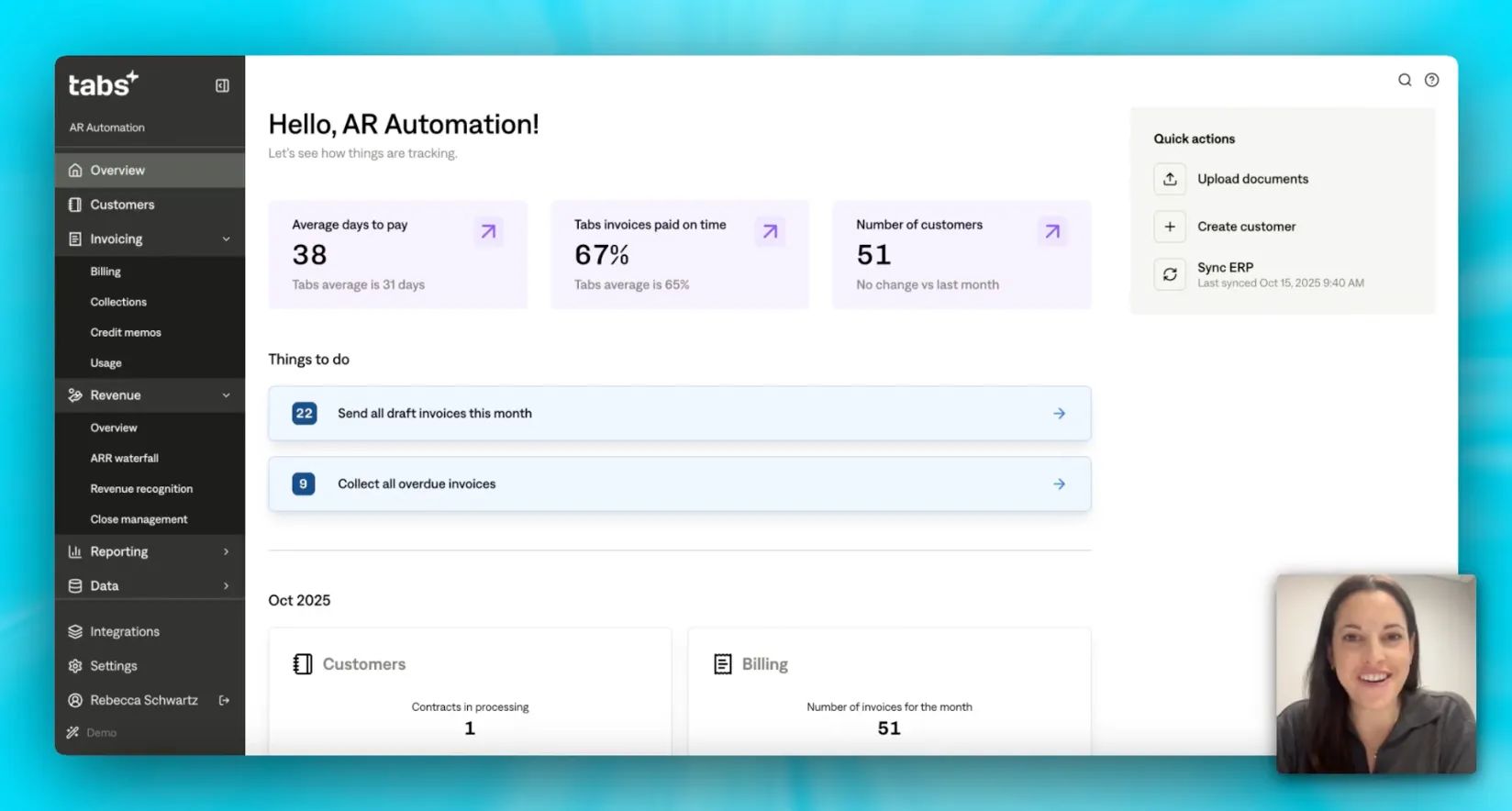
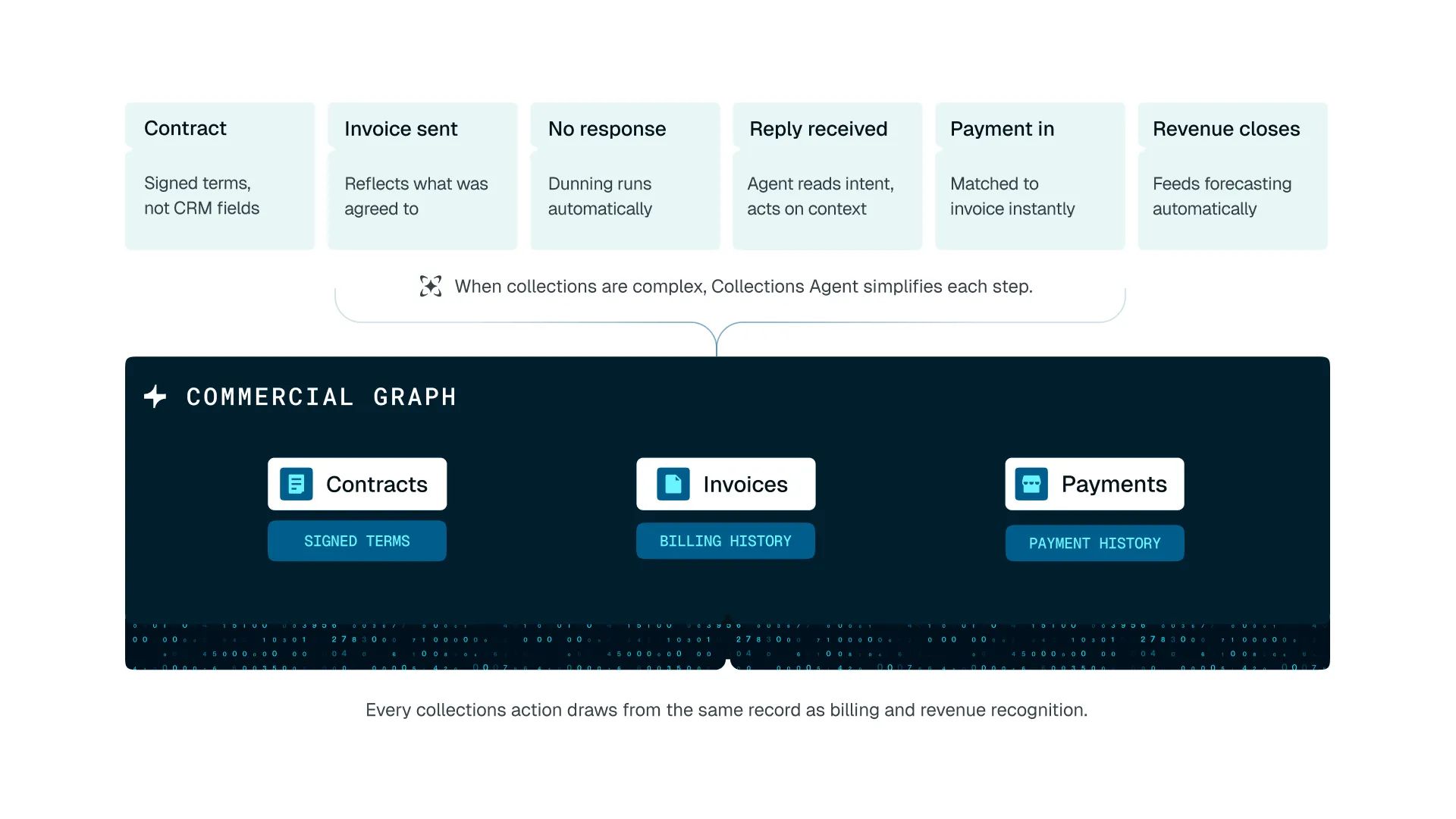
Every step of the collections journey in Tabs runs on real-time contract, invoice, and payment data. Automated payment reminders keep collections moving without manual follow-up. AI handles routine customer replies and flags what needs a human, so your team knows where to step in. Payments are matched and applied without manual work. And risk is caught early, so your team always knows where to focus.
Invoice sent
Contract Agent auto-extracts billing terms directly from the signed contract, so every invoice reflects what was actually agreed to before follow-up begins. Accuracy that starts upstream reduces friction at every step that follows.
Follow-up and outreach
Payment reminders go out on schedule across every account. Collections Agent drafts personalized outreach using contract details, payment history, and previous customer conversations, ready to review, and send in seconds.
Exception handling
When a customer disputes an invoice, submits a PO, or promises to pay, Collections Agent reads the intent and proposes the right action: updating the invoice, attaching a document, or scheduling a follow-up if payment doesn't arrive. Every outstanding account is visible in one place, with a plain-language summary of the trigger, the key facts, and what to do next.
If the proposed action needs a change, your team describes it and Collections Agent updates the draft. Approve, reject, or edit before anything sends.
Payment received
Customers pay via portal by credit card, ACH, wire, or check. Saved payment methods enable native autocharge, with customers able to update or set a default anytime.
Payment matched
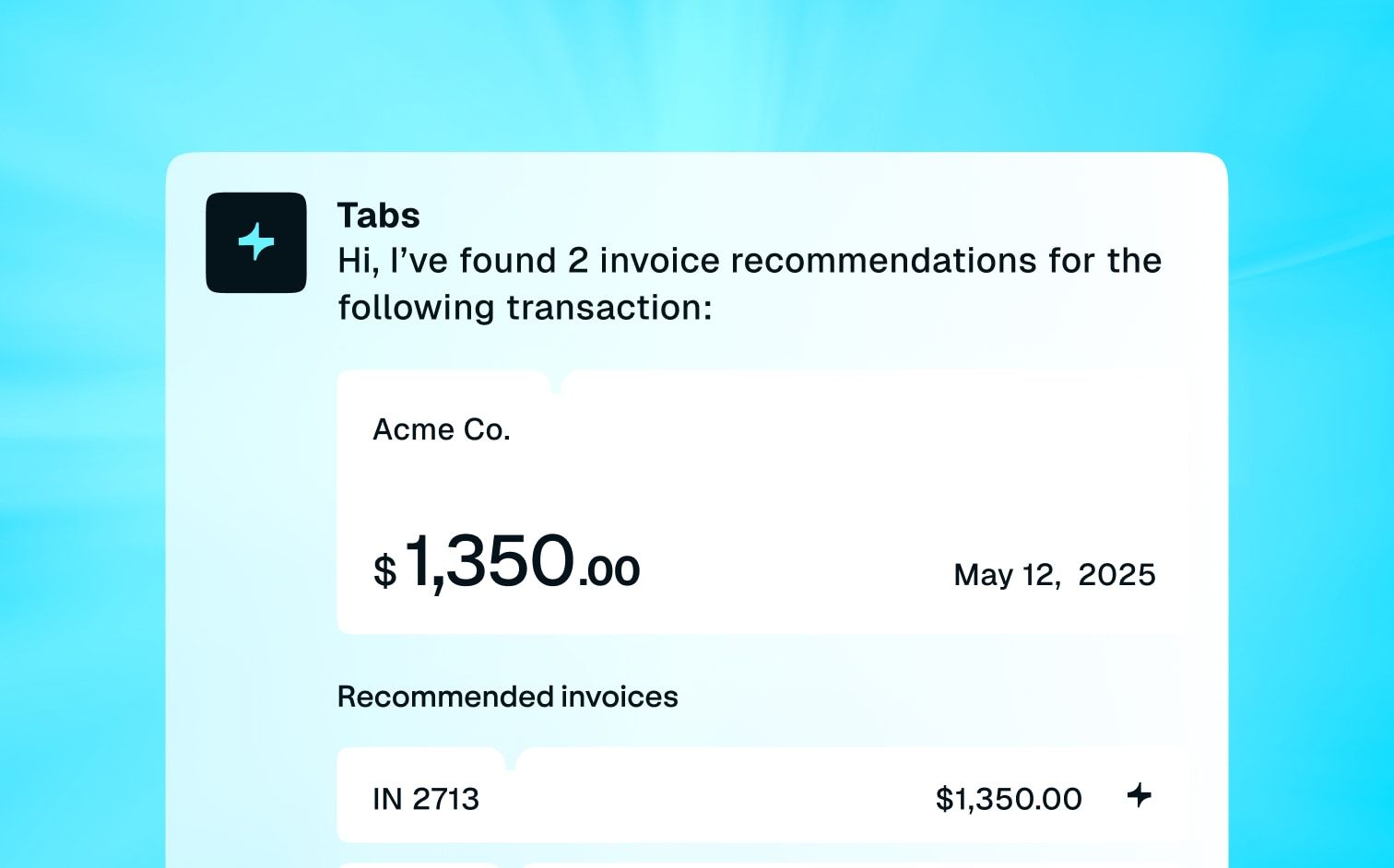
Cash application automatically applies portal payments to open invoices. For bank transactions, Collections Agent recommends matches based on payment history and customer behavior. Wire fees, card processing fees, and edge cases are reconciled without manual work.
Revenue cycle closes
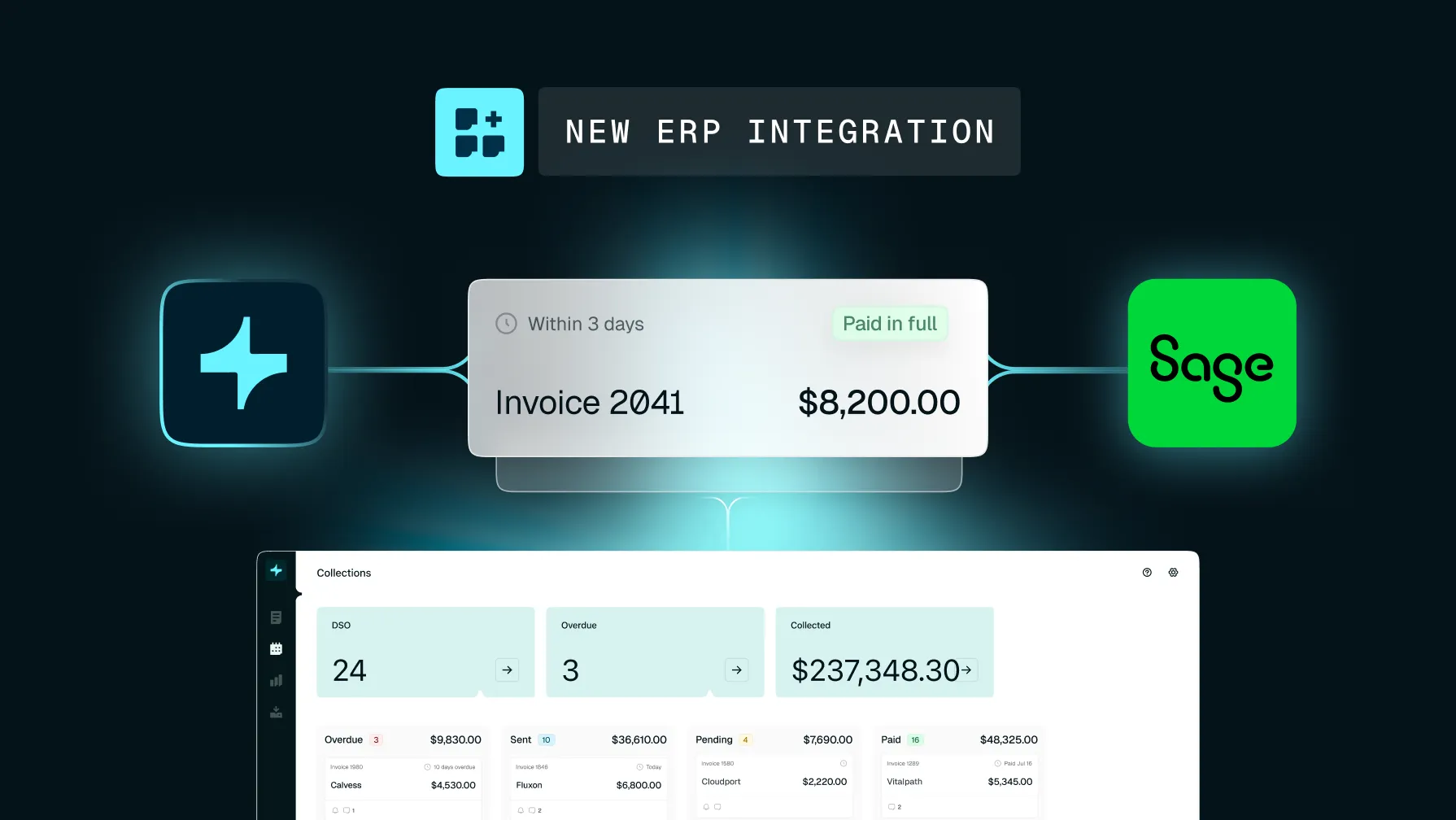
Matched payments update ARR reporting and predictive cash flow forecasting in real time. Payment trends and risk signals surface at the customer level so your team knows which accounts need attention before DSO becomes a problem.
From the expected to the unexpected, Tabs handles it
Most collections systems are built for the happy path. The moment a customer disputes an invoice or misses a payment, someone has to step in manually. That's where DSO creeps up and revenue numbers start to drift.
With Tabs, collections don't stall when something goes wrong. Collections Agent keeps collections moving by resolving routine exceptions automatically, surfacing the right issues for your team to review, and giving you a single place to see what's happening across every account, with the context needed to act in seconds.
What happens when you move collections to Tabs?
- Mode Mobile reduced DSO by 40%.
- Raina Music cut outstanding collections by 50%.
- GenLogs maintains 95% current AR while scaling rapidly.