




This guide explains how AI agents for finance teams managing complex contract-to-cash workflows transform billing, collections, and revenue recognition. You'll learn what separates intelligent automation from basic scripts, see specific use cases across your daily operations, and understand how to implement AI agents without a multi-year transformation.
What are AI agents for finance teams?
AI Agents for finance teams are autonomous software programs that execute multi-step workflows across your billing, collections, and accounting systems without continuous human guidance. Unlike traditional automation that follows rigid scripts, these tools interpret unstructured data—like PDF contracts or email threads—and propose the next best actions based on context, with guardrails and approvals for exceptions.
This matters because finance workflows are messy. Contracts arrive in different formats. Payment terms vary by customer. And the handoff between sales and accounting creates gaps where critical information gets lost.
What separates an AI agent from basic automation:
- Reasoning: Evaluates context from unstructured inputs to determine appropriate next steps, rather than following fixed if/then rules
- Multi-system access: Reads and writes data across your ERP, CRM, and billing tools through secure API connections
- Autonomy with oversight: Handles routine tasks independently while escalating exceptions to human operators for review
The key distinction is adaptability. A traditional script breaks when a customer formats their contract differently. An AI Agent processes that variability because trained models classify intent from context, not just fixed document structure.
Core capabilities finance leaders require from AI agents
Modern finance leaders need more than data extraction. They need a system of intelligence that understands the business implications of contract terms and translates them into accurate billing workflows. This commercial context—knowing that "net 60 with 2% early payment discount" affects cash forecasting, not just invoice timing—separates effective AI Agents from generic automation.
Natural language and reasoning
Finance runs on unstructured data. Emails, signed PDFs, Slack messages, DocuSign files. AI agents use trained models to parse this information and map it to structured data your systems can act on.
Because these tools evaluate context rather than relying on fixed field locations, they handle exceptions gracefully. When a customer uses non-standard phrasing in their contract, the system classifies the clause, flags low-confidence fields, and routes exceptions for review—rather than failing silently.
Why it matters: Your team stops re-keying data from documents and starts trusting automated workflows.
Multi-system access and governance
An AI agent is only useful if it can connect your systems securely. These tools orchestrate data flow between your CRM, billing software, and ERP while enforcing role-based access controls.
Every action generates a clear audit trail. Your accounting team sees exactly what data changed, when, and why. This visibility ensures automation never compromises your internal controls.
Why it matters: You get automation without sacrificing the governance your auditors require.
Contract ingestion and commercial context
Extracting text from a contract is table stakes. What actually matters is understanding the commercial implications.
Tabs uses AI to automate this translation. When a contract specifies milestone-based payments with annual escalators, Tabs doesn't just extract text—it translates terms into a billing schedule, informs cash forecasting using contract terms and payment behavior, and drafts Revenue Recognition schedules and journal entries for review and posting. This commercial context comes from the Commercial Graph, which unifies contracts, usage data, payments, and terms into one intelligent customer record.
Why it matters: Your billing operations reflect the actual business relationship, not just the raw data.
How AI agents improve contract-to-cash operations
The contract-to-cash lifecycle is notoriously fragmented. Sales finalizes an agreement in your CRM or CPQ. Finance manually re-keys terms into the billing system. Accounts receivable (AR) chases payments through email. And accounting reconciles everything in spreadsheets at month-end.
AI Agents bridge these gaps by automating the flow of data from a signed contract to Revenue Recognition. No manual handoffs. No re-keying. No waiting until close to discover errors.
Where intelligent automation transforms finance workflows:
- Billing: Converts executed contracts—including seat-based, usage, and milestone pricing—directly into accurate, scheduled invoices
- Collections: Automates dunning sequences to reduce days sales outstanding (DSO)
- Reconciliation: Matches incoming payments to open invoices across bank feeds
- Revenue Recognition: Applies ASC 606 rules to generate compliant journal entries
- Usage-Based Billing: Rates usage data to calculate accurate metered charges
Automate contract-to-cash with Tabs AI agents
AI agent use cases across billing, collections, and revenue recognition
Theory only goes so far. Here's how AI agents execute specific workflows across your daily operations.
Contract-to-invoice automation
The handoff between sales and finance creates a bottleneck of manual data entry. AI agents detect when a new agreement closes in your CRM and automatically extract billing terms—frequency, payment terms, pricing tiers, escalator clauses.
The system generates invoices without requiring anyone to open a PDF, interpret custom language, or manually build a billing schedule. Multi-year ramps and milestone triggers are parsed automatically.
Why it matters: Eliminates the dangerous gap where contract terms get lost between sales and finance.
Accounts receivable collections
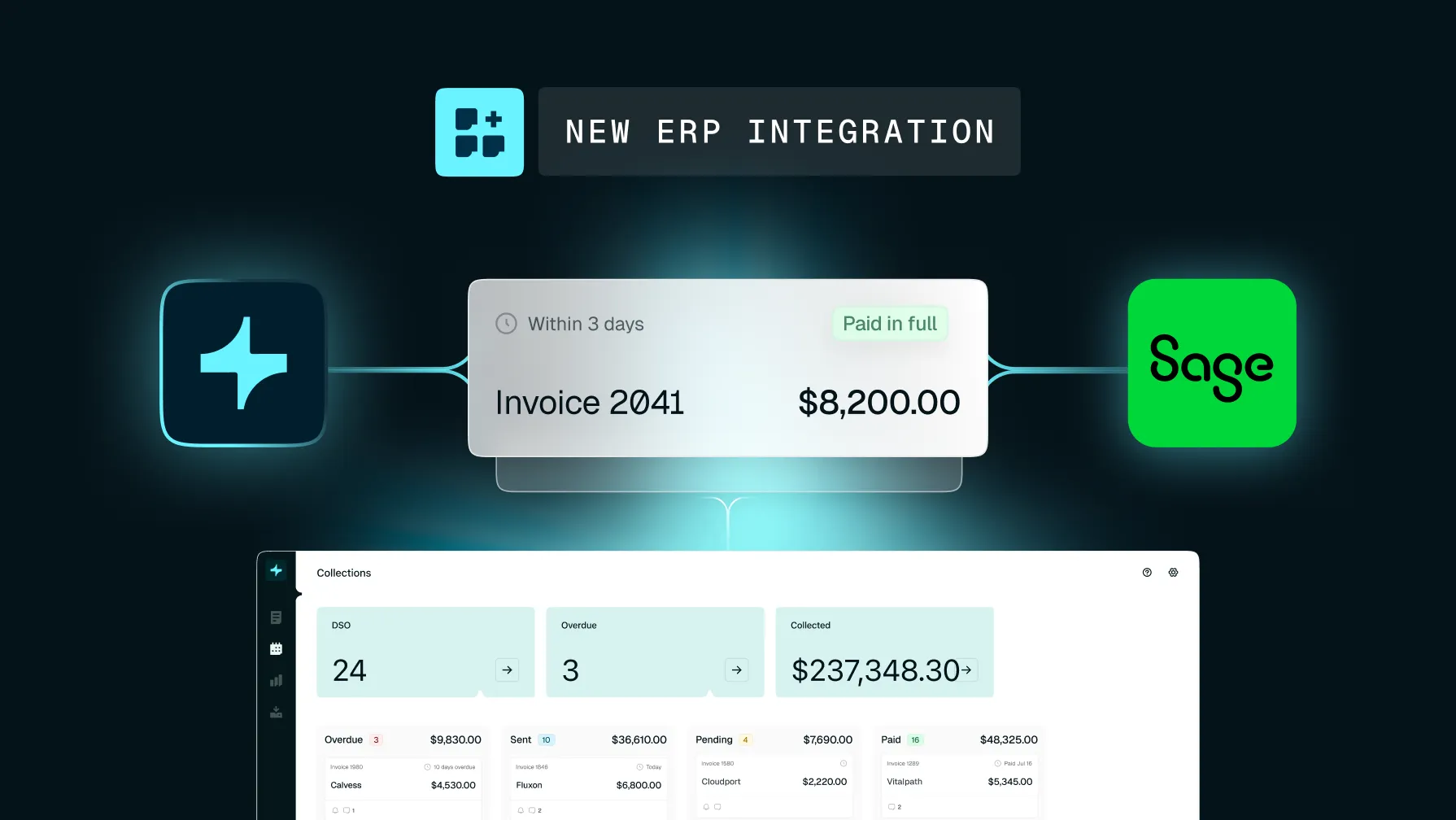
Chasing late payments drains your team's time. AI agents automate the entire dunning workflow—sending reminders before due dates, escalating past-due notices based on aging buckets, and embedding payment links directly in communications.
The system adjusts outreach based on each customer's payment history and specific contract terms. When manual intervention is required, your team gets notified immediately with full context.
Why it matters: Your AR team focuses on strategic accounts instead of routine follow-ups.
Payment reconciliation and cash application
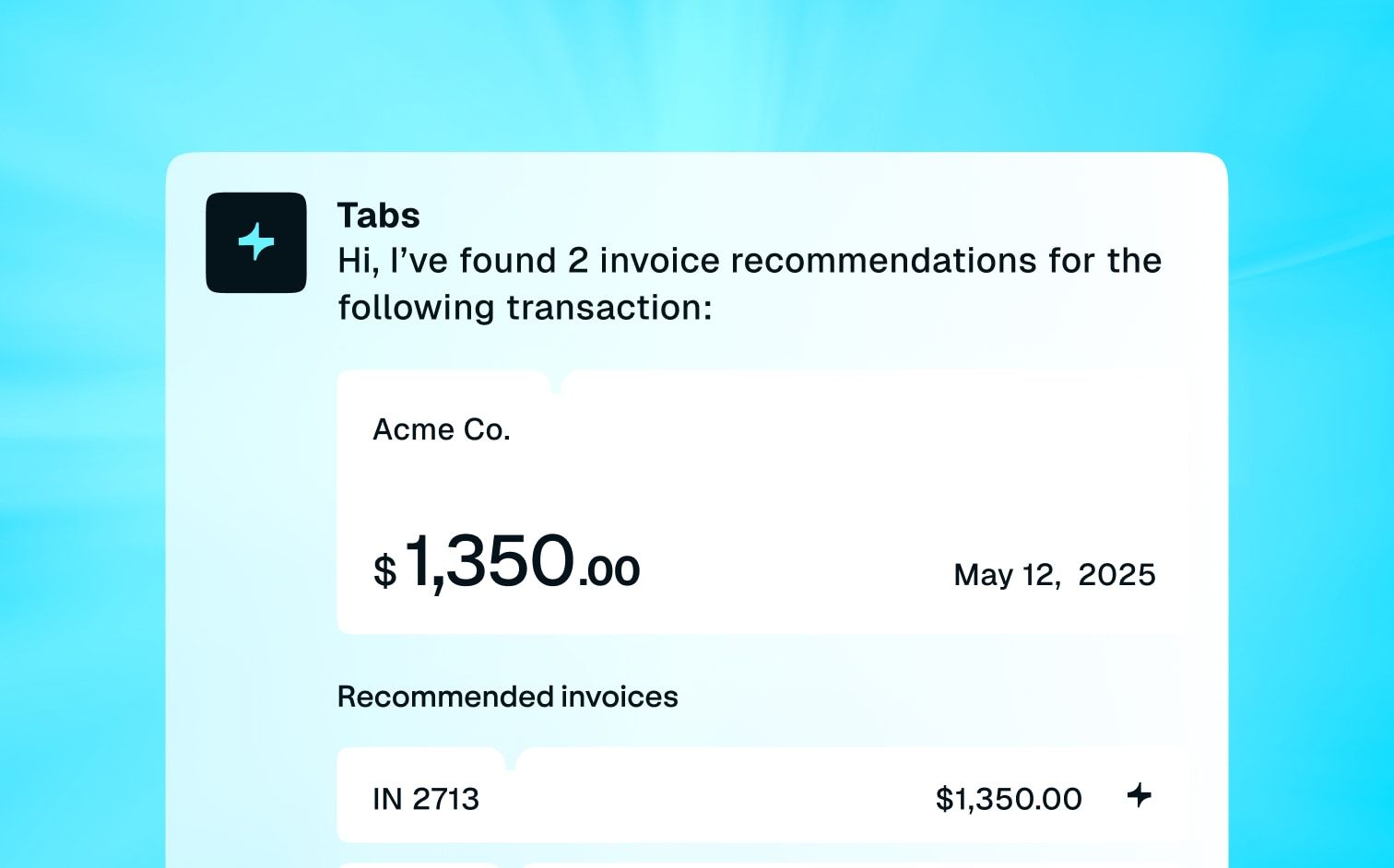
Matching a lump-sum wire transfer to multiple invoices is tedious puzzle work. AI agents parse remittance advice from bank files, emails, and customer portals to identify exactly which invoices are being paid.
They handle partial payments, overpayments, and one-to-many matching while maintaining a complete audit trail. No more manual detective work at month-end.
Why it matters: Cash application happens in hours, not days.
Revenue recognition and ASC 606
Managing ASC 606 compliance in spreadsheets introduces audit risk. AI Agents automate Revenue Recognition by applying contract terms and your configured ASC 606 policies to draft journal entries for review and posting in your ERP.
Performance obligations are proposed from contract language, with exceptions flagged for accounting review. Revenue is allocated based on standalone selling prices. Journal entries are prepared with complete data lineage your auditors can trace, and they can be pushed to your ERP based on your approval controls.
Why it matters: Reduces reliance on spreadsheet-based revenue recognition while maintaining audit-grade transparency.
Usage-based and hybrid billing
Whether you're running subscription-based billing or metered models, processing consumption data requires automation. AI agents handle usage rating by applying tiered pricing rules to raw event data.
Tabs natively supports hybrid models that combine subscriptions with overages—no custom engineering required. Your product team can launch new pricing without waiting on billing infrastructure.
Why it matters: Your revenue model evolves without being constrained by your billing system.
Benefits finance teams realize with AI agents
Automating the finance function isn't just about cutting costs. It's about transforming accounting into a strategic partner—a shift 50% of CFOs cite as their top digital transformation priority for 2026.
Speed in financial workflows
Manual data entry slows every step of the contract-to-cash process. AI Agents enable straight-through processing—contracts become invoices, payments match to receivables, and you recognize revenue with fewer manual touches and clear exception workflows.
Speed is table stakes. Cleanliness is the differentiator.
Accuracy in compliance
Fat-finger errors and missed contract clauses lead to revenue leakage and audit failures. AI agents apply your business rules consistently across every transaction, eliminating the variability that comes with manual processes.
Visibility in reporting
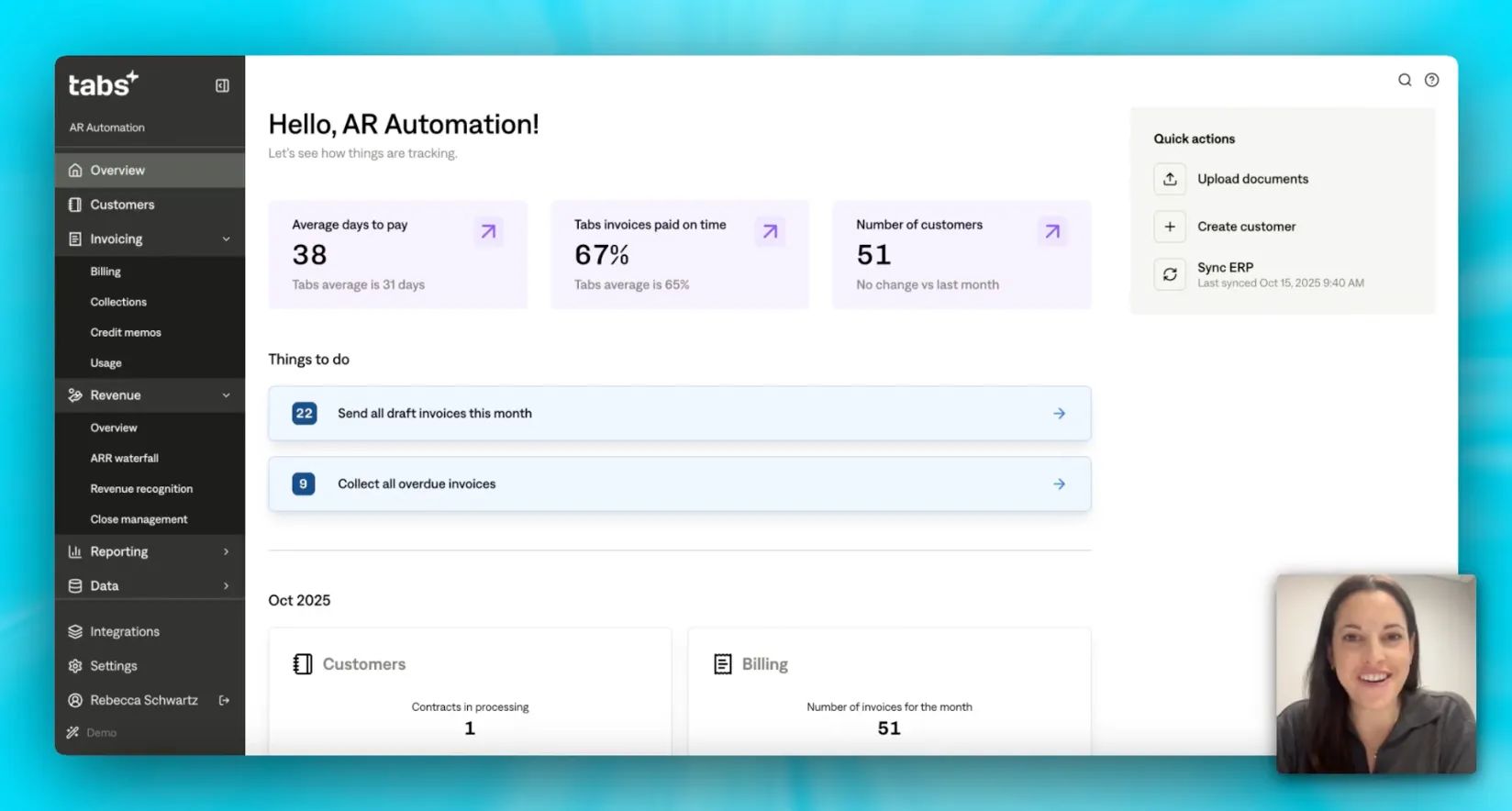
You can't make strategic decisions with 30-day-old data. AI Agents provide real-time visibility into annual recurring revenue (ARR), cash flow, and accounts receivable (AR) balances. Modern revenue automation platforms don't just show when invoices are due—they forecast when cash will actually land, based on historical payment behavior and contract terms.
Scalability without added headcount
High-growth companies often find their finance headcount scaling linearly with revenue. AI agents break this cycle. McKinsey reports finance teams with robust AI adoption spend 20 to 30 percent less time on data work. Your team processes significantly more invoices without hiring additional billing specialists.
How agentic AI differs from RPA and chatbots
The market is flooded with tools claiming to automate finance. According to Deloitte, 39% of organizations are now investing in agentic AI. Understanding the differences helps you build a resilient tech stack.
RPA and scripts vs agentic AI
Robotic process automation (RPA) follows deterministic scripts to automate repetitive, rule-based tasks. But if a customer formats their PDF differently, the bot breaks.
Agentic AI handles this variability because it evaluates context rather than relying on fixed coordinates. It understands the document's intent, not just its structure.
Chatbots vs agentic AI
Chatbots retrieve information and answer queries. But they can't take meaningful action.
Agentic AI executes multi-step workflows. It doesn't just tell you an invoice is overdue—it drafts the reminder, sends the email, and logs the interaction in your CRM.
Why Tabs is purpose-built for finance teams
Generic automation tools fail in finance because they lack accounting depth. Tabs is designed specifically for B2B revenue operations, sitting downstream of your CRM and CPQ to operationalize signed contracts.
AI contract ingestion from executed agreements
Most billing software requires you to manually build templates or re-key data from executed agreements. Tabs automatically captures terms directly from signed contracts—PDFs, Word documents, and DocuSign files—eliminating the gap where critical commercial terms get lost.
Commercial Graph for contract-to-cash context
Data extraction is useless without a unified data model. The Commercial Graph connects contracts, usage data, payments, and terms in one intelligent customer record. Because Tabs understands the actual commercial relationship, it generates billing and Revenue Recognition workflows you can trust.
Implementation roadmap for AI agents in finance
Deploying AI in your finance stack doesn't require a multi-year transformation. The best results come from a phased, controlled rollout.
- Identify high-volume, rule-heavy workflows: Start with processes like invoice generation or cash application that consume time but follow predictable patterns
- Define success metrics: Establish clear KPIs before you begin—DSO reduction, touchless invoice rates, close cycle time
- Run a controlled pilot: Test automation with a subset of customers or a single invoice type
- Establish governance controls: Set approval thresholds, define exception handling rules, ensure audit requirements are met
- Scale incrementally: Expand to additional workflows as your team's confidence builds