




9 best revenue reporting software platforms for B2B finance [2026]
This guide breaks down the best revenue reporting software for B2B finance teams managing complex billing, collections, and ASC 606 compliance. You'll learn what features matter most, how these platforms fit into your finance stack, and which tools match your billing complexity.
What is revenue reporting software?
Revenue reporting software is a financial tool that pulls data from your contracts, billing systems, and payment records into one place. This means you can see exactly how much money is coming in, when it's being recognized, and what's still outstanding—without digging through spreadsheets or chasing down data from five different systems.
For B2B companies, this matters because your revenue isn't simple. You're dealing with annual contracts, usage-based pricing, milestone payments, and complex amendments. Generic accounting tools weren't built for this. Revenue reporting software tracks SaaS revenue metrics like Annual Recurring Revenue (ARR), Monthly Recurring Revenue (MRR), and deferred revenue—the numbers your board and investors actually care about.
The best platforms connect contract terms directly to recognized revenue in real time. When a customer signs a deal with a price escalator or usage tier, the software uses trained models and rules to map those terms to billing events and Revenue Recognition schedules. Tabs takes this further by providing commercial context—translating contract terms into the billing workflows, collections expectations, and Revenue Recognition logic your finance team actually has to run.
Why revenue reporting software matters for B2B finance
Manual revenue reporting breaks down as you scale. What works at $2M ARR becomes a liability at $20M, which is why 89% of CFOs prioritize implementing tech to improve capabilities. Every month-end close turns into a scramble to reconcile spreadsheets, verify numbers, and hope nothing slipped through the cracks.
The real cost isn't just time. It's confidence. When your CFO presents ARR to the board, can they trust those numbers? When auditors ask for documentation, can you produce it in hours instead of weeks?
Revenue reporting software solves three problems at once:
- Audit readiness: Every revenue entry traces back to its source contract and billing record. Far less time spent reconstructing the paper trail.
- Forecast accuracy: 65% of CFOs are adjusting forecasts in response to current volatility. Your projections must be based on real-time billing and collection data, not assumptions from last quarter.
- Executive confidence: Board-ready metrics are available fast—without a week of manual verification—because the underlying contract and billing data stays connected.
Confidence is the real close bottleneck. If you can't tie ARR back to contracts in minutes, you're not ready for the board or the audit.
This is where most tools fall short. They aggregate numbers but don't model the underlying contract logic that drives billing, cash, and Revenue Recognition. A contract with a 90-day payment term and a 3% annual escalator requires different treatment than a simple monthly subscription—but generic tools flatten both into the same line item.
Turn complex contracts into audit-ready revenue—see Tabs.
Core features of revenue reporting software
Not all revenue reporting tools are created equal. The features that matter most depend on your billing complexity and compliance requirements. Here's what to look for.
Dashboards and metrics for ARR and MRR
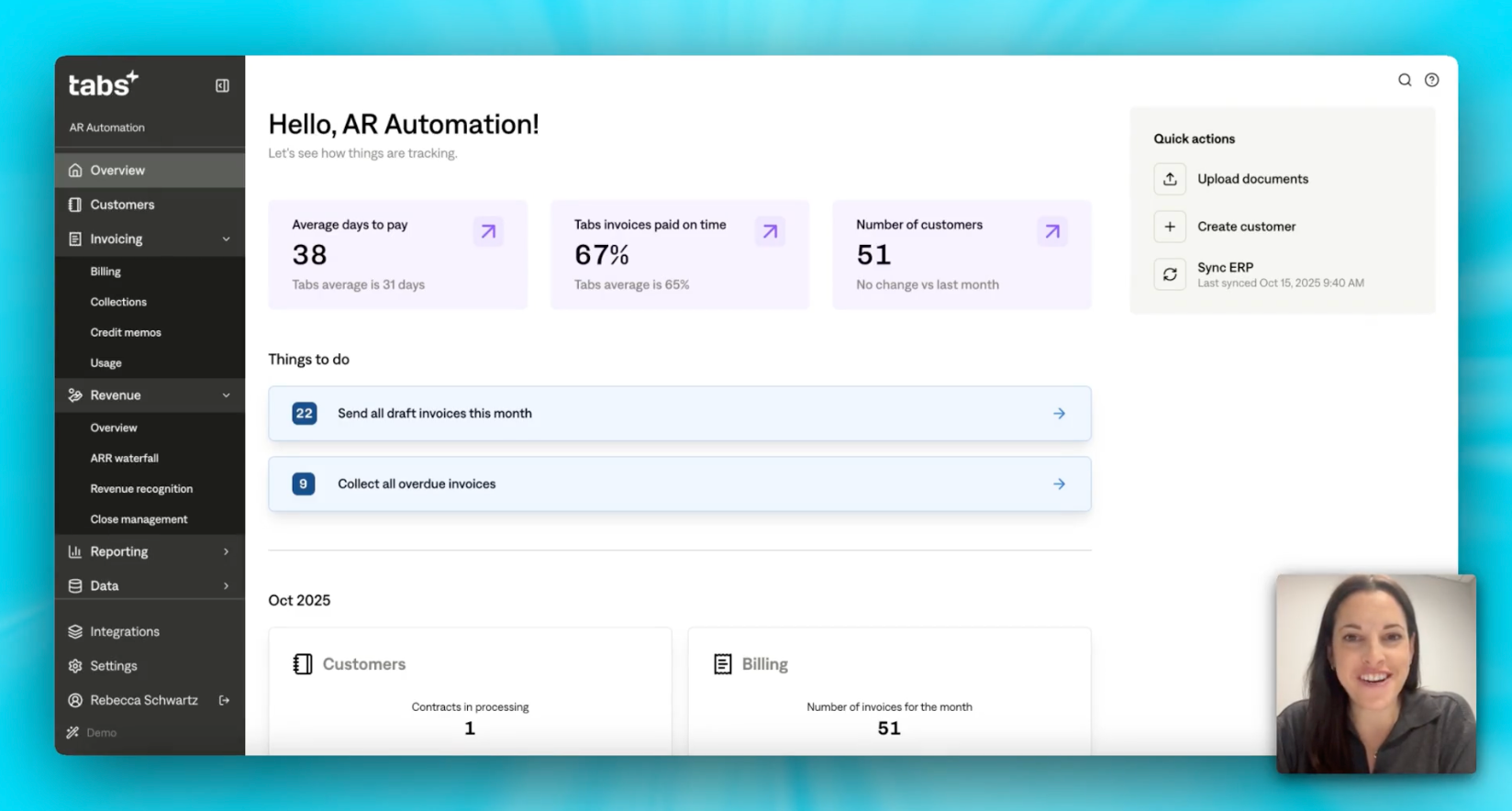
Your software should show ARR, MRR, net revenue retention, and churn in real time—not after month-end close. But high-level numbers aren't enough. You need to drill down by customer segment, product line, or region to understand what's driving growth or contraction.
Look for cohort analysis capabilities. Being able to see how revenue from customers acquired in Q1 behaves differently from Q3 acquisitions reveals patterns that aggregate metrics hide.
Why it matters: Real-time visibility means you catch problems before they hit your financial statements.
Revenue recognition and auditability
Accounting Standards Codification (ASC) 606 compliance isn't optional. It has resulted in higher ongoing costs due to greater judgment requirements. Your software must automate recognition schedules based on contract terms and performance obligations—the specific deliverables you've promised to customers.
- Automated schedules: Recognition rules apply when the contract is ingested, not manually at month-end.
- Performance obligation tracking: Multi-element arrangements are handled natively, without spreadsheet workarounds.
- Audit trail: Each entry links to contract versions, amendments, billing events, and approval history—so auditors can re-perform your tie-outs without spreadsheet archaeology.
Why it matters: Auditors don't want explanations. They want evidence. A complete audit trail can reduce audit prep from weeks to days by keeping support tied to each entry.
Contract-to-cash visibility across systems
Revenue reporting is only as good as the data feeding it. If your CRM, billing system, and ERP don't talk to each other, you're stuck reconciling manually.
The best platforms unify contract data, billing events, and payment records into a single view. Tabs calls this the Commercial Graph—an intelligent customer record that provides context for every revenue decision. When a contract amendment happens, it can flow through automatically to dramatically reduce manual updates and reconciliation.
Why it matters: Fragmented systems create blind spots. Unified data eliminates them.
How revenue reporting software works
Understanding the data flow helps you evaluate whether a platform fits your technical environment.
Data flow from contract to close
The process starts when a deal closes and ends when revenue is fully recognized:
- Contract ingestion: Terms are captured from executed documents—PDFs, DocuSign envelopes, or finalized order forms stored as CRM attachments.
- Billing automation: Invoices generate based on contract logic, whether recurring, usage-based, or hybrid billing.
- Payment tracking: Cash is applied and reconciled against open invoices.
- Revenue recognition: Schedules are created and entries posted per ASC 606 rules.
- Reporting: Dashboards update in real time.
Modern platforms automate each handoff. Legacy tools require manual intervention at every step.
How to choose revenue reporting software
The right choice depends on your billing complexity, existing tech stack, and growth trajectory. A tool that works for simple subscriptions or seat-based billing may fail completely for usage-based pricing.
Integrations and data sync with ERP and CRM
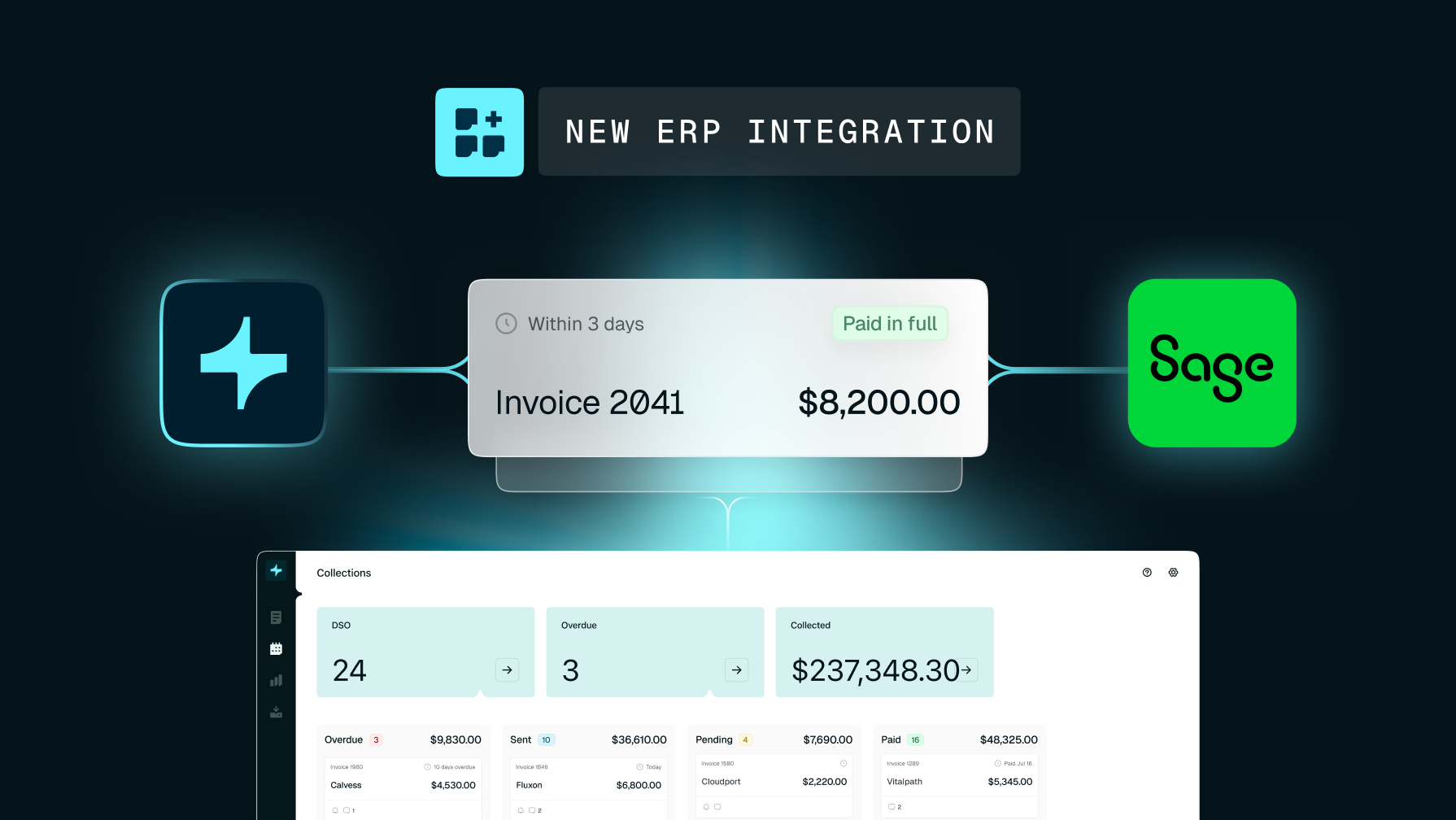
Revenue reporting sits downstream of your CRM and CPQ and upstream of your ERP. It operationalizes signed contracts into invoices, cash application, and Revenue Recognition outputs. Your platform must pull from your CRM (Salesforce, HubSpot) and push to your ERP (NetSuite, Sage Intacct, QuickBooks).
Prioritize bidirectional sync and real-time updates over batch imports. Batch processes create data latency—and latency creates errors.
Analytics and real-time reporting depth
Static PDF reports aren't enough. You need dynamic dashboards where you can slice data by customer, product, contract type, or time period.
Real-time capability matters most for companies with usage-based or high-velocity billing. When revenue changes daily, monthly snapshots are already outdated.
Implementation speed and scalability
Some platforms take 9–12 months to implement. Others go live in weeks. Time to value matters—especially if you're preparing for an audit or fundraise.
Scalability means handling increased invoice volume, multi-entity structures, and international expansion without rearchitecting your finance stack.
Best revenue reporting software platforms
The platforms below represent different approaches, from ERP-native modules to purpose-built revenue automation. The best fit depends on your billing complexity and whether you need reporting alone or end-to-end automation.
Tabs — the AI revenue platform
Tabs is built specifically for B2B companies with complex billing models. It uses AI to automate the entire contract-to-cash process, from ingesting signed contracts to generating invoices to recognizing revenue.
What sets Tabs apart is commercial context. Tabs uses AI to extract and classify contract terms, then translate them into billing workflows and Revenue Recognition logic—so escalators, tiers, proration, and milestones are operationalized without brittle, manual configuration. A contract with usage tiers, annual escalators, and milestone payments can be operationalized automatically, so you spend less time on manual configuration and rework.
| Capability | Tabs |
|---|---|
| Billing models | All—subscription, usage-based, hybrid |
| Revenue Recognition | ASC 606 automated |
| ERP integrations | NetSuite, Sage Intacct, QuickBooks, Stripe, Anrok, and more |
| AI Contract Parsing | Yes |
| Implementation | Weeks, not months |
Salesforce Revenue Cloud — CRM-native reporting
Best for companies deeply embedded in Salesforce. Strong pipeline-to-revenue visibility and CPQ integration. Revenue recognition requires additional configuration or third-party tools. Better for sales-led organizations than complex billing operations.
NetSuite — ERP-wide revenue visibility
The incumbent choice for companies standardizing on Oracle NetSuite. The Advanced Revenue Management module handles ASC 606 but requires significant configuration. Real-time dashboards often need custom saved searches or third-party BI tools.
Sage Intacct — dimensional reporting
Known for dimensional accounting—tagging transactions by department, project, or product line. Excellent for deep GL-level reporting. Billing automation is limited compared to specialized platforms.
SAP S/4HANA — enterprise control
Enterprise-grade for global organizations. Robust revenue recognition across multiple subsidiaries and currencies. Implementation takes months or years. Overkill for most growth-stage companies.
Workday Financial Management — unified suite
Strong choice if you already use Workday for HR and planning. Financial reporting integrates tightly with workforce data. Revenue recognition capabilities are solid but less specialized than purpose-built tools.
Zuora — subscription analytics
Legacy leader in subscription billing with solid recurring revenue metrics. Less flexible for usage-based or hybrid models. Implementation can be complex and customization often requires professional services.
Chargebee — subscription revenue ops
Mid-market option for subscription-first companies. Strong self-serve billing and decent reporting dashboards. Revenue recognition features are less mature than enterprise alternatives.
Zenskar — usage-based billing analytics
Newer entrant focused on usage-based and hybrid billing. Best suited for companies whose primary challenge is metering and billing consumption rather than comprehensive financial reporting.
Frequently asked questions
Does revenue reporting software replace my ERP for general ledger accounting?
No. Revenue reporting software integrates with your ERP rather than replacing it. It serves as a revenue-focused system of intelligence for metrics, auditability, and Revenue Recognition, while your ERP remains the system of record for general ledger (GL) accounting.
How does revenue reporting software provide evidence for ASC 606 audits?
The software maintains an audit trail linking every recognized revenue entry to its source contract, billing event, and payment record. This documentation satisfies auditor requirements for evidence of performance obligation completion and standalone selling price allocation.