






Revenue recognition can't stay manual forever
Spreadsheets are still the backbone of revenue recognition at most SaaS companies — and for simple contracts, they hold. But as contract complexity scales, so does the margin for error. Industry research consistently finds that up to 88% of spreadsheets contain errors, according to a meta-analysis published in the Journal of Organizational Behavior and Human Decision Processes — a statistic that should unsettle any controller responsible for Accounting Standards Codification Topic 606 (ASC 606) compliance.
The math used to be simple. Flat subscriptions meant straight-line recognition. But as SaaS pricing models have diversified — subscriptions layered with usage-based overages, hybrid contracts, and milestone-based services — the manual processes that held up at $5M in Annual Recurring Revenue (ARR) start cracking at $20M. More contracts. More variables. More places for revenue to be misstated.
And the stakes are real. ASC 606 — the standard governing how companies recognize revenue from contracts with customers — isn't a suggestion. One miscalculated standalone selling price (SSP) or misapplied performance obligation can trigger a restatement. Investopedia offers a helpful overview of how the standard works, but understanding it and operationalizing it at scale are two different challenges entirely.
Revenue recognition software exists to close that gap. The question isn't whether you need it — it's what to look for when the contracts outgrow the spreadsheets.
Why pricing complexity broke revenue recognition
The old model was straightforward: annual license, 12 months, straight-line recognition. Finance teams could manage it in a spreadsheet with a handful of formulas and a reasonable amount of care.
That model is gone. Today, a single enterprise contract might bundle an annual platform subscription, usage-based overages billed monthly, a one-time implementation fee recognized on delivery, and 12 months of premium support recognized ratably. Each element requires its own SSP allocation, its own recognition schedule, and its own audit trail. Multiply that across 200 contracts — with mid-cycle upgrades, downgrades, and renewals — and you have a recognition problem that no spreadsheet was designed to solve.
But this isn't just a spreadsheet problem. It's a systems and data fragmentation problem. Your CRM holds the deal structure. Your billing tool generates invoices. Your ERP is the general ledger of record. And none of them speak the same language about what a "contract" actually means for revenue purposes.
This is where commercial context matters. Traditional revenue recognition tools extract data from contracts and apply templates. Tabs takes a fundamentally different approach — its AI is trained to identify the business implications of pricing terms — translating them into accurate recognition schedules rather than applying generic templates. A usage-based overage clause isn't just a line item to extract; it's a variable consideration element that changes how the entire contract is recognized under ASC 606. That distinction — between data extraction and commercial understanding — is the difference between automation that works and automation you have to work around.
What month-end close actually looks like without automation
It's the 28th. Your controller is cross-referencing three spreadsheets, a billing export, and Salesforce notes to reconcile deferred revenue across 200 contracts. Two have mid-cycle upgrades that changed the recognition schedule. One has a usage component requiring manual SSP allocation. The journal entries don't tie to the general ledger. And the auditors need the waterfall by Friday.
Sound familiar? These are the symptoms of a rev rec process that hasn't kept pace with your business:
- Reconciliation discrepancies between billing and recognition data
- Audit trail gaps that surface only during quarter-end review
- Month-end close stretching to 15+ days
- Finance team working weekends to hit reporting deadlines
- Manual journal entries that require line-by-line verification
And the problems don't always announce themselves. They hide in the details:
- Mid-cycle amendments that alter performance obligations retroactively
- Usage true-ups that shift recognized revenue between periods
- Multi-year contracts with variable consideration and escalating tiers
- Credit memos and early terminations that require schedule adjustments
The root cause is almost always the same: fragmented systems and manual handoffs between CRM, billing, and ERP. When contract data lives in one system, invoicing in another, and recognition in a spreadsheet, errors aren't a risk — they're a certainty. And every manual handoff is an opportunity for data to drift. As SaaS Metrics notes, ratable revenue recognition challenges compound as contract complexity grows.
Five pillars of a modern revenue recognition stack
A revenue recognition stack that works at scale requires five capabilities — each one addressing a specific failure mode described above.
- Contract intelligence
Your system should extract and interpret contract terms automatically. Not just optical character recognition (OCR) or basic data capture — real commercial context that understands pricing structures, performance obligations, and what an amendment means for recognition. When a contract includes a usage-based component alongside a fixed subscription, the system should identify both elements, allocate SSP, and generate the appropriate schedules without manual intervention. Tabs applies AI-powered contract extraction trained to classify pricing structures, performance obligations, and amendment logic — not just pull text fields. 2. ASC 606-native compliance
The five-step revenue recognition model — identify the contract, identify performance obligations, determine the transaction price, allocate the price, and recognize revenue — should be automated across every contract type. Not bolted on as a template library you configure manually, but native to how the system processes revenue. Subscription, usage-based, hybrid, milestone, services, and hardware/software revenue should all be supported without custom rules. You can automate compliance instead of managing it. 3. Automated invoicing and billing sync
Revenue recognition and billing must be connected — not reconciled after the fact. When an invoice is generated, the recognition schedule should update automatically. When a contract is amended, both the billing cadence and the rev rec waterfall should adjust in lockstep. This eliminates the reconciliation discrepancies that eat up days every close cycle. Tabs can automate complex invoicing and keep billing and recognition in sync from day one. 4. ERP and system integrations
Rev rec data must flow to your general ledger (GL) without manual journal entries. Native sync with your ERP — with auto-posted journal entries and flux validation — means your GL reflects recognized revenue in real time, not after a week of manual posting. Tabs connects directly with the ERPs finance teams already use. 5. Audit-ready reporting
Real-time ARR waterfalls, deferred revenue balances, and detailed audit trails should be accessible on demand — not assembled in a spreadsheet the night before an audit. Your rev rec system should produce the reports auditors need without requiring your team to build them from scratch every quarter.
How Tabs makes revenue recognition operational
Most revenue recognition tools automate the calculations. Tabs automates the entire workflow — from contract ingestion to journal entry posting. The difference is commercial context: where other tools apply generic templates to extracted data, Tabs uses AI-powered models to identify the business meaning of contract terms and build recognition schedules that reflect how your revenue actually behaves.
In practice, Tabs handles the full workflow:
- Ingests contracts and applies trained models to classify performance obligations, pricing tiers, and amendment triggers automatically
- Generates ASC 606-compliant revenue schedules across subscription, usage-based, hybrid, milestone, services, and hardware/software models — no templates required
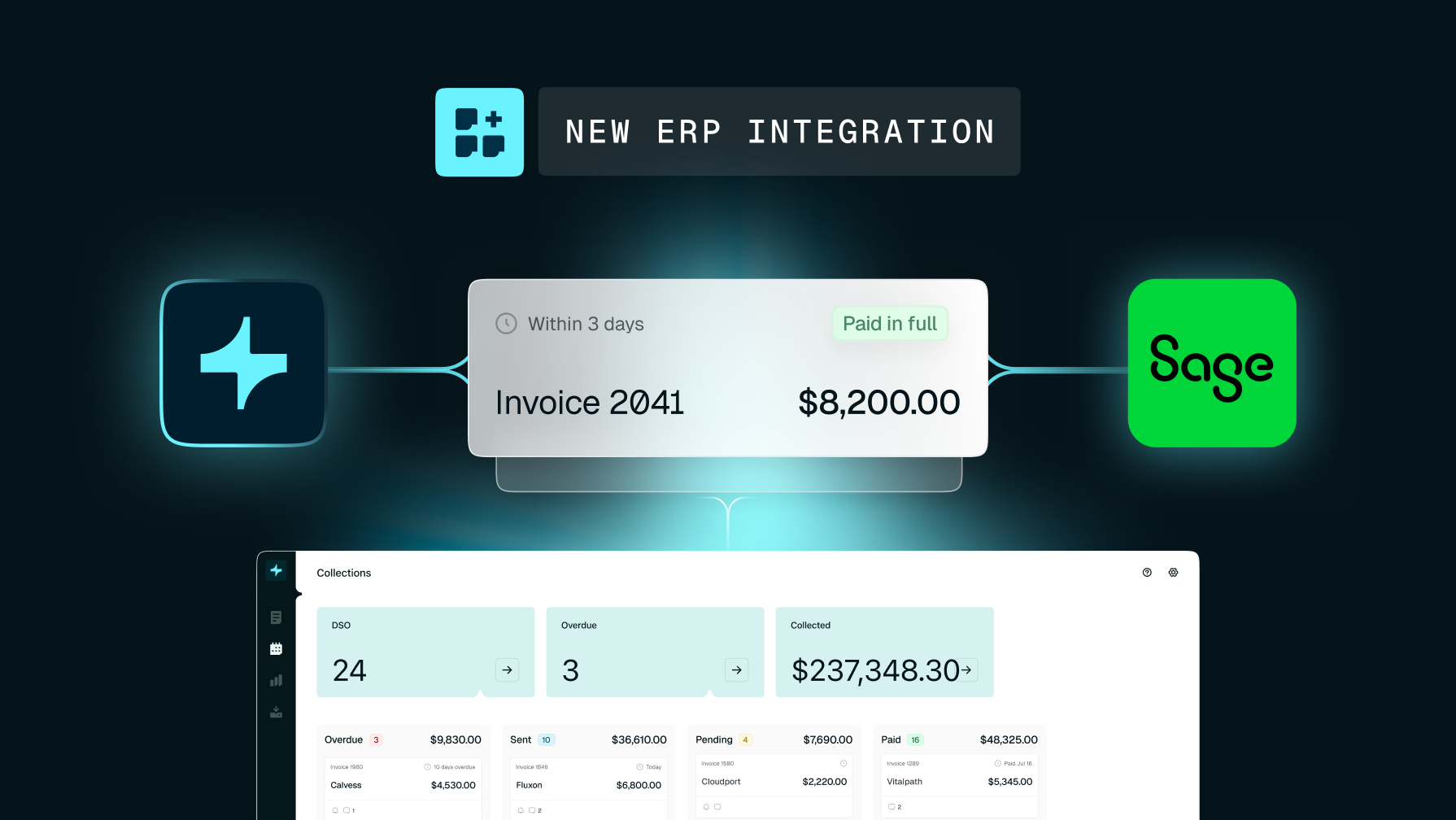
- Syncs journal entries directly to NetSuite, QuickBooks, or Sage Intacct with flux validation
- Flags anomalies in recognition patterns and adapts to evolving contract structures
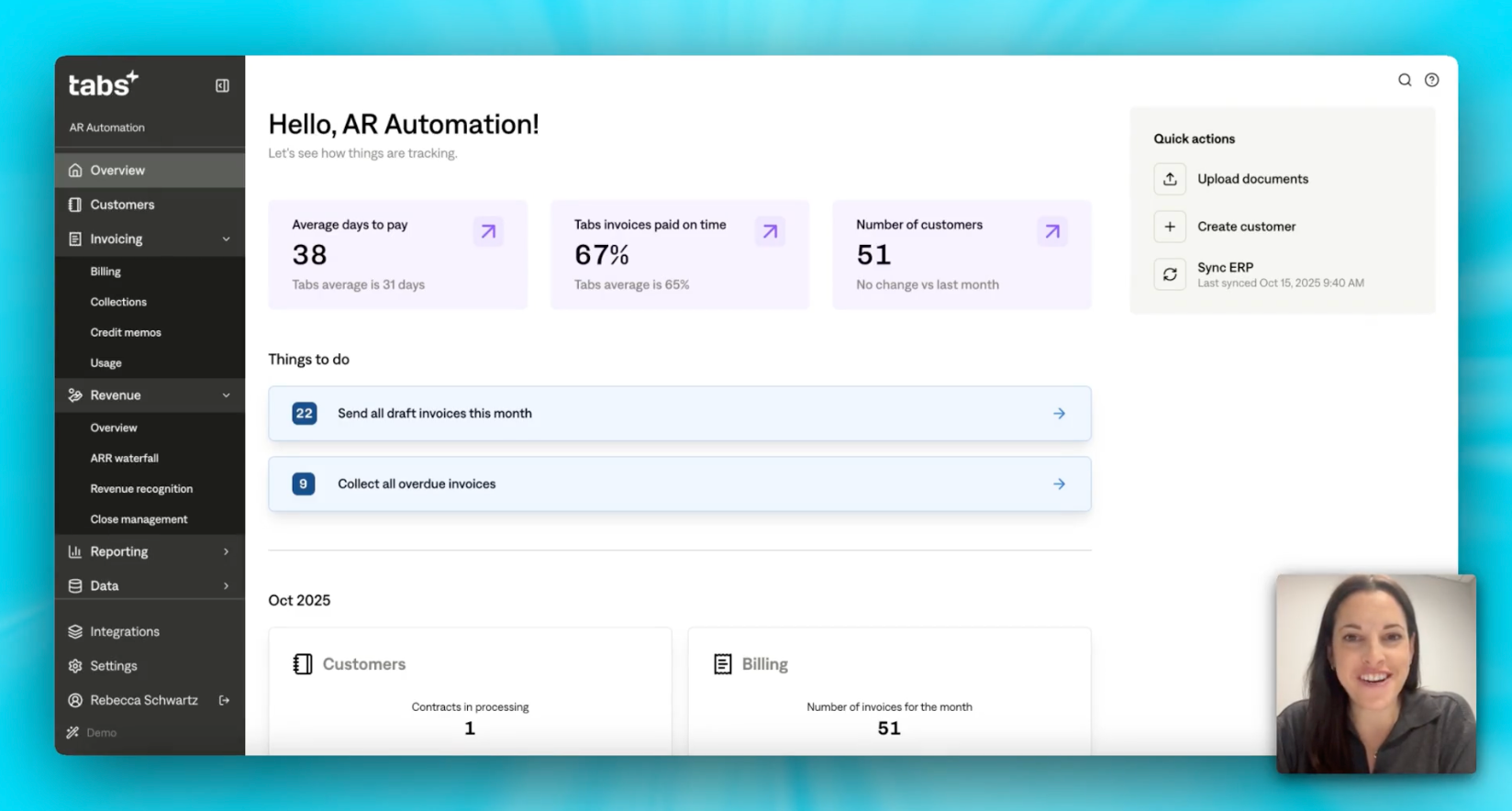
- Maintains always-on visibility into ARR waterfalls and deferred revenue balances
And the results are measurable. Statsig achieved a 100% reduction in aged receivables and handled 3x their previous invoice volume without adding headcount. Cortex cut overdue invoices by 50%. And across Tabs' customer base, over 30% of customers adopted usage-based models in under 30 days — compared to the 9–12 months typical with traditional billing solutions.
These aren't projections — they're operational results from finance teams that replaced manual processes with a system built for the complexity of modern B2B contracts.
Revenue recognition as a growth enabler
Revenue recognition is usually framed as a compliance requirement. And it is — ASC 606 isn't optional. But when rev rec is automated and accurate, something else happens: your finance team stops being a bottleneck and starts being a strategic asset.
Faster close means faster board reporting. Continuous audit readiness eliminates fire-drill preparation before quarter-end, and accurate real-time revenue data gives you the foundation for more confident pricing and investment decisions.
When evaluating revenue recognition software, start here:
- Standardize your revenue recognition policy across all contract types — subscriptions, usage-based, hybrid, and services
- Automate recognition schedules and journal entries so your team isn't rebuilding waterfalls manually every month
- Connect your billing, rev rec, and ERP into a single data flow that eliminates manual handoffs
- Maintain continuous compliance — not just at quarter-end, but every day
Tabs makes this possible without rebuilding your finance stack from scratch. It sits downstream of your CRM and CPQ, operationalizing signed contracts into accurate billing, recognition, and reporting — connected to the ERP you already use.
And when you're ready to implement, the transition doesn't have to be a multi-quarter project. Audit your current contracts to understand the mix of pricing models and recognition policies. Map how data flows from CRM to billing to your GL. Start with a defined contract subset, validate against your manual process, then expand. Fast deployment is possible when the system handles complexity natively — most teams are up and running without a multi-quarter implementation project. For a deeper look at key implementation considerations and common mistakes to avoid, these guides are worth bookmarking.
Related articles
- ASC 606 explained in five minutes
- What exactly is revenue recognition?
- The modern CFO's AI playbook
- Understanding deferred revenue and its business impact
- Best revenue automation platforms for B2B teams
Frequently asked questions
What is revenue recognition software?
Revenue recognition software automates the process of recognizing revenue in compliance with accounting standards like ASC 606 and IFRS 15. It replaces manual spreadsheet-based processes with automated recognition schedules, deferred revenue tracking, and journal entry creation — ensuring accuracy across complex contract types.
What features should I look for in revenue recognition software?
Look for five core capabilities: contract intelligence that interprets pricing terms automatically, ASC 606-native compliance across all revenue models, automated billing-to-recognition sync, native ERP integrations (NetSuite, QuickBooks, Sage Intacct), and audit-ready reporting with real-time ARR waterfalls and deferred revenue visibility.
How can revenue recognition software benefit my SaaS business?
The most immediate benefits are faster month-end close, fewer reconciliation errors, and continuous audit readiness. Tabs customers have achieved measurable results — Statsig handled 3x invoice volume without adding headcount, and Cortex reduced overdue invoices by 50%. Beyond efficiency, accurate revenue data enables better forecasting and more confident board reporting.
How does revenue recognition software ensure ASC 606 compliance?
Revenue recognition software automates the five-step ASC 606 model: identifying contracts, identifying performance obligations, determining transaction prices, allocating prices across obligations, and recognizing revenue as obligations are satisfied. The best systems apply this logic natively across subscription, usage-based, hybrid, and milestone revenue — without requiring manual rule configuration for each contract type.
Can revenue recognition software integrate with my existing systems?
Yes. Modern revenue recognition software connects directly to your ERP (NetSuite, QuickBooks, Sage Intacct), CRM, and billing systems. Tabs syncs journal entries automatically with flux validation, so your general ledger reflects recognized revenue in real time without manual posting or reconciliation.