




For finance leaders at B2B companies managing complex billing models, manual processes create bottlenecks that drain time, introduce errors, and delay cash collection. This guide breaks down how recurring billing automation works, what features matter most, and how to evaluate platforms that can transform your contract-to-cash workflow.
What is recurring billing automation?
Recurring billing automation is the end-to-end process of generating, sending, and collecting invoices on a scheduled or usage-triggered basis—without manual intervention. This means your finance team no longer needs to review contracts, re-key data into spreadsheets, or chase down payments by hand.
The scope extends far beyond simple payment processing. True recurring billing software handles the entire contract-to-cash lifecycle: extracting terms from signed agreements, creating accurate invoices, managing collections, and generating compliant Revenue Recognition entries.
Recurring billing automation supports predictable, repeatable customer billing across flat-fee, usage-based, and hybrid pricing models. It can manage standard monthly charges as well as more dynamic scenarios—usage spikes, mid-cycle upgrades, custom escalators, and pricing structures that combine multiple approaches.
Tabs uses AI models to extract key terms (pricing, billing cadence, renewals, and amendments) and map them into executable billing workflows and Revenue Recognition logic. Your contract terms drive invoices and accounting without manual re-keying.
Here's what true automation includes compared to what it replaces:
- Contract ingestion: Extracting billing terms directly from signed agreements vs. manually reading PDFs and copying data.
- Invoice generation: Creating accurate charges based on actual usage and contract rules vs. building formulas in spreadsheets.
- Revenue recognition: Automatically building compliant schedules vs. calculating deferred revenue by hand each month.
Benefits of recurring billing automation for B2B finance teams
Why does this matter for your team? Because manual processes don't just slow you down—they introduce errors that compound over time. Every typo requires a credit memo. Every delayed invoice pushes out cash collection. Every spreadsheet formula creates audit risk.
Modern finance leaders need predictable cash flow and clean reporting to drive business strategy. McKinsey research shows 65 percent of CFOs will increase AI investment in 2025. Automated recurring billing eliminates the administrative bottlenecks that keep your team stuck in reactive mode.
Accelerate invoice cycles
The lag between a signed deal and the first invoice is often measured in days—sometimes weeks. Manual contract review creates this bottleneck. Someone has to read the PDF, find the billing terms, and enter them into your billing system.
AI-powered term extraction can shrink this delay dramatically. Signed contracts can become ready-to-send invoices in minutes instead of days—especially when terms are standardized and the contract is fully executed. When you invoice faster, you collect faster.
Why it matters: Every day you delay invoicing is a day you delay cash collection.
Reduce DSO with smart collections
Days Sales Outstanding (DSO) measures how long it takes to collect payment after sending an invoice—averaging 36.8 days across industries according to the Credit Research Foundation. High DSO strains your cash flow and forces you to rely on credit lines or delay vendor payments.
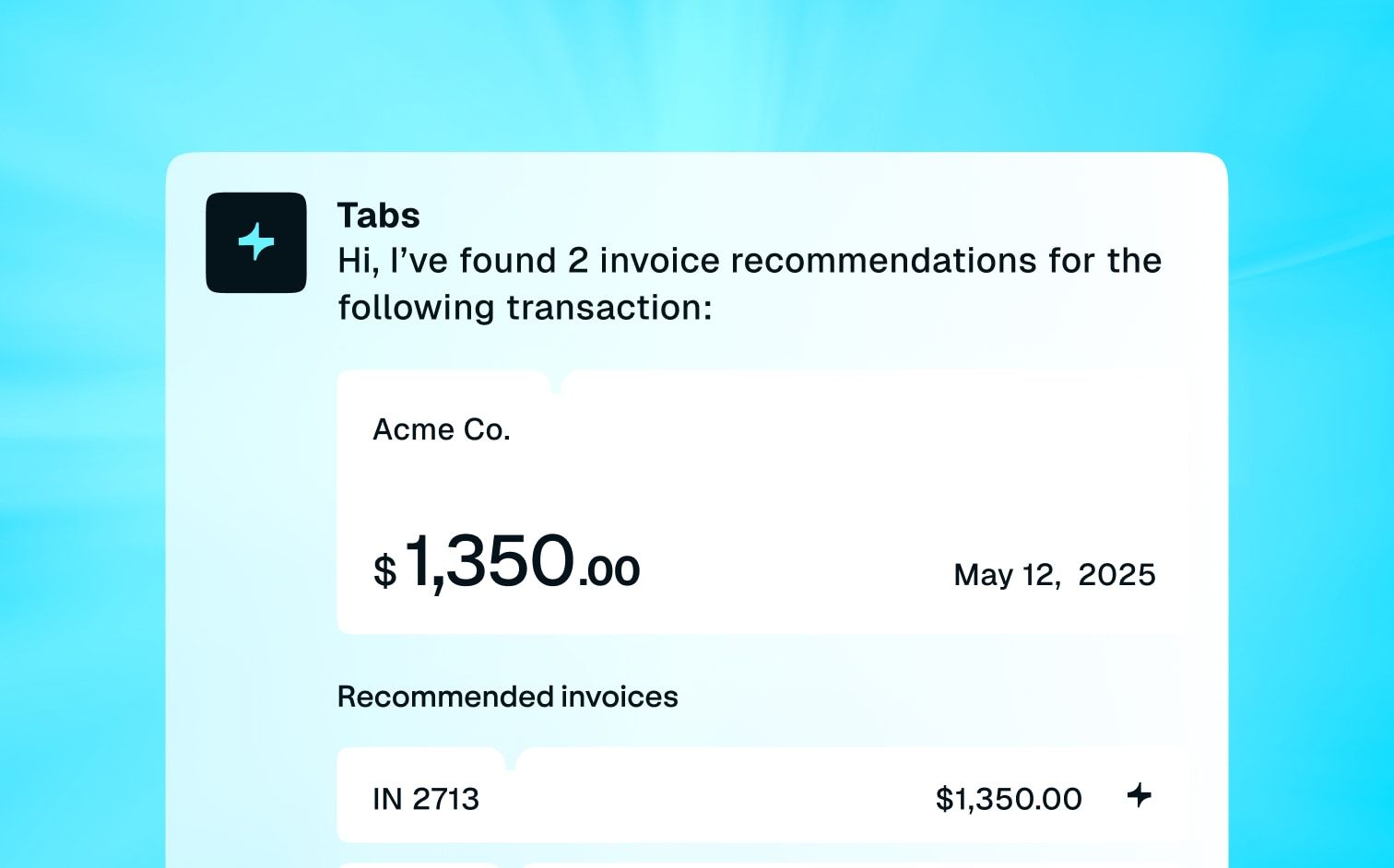
Smart collections workflows use embedded payment links and automated reminders to shorten this cycle. But the real value comes from actionable insights. Instead of blasting generic reminders to everyone, collections analytics flags which accounts need personal attention and which are likely to pay with automated reminders.
Why it matters: Lower DSO means better liquidity and less time spent chasing payments.
Eliminate billing errors and rework
Manual data entry inevitably leads to mistakes. A mistyped price. A wrong billing date. A missed escalator clause. Each error requires a credit memo, a rebill, and an awkward customer conversation.
Automation reduces errors by keeping terms flowing from the signed contract to the invoice with minimal re-keying—so exceptions are explicit, not accidental. Speed is table stakes. Cleanliness is the differentiator.
Why it matters: Accurate invoices prevent revenue leakage and protect customer relationships.
Improve audit-ready compliance
Accounting Standards Codification (ASC) 606 compliance requires detailed documentation of how you recognize revenue over time. Spreadsheets often make audit season harder because they don't consistently provide the traceability auditors require.
Automated systems log every invoice, adjustment, and recognition entry to create a complete audit trail. You gain audit-grade transparency without the manual reconciliation that drains your accounting team's energy.
Why it matters: Clean audit trails reduce compliance risk and save weeks of preparation time.
Turn contracts into invoices—automatically
Essential features for recurring billing automation
Not all recurring billing software is created equal. A true automation platform requires more than basic payment processing. Isolated point solutions create the exact same fragmentation problems they claim to solve.
With nearly 80% of organizations lacking in-house digital skills according to KPMG, you need a comprehensive SaaS billing system that handles everything from the initial contract to the final journal entry—without requiring you to act as human middleware between disconnected tools.
AI contract ingestion and term extraction
Generic tools struggle to read complex B2B agreements. They miss escalators, custom billing schedules, and renewal clauses buried in legal language.
Tabs uses AI to parse signed contracts—whether they're PDFs, Word documents, or emails—to extract billing terms automatically. But extraction alone isn't enough. The platform adds commercial context by mapping clauses—like ramp schedules, minimum commits, proration rules, and renewal language—into billing logic and Revenue Recognition requirements.
Why it matters: Eliminates manual contract review and downstream billing errors.
Automated invoices and accurate proration
Your flexible billing software must generate invoices based on contract terms without requiring manual data entry. It also needs to handle proration—the calculation of partial charges when customers upgrade, downgrade, or change plans mid-cycle.
Getting proration right prevents revenue leakage and eliminates customer disputes over incorrect charges. When a customer upgrades on day 15 of a 30-day billing cycle, the system should automatically calculate the correct amounts for both the old and new plans.
Why it matters: Accurate proration protects revenue and prevents customer friction.
Usage events and flexible pricing rules
Modern B2B companies increasingly rely on usage-based, metered, or hybrid billing models. A robust platform ingests usage events and applies pricing rules in real time to ensure accurate charges.
This flexibility allows product teams to evolve pricing structures without re-architecting the entire billing infrastructure. You can launch new usage-based SKUs, implement seat-based pricing for team plans, or experiment with hybrid models—all without engineering bottlenecks.
Why it matters: Pricing flexibility enables revenue growth without technical constraints.
Payments, tax rules, and collections workflows
Processing payments and calculating tax rules must happen seamlessly in the background. But collections workflows should do more than just send automated emails to past-due accounts.
Effective collections surface insights so finance teams know exactly which accounts require personal intervention. A large enterprise customer who's three days late needs a different approach than a small account that's 60 days overdue.
Why it matters: Smart collections recover more cash with less manual effort.
How recurring billing automation works from contract to cash
Understanding the operational flow helps you see where manual steps break down and cause delays. Here's how SaaS recurring billing flows from a signed agreement to recognized revenue.
Why it matters: A disconnected finance stack forces your team to act as human middleware. True automation connects the dots downstream of your CRM to operationalize signed contracts instantly.
Step 1: Capture contract data
The process begins the moment a deal closes. The system ingests the signed contract and parses the document automatically. AI extracts the pricing, terms, and billing schedules so nobody has to review the PDF manually.
This step is where most manual processes break down. Someone has to read the contract, interpret the terms, and enter them correctly into the billing system. Automation eliminates this bottleneck entirely.
Step 2: Create invoices from terms
Next, the platform generates accurate invoices based directly on those extracted terms. This step supports flat subscriptions, usage metering, and complex hybrid models.
Because the invoices reflect the actual contract language, you see far fewer customer disputes. The invoice matches what the customer signed, every time.
Step 3: Sync payments and collections
Once the invoice goes out, the system tracks payments and reconciles them automatically. It handles automated dunning, payment retries, and embedded payment links to accelerate cash flow.
The platform also surfaces actionable insights on overdue balances. You can see at a glance which accounts need attention and which are likely to pay without intervention.
Step 4: Generate revenue schedules
Finally, the system creates revenue recognition entries automatically based on the contract and billing data. This supports ASC 606 compliance by generating Revenue Recognition schedules and journal entries automatically, without relying on manual spreadsheet-based schedules.
Every action generates a clear audit trail for your accounting team. Renewal billing automation helps ensure that multiyear contracts and auto-renewals are handled correctly from day one.
Evaluation criteria for recurring billing automation platforms
Choosing the right recurring billing automation platform requires looking beyond a simple feature checklist. You must evaluate how well the system handles your specific operational complexity and growth plans.
A generic payments tool stretched to handle enterprise contracts will eventually break under pressure. Here's what to look for.
Usage-based billing support and real-time events
Usage-based and hybrid billing support is essential for modern B2B companies. You need a system that handles event ingestion, rating, and real-time metering.
Platforms designed only for flat-rate subscriptions will constrain your pricing evolution. If your product team wants to launch a usage-based SKU next quarter, your billing infrastructure shouldn't be the blocker.
ERP and CRM integrations and data sync
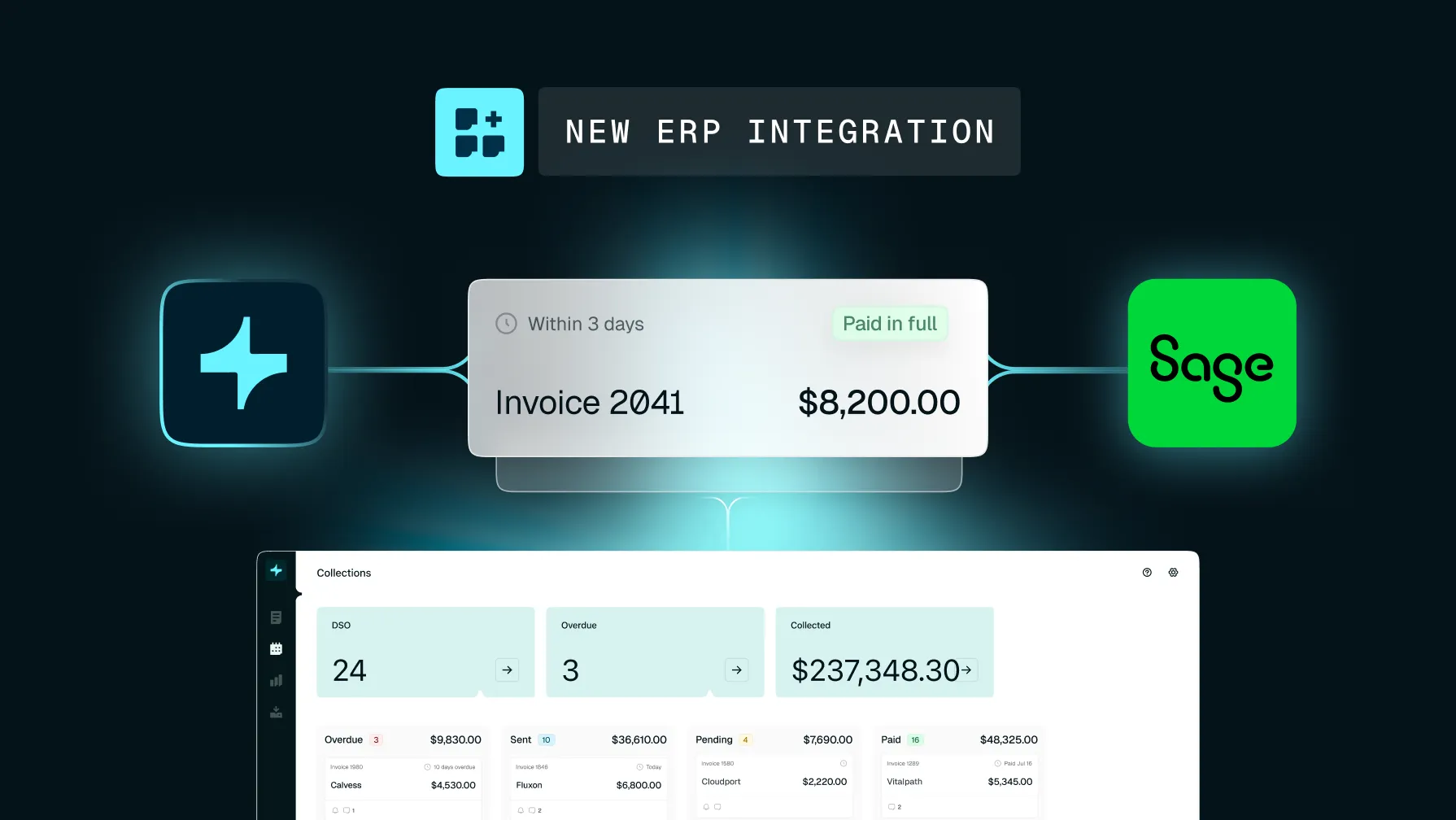
Your billing system must offer native integrations with financial systems like NetSuite, Sage Intacct, and QuickBooks. Bidirectional data sync is critical to avoid reconciliation headaches at month-end.
Tabs provides robust APIs for extending functionality and embedding billing directly into other products. This extensibility ensures your billing system can serve as the central nervous system for revenue operations.
Security, compliance, and audit trails
Enterprise-grade security and System and Organization Controls (SOC) 2 compliance are foundational requirements, not optional add-ons. The platform must enforce encryption and strict role-based access controls.
Audit trails must be complete and easily accessible—not buried deep in developer logs. Your auditors should be able to trace any transaction from contract to cash without requesting custom reports.
Metrics to track for recurring billing automation ROI
You need concrete KPIs to demonstrate the impact of your recurring revenue management software. Avoid generic efficiency claims and tie every metric to a specific operational improvement.
| Metric | What it measures | Why it matters |
|---|---|---|
| Days Sales Outstanding | Average days to collect payment | Lower DSO means faster cash flow |
| Invoice accuracy rate | Percentage of invoices sent without errors | High accuracy prevents revenue leakage |
| Time to close | Days required to close the books | Faster closes give leadership quicker data |
| Failed payment recovery | Percentage of declined payments collected | Effective recovery saves lost revenue |
Recurring billing automation with Tabs
Tabs is the AI-powered revenue automation platform built specifically for complex B2B finance teams. Tabs replaces fragmented finance stacks with a unified system of intelligence that scales with your business.
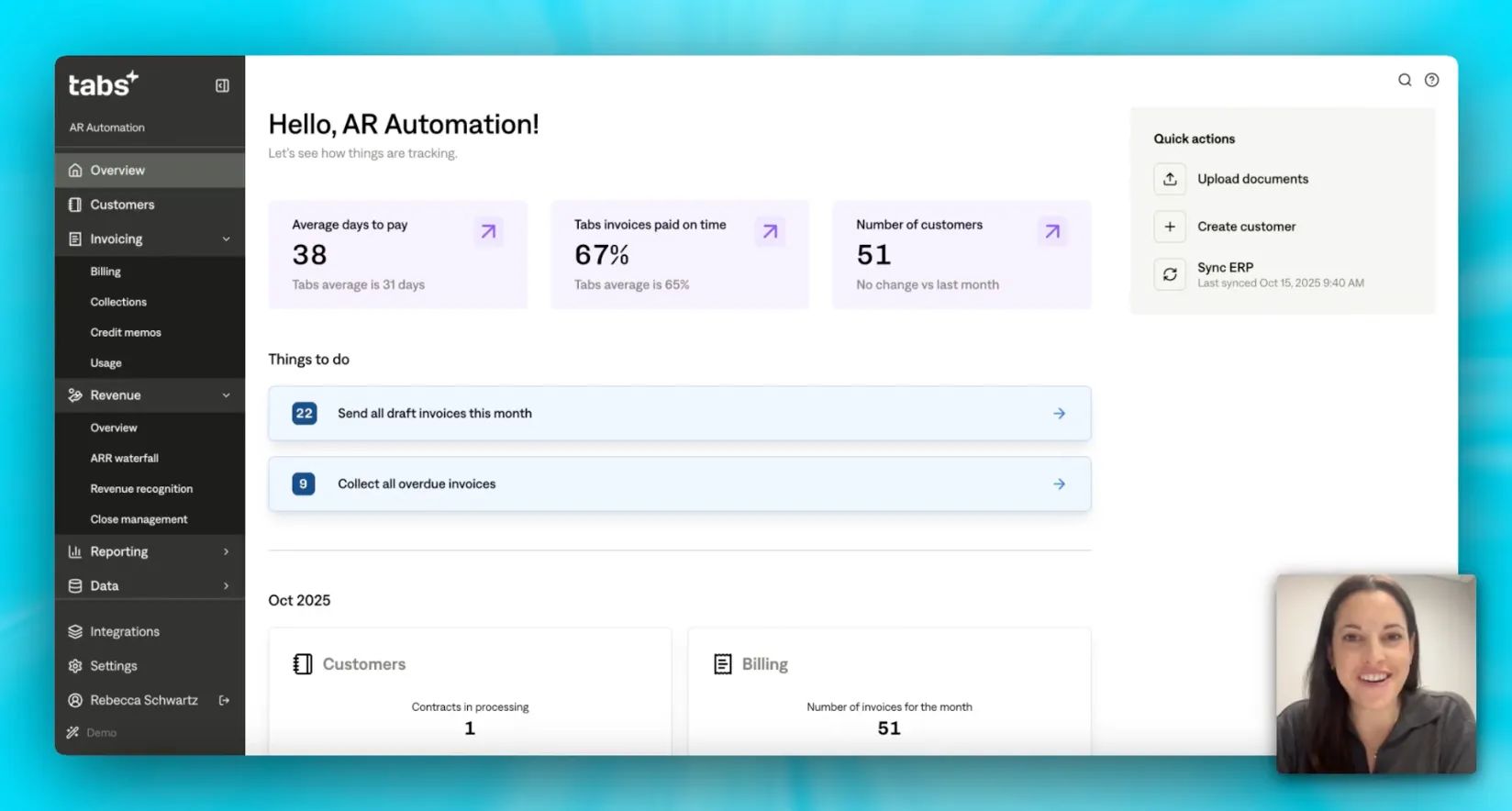
The platform consists of four seamless product modules:
- Billing: Automates invoice generation directly from contracts without manual PDF manipulation.
- Collections: Accelerates cash flow through automated reminders and actionable insights on overdue balances.
- Revenue Recognition: Ensures ASC 606 compliance through automated processes powered by contract data.
- Reporting: Provides real-time visibility into annual recurring revenue (ARR), cash, and renewals.
What sets Tabs apart is AI contract ingestion and the Commercial Graph—an intelligent customer record that unifies contracts, usage data, payments, and terms. Tabs uses AI models to automate term extraction and add commercial context—mapping clauses like ramp pricing, proration, minimums, and renewals into accurate billing workflows and Revenue Recognition schedules.
Teams such as Statsig and Cortex have shared that Tabs helped reduce aged receivables and bring down overdue invoices. (Add an inline link to the relevant case study or public source.) Tabs supports complex hybrid billing models that often require months of custom development with traditional tools.
Frequently asked questions
How does automated dunning reduce DSO without damaging customer relationships?
Smart dunning workflows send context-aware reminders and embed payment links, making it easy for customers to pay without friction. The automation surfaces insights on overdue balances so your team can intervene strategically on high-value accounts rather than blasting generic reminders to everyone.
Can recurring billing automation handle ASC 606 compliance for contracts with multiple performance obligations?
Yes—when configured correctly, recurring billing automation can generate revenue schedules based on contract and billing data. Tabs supports milestone-based, usage-based, and hybrid models with audit-grade transparency, creating the documentation auditors require without manual spreadsheet work.