




For B2B finance teams managing complex billing models, manual invoice tracking creates bottlenecks that slow collections and introduce errors that obscure cash visibility. This guide covers how modern invoice tracking software works, the features that matter for subscription and usage-based revenue, and how AI-powered automation eliminates manual reconciliation so you can scale revenue operations without scaling headcount.
What is invoice tracking software?
Invoice tracking software monitors the status of every invoice you send—from creation to payment to bank deposit. It reduces your reliance on spreadsheets, email threads, and manual logs —, especially as volume and complexity grow. At its core, this software answers a simple question: where is my cash?
Basic tools show you whether an invoice was sent and if it's been paid. But for B2B companies with complex contracts, that's not enough. You need to know why a specific amount was billed, whether it matches the signed agreement, and when cash will actually land in your account.
This is where revenue automation platforms differ from simple trackers. Tabs adds commercial context to the process —, using AI models to extract contract terms and operationalize them into accurate billing workflows. Instead of just logging transactions, Tabs interprets the business logic behind them —, then applies it to billing: payment schedules, usage rates, discount clauses, and renewal terms. That context is what separates tracking from true automation.
Key benefits of invoice tracking software
The right invoice tracking software transforms finance from a reactive function into a strategic one. When you eliminate manual processes, you remove the bottlenecks that slow down collections and delay your close.
Here's what changes:
- Faster collections: Automated reminders reduce days sales outstanding (DSO) without requiring your team to send follow-up emails manually. Customers get nudged at the right time, every time.
- Fewer errors: System-generated invoices eliminate the typos and calculation mistakes that come with manual data entry—mistakes that cause 60% of late payments. When the software pulls directly from contracts, you avoid the disputes that delay payment.
- Real-time visibility: Dashboards show which invoices are sent, viewed, paid, or overdue—and how that impacts your accounts receivable (AR). Cash flow reporting is simple and automated.
- Audit-ready records: Every invoice, payment, and adjustment is logged automatically with a timestamp. This creates an audit-ready trail for compliance and due diligence.
- Accurate cash forecasting: Modern revenue automation platforms don't just show when invoices are due —; they forecast when cash will actually land. Machine learning can improve forecast accuracy by 30-50% using historical payment behavior and contract terms.
Basic tools give you a list of unpaid bills. Platforms like Tabs provide the commercial context to prevent revenue leakage before it happens.
End manual reconciliation with Tabs
How invoice tracking software works
The workflow follows three stages: capture, routing, and reconciliation. Understanding where your current process breaks down helps you identify what to fix.
Capture invoice data
The process starts with data ingestion. In traditional workflows, someone manually types contract details into an accounting system or invoice template. This is slow, tedious, and prone to error.
AI-powered platforms automate this step entirely. Tabs pulls signed contracts from your CRM or file storage and uses AI models to extract billing terms, start dates, renewal clauses, and pricing tiers—without requiring anyone to re-key information. The invoice data matches the signed agreement exactly.
Why it matters: Eliminates manual contract re-keying and the downstream billing errors that come with it.
Route approvals and reminders
Once data is captured, the software generates the invoice and sends it to the customer. This stage includes tracking whether the email was delivered and if the client has viewed the document.
If payment doesn't arrive by the due date, the system triggers a dunning sequence—a series of automated reminders. Basic tools send generic "past due" emails on a rigid schedule. Tabs applies context-aware logic —, adjusting timing and tone based on the customer's payment history and contract terms.
Why it matters: Preserves customer relationships while ensuring consistent follow-up.
Collect payments and reconcile
The final stage closes the loop when cash hits the bank. Good software facilitates payment through embedded options like credit card links or Automated Clearing House (ACH) details, reducing friction for the customer.
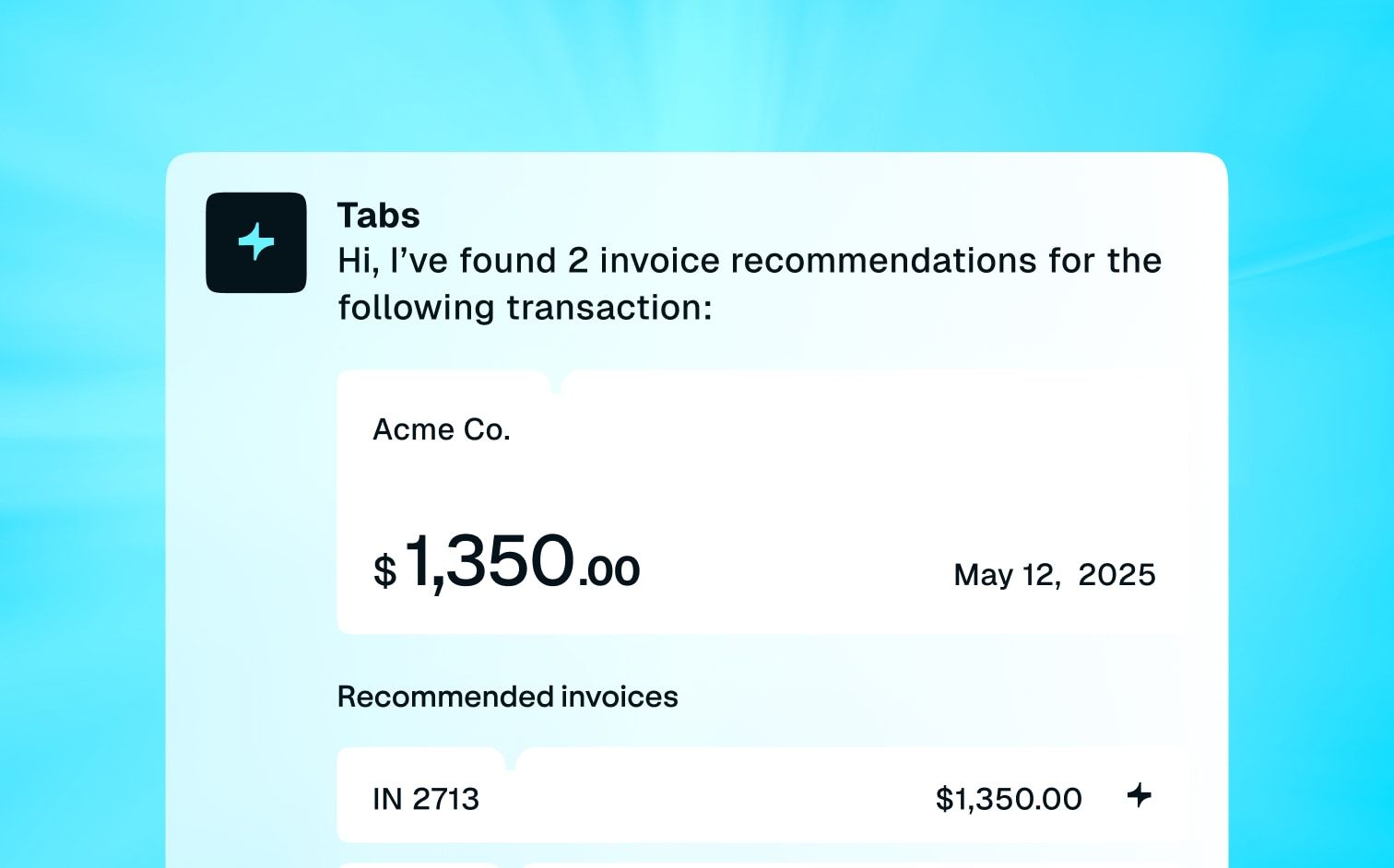
Once funds arrive, the system matches incoming payments to open invoices. This reconciliation step is where revenue leakage often starts—especially when partial payments, short pays, or lump sums cover multiple invoices and get misapplied. Tabs automates cash applicationautomates cash application by parsing remittance data and matching payments to the correct invoices and line items—including partial payments and consolidated remittances.
Why it matters: Stops reconciliation errors from becoming revenue leakage.
Invoice tracking software features for B2B finance
B2B finance teams face complexity that simple invoicing tools can't handle. You need features designed for high-volume, high-value transactions with multiple stakeholders and variable terms.
Automated payment reminders
Effective dunning requires consistency and nuance. You need configurable reminder schedules based on the age of the receivable—not just a single "past due" email.
- Configurable sequences: Set up specific email chains for three days before due, on the due date, and at various intervals past due.
- Escalation paths: Automatically loop in account executives or customer success managers when an invoice remains unpaid beyond a set threshold.
Basic tools treat every customer the same. Tabs allows segmentation, ensuring that a strategic enterprise partner receives a different follow-up cadence than a transactional small and midsize business (SMB) customer.
Inline payment options
Friction kills speed. If a client has to log into a separate portal or write a check, you may add days to your DSO.
Modern software embeds payment capabilities directly into the invoice—"Pay Now" buttons that support credit cards, ACH, Apple Pay, and wire transfers. When you make it easy for clients to pay, they pay faster. Tabs supports multiple payment gateways and automatically associates the resulting transaction with the correct customer account.
Status tracking and cash visibility
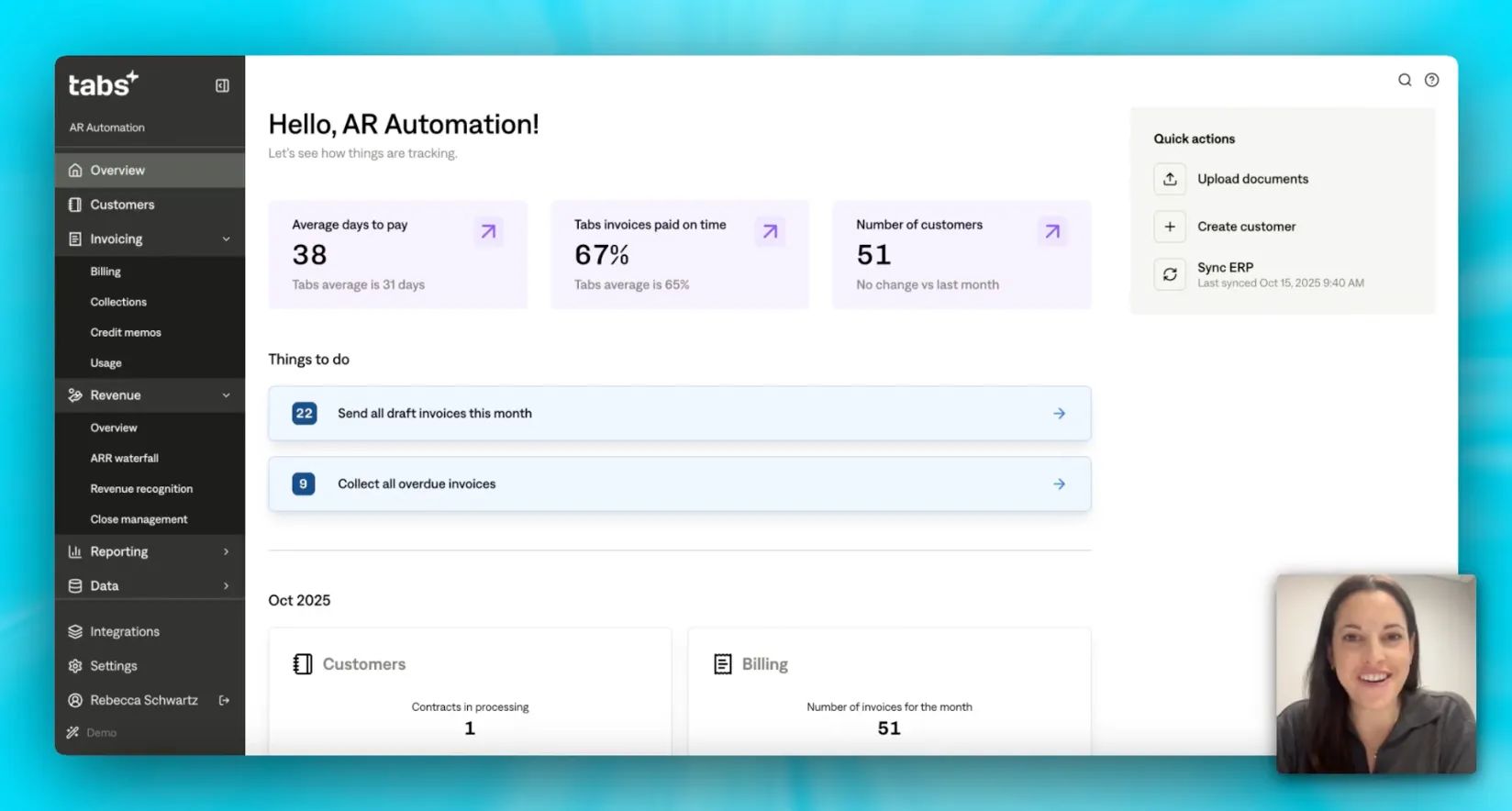
You can't manage what you can't see. A robust platform provides a centralized dashboard tracking the entire lifecycle of every invoice.
- Lifecycle stages: See instantly if an invoice is in draft, sent, viewed, disputed, paid, or voided.
- AR aging reports: Visualize receivables by time buckets (0–30, 31–60, 61–90, 90+ days) to prioritize collections efforts.
Tabs takes this further with cash forecasting based on actual behavior. It analyzes how long specific customers typically take to pay and adjusts projections accordingly—giving you a realistic view of your financial runway.
| Capability | Basic tracking tools | Revenue Automation (Tabs) |
|---|---|---|
| Invoice creation | Manual entry or templates | Auto-generated from contracts |
| Payment reminders | Rigid, time-based schedules | Context-aware dunning |
| Reconciliation | Manual matching | AI-powered cash application |
| Reporting | Static invoice status | Predictive cash forecasting |
Invoice tracking software for complex billing models
Standard invoice tracking tools were built for simple, one-time transactions. They struggle with the dynamic nature of modern B2B revenue models. If your company uses subscriptions, usage-based pricing, or hybrid models, a basic tool will force you back into spreadsheets.
B2B finance teams need software that handles:
- Recurring subscriptions: Automated invoices on configurable schedules with proration for mid-cycle upgrades or downgrades.
- Usage-Based Billing: Convert metered consumption into accurate invoices without manual calculation.
- Hybrid models: Combining flat platform fees with variable usage overages in a single, clean invoice.
- Milestone billing: Invoices triggered by project deliverables or implementation phases rather than calendar dates.
- Contract amendments: Mid-term changes reflected automatically without re-keying.
Tabs is purpose-built for this complexityall these complexities. The platform uses AI models to extract and interpret specific contract terms—including price escalators, usage caps, and custom clauses—and then applies the correct billing logic. Your billing infrastructure enables your business model rather than constraining it.
Integrations and data flow for finance systems
Invoice tracking can't exist in a vacuum. For finance operations to run smoothly, data must flow seamlessly between your CRM, billing engine, payment processors, and ERP.
Without tight integrations, your team is stuck manually exporting and importing CSV files—introducing data latency and copy-paste errors. A robust finance stack relies on these connections:
- CRM systems: Pull deal data directly from Salesforce or HubSpot so invoices match what sales closed.
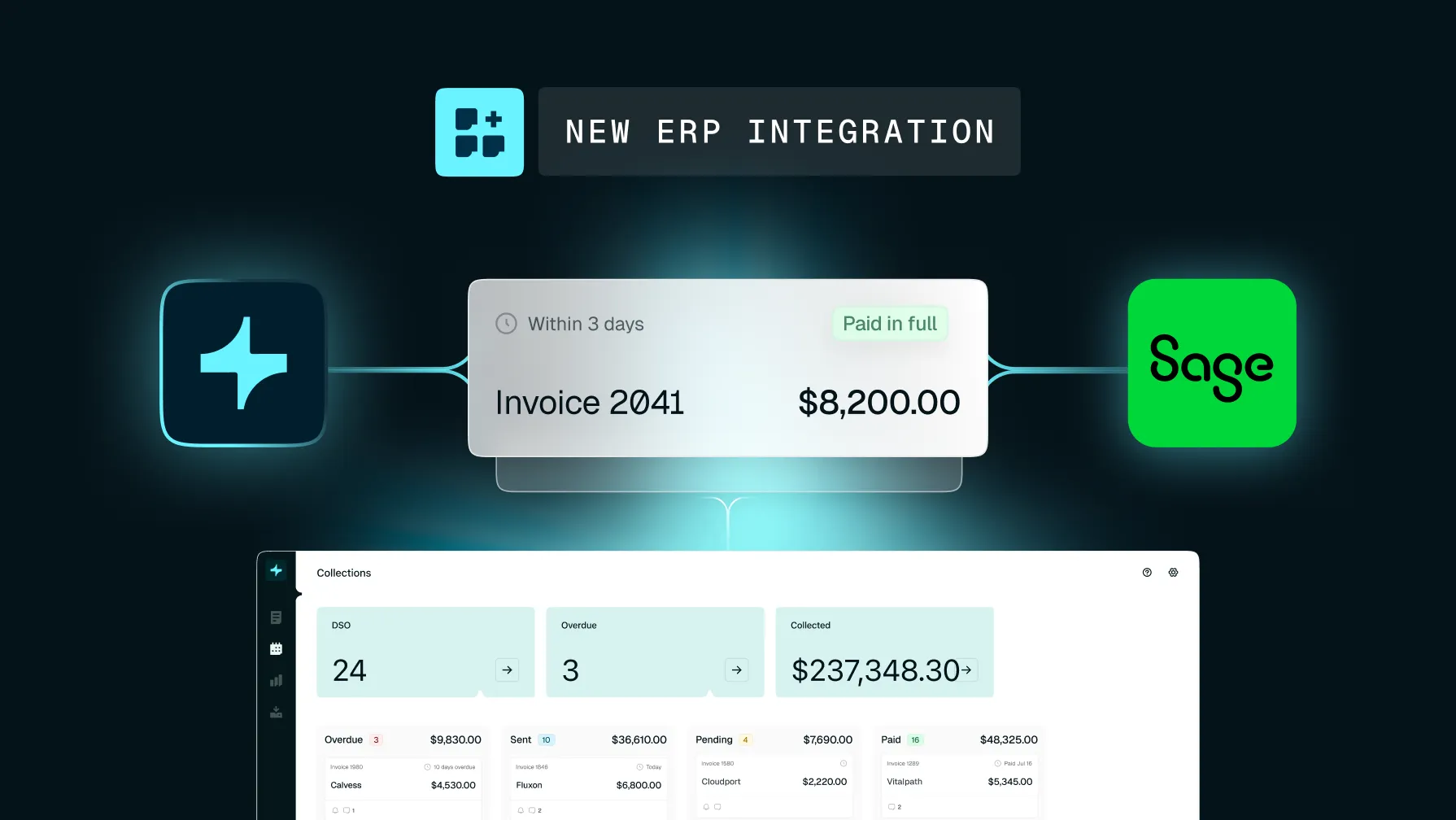
- ERPs: Sync invoices and payments to your general ledger (NetSuite, QuickBooks, Sage Intacct) for accurate financial statements.
- Payment gateways: Connect Stripe, GoCardless, or bank feeds for real-time payment capture.
- Reporting tools: Push accounts receivable (AR) data to your business intelligence (BI) tools for leadership visibility.
Tabs offers native integrationsnative integrations with major ERPs and CRMs, acting as the connective layer between signed contracts and financial records. Data flows cleanly from contract signature to Revenue Recognition without manual intervention.
How Tabs improves cash flow and revenue accuracy
For B2B finance teams that have outgrown basic tracking tools, Tabs offers a fundamental shift. The platform focuses on business outcomes rather than just digitalizing manual tasks.
- Reduced DSO: Intelligent reminders and frictionless payment options accelerate collections—reducing DSO by 20-35%—without adding headcount.
- Accurate invoices: AI extracts terms directly from contracts, eliminating human error. Invoices reflect exactly what was signed.
- Clean Revenue Recognition: Invoices and payments feed directly into Accounting Standards Codification (ASC) 606-compliant schedules, automating complex accounting for subscription and usage-based models.
- Exception handling: The platform flags mismatches between contracts, invoices, and payments before they impact your close.
- Audit-ready records: Every transaction traces back to the source contract.
The core differentiator is commercial context. Generic automation tools extract data but don't understand the business logic behind it. Tabs uses AI models toautomatically interprets B2B contract nuances and apply them to accurate billing workflows, cash application, and Revenue Recognition.
Frequently asked questions
How quickly can finance teams implement Tabs to replace manual invoice tracking?
Teams often go live in <30 days, depending on contract volume and integration requirements. Tabs handles data migration and integration setup, allowing you to transition from spreadsheets to automated workflows without a multi-month implementation.
Can Tabs generate invoices for usage-based and hybrid pricing models?
Yes. Tabs natively supports subscriptions, seat-based billing, Usage-Based Billing, milestone billing, and hybrid structures—all configured directly from contract terms without custom engineering.
Which ERPs and CRMs does Tabs integrate with natively?
Tabs offers native integrations with NetSuite, QuickBooks, Sage Intacct, and Salesforce. Contracts flow from your CRM into Tabs for invoicing, and financial data syncs to your ERP for general ledger reconciliation.