





For B2B finance teams managing complex billing models, this guide breaks down what makes a billing system truly efficient—covering the features that matter, the benefits that compound, and a practical implementation path that gets you from signed contract to collected cash without the manual work.
What is an efficient billing system?
An efficient billing system is software that minimizes manual work, reduces errors, and shortens the time between sending an invoice and collecting payment. This means your finance team spends less time copying data between tools and more time on strategic work.
Most legacy billing tools were built for simple recurring charges. But modern B2B companies need systems that handle usage-based pricing, mid-contract changes, and hybrid models without creating downstream billing and revenue recognition errors. When your revenue operations rely on disconnected tools, you end up reconciling data instead of analyzing it.
Tabs sits downstream of your CRM and CPQ, using AI to translate signed contracts into accurate billing and Revenue Recognition workflows. It uses trained models to identify commercial terms—like proration, ramp periods, usage thresholds, and effective dates—and operationalize them consistently, so what's in the executed contract is exactly what finance bills.
Here's what separates inefficient from efficient billing:
- Inefficient: Manual invoice generation requires reading PDF contracts and re-keying data into accounting software.
- Efficient: Automated workflows pull terms directly from executed contracts to generate accurate invoices without manual re-keying.
- Inefficient: Disconnected data sources force teams to download CSVs from multiple platforms to calculate usage overages.
- Efficient: A single source of truth unifies contract terms, product usage, and payment data in one intelligent record.
Benefits of efficient billing systems
When you eliminate friction between a signed contract and collected cash, the entire business moves faster. These benefits compound when your billing logic is informed by deep commercial context rather than manual configuration.
Reduce manual work and errors
Manual data entry is the enemy of scale. Every time someone copies information from a CRM into an invoicing tool, you introduce the risk of costly mistakes. And those errors cascade downstream quickly.
Incorrect invoices lead to customer disputes, delayed payments, and strained relationships. Tabs uses AI to extract terms directly from signed contracts and apply commercial context—like proration, co-terms, ramp pricing, and usage thresholds—to generate billing workflows and Revenue Recognition schedules without manual re-keying. Your team stops acting like data routers and starts acting like strategic advisors.
Why it matters: Eliminating manual contract re-keying prevents downstream billing errors before they happen.
Accelerate cash flow and DSO
Days sales outstanding (DSO) measures the average number of days it takes to collect payment after a sale. Faster invoicing and automated collections directly shorten this window.
But efficient billing automation software doesn't just send invoices faster—it sends accurate invoices that customers pay without dispute. Automated reminders and embedded payment links reduce the friction of completing payment. When customers can initiate an ACH payment directly from the invoice, your cash flow becomes predictable.
Why it matters: Accurate invoices get paid faster than disputed ones.
Improve compliance and audit readiness
Auditors look for unbroken chains of evidence connecting a signed contract to recognized revenue. Efficient systems maintain complete audit trails from signature through cash collection.
This is critical for Accounting Standards Codification 606 (ASC 606), which governs how B2B companies recognize revenue over time. Tabs maintains traceable records of every invoice, payment, and recognition event—giving finance leaders confidence during audits without the frantic scramble to justify historical entries.
Why it matters: Complete audit trails eliminate the stress of proving revenue accuracy.
Elevate customer experience
Billing is often your most frequent touchpoint with customers after the sale. Confusing invoices and incorrect charges damage the trust your sales team worked hard to build.
Efficient systems produce clear, accurate invoices that break down complex charges logically. They also offer self-service payment portals where customers can manage payment methods and view historical bills. Customers who trust their invoices pay faster and renew more readily.
Why it matters: Smooth billing relationships drive retention.
Stop reconciling spreadsheets—see Tabs automate contract-to-cash
Features of efficient billing systems for B2B finance
When evaluating billing software vendors, look past basic invoicing to find tools built for enterprise complexity. The best billing systems act as a system of intelligence, orchestrating data across your entire finance stack.
| Feature Category | What to Look For |
|---|---|
| Security & Compliance | SOC 2 certification, data encryption, role-based access |
| Invoicing & Dunning | Automated generation, customizable templates, smart reminders |
| Payment Options | Multiple gateways, embedded payment links, ACH and card support |
| Usability | Intuitive interface, minimal training required |
| Scalability | Handles volume growth without performance issues |
| Pricing Flexibility | Supports subscription, usage-based, and hybrid models |
Security controls and compliance
Financial data is the most sensitive information your company possesses. Baseline security requirements for billing engines include strict access controls and data encryption both in transit and at rest.
SOC 2 compliance is non-negotiable for any platform handling your revenue data. Tabs maintains SOC 2 compliance and enterprise-grade security as foundational requirements.
Why it matters: Security gaps in billing systems expose your most sensitive financial data.
Automated invoices and dunning
Automated invoicing turns executed contract terms into formatted, accurate invoices. Dunning is the automated process of following up on those bills when they become overdue.
Tabs generates invoices directly from contract terms without manual PDF review or data entry. The dunning workflow includes configurable reminder schedules, escalation paths for severely overdue accounts, and dashboards highlighting at-risk balances.
Why it matters: Automated follow-up recovers cash that manual processes miss.
Online payment options
Friction kills fast collections. Offering multiple payment methods directly on the invoice drastically reduces time to payment.
Modern platforms support payment gateway integrations, embedded payment links, and diverse methods like ACH, credit cards, and wire transfers. When customers have to log into a separate portal to pay you, DSO typically increases.
Why it matters: Every extra step between invoice and payment costs you days of cash flow.
Ease of use for finance teams
Powerful features mean nothing if the system requires engineering support to operate. Finance teams need intuitive interfaces that don't require developers to change a billing rule or update a pricing tier.
Tabs is built for finance users, with workflows designed around how accounting teams actually work.
Why it matters: Tools that require IT tickets for routine changes slow down your entire operation.
Scalability for complex pricing
Growth breaks fragile systems. Your billing infrastructure must handle increasing invoice volume and transaction complexity without slowing down.
Systems built for small-scale operations often crash when companies scale. You need architecture that processes 10,000 invoices as smoothly as 10.
Why it matters: Billing bottlenecks become growth bottlenecks.
Pricing model support and flexibility
Modern B2B companies rarely stick to a single pricing structure. They need systems handling subscription billing, usage-based, and hybrid approaches simultaneously.
Tabs natively supports all these models without custom development:
- Subscription: Recurring charges at fixed intervals
- Seat-based: Per-user pricing that scales with team size
- Usage-based: Variable charges calculated on consumption metrics
- Hybrid: Fixed base fees combined with variable overage components
- Milestone: Payments triggered by project completion or deliverables
Why it matters: Pricing flexibility lets you evolve your business model without rebuilding your billing infrastructure.
How to implement an efficient billing system
Implementation doesn't have to take months of grueling IT work. Success depends on data quality and thoughtful integration planning. Because Tabs handles contract ingestion and billing logic automatically, customers typically go live in <30 days.
Step 1: Import contract and customer data
Implementation begins with migrating existing contract terms, customer records, and historical billing data. This is when hidden data quality issues surface—inconsistent naming, missing terms, duplicate records.
Tabs uses AI to parse legacy contract documents and extract billing terms automatically, reducing the manual effort typically required for migration.
Step 2: Map products and billing codes
Next, align your product catalog with billing codes and general ledger accounts. This mapping determines how charges flow to invoices and financial reports.
Getting this architecture right ensures a specific software license always maps to the correct revenue account.
Step 3: Connect payment gateways
Payment gateway integration connects your billing platform to processors and banking networks. This ensures that when a customer clicks "pay," funds route correctly to your bank.
Conduct rigorous sandbox testing before going live—run test charges through every accepted payment method to verify routing.
Step 4: Automate invoices and revenue recognition
Configure invoice generation rules and revenue recognition schedules. This involves setting up proration logic, tax calculations, and delivery schedules.
Tabs automates ASC 606 workflows based on contract terms and billing events, with configurable policies and audit-grade trails to support your compliance process. Define the rules once, and the system applies them consistently.
Step 5: Sync with the general ledger
The final step connects billing data to your ERP or accounting system. Cloud-based billing systems must communicate flawlessly with your ledger to close books accurately.
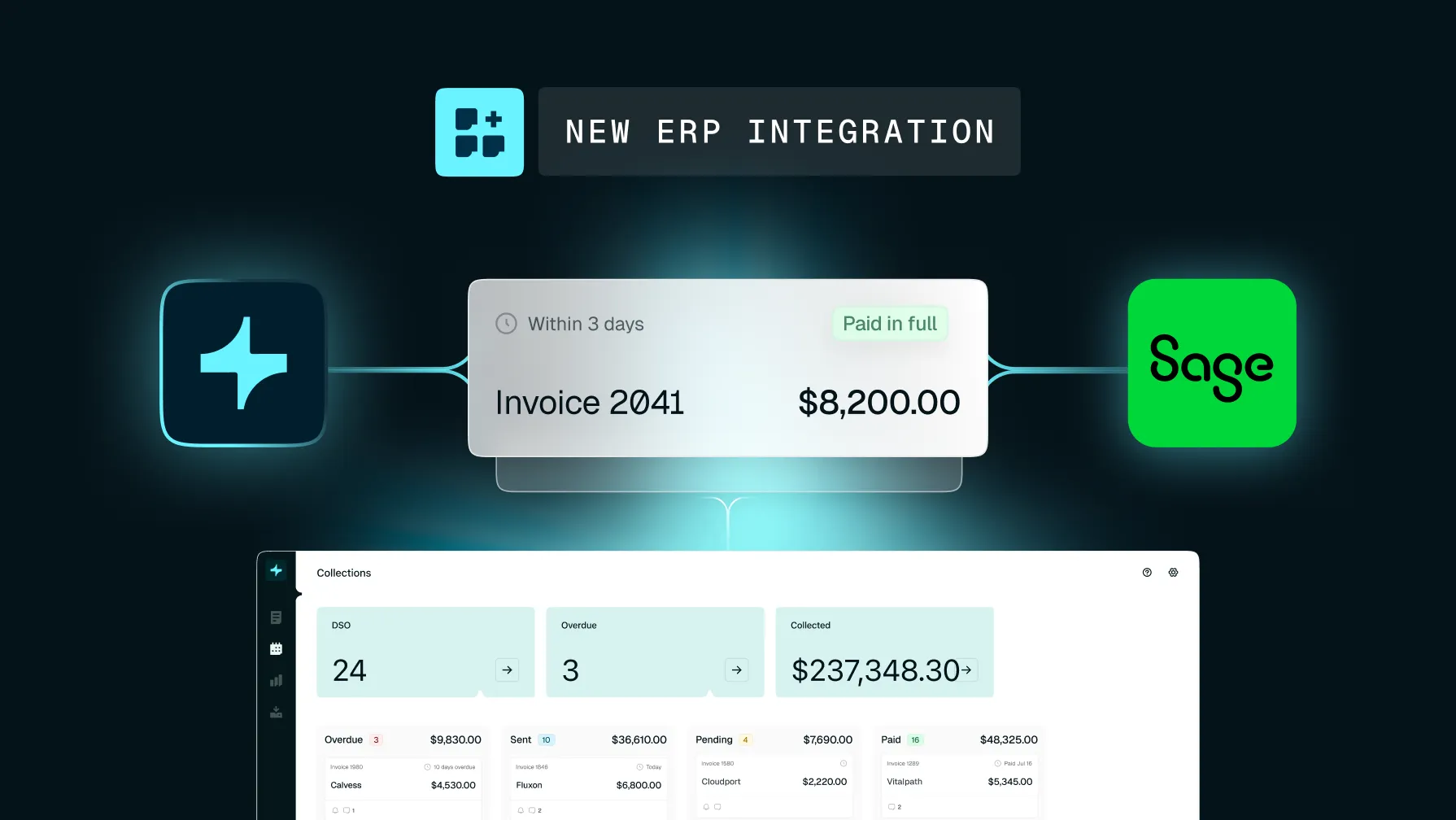
Tabs offers native integrations with QuickBooks, Oracle NetSuite, and Sage Intacct. Key considerations include account mapping, journal entry automation, and reconciliation workflows that ensure cash received matches payments recorded.
Explore how Tabs can help you go live in <30 days.