




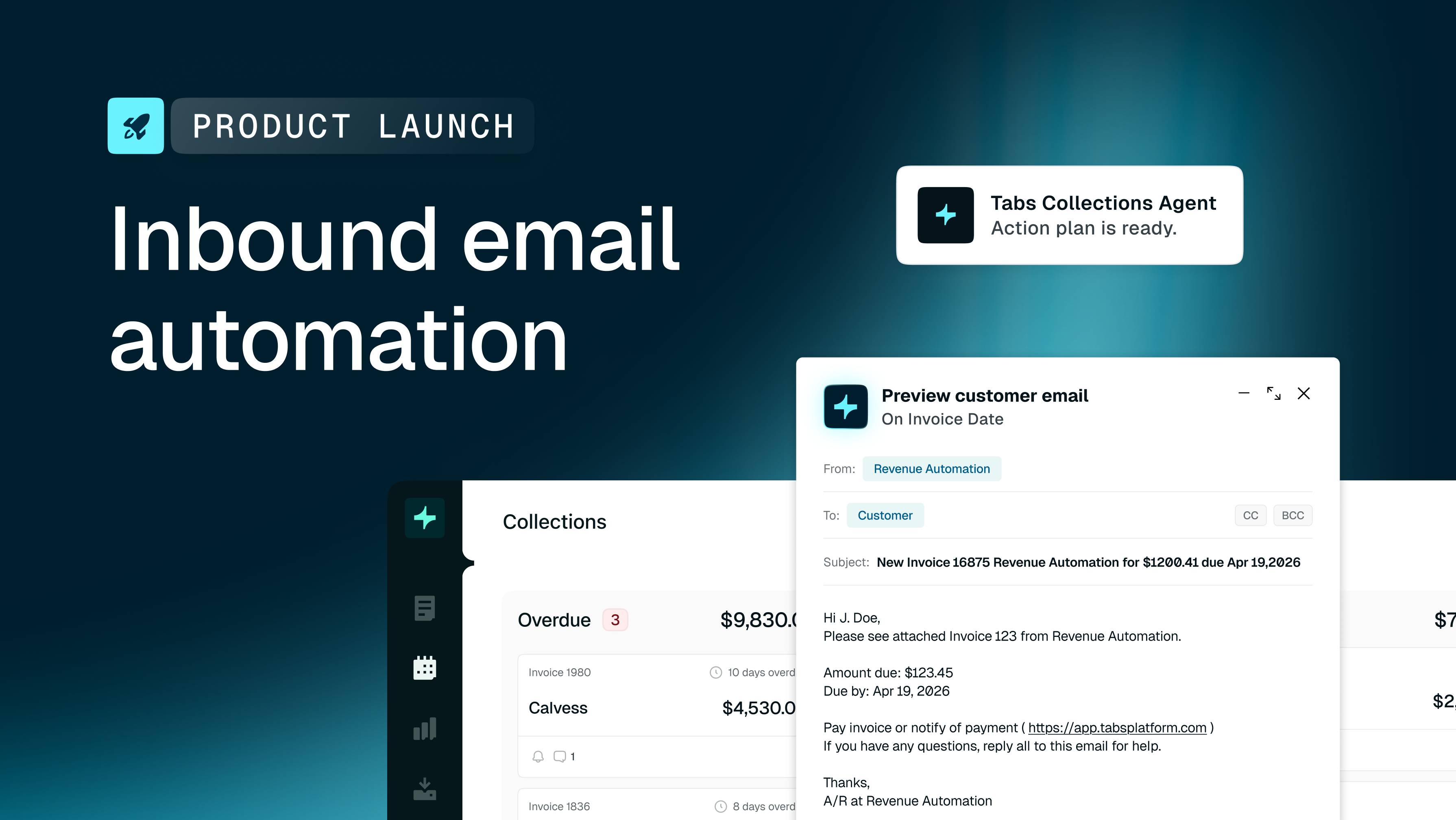
The Collections Agent already handled outbound workflows. Now, it handles workflows when customers send emails.
Collections is about one thing: getting paid, without turning follow up into manual work.
In practice that means a platform needs to know what is paid, what is overdue, and what actually needs attention. It needs to handle the routine automatically and surface the cases that require more hands- on work. That is how we built the Collections Agent in Tabs, and today we are making it significantly more automated.
The problem collections tools have not solved
Most platforms have made outbound collections faster. Automated reminders, dunning sequences on a cadence, and scheduled follow ups that go out without anyone managing them have become table stakes. What has not been solved is the other side of the conversation.
Customers write back. They confirm payment, ask for documents, submit PO numbers and update billing contacts. Every one of those replies lands in someone's inbox and waits for a human to read it, understand it, and figure out what to do next. Based on real collections email data, roughly a third of all inbound customer replies can be fully automated, and another half can simply be logged without any action. Only about 14% actually need human judgment. For any team managing collections at scale, that is a significant amount of time lost to manual work.
That is the problem the Collections Agent is now built to solve on both sides of the conversation, not just the outbound side.
How the Collections Agent works
The Collections Agent operates across the full collections workflow, from the first reminder through to final resolution.
Cash application and automated dunning
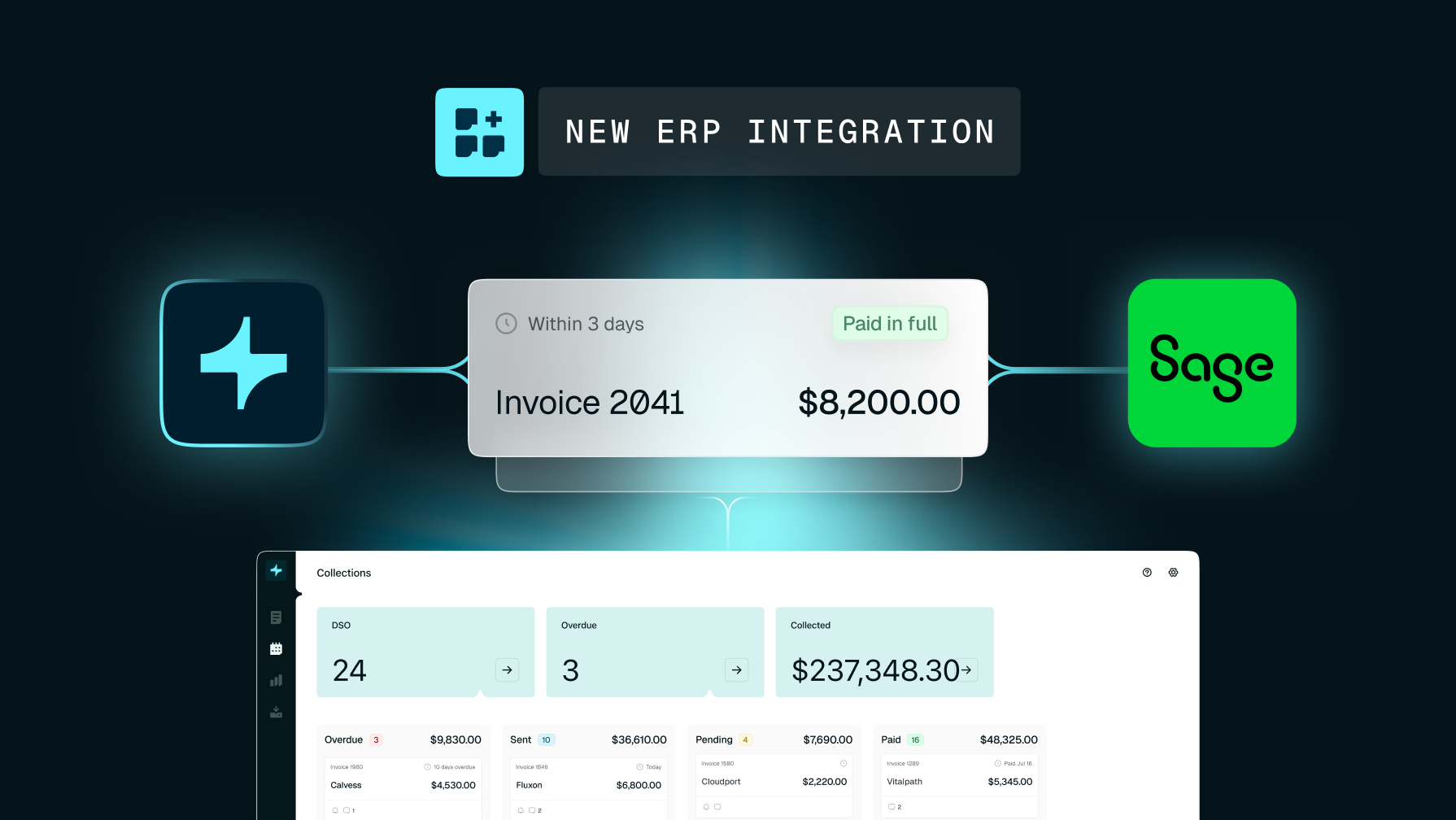
The foundation starts with knowing what is actually open. Tabs automatically matches payments to invoices through cash application, so teams always have an accurate view of what has been paid and what has not. From there, automated dunning handles standard follow ups on a cadence, sending reminders on schedule without anyone having to manage them manually.
AI- generated follow- up emails
Not every past due invoice warrants a generic reminder. Some situations call for more personal, direct outreach like a long overdue account, a relationship that needs careful handling, or a customer who has gone quiet. The Collections Agent drafts personalized follow- up emails using real context and insights from the Commercial Graph, drawing on what was billed, what is overdue, and what communication has already happened. Finance teams can adjust the tone, edit the message, and send when ready, which means faster escalation and more relevant outreach without writing from scratch every time.
New: Inbound email handling
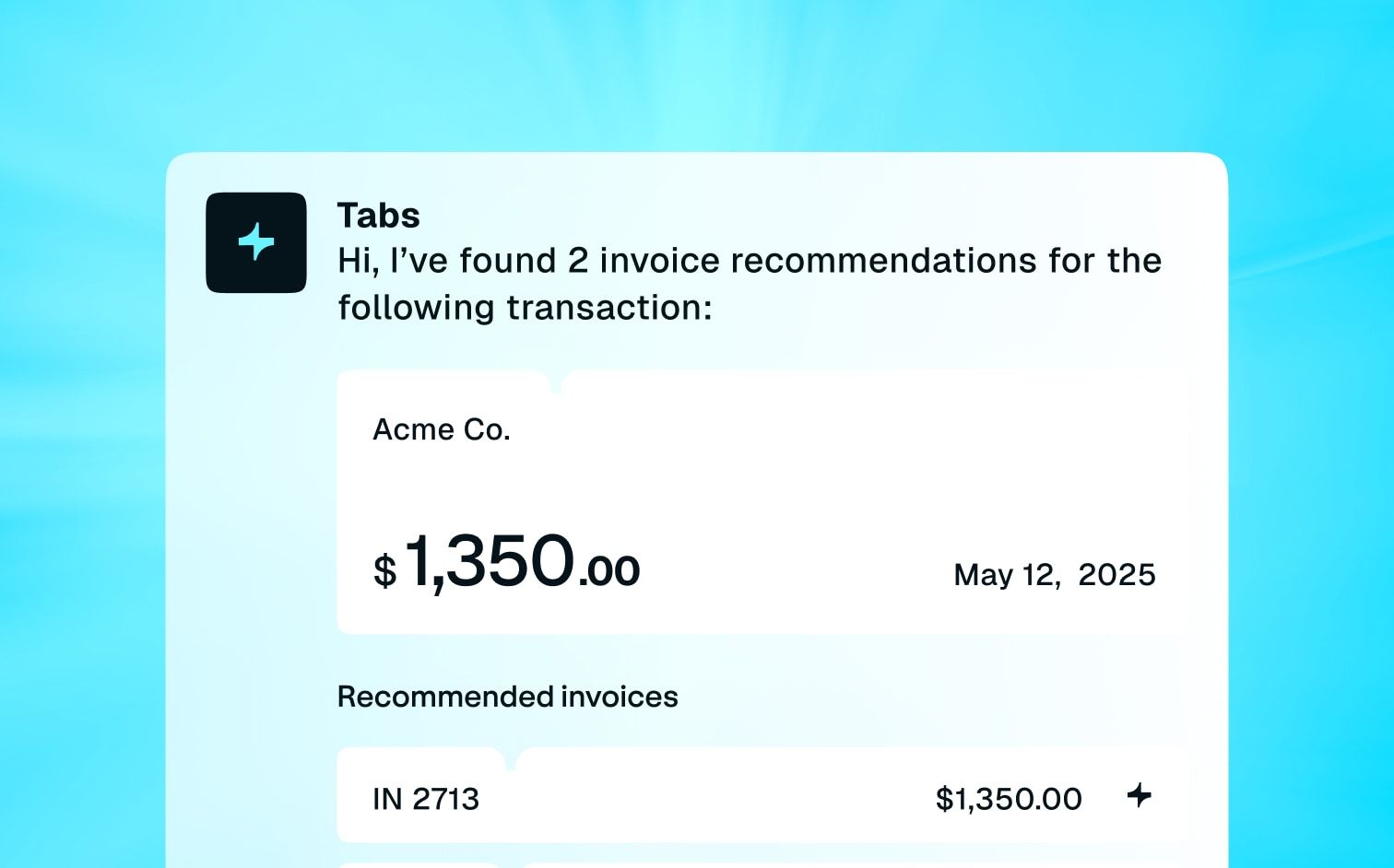
Today we are adding inbound email handling to the Collections Agent. When a customer replies to an invoice, the agent reads the email against everything Tabs already knows about that customer - the contract, the invoice status, the payment history - and proposes an ordered plan of actions with clear reasoning attached to each one. Your team can review the plan, edit the draft reply if needed, and execute with a single click. For merchants who want to move faster, each action type can be configured to run automatically without any review at all.
The actions the Collections Agent can take include updating PO numbers on invoices, updating billing contacts, marking invoices as pending with an expected payment date, composing and sending email replies, and attaching documents like W9s, contracts, or invoice PDFs.
Customers write back. Now the agent handles that, too
Merchant control is built into every step of the inbound workflow. Each action type is individually configurable, so merchants can set auto- handle for routine requests they trust the Collections Agent to manage and require review for anything that warrants a human eye. As confidence in the agent builds over time, those policies can expand. When the agent acts automatically, merchants receive a daily Slack digest of everything that was handled. When something needs attention, a real time alert comes through with a direct link to the invoice email view so nothing gets missed and nothing happens without visibility.
Accurate because it knows your customer, not just their email
Every capability in the Collections Agent is powered by the Commercial Graph, the connected model of customers, contracts, invoices, payments, and revenue that runs underneath Tabs. When the Collections Agent receives an inbound email, it already knows who the customer is, what they agreed to, and where the relationship stands before it processes a single word of the reply. That context is what makes every proposed action accurate rather than merely plausible, and it is what distinguishes the Collections Agent from platforms that layer AI on top of existing workflows without changing the underlying data model.
Inbound email handling is the first step in a broader expansion of what the Collections Agent can do. Book a demo to see the Collections Agent in action.