







Every finance team has a number that keeps them up at night. For many, it's days sales outstanding (DSO) — the gap between sending an invoice and actually collecting cash. According to Hackett Group research, aggregate DSO worsened for the second year in a row in 2024, and accounts receivable now represent 35% of total excess working capital — the single largest source of trapped cash, and for companies with complex pricing models, that number climbs higher.
The root cause is structural. B2B pricing has evolved far beyond simple annual subscriptions — usage-based pricing, hybrid models, milestone-triggered billing, and mid-contract amendments are now standard. Companies adopting usage-based pricing with legacy tools routinely spend 9–12 months on implementation — a timeline that modern platforms have compressed to weeks. Meanwhile, investors and boards are demanding faster, more predictable cash collection. Finance teams are caught between growing billing complexity and growing pressure to collect faster — and manual processes can't bridge that gap.
This isn't a buyer's guide to picking a tool. It's a framework for understanding what modern automated billing software actually requires — and how to evaluate whether your current setup can handle the complexity your business is creating. The finance teams closing this gap are the ones scaling revenue without scaling headcount — and the foundation is getting billing right.
Why manual billing breaks at scale
B2B billing used to be straightforward. A customer signed a contract for a fixed annual fee, finance sent 12 identical invoices, and collections followed a predictable rhythm. That model is disappearing. Today's contracts routinely combine seat-based pricing with usage-based components, include milestone triggers, and allow mid-term amendments — sometimes all within the same agreement.
The tools and processes most finance teams rely on were designed for the old model. And when those tools meet modern contract complexity, the breakdowns are predictable and painful. Sales ops exports usage data from a metering platform. Finance copies it into a spreadsheet, cross-references it against contract terms stored in a different system, and manually builds the invoice. Someone catches a discrepancy three days after the invoice goes out. The customer disputes the amount. Collections stalls.
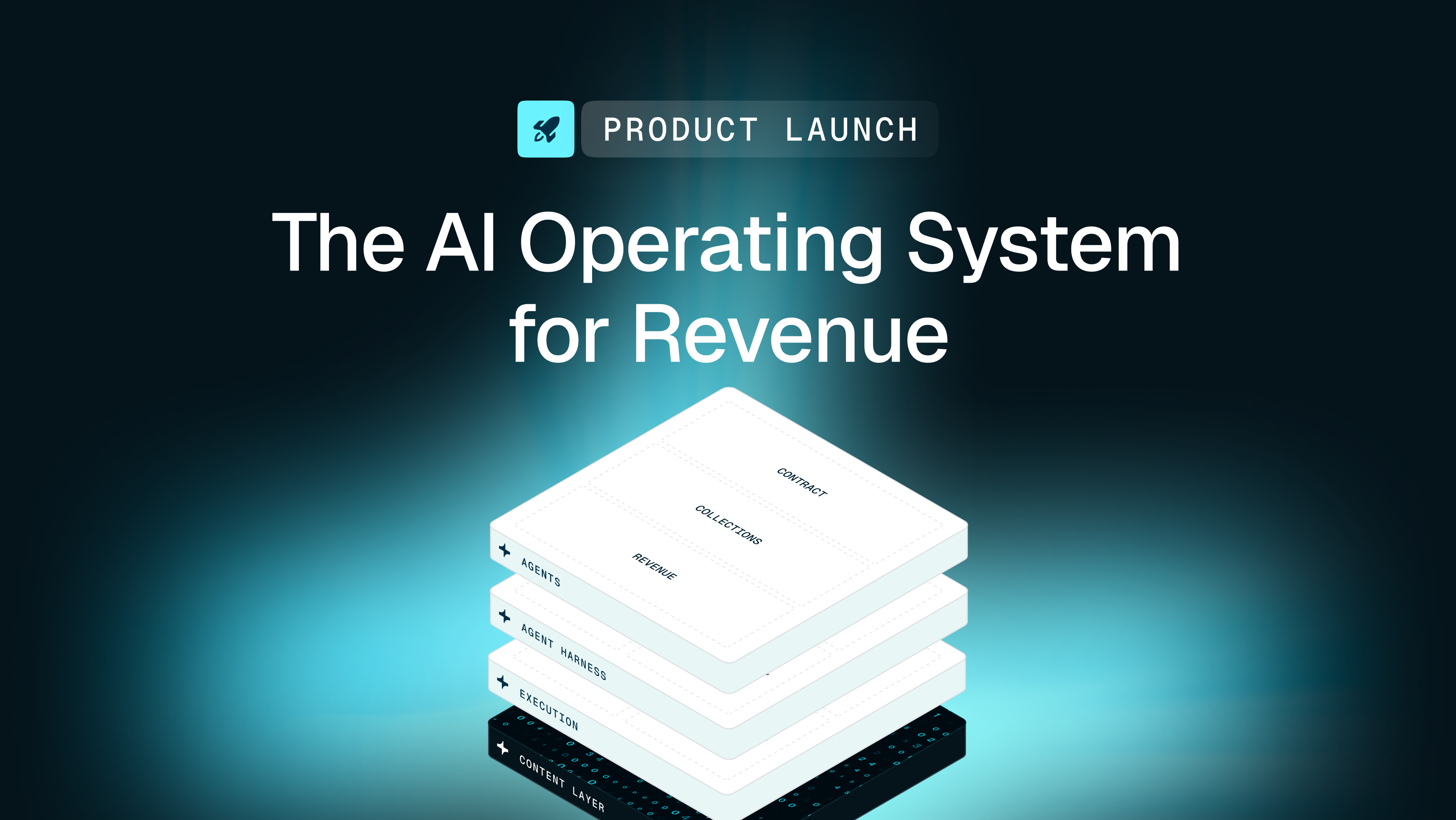
This isn't a people problem — the individuals doing this work are capable and diligent. It's a system problem. Finance teams are being asked to run complex billing automation logic accurately, at scale, in real time — with tooling that was never designed for it. The structural shift from simple subscriptions to multi-dimensional pricing models has outpaced the infrastructure most teams use to manage automated billing. And every month that gap widens, revenue risk compounds. According to industry benchmarks, manual invoice processing costs $15–16 per invoice with a 1.6% error rate, compared to $3 or less for automated flows. This is the gap Tabs was built to close. As an AI Revenue Platform, Tabs doesn't just automate invoice delivery — it reads contracts, understands the commercial context of each term, and translates that context into accurate billing workflows, collection actions, and Revenue Recognition schedules. The contract itself becomes the source of truth, not a spreadsheet interpretation of it.
The real problem: fragmented billing stacks
It's the 28th of the month, invoices need to go out by the 30th, and the usage data from three different systems doesn't reconcile. The contract terms for your largest customer were amended last quarter, but the spreadsheet your team uses to track billing rules wasn't updated. Someone catches it — but only after the invoice has already been sent. Sound familiar?
The root cause isn't bad data. The data exists — in your CRM, your CPQ tool, your usage metering platform, and your ERP. The problem is fragmentation. These systems don't talk to each other in a way that produces an accurate, ready-to-send invoice. Someone on your team has to manually bridge those gaps every billing cycle. And as Deloitte's CFO Signals survey has reported, the majority of B2B finance teams still rely on spreadsheets for some portion of their AR workflow — even at companies with tens of millions in annual revenue.
This fragmentation doesn't just slow things down. It creates compounding errors that ripple across the entire billing system and accounts receivable automation process. Here are the symptoms most finance teams recognize immediately:
- Invoice errors that require reissuing after a customer flags a discrepancy in pricing or usage calculations
- Revenue recognition schedules that don't match what billing actually sent — creating close-cycle headaches
- Collections follow-up that requires manually checking which invoices are overdue across disconnected systems
- Month-end close delays caused by reconciling billing data pulled from three or four different platforms
- Customer disputes that take days to resolve because contract terms, usage data, and billing records live in separate tools
This is why point solutions — tools that automate one step of invoice automation but leave the rest manual — don't actually solve the problem. You can automate invoice delivery and still have a broken billing process if the data feeding those invoices is fragmented.
What good billing automation looks like
The question isn't whether automated billing software can send invoices automatically. Every tool does that. The question is whether it can handle the complexity of your actual contracts — and whether it keeps your billing, revenue recognition, and collections in sync without manual intervention.
Modern finance teams don't need more features. They need fewer systems doing more of the right work. Here are the five pillars that define what automated invoicing software should deliver:
- Contract-aware invoicing — The system reads and applies contract terms directly, rather than requiring finance to manually translate contract language into billing rules. This eliminates the most common source of billing errors in B2B: the gap between what the contract says and what the invoice reflects. When the contract is the source of truth — not a spreadsheet interpretation of it — accuracy follows.
- Multi-model billing support — Modern B2B contracts are rarely flat-rate. Good billing automation handles fixed fees, usage-based pricing, tiered pricing, milestone billing, and hybrid models — ideally within the same contract without custom engineering. Recurring billing is the baseline, not the ceiling.
- Integrated collections — Billing doesn't end when the invoice goes out. Automated dunning, payment tracking, and dispute management should be part of the same system — not a separate workflow in a separate tool. When billing and collections share the same data, follow-up is faster, more accurate, and less likely to damage customer relationships.
- Revenue recognition alignment — Billing and revenue recognition are downstream of the same contract data. A good system keeps them in sync automatically — so finance doesn't have to reconcile two separate processes at month-end close. This is especially critical for companies navigating ASC 606 compliance with complex or usage-based pricing models.
- Real-time reporting and cash visibility — Not just a dashboard of invoices sent, but a forward-looking view of when cash is expected to land, based on payment behavior history and contract terms. Modern Revenue Automation platforms don't just show when invoices are due — they forecast when cash will actually land.
These pillars aren't aspirational. They describe what Tabs was built to deliver — a unified contract-to-cash platform where billing, collections, revenue recognition, and reporting operate from the same data, in the same system.
AI-powered revenue automation in practice
AI in billing isn't a future capability. It's what Tabs uses in production billing workflows today — not to generate predictions or summaries, but to automate the operational work that keeps finance teams stuck in manual processes.
Here's what that looks like in practice with automated billing software powered by AI:
- Contract term extraction — Tabs reads commercial agreements — including non-standard formats and complex pricing schedules — and extracts the terms that govern billing. This eliminates manual re-entry, interpretation errors, and the risk of billing against outdated contract versions.
- Billing rule automation — Once contract terms are extracted, Tabs automatically translates them into billing logic — handling usage-based pricing, milestone triggers, seat counts, and hybrid models without custom engineering or manual configuration.
- Automated invoice generation — Tabs generates and sends invoices on the correct schedule, in the correct format, with the correct amounts — based on contract terms and actual usage data, not manual input from a spreadsheet.
- Collections automation — Tabs automates payment reminders, dunning sequences, and escalation workflows based on payment history and customer behavior — so collections follow-up is systematic, not manual. The billing and collections data lives in the same system, which means follow-up is informed by context, not guesswork.
- Revenue Recognition — Tabs keeps billing and Revenue Recognition in sync, applying the appropriate recognition schedules — ratable, milestone, usage-based — automatically at the time of billing. Finance teams don't have to reconcile two separate systems at close.
The outcomes Tabs customers report go beyond task-level efficiency:
- Statsig reduced aged receivables by 100% and handled 3x invoice volume without adding headcount.
- Cortex reduced overdue invoices by 50%.
- More than 30% of Tabs customers adopted usage-based pricing models in under 30 days — compared to 9–12 months with traditional billing solutions.
These aren't projections. They're measured results from B2B companies running complex pricing models at scale.
Getting started with billing automation
The shift from manual billing to automated billing software isn't a temporary trend — it's a structural change in how B2B finance operates. As pricing models grow more complex, the gap between what manual processes can handle and what the business actually needs widens every quarter.
The risk of inaction is concrete: delayed invoices extend DSO. Billing errors trigger customer disputes that consume your team's time. Inaccurate Revenue Recognition creates close-cycle risk and audit exposure. And every manual handoff between systems is a point where revenue can leak. This isn't a technology preference — it's a systems readiness question.
When billing is accurate, automated, and integrated with collections and revenue recognition, the entire company moves faster. Finance stops being a bottleneck and becomes a source of real-time revenue intelligence — the kind of visibility that CFOs and boards increasingly demand.
If your team is evaluating this decision, modernization starts with mapping what you have. Audit which systems currently hold billing-relevant data — CRM, CPQ, usage metering, ERP — and identify where manual handoffs occur between them. Then ask whether your billing logic can be maintained without custom engineering as contracts evolve and new pricing models launch. Assess whether collections and Revenue Recognition are integrated with billing or running as disconnected workflows. And define the internal owner accountable for the contract-to-cash process end-to-end — from signed contract to recognized revenue.
You don't need to rebuild your entire finance stack. Most teams start with billing and collections — the highest-leverage, highest-visibility part of the process — and expand from there. The right platform meets you where you are and scales as your billing complexity grows.
Frequently asked questions
What is automated billing software?
Automated billing software automates the process of generating, sending, and tracking invoices based on contract terms and customer data. In modern platforms, it goes well beyond basic invoicing — managing payment collection, dunning, dispute resolution, and revenue recognition as part of a unified contract-to-cash workflow. For B2B companies with complex pricing models, automated invoicing software eliminates the manual translation of contract terms into billing rules and keeps billing, collections, and revenue recognition in sync.
How does automated billing software handle usage-based pricing?
A modern automated billing system ingests usage data in real time — from API calls, seat counts, consumption metrics, or other metered inputs — and applies the tiered or usage-based pricing rules defined in the contract to generate accurate invoices automatically. No manual calculation, no spreadsheet reconciliation. This is one of the highest-complexity billing challenges in B2B, and it's where legacy tools typically require custom engineering. More than 30% of Tabs customers adopted usage-based models in under 30 days — a process that takes 9–12 months with traditional solutions.
What is the difference between billing automation and invoicing software?
Invoicing software generates and sends invoices. Billing automation software goes further — it manages the rules that determine when invoices go out, how much they're for, and what happens after they're sent. That includes automated collections, dispute management, dunning sequences, and revenue recognition. The distinction is scope: invoicing is one step in the process, while billing automation covers the full lifecycle from contract terms to cash collection to recognized revenue.
How long does it take to implement automated billing software?
Implementation timelines depend on contract complexity, the number of pricing models in play, and integration requirements with existing systems like your CRM and ERP. Legacy billing platforms often require months of custom configuration. Modern platforms like Tabs are designed to reduce that timeline significantly — more than 30% of Tabs customers were live with usage-based pricing models in under 30 days. The most important factor isn't the software itself but the complexity of the billing logic it needs to handle.
Can automated billing software handle both subscription and usage-based models?
Yes — and this is one of the most important evaluation criteria for B2B finance teams today. Many legacy billing tools were built for flat-rate recurring billing and require custom engineering to support usage-based or hybrid pricing. Modern automated billing software like Tabs handles subscription, usage-based, tiered, milestone, and hybrid models natively — within the same contract, without custom code. That flexibility is essential as B2B pricing continues to evolve beyond simple subscription structures.