





Finance teams at B2B companies lose hours each week re-keying data from contracts and invoices into spreadsheets and ERPs. This guide covers how to automate PDF data extraction. We'll compare the leading tools and approaches, showing how modern revenue automation platforms like Tabs turn extracted contract terms into automated billing workflows and compliant revenue recognition.
What is PDF data extraction?
PDF data extraction is the process of pulling structured information—text, tables, and specific values—out of PDF files so your software can actually use it. This is necessary because PDFs store visual layouts, not organized data. When you look at an invoice, you see a clean table with line items. Your computer sees text blocks positioned at specific coordinates on a page.
The extraction method depends on how the file was created. Digital-native PDFs have an embedded text layer that makes parsing straightforward. Scanned documents are flat images that require optical character recognition (OCR) to convert pixels into readable text.
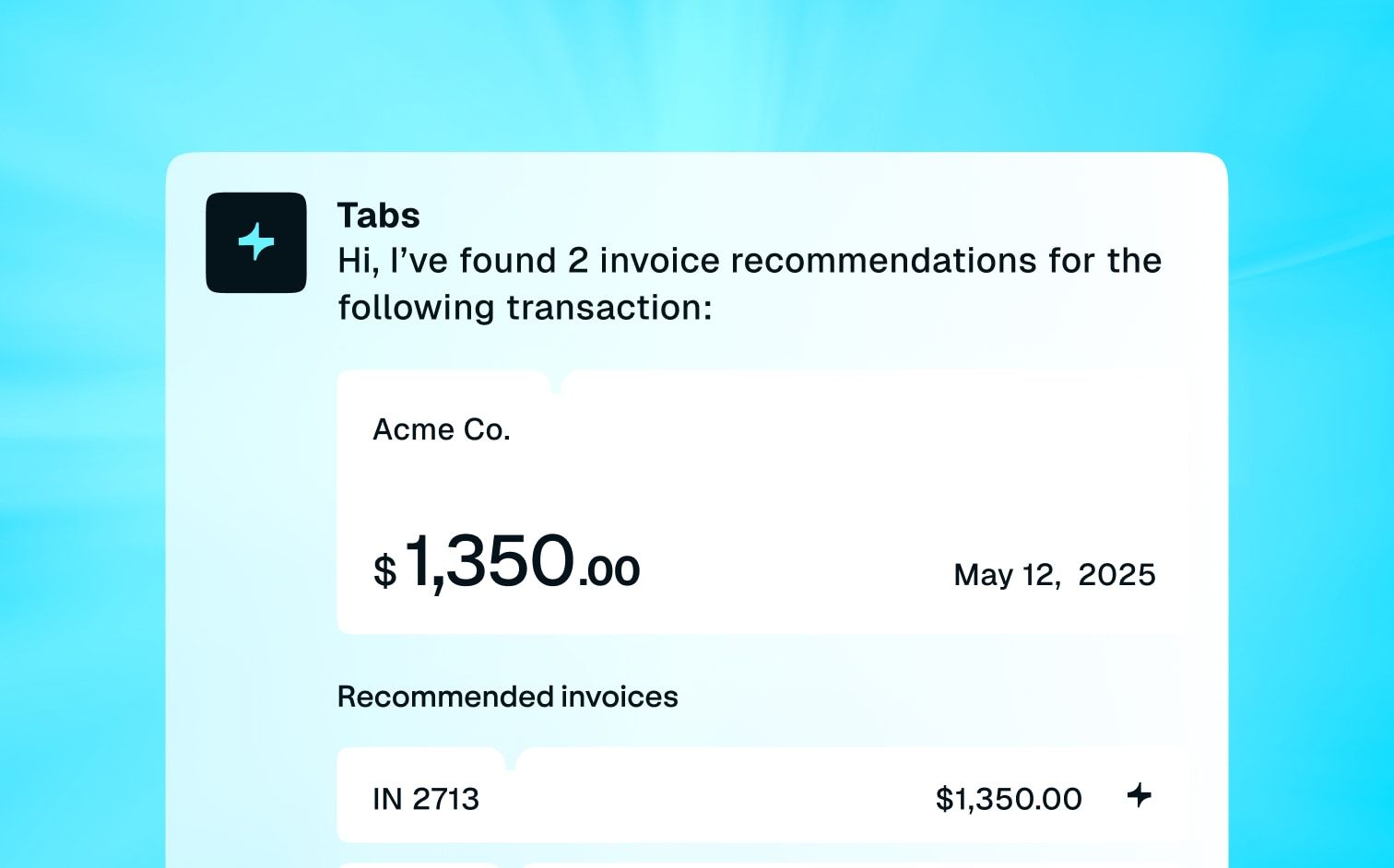
Generic extraction tools stop at pulling raw text. Tabs goes further by using trained models to identify the commercial context in your contracts—mapping pricing tiers, escalators, and usage thresholds into automated billing workflows.
Why automate PDF data extraction for finance teams
Manual data entry from invoices and contracts is slow, error-prone, and fundamentally unscalable—consuming 25% of finance staff time.
When your team re-keys data from PDFs into spreadsheets or ERPs, they introduce errors that cascade downstream. Delayed billing. Revenue leakage. Compliance issues during audits.
Automation frees your finance team to focus on strategic work instead of transcription. When you automate extraction, you build a scalable foundation for your entire contract-to-cash workflow.
The benefits are immediate:
- Faster processing: Reduce invoice turnaround from days to minutes, with businesses reporting a 25% drop in processing time
- Higher accuracy: Eliminate transcription mistakes that cause billing disputes
- Audit-ready records: Maintain a traceable trail from source document to billing event, reducing audit preparation time by 40%
- Scalability: Handle volume spikes without adding headcount
Modern revenue automation platforms don't just show when invoices are due—they forecast when cash will actually land based on historical payment behavior and contract terms. Tabs extracts pricing tiers and escalators and applies your billing rules to automatically generate compliant invoices.
Automate invoices from PDFs with Tabs
PDF data extraction tools and platforms for invoices and contracts
The market offers dozens of ways to extract data from documents. The right choice depends on your document complexity, volume, and technical resources.
| Approach | Best for | Limitations |
|---|---|---|
| Python libraries | Engineering teams with dev resources | Requires coding and maintenance |
| OCR platforms | Scanned or image-based PDFs | Accuracy varies with scan quality |
| No-code automation | Simple, template-based documents | Limited flexibility for complex contracts |
| AI-powered Revenue Automation platforms | Finance teams handling invoices and contracts | Purpose-built for billing workflows |
PyPDF2
PyPDF2 is an open-source Python library for extracting text and metadata from digital-native PDFs. It works well for simple documents but struggles with complex layouts and tables. Engineering teams often use it as a starting point before adding more advanced parsing logic.
pdfplumber
This Python library specializes in extracting tables from PDFs. It provides detailed information about each text character, making it reliable for structured digital documents with predictable, grid-like layouts.
Tabula
Tabula extracts tables from PDFs and converts them into CSV or Excel files. It requires a clean text layer and cannot process scanned images. It's a lightweight option for teams that just need tabular data quickly.
Tesseract
Tesseract is an open-source OCR engine maintained by Google. It converts scanned images into text but requires significant image preprocessing to achieve high accuracy. Developers frequently wrap Tesseract in custom code to build internal extraction tools.
Google Document AI
Google Document AI uses machine learning to classify documents and extract key-value pairs. It offers a robust API for developers building custom data pipelines. It's highly scalable but requires technical expertise to implement.
Zapier
Zapier is a no-code platform with basic PDF parsing capabilities. It works best for highly standardized documents where data always appears in the exact same location. It's not suitable for complex B2B contracts with variable lengths and clauses.
Make
Make provides visual workflows to automate data transfer between systems. It can route extracted PDF data into your CRM or ERP, provided you use a third-party parser for the actual extraction. It's a strong orchestration tool but lacks native document understanding.
Tabs
Tabs is an AI-powered Revenue Automation platform that sits downstream of your CRM and CPQ to operationalize signed contracts. It uses AI to extract complex billing terms and automatically generates invoices and Revenue Recognition schedules, with validation against your billing rules. Tabs provides the commercial context that generic parsers lack.
OCR vs digital PDFs for data extraction
Understanding document types is critical before you deploy any extraction tool. Digital-native PDFs are created directly from software like Microsoft Word or Google Docs. They contain an embedded text layer, making extraction fast and accurate.
Scanned PDFs are photographs of physical paper. To extract text, you must use OCR to convert pixels into machine-readable characters. This process is inherently more error-prone.
Several factors impact OCR accuracy:
- Scan resolution: Higher DPI produces cleaner text
- Page skew: Tilted scans confuse character recognition
- Background noise: Smudges and shadows create artifacts
- Font quality: Unusual or degraded fonts reduce confidence scores
Finance teams deal with a messy mix of both formats daily. Tabs supports both document types and uses trained models plus validation rules to normalize extracted data to your pricing logic.
How to automate PDF data extraction step by step
Building a reliable extraction pipeline requires a structured approach. Here's how to move from raw PDFs to usable data in your finance stack.
Step 1: Detect PDF type and structure
First, identify whether your document is digital or scanned. Assess its visual layout—single-column text, multi-column formats, or nested tables. Some advanced tools auto-detect structure. Basic parsers require manual configuration.
Step 2: Select extraction method and tools
Match your tool to your document complexity and volume. If you process thousands of variable vendor invoices, you need an AI-powered platform rather than a rigid template parser. Choose a method that minimizes manual exception handling.
Step 3: Map fields for invoices and contracts
Field mapping tells your extraction software where to find specific values and how to label them. Define which data points matter most for your revenue operations:
- Invoice number and date
- Vendor or customer name
- Line item descriptions and amounts
- Payment terms and due dates
- Contract start and end dates
- Pricing schedules and escalators
Step 4: Connect ERP, CRM, and data warehouse
Extraction is useless if data sits isolated in a parsing tool. Route extracted data into your finance stack using API connections, webhooks, or file exports. Common destinations include NetSuite, QuickBooks, and Salesforce.
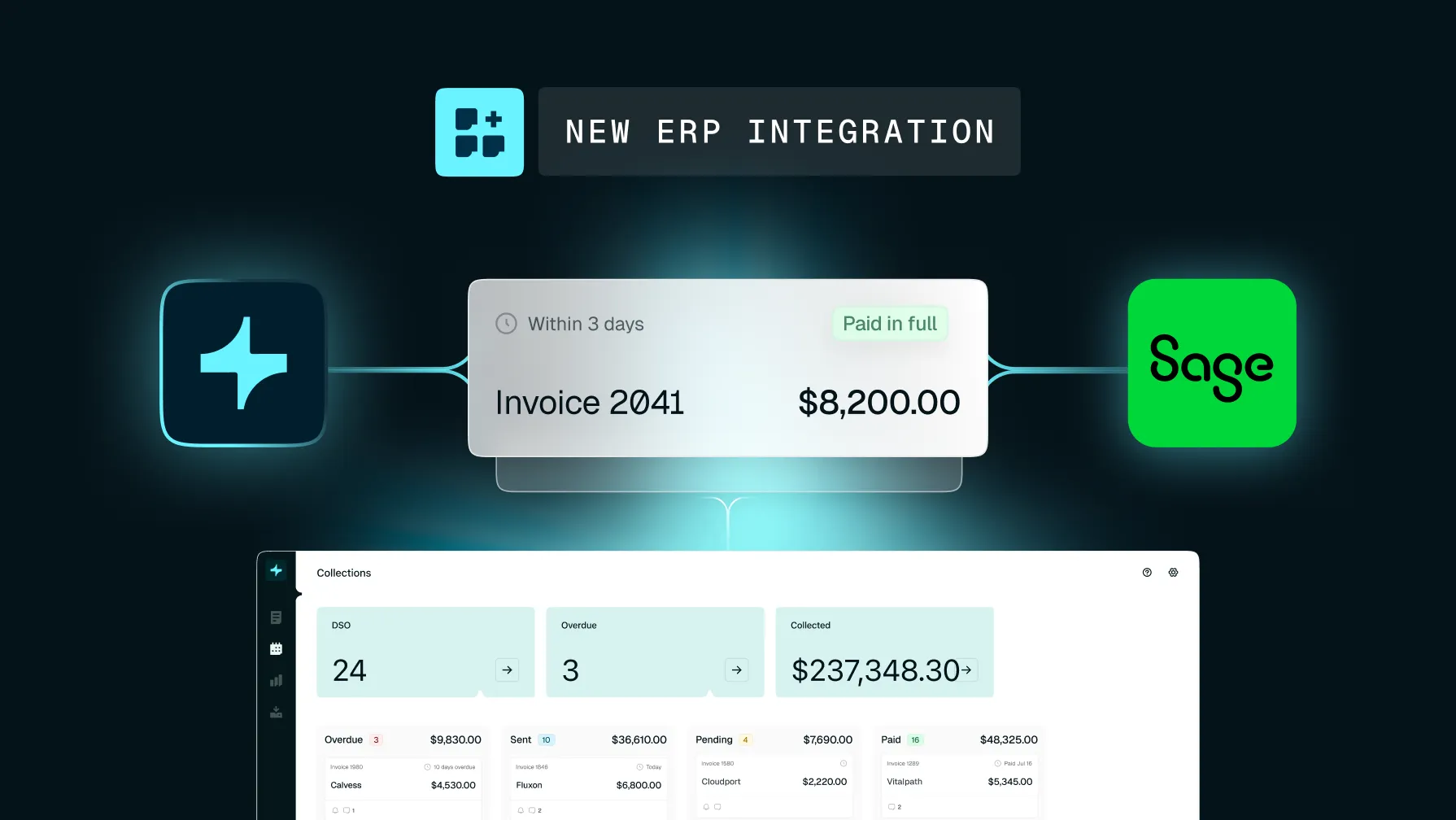
Tabs integrates with major ERPs and connects downstream of your CRM and CPQ so signed contract terms flow into billing and Revenue Recognition.
Step 5: Validate outputs and monitor accuracy
Automation doesn't mean set-and-forget. Establish validation rules—verify that line items sum to the invoice total. Build monitoring to catch low-confidence extractions before they impact your billing cycle.
Extract text and tables from invoices and contracts
Pulling structured tables out of PDFs is notoriously difficult. Extraction tools must identify text blocks, detect table boundaries, and interpret merged cells or spanning headers. Embedded images and invisible cell boundaries frequently break standard parsing logic.
Complex B2B contracts often feature tables spanning multiple pages or inconsistent formatting across vendors. Your system must understand the spatial relationship between different text elements.
Best practices for table extraction:
- Define table regions explicitly: Draw manual bounding boxes if auto-detection fails
- Handle multi-page tables: Stitch rows together across page breaks
- Normalize headers: Ensure consistent field names across vendor documents
- Post-process extracted text: Remove artifacts like extra spaces or line breaks
Tabs parses complex contract language—not just tables—to extract billing-relevant terms like usage thresholds and discount schedules. This commercial understanding ensures data is ready for invoicing, not just storage.
Common challenges in PDF data extraction and fixes
Even the best automation encounters edge cases. Planning for these challenges is the only way to build a resilient pipeline.
- Low-quality scans: Increase scanner DPI and apply preprocessing like deskewing and denoising
- Multi-column layouts: Configure specific extraction zones or use AI models trained in layout analysis
- Nested tables: Define custom parsing rules or flag irregular tables for human review
- Template drift: Vendor formats change frequently—build monitoring to catch new layouts
- Fix encoding issues: Configure font handling for special characters and non-Latin scripts
Robust automation always includes human-in-the-loop review. Set a confidence threshold that flags ambiguous documents for manual verification before data enters your ERP.
How Tabs automates contract and invoice data extraction for billing
Tabs represents a fundamental shift in how B2B companies approach revenue operations. Instead of stitching together generic extraction tools, finance teams use Tabs as a purpose-built system of intelligence.
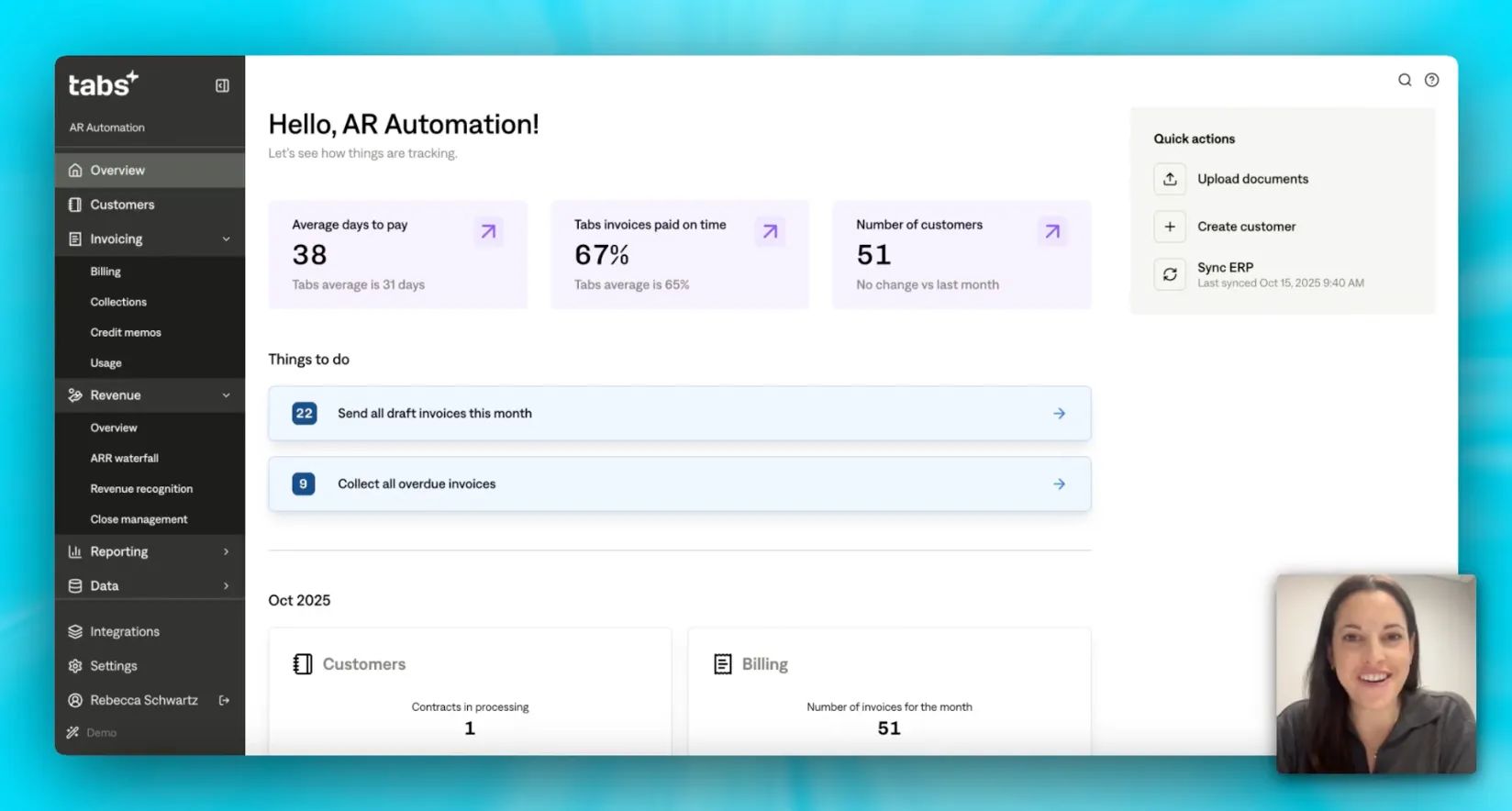
Tabs processes signed contracts and extracts complex billing terms—from seat-based pricing tiers to usage thresholds and payment schedules—without manual data entry. It doesn't just pull raw text—it extracts terms and maps them to your billing logic so you can generate invoices and Revenue Recognition outputs without re-keying data.
Whether from subscription, usage-based, or hybrid billing contracts, this extracted data flows directly into automated invoice generation, collections, and ASC 606-compliant revenue recognition. With native integrations, Tabs connects seamlessly to your existing ERP and CRM.
Core capabilities:
- Extract: AI parses contracts and invoices to capture structured data accurately
- Validate: Pricing logic and compliance rules applied in real time
- Generate: Invoices created automatically from extracted contract terms
- Integrate: Data syncs natively to ERP, CRM, and reporting tools
- Audit: Every extraction result and validation step is logged for System and Organization Controls (SOC) 2 compliance.
FAQ
Can PDF data extraction handle handwritten notes on contracts?
Most tools that automate PDF data extraction struggle with handwriting because OCR models are trained primarily on printed text. You'll need specialized handwriting recognition or manual review for documents with significant handwritten content.
How can you handle PDFs with password protection or encryption?
Password-protected PDFs require decryption before extraction can begin. Most tools support entering known passwords programmatically, but encrypted files without credentials cannot be processed automatically.
What file formats can extracted data be exported to?
Common export formats include JSON, CSV, and XML. The right choice depends on your downstream systems—ERPs typically prefer structured formats like JSON, while spreadsheet-based workflows use CSV.
How long does it take to set up automated PDF extraction?
Setup time varies dramatically based on document complexity and tool choice. Simple template-based extraction can be configured in hours. Complex multi-format pipelines with custom validation may take weeks to fully operationalize.