





This guide helps B2B finance teams evaluate AR automation platforms based on billing complexity, integration requirements, and workflow coverage—so you can select a vendor that accelerates collections and eliminates the manual work between signed contracts and recognized revenue.
How to evaluate AR automation companies
AR automation is software that removes manual work from invoicing, collections, and payment reconciliation. But what actually matters when you evaluate vendors—coverage, integrations, or invoice accuracy? This means your finance team spends less time chasing down payments and more time on strategic work. KPMG projects 60-70% of finance transactional activities will become automated with AI. But choosing the wrong platform creates more administrative burden than it eliminates.
The market has shifted dramatically. Generic automation tools that simply extract text from documents are no longer enough. Modern finance leaders need platforms that apply trained models to contract language—mapping complex billing terms into accurate invoices and downstream workflows without manual interpretation.
Integration depth and data flow
Your AR software only works if it connects cleanly to your existing systems. Disconnected tools force your team to manually export and upload files between platforms, which introduces errors and delays.
- Native ERP connectors: Pre-built integrations sync invoices and payments without manual mapping
- CRM alignment: The platform should pull contract data directly rather than requiring re-entry
- Banking and payment rails: Robust systems handle Automated Clearing House (ACH) transfers, wires, and credit card reconciliation automatically
- API flexibility: Developer-friendly APIs let you extend the platform or embed billing into your own product
AR workflow coverage
Not all platforms cover the same ground. Some focus narrowly on collections. Others handle the entire workflow from contract-to-cash. You need to identify which specific bottlenecks are slowing down your cash conversion cycle.
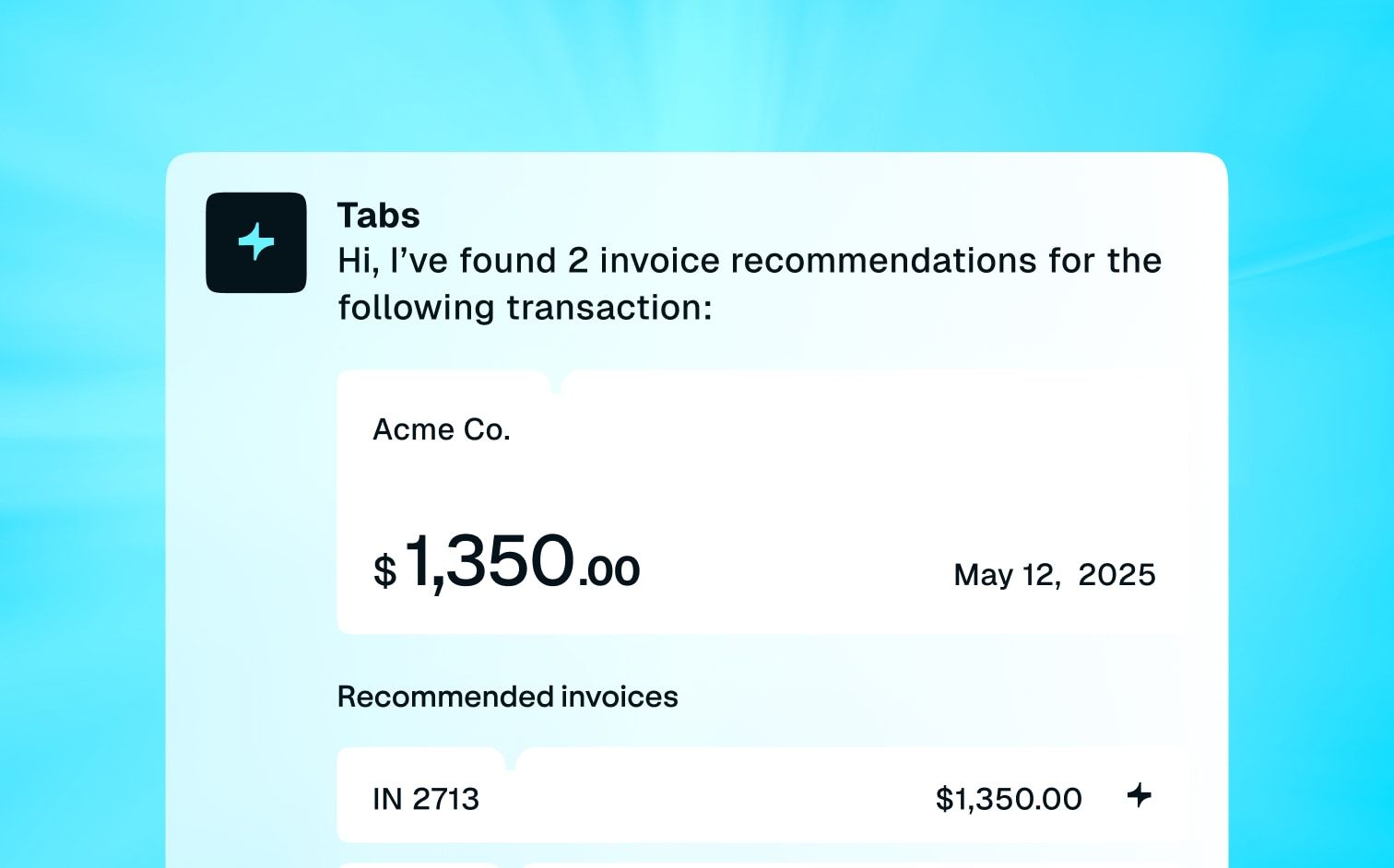
The full AR workflow includes invoice generation, delivery and tracking, collections and dunning, cash application, dispute management, and reporting. Most billing errors originate upstream—in the gap between what the contract says and what gets invoiced. Platforms like Tabs address this by ingesting signed contracts and using AI to translate billing terms into invoice logic and Revenue Recognition-ready outputs—reducing errors before invoices go out.
AI capabilities that matter
AI is increasingly table stakes—87% of CFOs believe it will be extremely or very important to finance operations in 2026. But where it's applied—and how reliably it drives invoice accuracy—still varies wildly. Some platforms use AI only for basic optical character recognition. Others apply it to intelligent cash application and predictive collections.
Tabs uses AI across key contract-to-cash steps by applying trained models to signed agreements—turning billing terms into invoice logic, collections workflows, cash application cues, and Revenue Recognition inputs. Tabs translates usage thresholds, escalators, and milestone triggers into accurate invoices—without manual interpretation. This commercial-context mapping is what separates modern Revenue Automation from generic document processing.
Turn contracts into accurate invoices—book a Tabs demo
Cash flow impact and DSO reduction
Days sales outstanding (DSO) measures the average number of days it takes to collect payment after a sale. The best AR automation compresses this timeline through faster invoicing, smarter dunning, and easier payment options.
Modern revenue automation platforms don't just show when invoices are due—they forecast when cash will actually land, based on historical payment behavior and contract terms. This visibility lets you intervene early on accounts that are likely to pay late.
AR automation companies by category
Rather than a generic ranked list, you should evaluate companies based on their specific category and use case. This ensures you select a platform built for your transaction volume and billing complexity.
Enterprise AR suites
These platforms serve large enterprises managing massive transaction volumes across multiple global entities. They require significant implementation investment but handle incredible scale.
Billtrust provides comprehensive contract-to-cash and accounts receivable automation for large B2B enterprises. The platform excels at processing high volumes of complex payments.
HighRadius leverages AI-powered capabilities to streamline enterprise cash application and treasury management. Their software handles the massive data loads typical of Fortune 500 finance departments.
Esker specializes in global document automation for enterprise organizations. They provide robust tools for managing complex deductions and international compliance requirements.
Mid-market platforms
Mid-market companies need more than basic invoicing but don't require enterprise-scale cash application engines. These platforms emphasize customer collaboration and dispute workflows.
Versapay focuses on collaborative AR by providing shared portals where buyers and suppliers resolve disputes. This transparency accelerates payments and improves customer relationships.
YayPay (Quadient) uses predictive analytics to forecast cash flow and automate collections outreach. The platform gives AR teams visibility into which accounts are most likely to pay late.
Invoiced delivers a customizable automated AR platform designed to scale with growing businesses. They offer strong multi-channel billing and embedded payment options.
Billing-led automation
These platforms start at the contract and extend through the entire revenue lifecycle. They're essential for companies where invoice accuracy depends on complex contract terms.
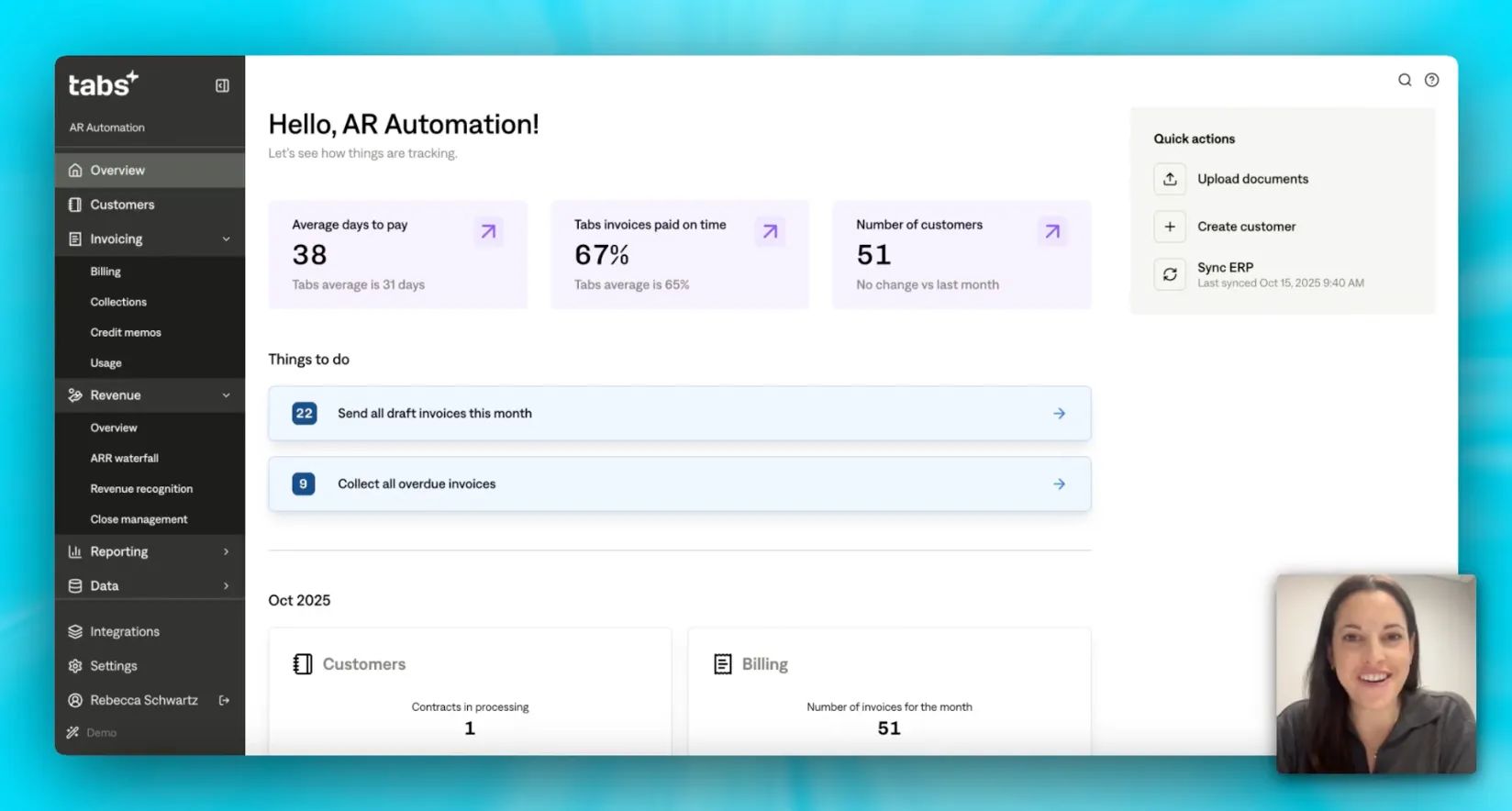
Tabs is an AI-powered Revenue Automation platform that sits downstream of your CRM and configure-price-quote (CPQ) system to operationalize signed contracts. Because Tabs applies commercial context to your agreements, it translates usage-based pricing, milestone billing, and hybrid terms into billing workflows natively. Collections, Revenue Recognition, and reporting all flow from this single source of truth—eliminating the reconciliation gaps that plague finance teams using disconnected tools.
SMB invoicing tools
Small businesses need basic invoice generation and payment collection without enterprise complexity. These tools prioritize ease of use and fast setup.
FreshBooks provides intuitive invoicing and time-tracking software built for freelancers and small agencies.
Zoho Invoice offers a free invoicing solution with customizable templates and basic automated reminders.
Wave delivers free accounting and invoicing software tailored for micro-businesses and sole proprietors.
Collections add-ons
These platforms specialize in collections rather than full AR automation. They connect to your existing billing infrastructure to optimize dunning and predict payment behavior.
Kolleno provides smart collections and reconciliation software that integrates with your existing accounting tools.
Upflow focuses on giving B2B companies deep visibility into cash flow and outstanding receivables.
Tesorio connects to your ERP to provide real-time cash flow performance and AR forecasting.
Best-fit AR automation by company size
Matching your operational reality to the right platform category prevents costly implementation failures.
Enterprise finance teams
Large enterprises must prioritize platforms with proven scale and deep ERP integrations. Expect longer implementations but more comprehensive functionality. Your platform must process thousands of invoices monthly without performance issues, support multi-entity and multi-currency operations, and provide strict audit trails with role-based access controls.
Mid-market AR teams
Mid-market companies need fast time to value and flexible integrations. Prioritize platforms that go live in weeks rather than months. If you use subscriptions, usage-based pricing, or hybrid models, ensure the platform handles them natively without custom development.
SMB finance teams
Small businesses should prioritize simplicity and transparent pricing. Avoid overbuying—enterprise features add unnecessary complexity. Look for self-service onboarding, direct sync with your accounting software, and embedded payment links.
Implementation and security requirements
Getting your platform deployed requires careful planning around data migration and system architecture.
Implementation phases
The typical implementation includes discovery and scoping, platform configuration, data migration, integration setup (based on the integrations you've prioritized above), and team training. Timeline varies based on your billing complexity—mid-market platforms typically deploy in weeks, while enterprise suites may require several months.
Integration scope
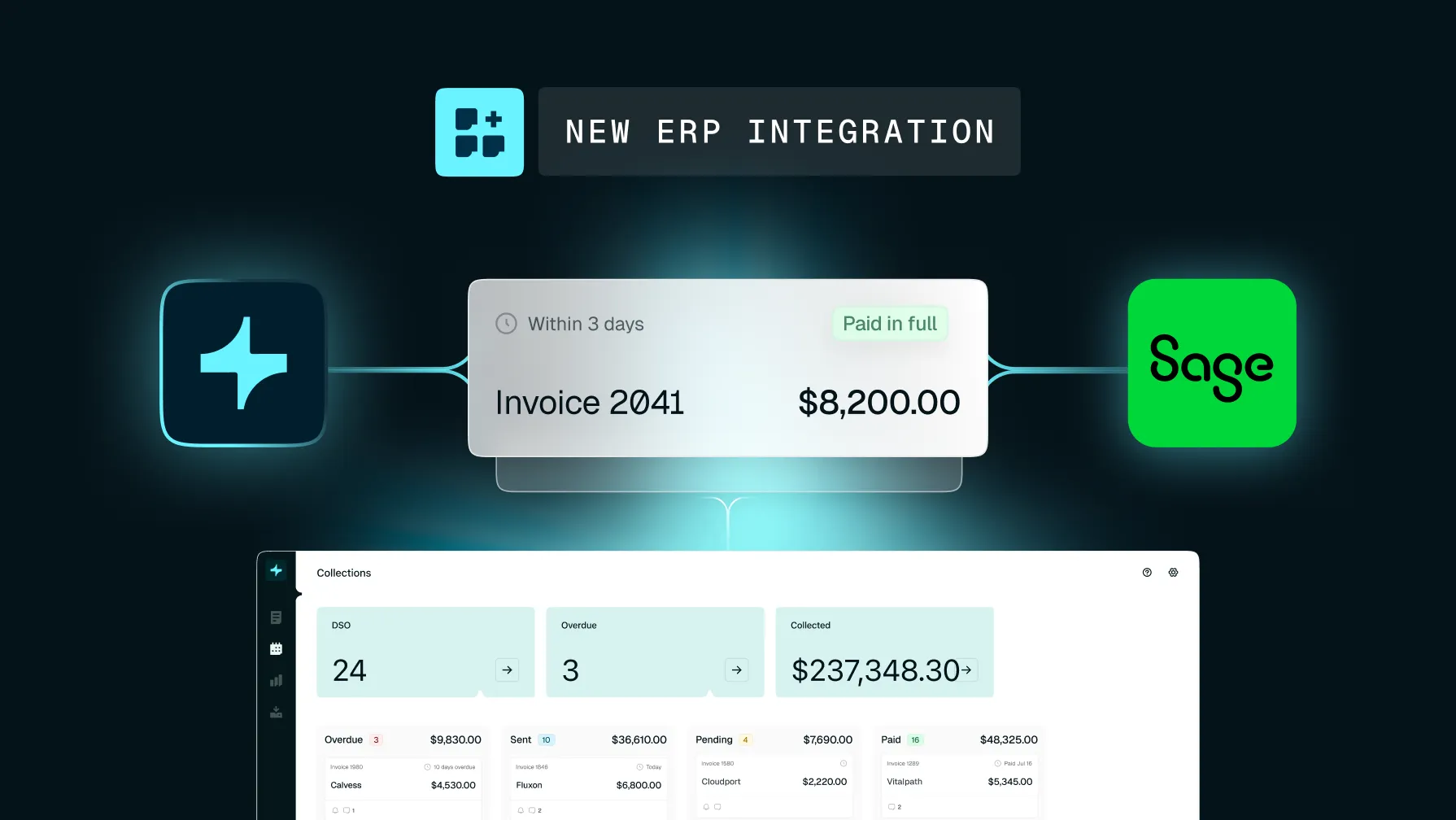
Your automation platform should function as a system of intelligence for contract-to-cash data—not just a single source of truth. It should integrate with your ERP for general ledger synchronization, your CRM and CPQ for signed contract terms, and your banking systems for payment reconciliation. Robust APIs allow custom integrations and embedding billing into your own product.
Security controls
Financial data requires enterprise-grade security. Demand Service Organization Control 2 (SOC 2) compliance, encryption in transit and at rest, role-based permissions with single sign-on (SSO) integration, and complete audit trails for all system actions.
Pricing models and ROI
Understanding how vendors structure pricing helps you calculate accurate return on investment.
Common pricing models include platform fees (monthly or annual subscriptions), transaction fees (per-invoice or per-payment charges), implementation fees, and add-on modules for advanced features.
Measure ROI through DSO reduction, headcount efficiency, error reduction, and working capital improvement. Faster collections improve your cash position and reduce external borrowing needs.
How Tabs approaches AR automation differently
Tabs starts where other platforms stop—at the signed contract. Most AR software assumes clean invoice data already exists. Tabs ingests contracts directly, uses AI to extract and structure billing terms, and translates them into invoice logic and Revenue Recognition-ready outputs—without manual data entry.
The difference is commercial context. Tabs doesn't just read contract text. It uses trained models to identify billing triggers and map them into invoice logic and downstream workflows—so usage thresholds, escalators, and milestone events produce accurate invoices automatically. Collections, revenue recognition, and reporting all flow from this single source of truth.
For B2B companies managing complex billing models—including seat-based pricing—Tabs consolidates the patchwork between CRM/CPQ and ERP so finance teams close faster, collect sooner, and spend less time chasing discrepancies.
Explore how Tabs can help you go live in <30 days.
Frequently asked questions
Can AR automation handle usage-based and hybrid billing models?
Capabilities vary widely. Billing-led platforms like Tabs handle usage-based and hybrid models natively because they extract billing logic directly from the contract rather than requiring manual configuration.
How long does AR automation take to deploy with NetSuite or QuickBooks?
Timeline depends on the platform and your billing complexity. Mid-market platforms typically deploy in weeks, while enterprise suites may require several months of implementation work.
Does AR automation reduce days sales outstanding?
Yes, when implemented correctly. Faster invoice delivery, automated dunning, and embedded payment options all compress the collection cycle by removing friction from the payment process.
Do we need to replace our ERP to adopt AR automation?
No. These platforms integrate with your existing ERP rather than replacing it. Look for native connectors to your specific system and verify two-way synchronization capabilities before selecting a vendor.