





Collections management tools that actually recover revenue
Key Takeaways
- Modern collections management tools replace one-size-fits-all reminders with a system that unifies contract terms, payment history, and dunning workflows for personalized follow up.
- 55% of B2B invoiced sales in the U.S. are overdue, but the real cost is inaccurate cash forecasting, strained customer relationships, and finance teams stuck reacting instead of planning.
- Collections tools fail when contract terms are buried in PDFs, dunning cadences ignore payment behavior, there's no early warning on at-risk invoices, and reconciliation is manual.
- When evaluating a platform, check five things: your cash goals/metrics, ERP and CRM integration depth, support for complex contract structures (usage-based, milestone, hybrid billing), live-scenario dunning workflows, and security/compliance controls (SOC 2, encryption, RBAC, audit logs).
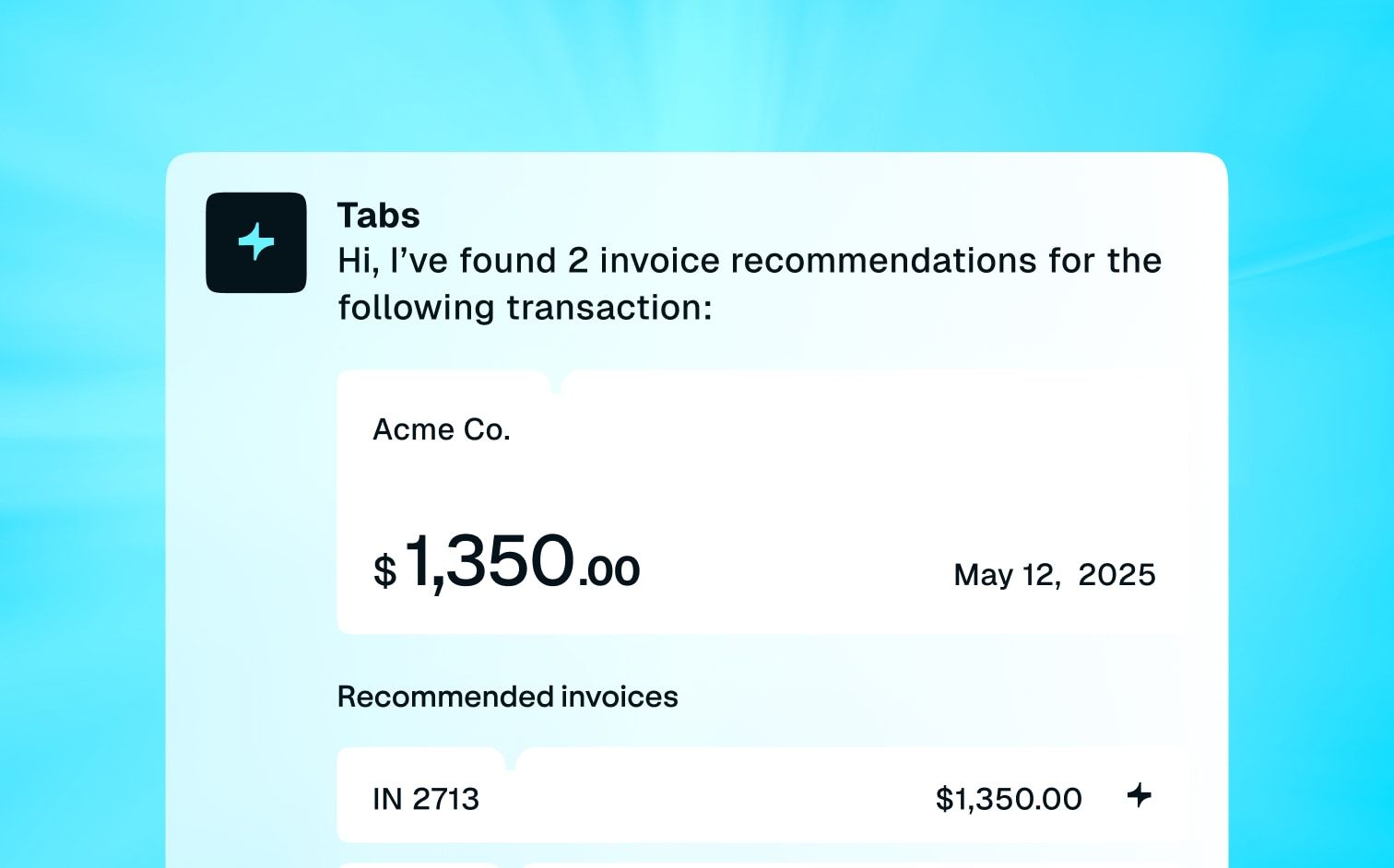
- AI-native platforms like Tabs go beyond tracking by tying each invoice back to its signed contract terms and payment history to score risk, recommend next-best actions, and route escalations automatically.
- Bidirectional ERP/CRM sync (not CSV exports or manual updates) is what keeps contract-to-cash data consistent and prevents reconciliation errors downstream.
Collection management tools are designed to automate how finance teams track, pursue, and collect outstanding invoices for B2B invoices. They replace the manual work of chasing payments—spreadsheets, email threads, calendar reminders—with a unified system that manages your entire accounts receivable (AR) lifecycle.
But for those managing complex B2B contracts, the wrong tools can decide cash flow lives or dies.
This guide breaks down what modern collections management tools actually do, how to evaluate them for your AR workflows, and how AI-powered platforms like Tabs turn reactive payment chasing into predictable cash recovery.
How do modern collections management tools help finance teams?
Legacy collections software relies on basic task lists and static reminders. Every overdue invoice gets the same treatment, regardless of the customer, the contract terms, or the payment history. Modern collections systems go further by unifying contract data, payment tracking, and dunning workflows into one system of intelligence.
But the real shift is the added context they're able to provide. AI-powered platforms like Tabs use trained models to apply contract terms, historical payment behavior, and escalation rules so you can forecast when cash is likely to land and route the right follow-up automatically.
That shifts collections from reactive follow-up to a strategic cash function—prioritizing the right accounts, earlier, with cleaner forecasting.
Core functions of a modern collection system:
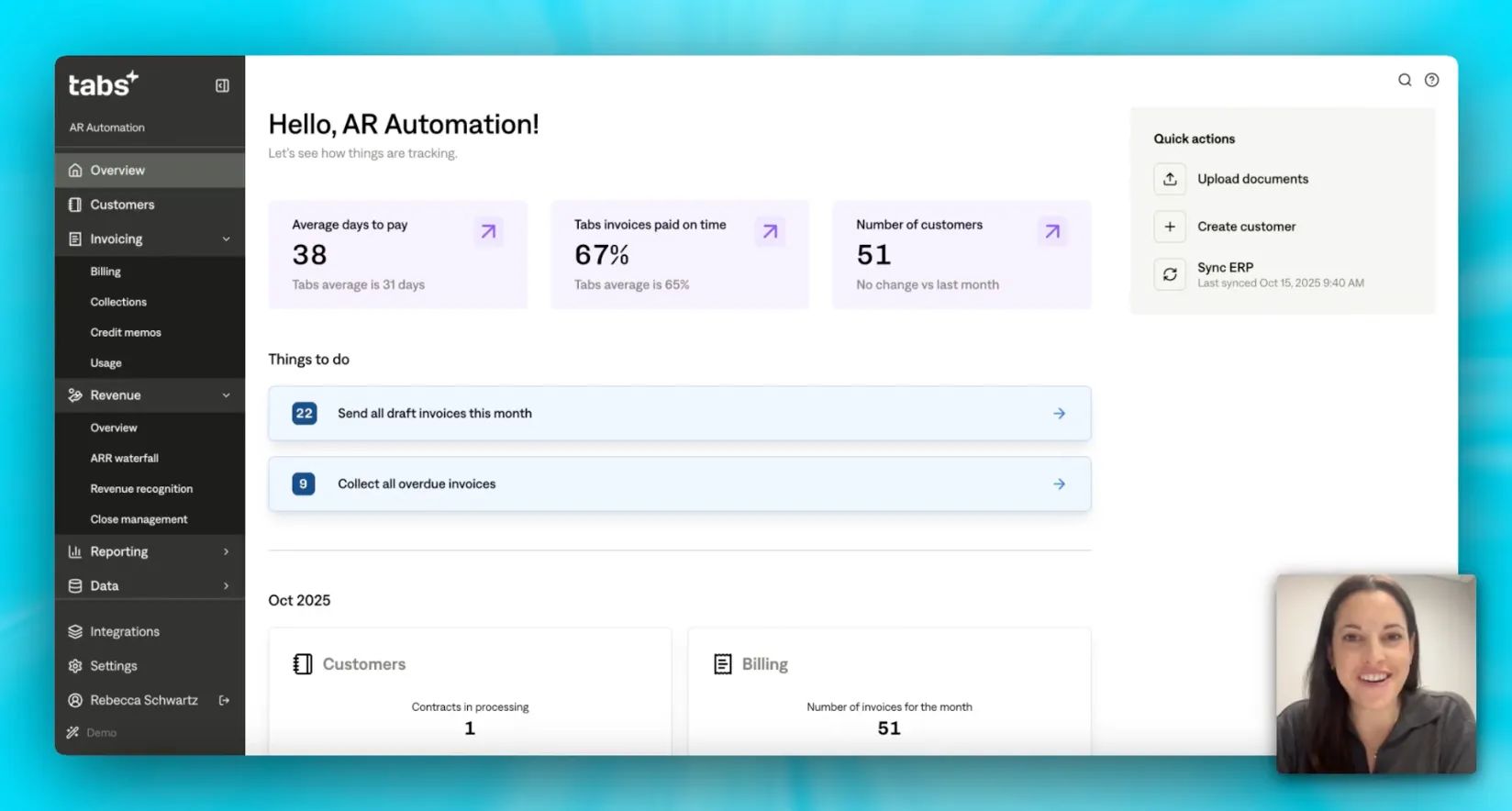
- Invoice tracking: Centralized view of outstanding balances, aging buckets, and real-time payment status across all accounts
- Automated reminders: Scheduled outreach based on due dates, grace periods, and escalation rules
- Payment reconciliation: Matching incoming payments to open invoices without manual intervention
- Risk identification: Flagging accounts with overdue balances or deteriorating payment patterns
- Audit trail: Logging every touchpoint for compliance and dispute resolution
Why B2B collection management fails without the right system
Fragmented finance stacks force teams to toggle constantly between CRM, ERP, spreadsheets, and email. It creates blind spots and delays, meaning your finance team spends hours figuring out who owes what instead of actually collecting.
Though 55% of B2B invoiced sales in the U.S. are overdue, the cost isn't just late payments. It's inaccurate cash forecasting, strained customer relationships when the wrong person gets the wrong reminder at the wrong time, and finance teams always chasing instead of planning.
TL;DR: If your team can't tie invoices back to signed terms and payment behavior, you'll chase the wrong accounts, escalate too late, and forecast cash inaccurately.
Where do things break down?
- Contract terms buried in PDFs: Billing never sees the escalator clauses or custom payment schedules that sales negotiated.
- One-size-fits-all reminders: Dunning cadences ignore customer-specific payment behavior, sending aggressive emails to strategic accounts.
- No early warning system: You don't know which invoices are at risk until they're severely past due.
- Manual reconciliation: Cash application takes days or weeks, artificially inflating your AR aging reports.
- Tribal knowledge escalations: Who handles a 60-day overdue invoice? It depends on who you ask.
Without an intelligent system, your team is guessing which accounts need attention. And guessing doesn't recover revenue.
Automate collections, recover cash—book a Tabs demo
AR collections features that move cash faster
Effective collections software goes beyond invoice tracking by helping you pull forward cash and reduce avoidable follow-up. These features are designed to reduce Days Sales Outstanding (DSO)—the average number of days it takes to collect payment, benchmarked at 40 days per EY research—and improve cash predictability.
Automate invoice reminders and cadences
Automated dunning sequences replace manual follow-up. You configure cadences based on invoice age, customer segment, or contract terms. Modern tools adjust timing and tone based on payment history, not just static schedules that treat every customer the same.
Embed one-click payment links
Friction kills collections. Embedded payment links in invoices and reminders let customers pay immediately without navigating complex portals. Support for multiple payment methods (like ACH, credit card, or wire) removes excuses and accelerates cash.
Surface risk scores and next-best actions
AI-powered collections tools analyze payment behavior, contract terms, and account history to score risk. They recommend prioritized actions rather than treating all overdue invoices equally.
Tabs adds commercial context here by correlating the invoice to the underlying contract terms, prior payment patterns, and your escalation rules to suggest the next best action for that account.
Route escalations with owner assignment
Escalation workflows assign overdue accounts to specific owners based on configurable rules. An invoice might route to an AR specialist at 30 days, then escalate to an account manager at 60. Clear ownership prevents invoices from falling through the cracks.
Reconcile payments and close out invoices
Automated cash application matches incoming payments to open invoices without manual lookup. Modern platforms handle partial payments, overpayments, and remittance mismatches that confuse legacy systems.
Tols like Tabs reconcile payments against the contract's billing schedule, credits, and payment terms—not just the invoice total—catching mismatches before they show up as aging noise.
How to evaluate collections management tools for B2B AR
Selecting the right collections system requires a structured approach. The ideal tool depends on your billing complexity, integration requirements, and team capacity.
Define cash goals and metrics
Start with outcomes. What does success look like? You might target DSO reduction—which can cut financing costs by up to 30% per PwC—fewer aged receivables, a higher collection rate, or faster time-to-cash. Clear goals shape your feature requirements and help you measure ROI.
Assess ERP and CRM integrations
Collections tools should pull signed contract data from your CRM (and CPQ, if you use one) and post payments back to your ERP, so your contract-to-cash process stays consistent downstream. Shallow integrations can create data silos and extra work.
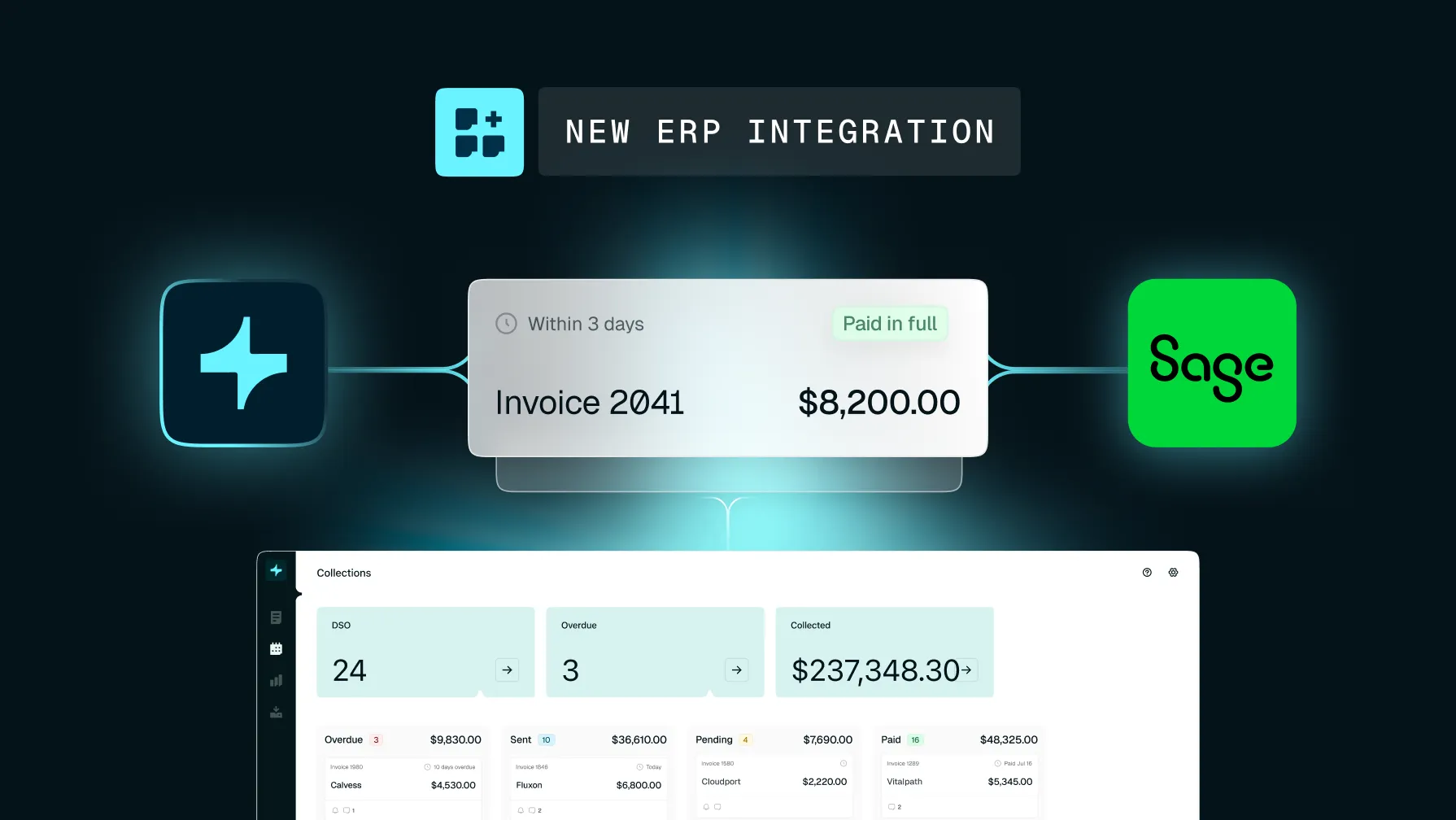
Look for tools, like Tabs, who offer native, bidirectional integrations with QuickBooks, Oracle NetSuite, Sage Intacct, and major CRMs. Data stays in sync without manual intervention.
Verify data model and contract support
Complex B2B contracts include usage-based pricing, milestone billing, and hybrid models. Your collections system must understand these terms, not just invoice amounts.
Tabs captures signed contract terms and translates them into operational rules—so dunning and escalations reflect the agreement's net terms, grace periods, and billing structure. When a contract specifies net 45 with a 10-day grace period, Tabs applies those rules automatically to your reminders and escalations.
Test dunning workflows with live scenarios
Run real-world scenarios during evaluation: late payment, partial payment, disputed invoice. Workflow flexibility—custom cadences, conditional logic, multi-channel outreach—separates capable tools from rigid systems.
Confirm security and compliance controls
AR data can include personally identifiable information (PII), payment details, and confidential contract terms. Baseline requirements: SOC 2 Type II, encryption at rest and in transit, role-based access control (RBAC), and comprehensive audit logs.
Model total cost and time-to-value
Evaluate total cost of ownership: license fees, implementation, training, ongoing support. Time-to-value matters too, so clarify how quickly can your team go live and see impact.
Integrations that unify the revenue stack
Collections management tools must connect to your broader finance stack because any sync gap becomes manual follow-up, messy aging, and noisy cash forecasts. Siloed data leads to duplicate entry, reconciliation errors, and reporting gaps. Tools like Tabs act as the connective layer that operationalizes signed contracts and keeps every system in sync.
Connect ERP for posting and reconciliation
Tabs syncs with ERPs like QuickBooks, NetSuite, and Sage Intacct to post payments and update AR balances automatically. Bidirectional sync eliminates manual journal entries and reconciliation delays that slow your month-end close.
Sync CRM for contract and account data
CRM integration ensures collections workflows reflect current contract terms, renewal dates, and account ownership. When sales closes a deal, finance has immediate visibility into the agreed-upon terms.
Ingest usage and metered events
Usage-based and hybrid billing models require real-time event ingestion. If your billing is based on consumption, your collections process must reflect those metered amounts rather than static estimates.
Security, compliance, and data governance for AR collections
Data security isn't optional when handling AR. You're dealing with customer PII, payment details, and confidential contract terms. This requires enterprise-grade controls.
Tabs builds security into Revenue Automation from day one. The platform implements strict data governance protocols to ensure only authorized personnel can view or modify financial records.
Key security controls:
- SOC 2 Type II: Independent verification of security practices
- Encryption at rest and in transit: Protecting data throughout its lifecycle
- Role-based access control: Limiting visibility to authorized users
- Audit logs: Tracking every action for compliance and review
- Single sign-on (SSO) and Security Assertion Markup Language (SAML) support: Streamlining authentication for enterprise IT
Why Tabs is the trusted AI revenue platform for collections
Tabs is a comprehensive Revenue Automation platform that connects your entire contract-to-cash process—billing, collections, Revenue Recognition, and reporting in one system.
The differentiator is commercial context. Tabs uses AI to automate complex workflows, but it doesn't stop at extracting fields from a contract. It maps contract terms to their business implications and operationalizes them into accurate billing workflows and compliant Revenue Recognition processes.
How Tabs transforms collections:
- AI contract ingestion: Automatically captures terms from signed contracts to power accurate invoicing and collections
- Commercial context: Maps contract terms to billing and Revenue Recognition outcomes—not just data extraction
- Unified platform: Billing, collections, Revenue Recognition, and reporting in one system
- Flexible billing models: Supports subscription, seat-based, usage-based, and hybrid pricing without custom logic
- Native integrations: Connects to QuickBooks, NetSuite, Sage Intacct, and major CRMs
Customers like Statsig reported dramatically reducing aged receivables and handling higher invoice volumes without adding headcount. Cortex reported cutting overdue invoices in half after implementing Tabs.
The result? Fewer bottlenecks. Cleaner data. Faster closes. And a finance team that finally has time to focus on strategic work instead of chasing payments.
Explore how Tabs can help you go live in less than 30 days.
Make cash predictable—see Tabs in action
Collection management tool FAQs
What's the difference between legacy collections software and AI-powered collections tools?
Legacy tools apply the same reminder schedule to every overdue invoice regardless of account or contract terms. AI-powered platforms like Tabs correlate each invoice with contract terms, payment history, and escalation rules to prioritize accounts and recommend next-best actions — shifting collections from reactive chasing to proactive cash management.
How much can collections automation actually reduce DSO?
Days Sales Outstanding is benchmarked at 40 days on average (per EY research), and reducing it can cut financing costs by up to 30% (per PwC). The size of the improvement depends on how automated your current dunning and reconciliation process already is — teams moving off manual spreadsheets typically see the biggest gains.
Can collections software handle complex B2B contract terms like escalators or custom payment schedules?
Yes. Platforms like Tabs capture signed contract terms — net terms, grace periods, escalation clauses — and translate them directly into dunning cadences and escalation rules, so billing doesn't have to track custom terms manually or dig through PDFs.
What does Tabs integrate with for collections and cash application?
Tabs offers native, bidirectional integrations with QuickBooks, NetSuite, Sage Intacct, and major CRMs, keeping contract, payment, and AR data in sync without manual exports or reconciliation gaps.
How long does it take to implement a collections platform like Tabs?
Most Tabs customers go live in under 30 days, though the exact timeline depends on contract complexity and integration scope.
What security and compliance standards should a collections platform meet?
At minimum: SOC 2 Type II certification, encryption at rest and in transit, role-based access control, comprehensive audit logs, and SSO/SAML support for enterprise authentication — all part of Tabs' baseline security controls.