





B2B finance teams managing complex contracts need billing software that does more than generate invoices on a schedule. This guide covers what SaaS billing software is, how it handles subscription, usage-based, and hybrid pricing models, and what features to prioritize when evaluating platforms for your finance stack. Then it compares the seven platforms best suited to complex revenue models, so you can match the right tool to the way your contracts actually work.
What is SaaS billing software?
SaaS billing software automates how subscription and usage-based companies invoice customers, collect payments, and recognize revenue. Instead of manually creating invoices from contract PDFs or tracking renewals in spreadsheets, the software handles the entire billing lifecycle—from the moment a contract is signed to the moment cash hits your bank account.
For B2B companies, this matters because your contracts aren't simple. You're dealing with annual subscriptions that renew at different rates, usage overages that need to be calculated mid-cycle, and custom terms that vary by customer. Subscription billing software handles predictable recurring charges, but a modern SaaS billing platform goes further—it uses AI to extract and classify contract terms, then maps them to billing logic to generate accurate invoices automatically across subscription, usage, and hybrid models.
The core functions include:
- Recurring invoicing: Generates and sends invoices on the schedule defined in each contract—weekly, monthly, annually, or custom
- Subscription management: Tracks the full customer lifecycle including upgrades, downgrades, renewals, and cancellations
- Payment processing: Connects to payment gateways to collect funds and match payments to invoices
- Revenue Recognition: Determines when revenue should be recognized according to Accounting Standards Codification (ASC) 606—not just when cash arrives
- Dunning automation: Retries failed payments and sends reminders to recover revenue that would otherwise be lost
The difference between basic invoicing tools and true SaaS billing software is depth. Basic tools generate invoices. SaaS billing platforms capture the commercial context behind those invoices—escalator clauses, milestone triggers, and usage thresholds—by structuring those terms into billing logic and audit-ready financial records.
Why B2B finance teams need SaaS billing software
Manual billing breaks down fast. When your sales team closes a deal with custom payment terms, a three-year ramp, and usage-based overages, someone on finance has to interpret that contract, build the invoice schedule, and track it all in a spreadsheet. Multiply that by dozens or hundreds of customers, and you've created a full-time job that adds no strategic value.
The real cost isn't just time. It's accuracy. Contract terms buried in PDFs get misread. Escalator clauses get missed. Usage data gets pulled from the wrong source. And when invoices don't match what customers agreed to, you get disputes, delayed payments, and eroded trust.
This is where the distinction between generic automation and purpose-built billing becomes clear. Most tools can send an invoice on a schedule. But B2B contracts require more—they require understanding what the contract actually says and translating that into the right billing logic.
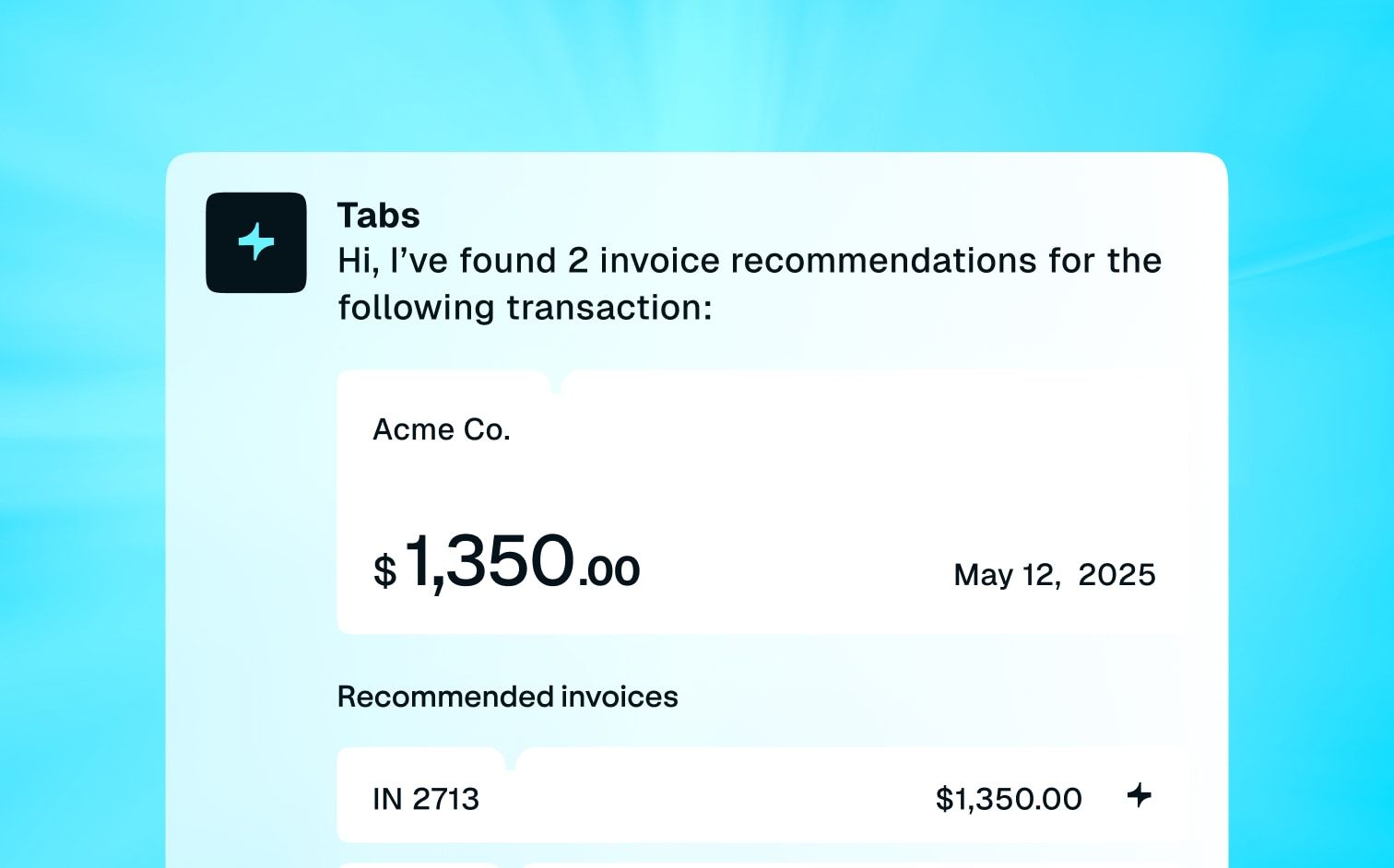
Tabs approaches this differently by providing commercial context, not just data extraction. When Tabs ingests a contract, it doesn't just extract a dollar amount and a date. It uses trained models to classify monetization terms—like minimum commitments, overage structures, annual escalators, and milestone payment triggers—and applies the corresponding billing logic. That context flows directly into billing workflows and Revenue Recognition schedules tied to the signed contract terms.
The outcomes for finance teams are concrete:
- Faster closes: Automated billing means less time reconciling invoices at month-end
- Lower Days Sales Outstanding (DSO): Smart dunning and embedded payment links accelerate collections
- Audit readiness: Every invoice ties back to contract terms with a complete audit trail
- Scalability: Invoice volume can grow without adding headcount
Automate complex billing with Tabs — book a demo
SaaS billing models for modern B2B companies
B2B pricing has moved far beyond simple per-seat subscriptions—85% of SaaS leaders have adopted usage-based pricing. Today's contracts often combine multiple billing models in a single agreement—61% of companies now employ hybrid pricing, combining base subscriptions with usage overages or tiered pricing with minimum commits. Your billing software needs to handle all of them natively.
Here's how the most common models work:
| Model | How it works | Best for |
|---|---|---|
| Flat-rate subscription | Fixed price per billing period | Simple products with predictable usage |
| Per-seat pricing | Price scales with number of users | Collaboration and productivity tools |
| Tiered pricing | Different feature sets at different price points | Products serving distinct customer segments |
| Usage-based | Charges based on consumption (API calls, storage, compute) | Infrastructure, AI, and developer tools |
| Hybrid | Combines base subscription with usage overages or minimum commits | Enterprise contracts with variable consumption |
The challenge isn't understanding these models—it's operationalizing them. Usage-based billing requires real-time data ingestion from your product. Hybrid models require logic that calculates overages against minimums. Tiered pricing requires tracking which tier each customer is on and when they cross thresholds.
Many legacy billing tools were built for simple subscriptions. They require workarounds, custom code, or manual intervention to handle anything more complex. That's a problem when your product team wants to launch a new pricing model and finance becomes the bottleneck.
Tabs supports subscription, usage-based, and hybrid billing natively. Finance teams configure billing logic directly from contract terms—no engineering tickets required. When your pricing strategy evolves, your billing infrastructure keeps pace.
Essential features of SaaS billing software
Not all billing platforms are created equal. The features that matter most depend on your billing complexity, compliance requirements, and how much manual work you're willing to tolerate. Here's what to look for.
AI contract ingestion and invoice automation
The traditional billing workflow starts with someone reading a contract PDF, extracting the relevant terms, and manually entering them into a billing system. This is slow, error-prone, and doesn't scale.
AI-powered contract ingestion changes that. The software ingests the contract directly—whether it's a PDF, Word doc, or email attachment—and uses AI to extract billing terms automatically. But extraction alone isn't enough. The system needs to classify what those terms mean operationally—so it can generate the right billing logic and Revenue Recognition treatment.
Tabs doesn't just pull data from contracts. It uses trained models to detect and classify escalator clauses, milestone payment triggers, and usage thresholds—and then maps each term to billing workflows and Revenue Recognition schedules. That commercial context flows directly into invoice generation, so the first invoice is accurate—not an approximation that requires manual correction.
Why it matters: Eliminates manual contract re-keying and the downstream billing errors that come with it.
Usage and hybrid billing support
Usage-based billing requires a different architecture than subscription billing. You need real-time data ingestion from your product, a rating engine that calculates charges based on consumption, and logic that handles mid-cycle true-ups and prepaid credit drawdowns.
Hybrid models add another layer of complexity. When a customer has a base subscription plus usage overages, the system needs to track both—and calculate overages against minimum commits when applicable.
The platforms built for simple subscriptions struggle here. They require custom code, manual calculations, or third-party integrations to handle usage data. That creates fragility and introduces opportunities for error.
Why it matters: Prevents revenue leakage by ensuring every unit of consumption gets billed accurately.
Collections and dunning automation
Generating invoices is only half the job. Getting paid is the other half. Effective billing software accelerates collections through automated reminders, embedded payment links, and smart dunning sequences that retry failed payments at optimal intervals.
Modern revenue automation platforms don't just show when invoices are due—they forecast when cash will actually land, based on historical payment behavior and contract terms. That visibility helps finance teams prioritize follow-ups and manage cash flow proactively.
Why it matters: Reduces Days Sales Outstanding and recovers revenue that would otherwise be lost to failed payments.
Revenue recognition compliance
ASC 606 requires companies to recognize revenue when performance obligations are satisfied, not when invoices are sent or cash is collected. As KPMG's SaaS revenue handbook notes, for B2B companies with multi-year contracts, usage-based components, or milestone-based payments, ASC 606 creates significant complexity requiring substantial judgments and estimates.
Spreadsheet-based revenue recognition is risky. It's manual, error-prone, and difficult to audit. When contract terms change or amendments are signed, someone has to update the spreadsheet—and hope they don't miss anything.
Tabs automates Revenue Recognition based on contract and billing data. Revenue schedules are generated automatically, tied directly to the terms in each contract. When auditors ask questions, every entry traces back to its source.
Why it matters: Ensures ASC 606 compliance without the audit risk of manual spreadsheets.
7 best SaaS billing platforms for complex revenue models
The platforms below all handle recurring invoicing. Where they diverge is complexity—how well they operationalize hybrid contracts, usage overages, ramps, and the Revenue Recognition that follows. The right fit depends on where your billing logic lives today and how much of it you want finance, rather than engineering, to own. Here's who each platform is best for, one real strength, and one honest limitation.
Tabs
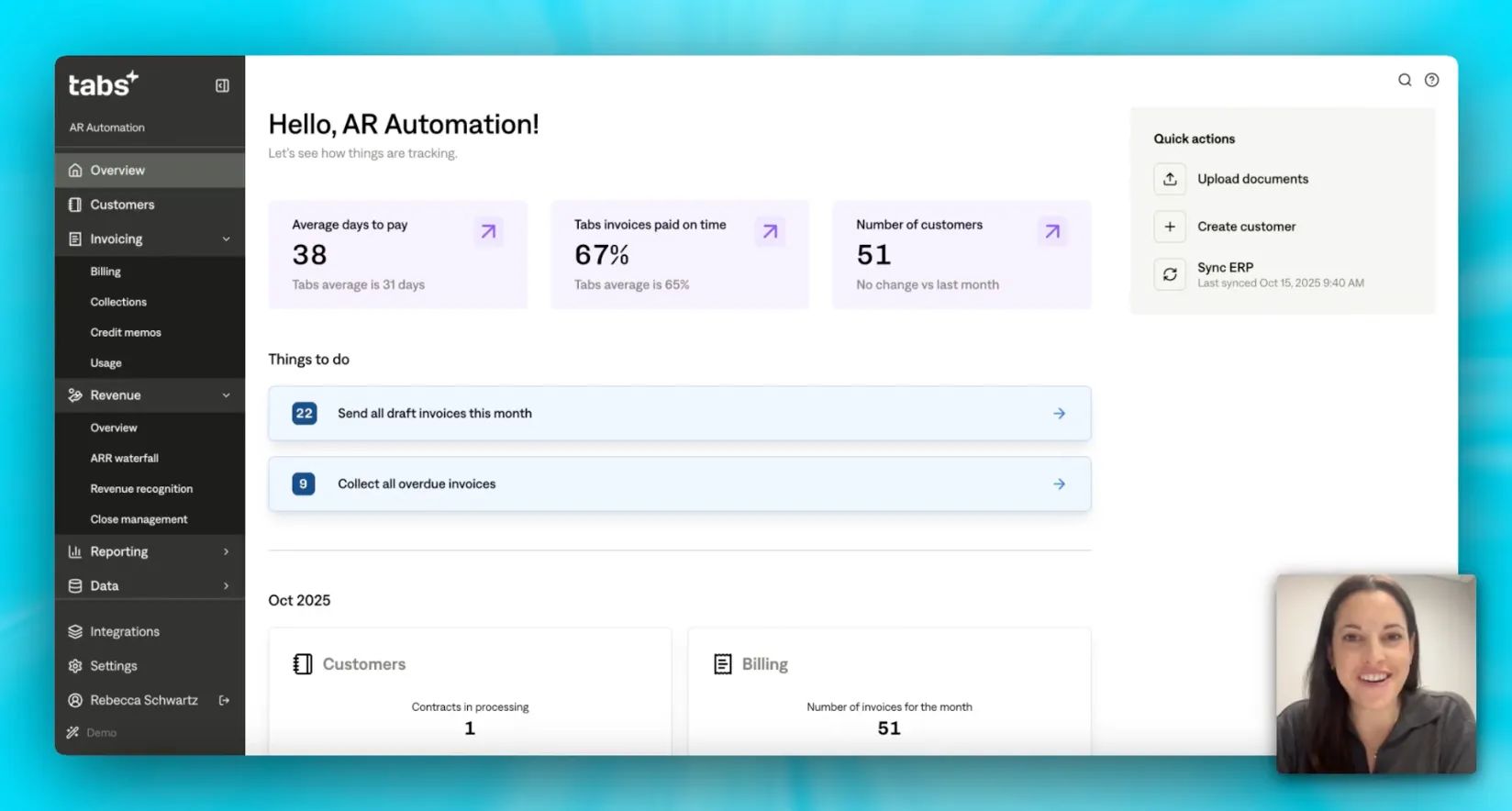
Tabs is an AI-powered Revenue Automation platform built for B2B finance teams managing complex contracts. It sits downstream of your CRM and configure-price-quote (CPQ) tools, focused entirely on operationalizing signed contracts—turning them into accurate invoices, collected cash, and recognized revenue. What sets Tabs apart is commercial context: it doesn't just extract contract data, it uses trained models to interpret terms like ramps, minimums, overages, escalators, and milestones into accurate billing and Revenue Recognition schedules. Tabs customers launch usage-based billing models in <30 days—compared to the 9–12 months legacy tools often require—so its main trade-off is that it's purpose-built for finance-owned complexity rather than a general-purpose payments layer. See Tabs in action — book a demo.
Chargebee
Chargebee is best for mid-market subscription businesses that need deep subscription management—plan changes, coupons, and renewals across multiple channels. Its strength is the maturity of that subscription tooling; its honest limitation is that usage-based and hybrid models often lean on add-ons and configuration work. Teams whose pricing is turning contract-driven frequently choose Tabs to interpret signed terms into billing and Revenue Recognition rather than maintain that logic by hand.
Zuora
Zuora is built for large enterprises with high-volume, highly configurable billing requirements. Its strength is breadth at enterprise scale; its limitation is a heavy implementation that can run many months and typically depends on specialized resources to configure and maintain. For finance teams that want faster time-to-live, Tabs reads the contract directly and gets complex billing running in <30 days without a long build.
Maxio
Maxio is best for finance and RevOps teams that want billing and Revenue Recognition together, particularly across subscription and usage models. Its strength is that pairing of billing with rev rec reporting; its limitation is that configuring complex hybrid contracts can still require meaningful manual setup. Tabs differs by using trained models to classify contract terms into billing and ASC 606 schedules automatically, reducing the manual configuration finance owns.
Stripe Billing
Stripe Billing is best for developer-first companies that want billing tightly coupled to payments on infrastructure they may already run. Its strength is that developer experience and native payments tie-in; its limitation is that complex B2B logic—negotiated ramps, minimum commits, and Revenue Recognition—often ends up living in engineering code. Tabs keeps that logic with finance by operationalizing the signed contract, so billing changes don't require an engineering ticket.
Orb
Orb is best for developer and AI products that need precise usage-based metering and flexible rating. Its strength is granular consumption tracking; its limitation is that the broader finance workflow—collections and contract-driven Revenue Recognition—can require additional tooling around it. Tabs covers the full contract-to-cash process, translating usage terms and the rest of the agreement into invoices, collections, and recognized revenue in one place.
Metronome
Metronome is best for high-volume usage rating where large event streams must be aggregated and priced accurately. Its strength is that rating engine at scale; its limitation is that it's focused on metering rather than the full finance stack around it. Tabs pairs usage handling with commercial context—interpreting the complete contract into billing and Revenue Recognition—so finance teams manage complex revenue models without stitching multiple tools together.
How to choose SaaS billing software for your company
The right platform depends on your specific situation—your pricing models, your compliance requirements, and your existing finance stack. Here's how to evaluate your options.
Do your pricing models require usage or hybrid support?
If you bill based on consumption—API calls, storage, compute cycles, or any other usage metric—you need a platform built for real-time metering. Many legacy tools were designed for simple subscriptions and require painful workarounds for usage-based billing.
Ask these questions during your evaluation:
- Can the platform ingest usage data in real time from your product?
- Does it support mid-cycle invoicing and usage true-ups?
- Can it handle prepaid credit drawdowns and overage calculations?
- Can finance configure rating logic without engineering support?
If the answer to any of these is "with custom development," you're looking at ongoing maintenance costs and potential delays every time your pricing evolves.
Do your compliance needs include ASC 606 and global tax?
Companies selling globally or preparing for audit need platforms with built-in compliance capabilities. This includes automated revenue recognition schedules, multi-currency support, and tax calculation.
Key compliance features to evaluate:
- Automated ASC 606 schedules: Revenue recognition tied directly to contract terms and performance obligations
- Multi-currency and multi-entity support: Essential for companies operating across geographies
- Tax calculation: Either built-in tax engines or Merchant of Record models that handle tax compliance entirely
- Audit trail: Every transaction, adjustment, and override logged and accessible
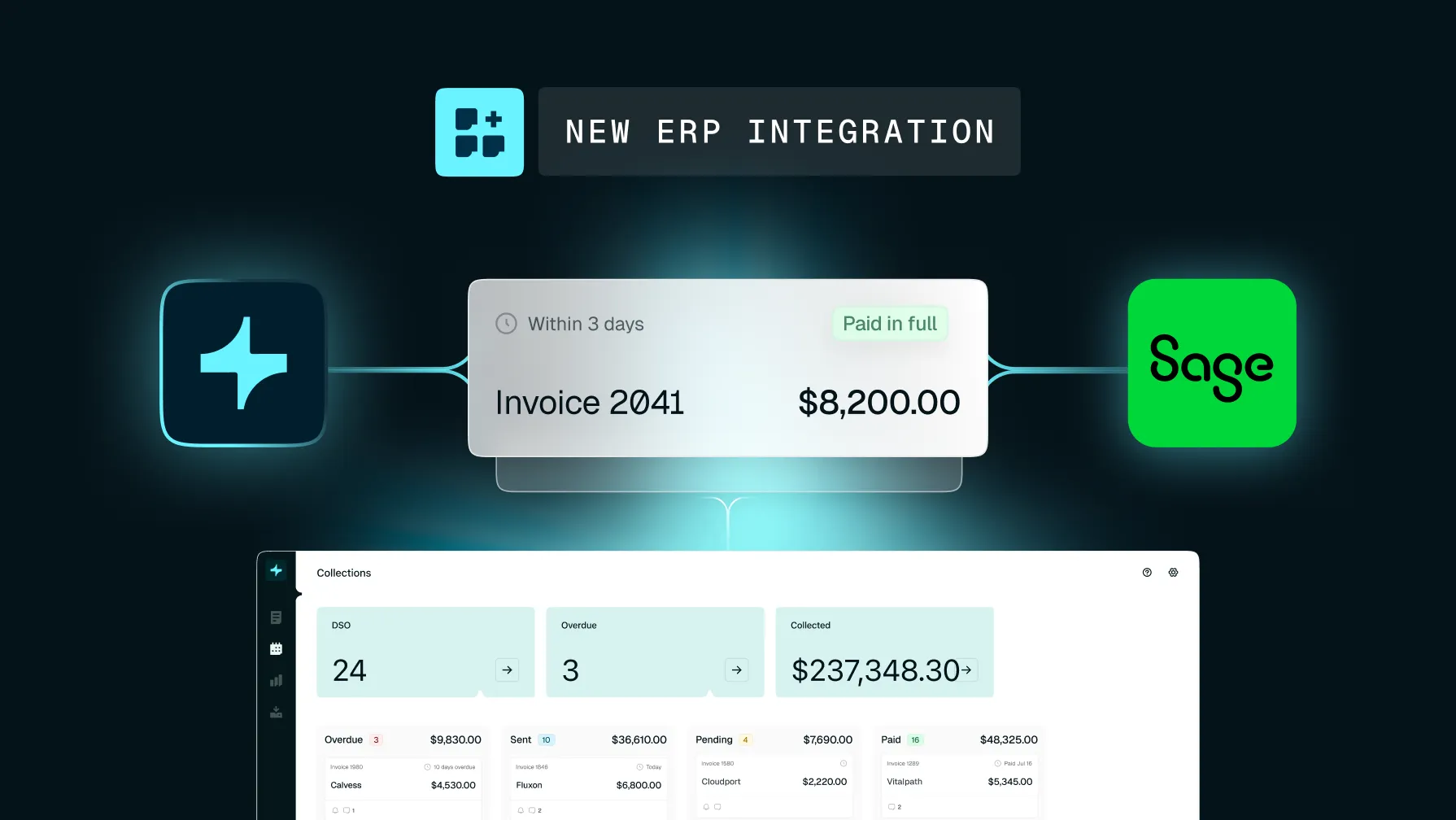
If you're outgrowing QuickBooks and evaluating an ERP upgrade, make sure your billing platform integrates cleanly with your chosen ERP—whether that's NetSuite, Sage Intacct, or another system.
Frequently asked questions
Can SaaS billing software handle contracts with custom terms and mid-cycle amendments?
Yes—modern platforms use AI to extract terms directly from contracts and generate invoices automatically. Tabs goes further by understanding commercial context, so escalator clauses, milestone triggers, and custom pricing translate into accurate billing without manual intervention. When amendments are signed, the billing logic updates accordingly.
How long does it take to implement SaaS billing software for complex pricing models?
Implementation timelines vary based on complexity, but modern platforms with pre-built integrations and guided onboarding can get teams live in weeks rather than months. Tabs customers have launched usage-based and hybrid billing models in <30 days, compared to the 9-12 month timelines common with legacy billing systems.
Operationalize complex revenue—see Tabs in action
How is SaaS billing software different from spreadsheets or generic invoicing?
Purpose-built billing software captures every billable event and automates prorations, dunning, and Revenue Recognition, while staying ASC 606 audit-ready. Spreadsheets and generic invoicing tools still have their place, but they leave accuracy and compliance gaps that widen as contracts grow more complex.
When should a SaaS company move off Stripe Billing?
The signal is when pricing turns hybrid or contract-driven and your billing logic starts living in engineering code or spreadsheets. That's the point where a revenue automation platform that reads signed contracts and operationalizes them keeps that logic with finance instead of tying it to your product roadmap.