




For controllers, CFOs, and accounting managers at high-growth B2B companies, this guide breaks down the leading financial close automation tools, explains how they work, and shows where they fit in your revenue stack alongside upstream platforms like Tabs that handle billing, collections, and ASC 606 Revenue Recognition.
What is financial close automation software?
Financial close automation software is a platform that streamlines your month-end accounting cycle by automating reconciliations, journal entries, and approval workflows. Instead of manually matching transactions in spreadsheets, the software does the heavy lifting—flagging exceptions, routing approvals, and maintaining audit trails automatically.
But here's what most buyers miss: a fast close is wildly difficult when upstream revenue data is inconsistent. If invoices are wrong, collections are delayed, and Revenue Recognition lives in fragmented spreadsheets, your close will still be chaos. This is why modern finance leaders pair close software with Tabs—a Revenue Automation platform that uses AI to operationalize signed contracts across contract-to-cash before the close even begins.
Financial close automation vs. task management tools
Task management tools assign checklist items and track due dates. That's it. Financial close automation software actually performs accounting work—auto-matching bank feeds against your general ledger, pre-populating journal entries, and enforcing segregation of duties.
The difference matters. Automation reduces manual effort. Task trackers just organize it.
Why it matters: You need systems that execute tasks, not just monitor them.
Who uses financial close software?
Controllers and accounting managers are the primary users, handling daily reconciliations and journal approvals. CFOs rely on these platforms for real-time visibility into close progress without scheduling status meetings.
Mid-market and enterprise companies with multi-entity structures see the highest return. When transaction volumes scale, manual spreadsheet reconciliation becomes operationally impractical for lean teams.
Why it matters: The right tool scales with your business without requiring proportional headcount growth.
Processes in scope vs. out of scope
Understanding what close software handles—and what it doesn't—helps you build the right finance stack.
In-scope for close software:
- Account reconciliations and transaction matching
- Journal entry creation and approvals
- Close checklists and task dependencies
- Variance analysis and flux reporting
- Period-end certifications
Out-of-scope (handled upstream by Tabs):
- Subscription and automated billing from signed contracts
- Collections and accounts receivable management
- ASC 606 Revenue Recognition
- Usage-based pricing calculations
Why it matters: Close software manages period-end accounting. Tabs operationalizes the commercial data that feeds it.
How financial close software works
The month-end close follows a rigid sequence. Financial close automation software digitizes that sequence to eliminate bottlenecks and enforce accounting policies automatically.
Data ingestion and reconciliations
First, the software pulls data from your ERP, bank feeds, and subledgers. It then applies matching logic to reconcile transactions—flagging exceptions for human review rather than requiring manual line-by-line comparison.
Why it matters: Your team only investigates actual discrepancies, not every single transaction.
Task orchestration and dependencies
Accounting workflows require strict order of operations. Close software manages these dependencies automatically—you can't start the revenue rollforward until the bank reconciliation is certified.
This replaces spreadsheet-based checklists and endless email follow-ups asking "is this done yet?"
Why it matters: Dependencies are enforced by the system, not by memory or manual tracking.
Journal entries and approvals
The system automates recurring journal entries each month. For ad-hoc entries, it routes proposed adjustments through approval workflows based on materiality thresholds and role-based access.
Every change is logged in an immutable audit trail before posting to the ERP.
Why it matters: Unauthorized adjustments can't hit your general ledger without proper approval.
Certifications and sign-off
The final step is formal certification. Account owners sign off on their balances electronically, and the software timestamps and stores all supporting evidence.
Why it matters: You create a clean, searchable archive for future audits—without manual document management.
Key features of financial close automation software
Evaluating financial automation software requires looking past marketing claims. Focus on capabilities that actually reduce your team's workload.
Close checklists and templates
Configurable templates let you build standardized close checklists with recurring schedules and role assignments. You can clone templates across periods and entities to ensure consistency.
Why it matters: Every close follows the same process, regardless of who's executing it.
Account reconciliations
Automated matching compares balances between your trial balance and external sources. The system uses materiality thresholds to auto-approve minor variances without human intervention.
Why it matters: High-volume transaction matching becomes manageable for lean teams.
Journal workflow and approvals
Users create manual, recurring, or auto-generated journal entries within the platform. The software routes entries through segregation of duties checks before pushing them to the general ledger.
Why it matters: Every journal entry has a clear audit trail from creation to posting.
Integrations and APIs
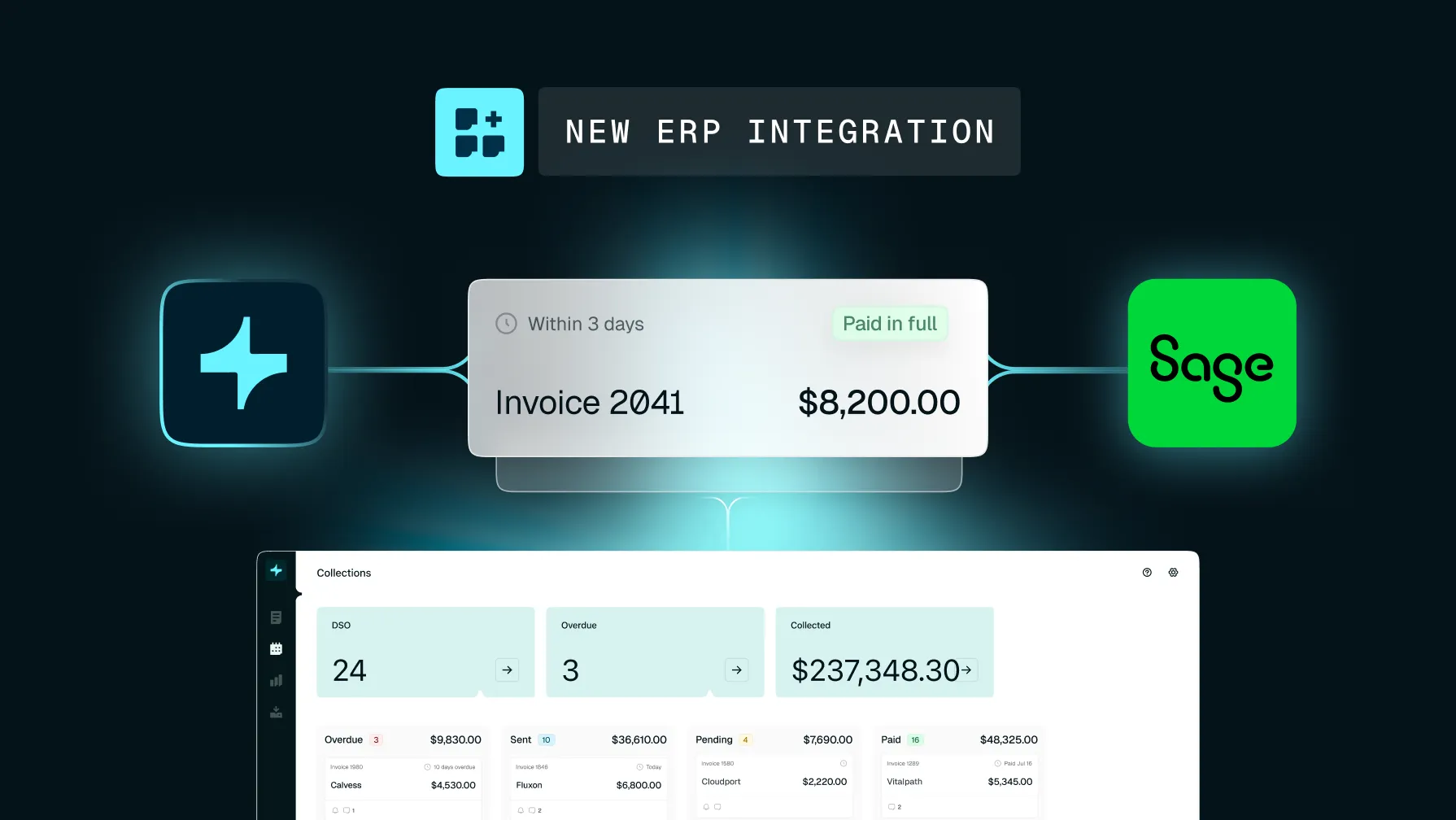
Native integrations with ERPs like NetSuite, Sage Intacct, and QuickBooks are mandatory. Enterprise teams also need open APIs for custom connections, plus single sign-on (SSO) and secure file transfer protocol (SFTP) support.
Why it matters: Your close software must communicate flawlessly with your existing finance stack.
Dashboards and close analytics
Real-time dashboards show close progress, task completion rates, and bottlenecks. Key metrics include days to close, reconciliation completion rate, and open items aging.
Why it matters: Leaders can identify and resolve delays without scheduling status meetings.
Benefits of financial close automation software
TL;DR: The right tools shift your focus from manual data entry to strategic financial analysis.
Faster time-to-close and fewer errors
Automation eliminates the manual data entry that causes most accounting errors. This reduces rework during review and compresses your overall close calendar.
Your team reallocates time from transaction processing to actual variance analysis, spending 20-30% less time crunching data.
Why it matters: Speed without accuracy is worthless. You need both.
Audit readiness and evidence retention
Close software maintains a complete audit trail automatically. Every reconciliation, journal approval, and certification is timestamped and stored in a centralized repository.
You no longer dig through shared drives to find last year's supporting schedules.
Why it matters: Audit prep time drops dramatically when evidence is already organized.
Team productivity and visibility
Automated task routing gives controllers instant visibility into close progress. Team members spend less time chasing approvals and more time on substantive work.
Why it matters: The chaotic end-of-month scramble becomes predictable and manageable.
Fix upstream revenue data to close faster with Tabs
Best financial close automation software compared
The market offers several strong options. Choosing the right one depends on your company size, transaction volume, and existing tech stack.
| Tool | Best for | Notable capabilities |
|---|---|---|
| BlackLine | Large enterprises | High-volume matching, intercompany accounting |
| FloQast | Mid-market companies | Fast implementation, intuitive UX |
| Trintech | Complex global teams | Advanced reconciliation, risk management |
| Workiva | Public companies | SEC reporting, SOX compliance |
BlackLine
BlackLine is the enterprise leader in financial close software. It excels at high-volume reconciliations, complex intercompany accounting, and strict SOX compliance.
However, implementation timelines and total cost can be prohibitive for smaller, high-growth teams that need to move fast.
FloQast
FloQast is the mid-market favorite—built by accountants, known for fast implementation and a workflow that's easy to adopt across the close team.
FloQast remains a top choice for teams prioritizing speed and usability over complex enterprise configurations.
Trintech Cadency
Trintech provides enterprise-grade transaction matching and reconciliation workflows. Trintech's ReconNET product handles highly specific reconciliation use cases for global organizations.
Companies often pair Trintech with other financial reporting solutions to complete their stack.
Workiva
Workiva functions primarily as a compliance and reporting platform with close management capabilities. It's exceptionally strong for Sarbanes-Oxley (SOX) documentation, Securities and Exchange Commission (SEC) reporting, and external audit collaboration.
The platform is broader than pure close automation, making it ideal for pre-IPO and public companies.
How to choose the right financial close software
Selecting new accounting software requires structured evaluation. Look beyond feature lists to understand how the tool fits your daily operations.
Requirements and use-case fit
Start by documenting your specific pain points before evaluating vendors. Is your bottleneck reconciliation volume? Task tracking? Multi-entity consolidation?
Different tools excel in different areas. Your use case must drive the evaluation.
Why it matters: The best tool for a Fortune 500 company isn't the best tool for a Series B startup.
Integration, security, and compliance
Verify that the vendor maintains Service Organization Control (SOC) 2 compliance and supports role-based access controls. Global companies must evaluate data residency requirements before signing.
Your close software must integrate natively with your ERP to be effective.
Why it matters: Security gaps in your close process create audit risk and compliance exposure.
Total cost, time-to-value, and ROI
Evaluate the complete financial commitment—implementation timelines, professional services, and ongoing subscription fees. A massive feature set is useless if deployment takes 12 months.
Why it matters: Faster time-to-value often matters more than having every possible feature.
Monitoring and audit readiness in the close
A clean close is only half the battle. You must also prove your numbers are accurate to auditors and stakeholders.
Audit trails and controls testing
Close software captures every action automatically—who prepared a schedule, when it was reviewed, what changed. This immutable record makes Sarbanes-Oxley (SOX) 404 controls testing straightforward.
Why it matters: Auditors get the evidence they need without disrupting your team.
Retention policies and access reviews
These platforms enforce document retention policies and maintain detailed access logs for periodic reviews. Multi-entity close tools ensure proper segregation of duties across all subsidiaries.
Why it matters: Compliance isn't just about the close—it's about proving the close was done correctly.
Where financial close software fits in the revenue stack
Financial close software manages period-end accounting tasks effectively. But it can't fix bad data flowing in from commercial operations. When billing—whether seat-based, usage-based, or subscription—collections, or Revenue Recognition data is inconsistent upstream, month-end still turns into rework—no matter how strong your close tooling is.
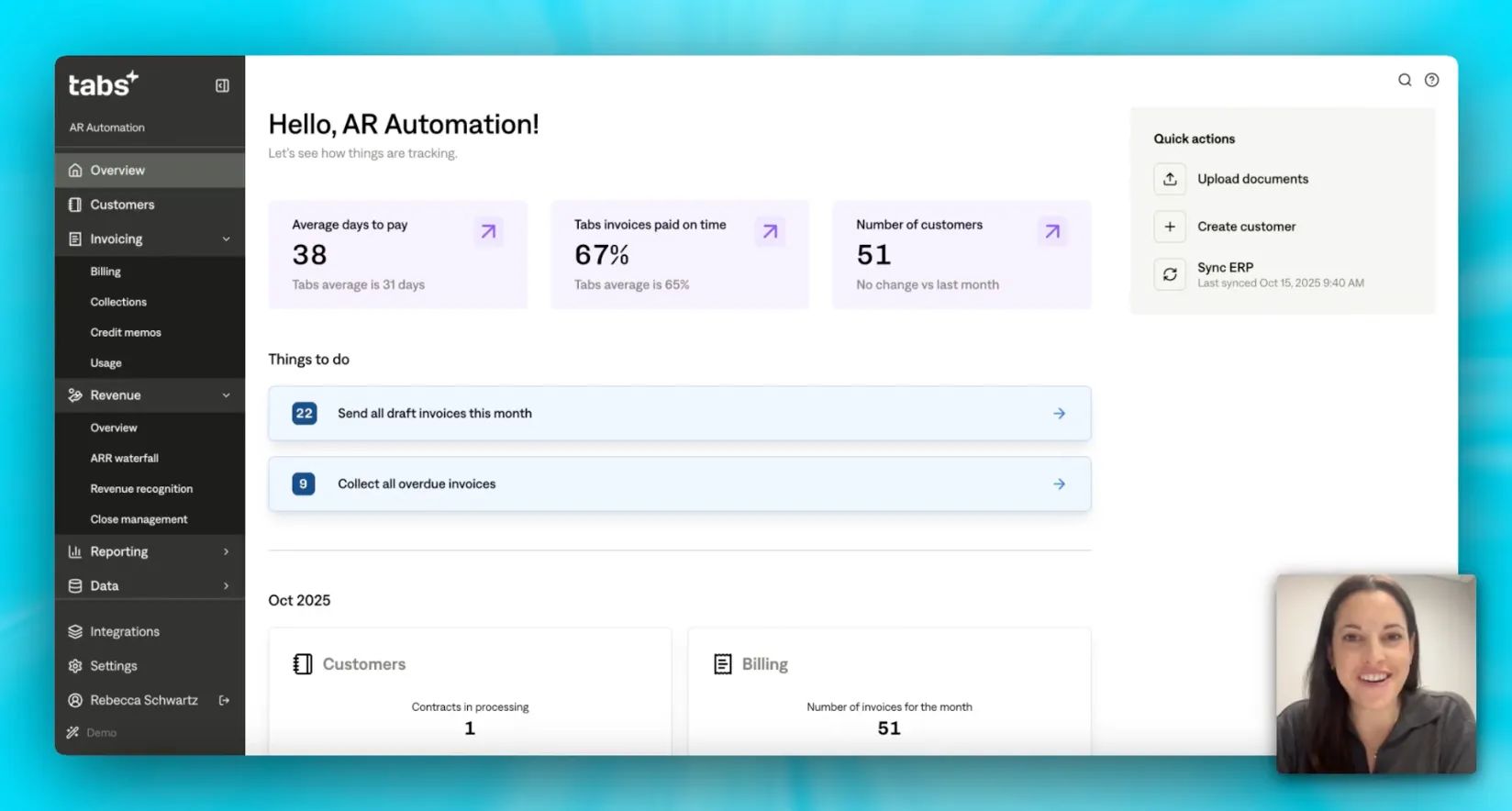
This is why modern finance teams deploy Tabs downstream of their CRM and CPQ, and upstream of their close software. Tabs provides commercial context—not just intelligence. It doesn't merely extract contract data; it uses trained models to classify terms and map them into billing workflows—including complex hybrid billing models—and Revenue Recognition rules.
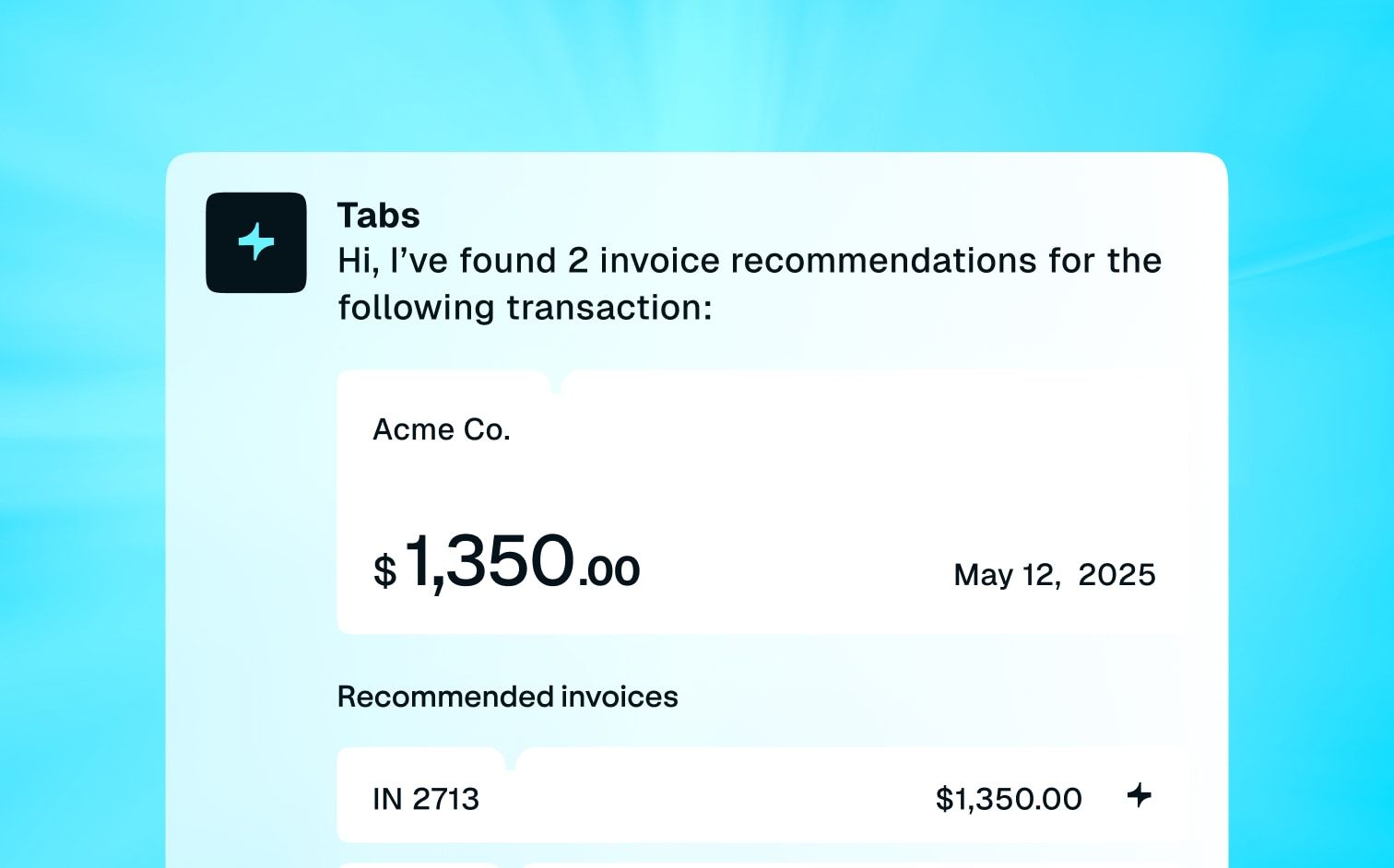
When Tabs runs your contract-to-cash workflows, your ERP receives validated, consistent data you can tie back to signed terms. Automated invoices align to contract terms. Collections workflows trigger on schedule with consistent follow-up. ASC 606 Revenue Recognition is supported with audit-ready schedules, tie-outs, and approvals from the start.
By the time your financial close software takes over at month-end, the hardest work is already done.
Explore how Tabs can help you go live in <30 days.
FAQs
How long should month-end close take for a high-growth B2B company?
Best-in-class teams close in five to seven business days, while many organizations take two to three weeks. Close automation reduces close time by 30-50% by eliminating manual bottlenecks in reconciliation and approval workflows.
What KPIs should finance teams track during the close cycle?
Track days to close, reconciliation completion rate, open items aging, first-pass accuracy rate, and hours spent on manual data entry. Most close software dashboards surface these metrics automatically.