





For finance leaders managing complex B2B revenue workflows, connecting your CRM to your billing system is the foundation of accurate invoicing, faster collections, and clean revenue recognition. This guide breaks down how CRM billing integration works, the methods available, and why modern contracts demand more than basic data sync.
What is CRM billing integration?
CRM billing integration is the connection between your customer relationship management system and your invoicing platform. It creates a direct data flow from sales activities to finance operations—so when a deal closes in your CRM, the billing system automatically receives the information it needs to generate an invoice.
Without this connection, finance teams spend hours copying contract details from one system to another. They re-key customer names, pricing terms, and payment schedules in the billing system. This creates delays, introduces errors, and forces your team to chase down discrepancies instead of focusing on strategic work.
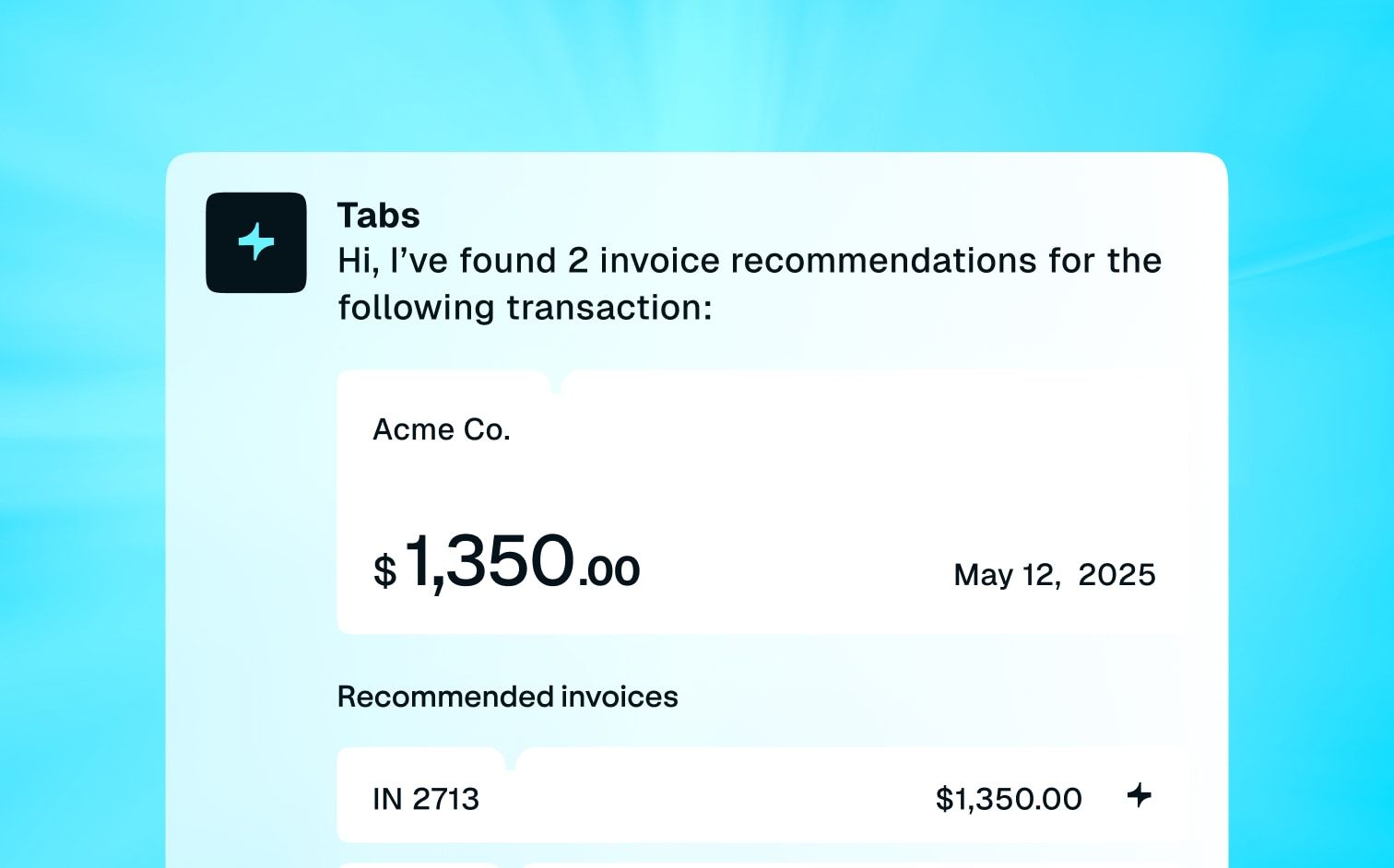
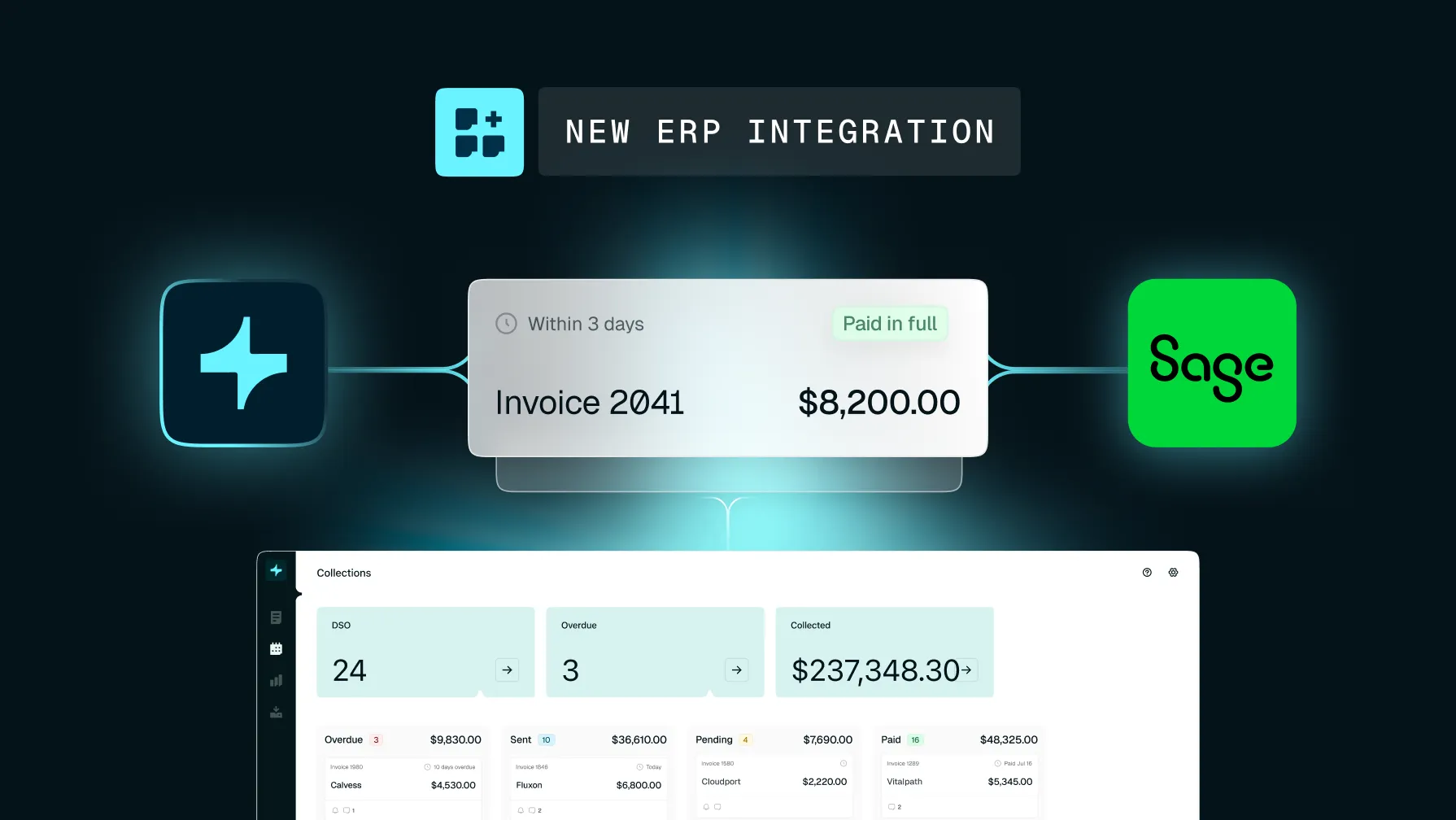
The goal is simple: what gets sold should match what gets billed. But achieving that goal requires more than just moving data between systems. Modern B2B contracts include usage-based pricing, custom payment terms, and hybrid billing models that don't fit neatly into standard database fields—for example, ramps, minimum commits, and bespoke invoicing cadences. Revenue Automation platforms like Tabs sit downstream of your CRM and CPQ—so they don't just move fields between systems; they apply commercial context from the signed contract to produce accurate billing workflows.
How CRM billing integration works
The integration process starts when a lifecycle event happens in your CRM—a deal moves to "Closed Won," a contract gets signed, or a renewal date arrives. That event triggers the system to capture relevant data and send it to your billing platform.
Modern integrations work in real-time. Data transfers instantly rather than waiting for a nightly batch update. And the flow goes both directions—payment status and collection updates can sync back to the CRM so your sales team sees the full picture.
Here's what happens at each stage:
- Connection and authentication: Your systems establish a secure communication channel using APIs (application programming interfaces). Think of APIs as digital translators that let different software programs talk to each other.
- Data mapping: CRM fields like "Deal Value" and "Billing Address" get matched to corresponding fields in your billing system. This ensures customer information lands in the right place.
- Synchronization triggers: Specific events—deal closed, contract signed, subscription renewed—tell the integration when to transfer data.
- Payment processing: The billing system uses the synced data to generate invoices, process payments, and record transaction results.
Connection and authentication
Before any data moves, both systems need to verify each other's identity. This happens through authentication protocols like OAuth 2.0, which works like a digital passport—it confirms who's connecting without sharing passwords.
Your admins generate API keys that grant specific permissions. Your billing system can only access the CRM data it needs, and vice versa. Enterprise-grade integrations also encrypt data in transit and log every connection attempt for compliance purposes.
Why it matters: Secure authentication protects sensitive financial data while enabling the automation your team needs.
Data synchronization and customer profiles
Once connected, the integration keeps customer records consistent across both platforms. When a new customer signs a contract, their profile appears in the billing system automatically—same name, same address, same contact details.
And it keeps running continuously—so changes propagate automatically without a manual refresh. If someone updates a billing address in the CRM, that change flows to the billing system. If a payment fails, that status flows back to the CRM. Your sales and finance teams always see the same information.
Why it matters: Unified customer profiles eliminate the "swivel chair" problem of checking multiple systems to piece together a complete picture.
Payment processing and invoicing
The billing system uses synchronized contract data to determine what to bill, when to bill it, and how much to charge. This includes calculating taxes, applying discounts, and handling complex logic such as prorated subscriptions or usage-based fees.
Once an invoice generates, the system can email it automatically or charge a stored payment method. Transaction results—success or failure—get recorded immediately, giving your team real-time visibility into cash flow.
Why it matters: Automated invoicing eliminates the lag between closing a deal and sending a bill, which directly impacts how fast you get paid.
See CRM-to-billing automation in action
CRM billing integration methods
You have three main options for connecting your CRM and billing systems. Each involves different trade-offs between control, complexity, and maintenance.
| Method | Best for | Trade-offs |
|---|---|---|
| Direct API | Teams with engineering resources who need full control | Higher maintenance, requires technical expertise |
| iPaaS/Middleware | Companies connecting multiple systems without custom code | Subscription costs, potential latency |
| Native integrations | Teams using platforms with pre-built connectors | Limited customization, vendor dependency |
API integrations for direct control
Direct API integrations involve writing custom code to connect your systems. This approach gives you complete control over how data maps, transforms, and triggers between platforms.
The downside? Maintenance. When either system updates its API, your engineering team must update the integration code. This creates ongoing work that pulls developers away from your core product.
Why it matters: Custom APIs offer maximum flexibility but require dedicated engineering resources to build and maintain.
iPaaS and middleware for orchestration
Integration Platform as a Service (iPaaS) tools orchestrate data flows between applications, with built-in transforms, logging, and retries. Platforms like Workato or Tray.io provide visual interfaces where you can build workflows without writing extensive code.
These tools handle data transformation, error logging, and retry logic automatically. Operations teams can manage integration logic directly, making it easier to adjust workflows as business needs change.
Why it matters: Middleware reduces engineering burden while still enabling complex, multi-system workflows.
Common systems to connect for end-to-end flow
A complete contract-to-cash flow requires more than CRM-to-billing connectivity. Gaps in your system chain create manual work and data inconsistencies.
The typical finance stack includes:
- CRM: Source of deal and customer data
- CPQ: Quote configuration feeds pricing and terms to billing
- Billing platform: Generates invoices, manages subscriptions, tracks payments
- ERP/General ledger: Receives financial entries for accounting and reporting
- Payment gateway: Processes transactions and returns payment status
Why it matters: Every disconnected system in this chain represents a place where data can get lost, delayed, or corrupted.
Benefits of CRM billing integration for B2B finance teams
When your CRM and billing systems communicate effectively, finance transforms from a reactive function into a strategic partner. According to PwC, leading finance teams have reduced costs by nearly 25% by spending more time generating insights and less on automatable tasks.
Why this matters: Disconnected systems force finance teams into manual reconciliation and delayed closes. Integration shifts the operating model from data entry to strategic analysis—a transformation 73% of CFOs cite as a high priority according to PwC.
Unified customer profiles and records
Integration creates a complete view of each customer—from initial deal through every invoice and payment. Sales sees payment history. Finance sees contract context. Customer success sees both.
This transparency improves customer conversations. Your team doesn't have to ask clients to repeat information or correct billing errors caused by outdated records.
Automated financial workflows and dunning
Manual invoicing is slow and error-prone. Integration enables automatic invoice generation based on contract milestones—no copying, no re-keying, no delays.
Beyond invoicing, integrated systems automate collections. When a payment fails, the system sends reminders automatically—which can reduce DSO by 8-12 days according to 2025 industry benchmarks. If an invoice goes 15 days past due, your workflow can create a task for your customer success manager in the CRM.
Real-time data accuracy and visibility
In a manual environment, finance leaders wait until month-end to get accurate revenue numbers. Integration provides real-time visibility into ARR, cash flow, and bookings.
Reports stay current because data syncs instantly. Board decks and investor reports reflect reality, not last month's snapshot.
ASC 606 revenue recognition and auditability
Compliance with ASC 606 requires a clear link between contract terms and recognized revenue. Integration maintains a digital paper trail connecting every invoice line item to its source contract.
This traceability reduces audit prep time dramatically. Instead of digging through emails and PDFs, auditors trace data lineage directly through your integrated systems.
Faster cash flow and reduced DSO
The time between signing a contract and sending an invoice directly impacts your Days Sales Outstanding (DSO). Integration eliminates that lag.
Invoices go out the moment they're eligible. And because data comes directly from approved contracts, invoices contain fewer errors—which means fewer disputes and faster payments.
CRM billing integration challenges and how to address them
Integration projects aren't without obstacles. But these challenges are manageable with the right approach.
Data security and compliance controls
Financial data requires strict security. Payment information falls under PCI DSS regulations. Customer data may be subject to GDPR or CCPA.
Choose platforms with SOC 2 compliance and encryption at rest and in transit. Ensure your integration supports role-based access controls so only authorized users see sensitive data.
System compatibility and legacy constraints
Older ERP or CRM systems may lack modern API capabilities. They might only support file-based transfers or nightly batch updates rather than real-time sync.
Middleware can bridge these gaps, translating modern API calls into formats legacy systems understand. Alternatively, prioritize upgrading to platforms with pre-built connectors for your stack.
Technical complexity and maintenance burden
Custom integrations require ongoing maintenance. API changes can break connections without warning. This creates permanent work for your engineering or IT team.
Evaluate total cost of ownership—including the engineering time needed to maintain connections. Managed platforms that handle updates automatically often prove more cost-effective than point-to-point integrations.
Data migration and synchronization risk
Integration quality depends on data quality. If your CRM contains duplicate accounts or incomplete contract fields, automation will simply propagate those errors into your billing system.
Perform a thorough data audit before turning on the integration. Run parallel systems during transition to validate accuracy, and establish clear rollback procedures.
Why modern B2B billing requires more than basic CRM integration
Traditional integrations move data from point A to point B. They copy a field from Salesforce into NetSuite. That solves the data entry problem—but it doesn't address the complexity of modern B2B revenue.
Today's contracts include usage-based pricing, seat-based licensing, hybrid subscription models, ramp deals, and custom terms. A basic integration can't operationalize contract terms into billing and Revenue Recognition logic. It can only copy fields or free-text. Finance teams still have to manually configure billing logic for every new deal.
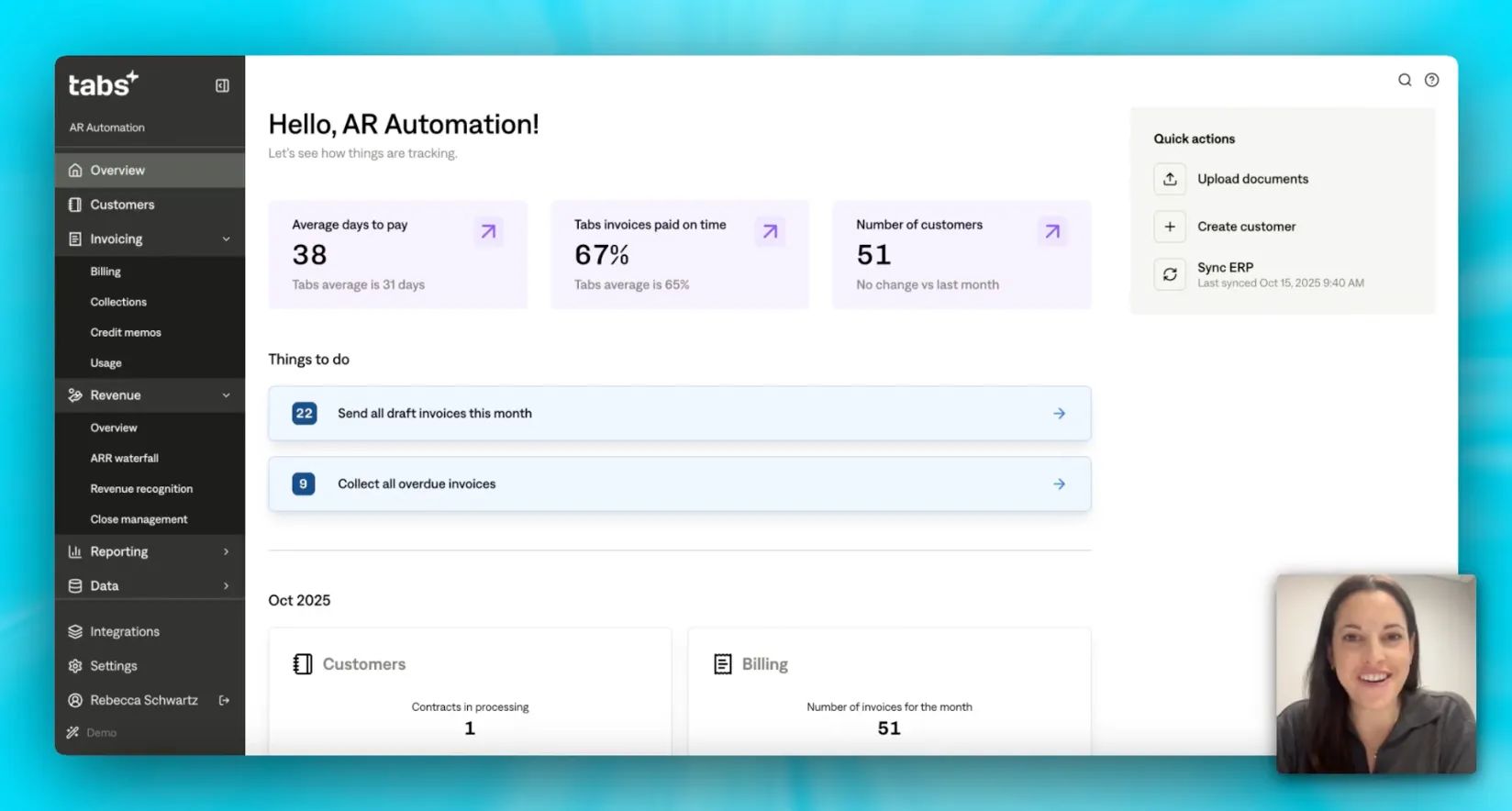
This is where Tabs differs. Tabs is a Revenue Automation platform that uses trained models to capture commercial context from signed contracts—then structures those terms into billing workflows and accounting-ready outputs.
- Basic integration: Moves deal data from CRM to billing; requires manual configuration of billing rules
- Revenue automation: Interprets contract terms, applies appropriate billing logic, and generates compliant invoices automatically
Using AI-powered automation—87% of CFOs predict AI will be extremely important to finance operations according to Deloitte—Tabs ingests signed contracts, identifies key commercial terms, and translates them into precise billing schedules and Revenue Recognition rules.
Tabs maintains what it calls a "Commercial Graph"—a system of intelligence that unifies contracts, usage data, and payments. This ensures your billing system reflects the commercial reality of each deal based on the signed contract—not just what was typed into the CRM.
For finance teams, this means moving beyond simple connectivity to true automation. You can operationalize any pricing model your product team creates—without custom engineering work for every new contract structure.