




For finance teams managing subscription and Usage-Based Billing, collections is where cash flow meets complexity. This guide covers how to evaluate collections tools that reduce DSO, automate dunning with commercial context, and integrate cleanly into your existing finance stack.
What are collections tools for B2B finance?
Collections tools are software that automate tracking, managing, and collecting outstanding invoices from customers. For B2B companies with subscriptions or Usage-Based Billing, these tools must handle recurring invoices, variable amounts, and complex contract terms—not just one-time transactions. McKinsey research found that 73% of revenue at higher-growth companies comes from value-based billing models.
The standard accounts receivable (AR) workflow moves from invoice generation to delivery, payment tracking, dunning, and reconciliation. Dunning is the process of systematically communicating with customers to collect overdue payments. Modern accounts receivable collections software is AI-powered—it can prioritize accounts, automate outreach, and flag patterns (like repeat short-pays or stalled approvals) that help finance teams reduce Days Sales Outstanding (DSO)—the average number of days it takes to collect payment after invoicing.
Most collections tools treat invoices as isolated transactions. Tabs approaches collections differently. Tabs uses AI models to interpret invoice context—contract terms, billing schedules, and payment history—so workflows reflect the commercial reality behind each balance. This means automated dunning sequences reflect the account relationship and contract realities—not just a due date.
Here are the foundational terms you need to know:
- Days Sales Outstanding (DSO): The average number of days to collect payment after an invoice is issued
- Dunning: Systematic communication with customers to collect overdue payments
- AR aging: A report categorizing outstanding invoices by how long they've been unpaid
Essential features in collections tools that reduce DSO
The right collections automation software doesn't just automate tasks. It gives finance teams visibility and control over cash flow—a top priority for 77.9% of CFOs—while reducing manual intervention.
AI-powered prioritization
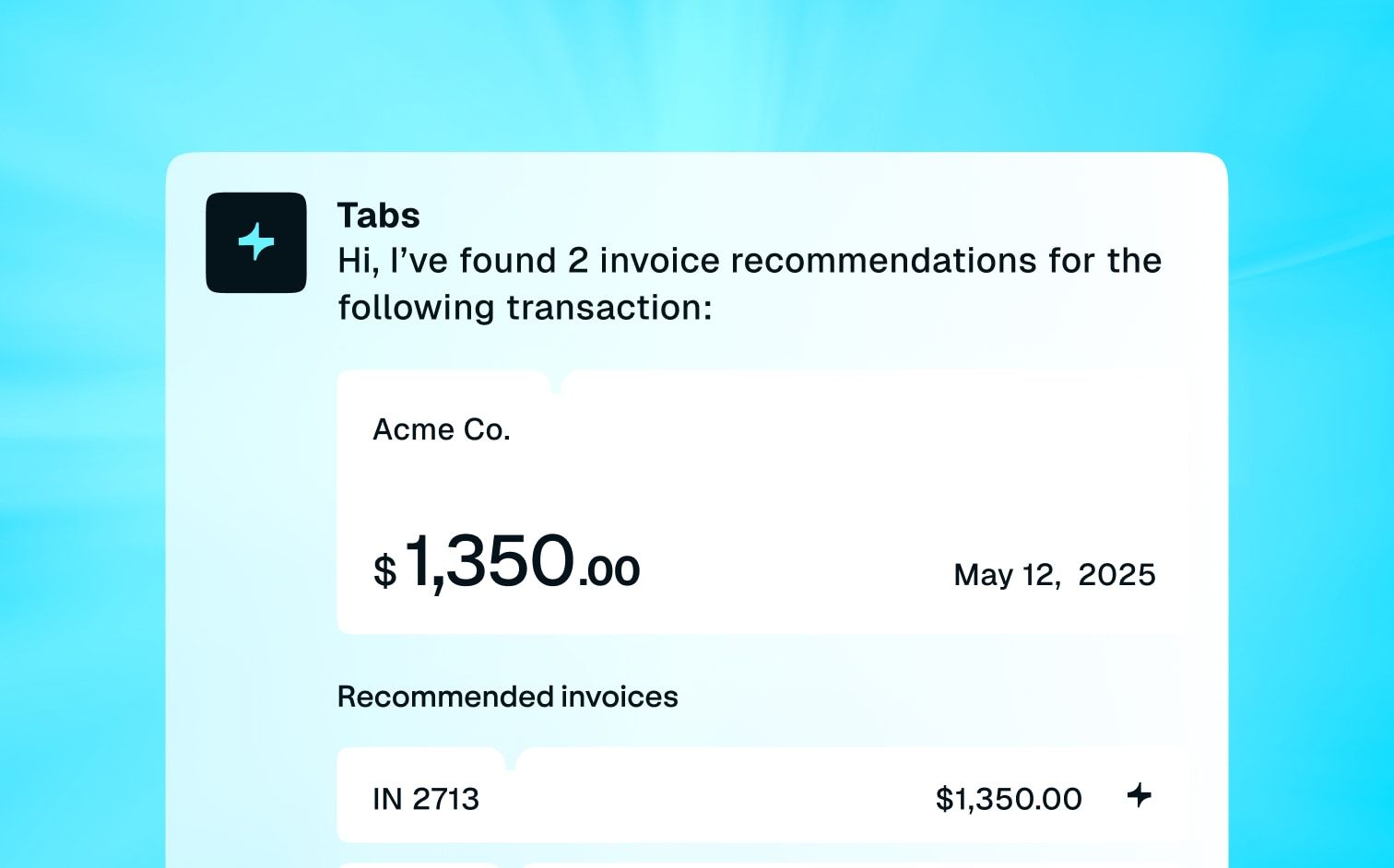
AI prioritization ranks overdue accounts based on factors like invoice amount, customer payment history, and likelihood to pay—rather than relying solely on aging buckets. This helps collectors focus on high-impact accounts first.
Tabs uses AI models trained on B2B billing patterns to surface accounts where outreach is most likely to accelerate cash collection. The platform doesn't just flag accounts that are technically overdue—it identifies the commercial nuance behind the delay.
Effective prioritization considers:
- Invoice value: Dollar amount and cash materiality
- Payment history: Typical payment speed and variance
- Renewal timing: Proximity to renewal and commercial leverage
- Customer tier: Strategic importance and escalation path
Why it matters: Generic aging reports treat a $500 invoice the same as a $50,000 invoice. AI-powered prioritization ensures your team chases the right dollars first.
Automated dunning sequences
Dunning sequences are pre-configured outreach cadences triggered by invoice status. Automation ensures consistent follow-up without manual tracking. But effective dunning adapts to context—a strategic enterprise customer shouldn't receive the same templated reminder as a self-serve account.
Tabs allows finance teams to configure dunning logic based on contract terms, customer tier, and payment history. A comprehensive sequence includes:
- Pre-due reminders: Sent before the invoice due date to prompt timely payment
- Past-due escalations: Graduated outreach as invoices age
- Internal alerts: Notifications to account owners when intervention is needed
Why it matters: Consistent, context-aware follow-up reduces DSO without damaging customer relationships.
Cut DSO with AI-driven collections
Embedded payment links
Embedded payment links allow customers to pay directly from invoice emails or a self-serve portal. Removing friction accelerates cash collection. Online payment collection software must support multiple payment methods—Automated Clearing House (ACH), credit cards, and wire transfers.
For B2B, payment links must also handle partial payments, payment plans, and application to specific invoices. Tabs embeds payment links directly in automated dunning emails with automatic reconciliation back to the invoice.
Why it matters: Every click you remove between invoice and payment shortens your cash cycle.
ERP and CRM integrations
Collections tools must sync with your existing systems. Your ERP handles financial records. Your CRM holds customer context. Two-way sync ensures payment status, notes, and disputes are visible across teams without manual updates.
| Integration Type | Purpose | Example Systems |
|---|---|---|
| ERP | Financial record sync, GL posting | NetSuite, QuickBooks, Sage Intacct |
| CRM | Customer context, account ownership | Salesforce, HubSpot |
| Payment processor | Transaction reconciliation | Stripe, ACH processors |
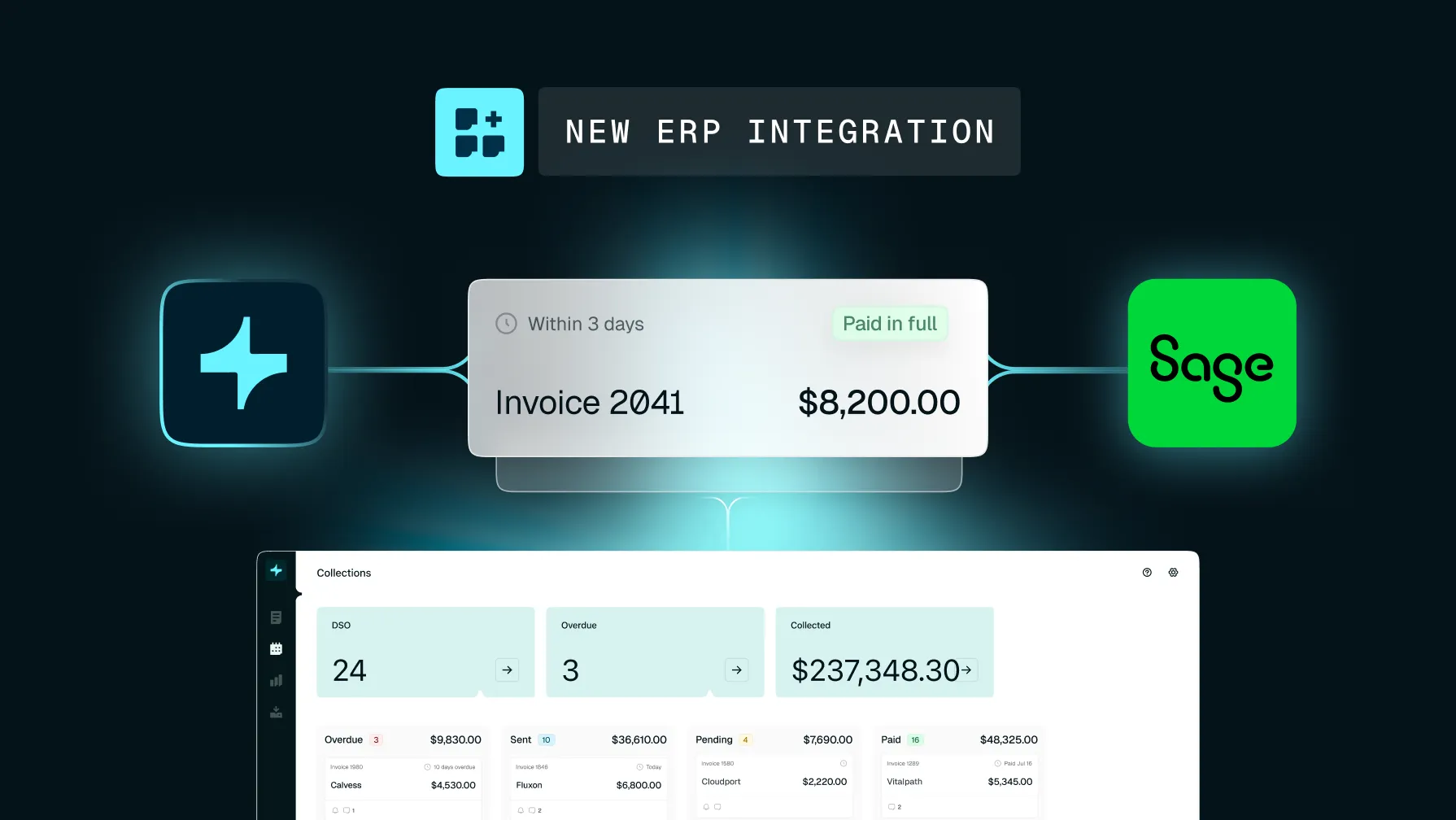
Tabs offers native integrations and open APIs to ensure collections data flows into your finance stack without middleware or manual exports.
Why it matters: Disconnected systems create blind spots. Integrated systems create confidence.
Audit-grade compliance
Collections tools must maintain a complete audit trail—every outreach, payment, dispute, and status change logged and accessible. Compliance requirements like Service Organization Control 2 (SOC 2) and the Payment Card Industry Data Security Standard (PCI DSS) apply when handling payment data.
For companies with complex billing models, audit trails must connect collections activity back to the original contract and revenue recognition treatment. Tabs maintains end-to-end traceability across contract-to-cash—from signed contract terms (operationalized downstream of your CRM/CPQ) through billing, collections, and cash application.
Why it matters: When auditors ask how a payment was applied, you need an answer in minutes, not days.
How to evaluate collections tools for B2B finance
Evaluation starts with understanding your billing complexity—subscriptions, Usage-Based Billing, or hybrid models—before you compare features. Follow these three steps to align your technology choice with your actual revenue operations.
Step 1: Map contracts, billing models, and data sources
Document your current state. What billing models do you use? Where does contract data live? How are invoices generated and tracked? This mapping reveals integration requirements and highlights where manual processes create collection delays.
Tabs pulls key terms from signed agreements and operationalizes them downstream of your CRM and CPQ—mapping terms into billing schedules, collections workflows, and Revenue Recognition logic. Mapping your contract sources clarifies how much automation is possible.
Ask your team:
- What billing models do you support today? What's on the roadmap?
- Where do signed contracts live? Are terms structured or buried in PDFs?
- How do invoices get generated—manually, from ERP, from a billing system?
- What systems need to receive payment and collections data?
Step 2: Score features against AR KPIs and compliance
Once requirements are mapped, score vendors against features that directly impact AR performance: DSO reduction, collector productivity, dispute resolution time. Include compliance requirements—SOC 2, audit trail depth—as non-negotiables.
Create a weighted scorecard based on your priorities:
- AI prioritization and automation depth
- Dunning flexibility by customer tier, contract type, and amount
- Payment options and reconciliation accuracy
- Integration breadth and API quality
- Compliance certifications and audit trail completeness
Step 3: Validate integrations, automation, and audit trails
Demos and documentation only go so far. Finance teams should validate claims in a sandbox or pilot. Test that integrations actually sync data bidirectionally. Confirm automation rules handle edge cases—partial payments, disputes, credits. Verify audit trails capture the detail needed for compliance.
Tabs offers sandbox environments and implementation support so you can validate contract-to-cash workflows end to end—especially edge cases like tiered usage, mid-cycle changes, credits, and partial payments—before go-live.
Collections tools categories and selection checklist
Collections tools fall into several categories, each with tradeoffs. Understanding these categories helps you evaluate options based on your stack and needs.
AR suites with native collections
AR suites handle the full contract-to-cash workflow—invoice creation, collections, cash application, and reporting—in a single system. Native collections means dunning and payment tracking are built in, not bolted on.
This category works well for companies that want a unified system and are willing to consolidate tools. Tabs fits this category, combining billing, collections, and Revenue Recognition in one system, using AI models to apply contract terms consistently across all three.
Payment platforms with collections add-ons
Payment platforms like Stripe offer collections features as extensions. These work well for companies with simple billing but may lack the depth needed for complex B2B contracts, usage-based models, or multi-entity structures. Integration with ERP and CRM may require additional middleware.
Point solutions for dunning and reminders
Point solutions focus specifically on dunning automation and payment reminders. They layer on top of existing billing or ERP systems but require integrations to access invoice and customer data. Point solutions may lack the commercial context needed to prioritize accounts intelligently or adapt outreach to contract terms.
Use this checklist for vendor evaluation:
- Does the tool support your billing models (subscriptions, seat-based, Usage-Based Billing, and hybrid)?
- Can it ingest contract terms automatically, or does it require manual setup?
- Does dunning logic adapt to customer tier, contract value, or payment history?
- What ERP and CRM integrations are native vs. requiring middleware?
- How deep is the audit trail—does it connect collections to contracts and revenue recognition?
- What compliance certifications does the vendor hold?
How Tabs automates B2B collections with commercial context
Tabs is a Revenue Automation platform built for B2B companies with complex billing. Tabs doesn't just automate dunning—it uses AI models to interpret contract terms, billing schedules, and payment patterns so collections actions reflect the commercial context behind each invoice.
This means collections workflows reflect actual revenue implications, not just static rules. Tabs connects collections to billing and Revenue Recognition in a single system, reducing data silos that slow cash collection and create audit risk—because the same contract terms drive every downstream workflow.
- AI-powered contract ingestion: Extracts key billing terms from signed contracts and maps them into billing schedules and Revenue Recognition rules—without manual data entry
- Context-aware dunning: Outreach sequences adapt to customer tier, contract value, and payment history
- Embedded payments: Customers pay directly from invoice emails with automatic reconciliation
- Unified audit trail: Every invoice, reminder, payment, and dispute is traced from contract to cash
Frequently asked questions
Do collections tools support usage-based and hybrid billing models?
Modern collections tools vary widely in their support for complex billing. Look for tools that handle variable invoice amounts, mid-cycle adjustments, and contracts combining subscriptions and usage components—Tabs supports these patterns with contract-aware workflows built from signed terms.
How quickly can finance teams implement collections software without disrupting the ERP?
Implementation timelines depend on integration complexity and data quality. Tabs offers native ERP integrations and sandbox environments that allow finance teams to validate workflows before go-live, with many customers operational in weeks rather than months.
What security certifications should B2B collections tools have?
SOC 2 compliance is a baseline for handling financial data, and PCI DSS is required if the tool processes card payments directly. Tabs is SOC 2 compliant and uses encryption and audit-ready access controls to support secure financial operations.