




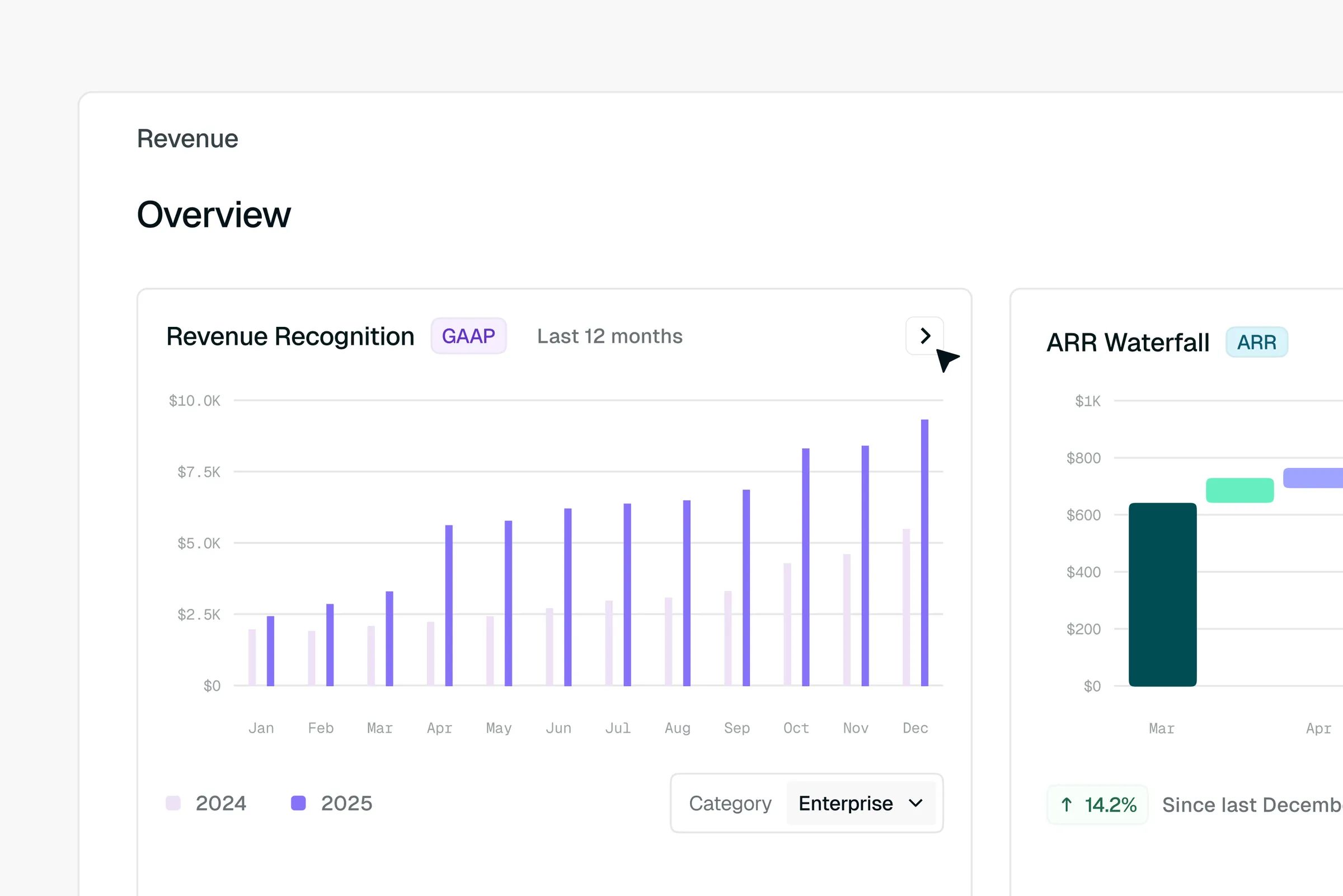
This guide breaks down how billing and collections software works, what features matter most for complex B2B revenue models, and how modern finance teams use automation to reduce DSO, eliminate billing errors, and scale without adding headcount.
What is billing and collections software?
Billing and collections software automates the process of generating invoices, tracking payments, and following up on outstanding balances. It connects the moment a contract is signed to the moment cash lands in your bank account.
Some tools focus only on sending invoices. Others specialize in chasing overdue payments. But modern platforms handle the entire contract-to-cash workflow in one system—eliminating the manual handoffs that slow finance teams down.
The difference between basic automation and true Revenue Automation comes down to commercial context. Basic tools copy data from one place to another. Platforms like Tabs use AI models trained on B2B contract structures to interpret the commercial implications of contract terms and translate them into accurate billing logic automatically. This means fewer errors, faster invoicing, and collections workflows that actually reflect your revenue model.
Essential features for B2B billing and collections software
Feature depth matters more than feature count. B2B contracts contain complex terms—usage tiers, seat-based pricing, milestone payments, annual escalators—that simple tools cannot handle without manual workarounds.
| Feature Category | Basic Capability | Advanced Capability |
|---|---|---|
| Invoicing | Manual invoice creation | Automated generation from contracts |
| Billing models | Flat-rate subscriptions | Usage-based, hybrid, and milestone-based billing |
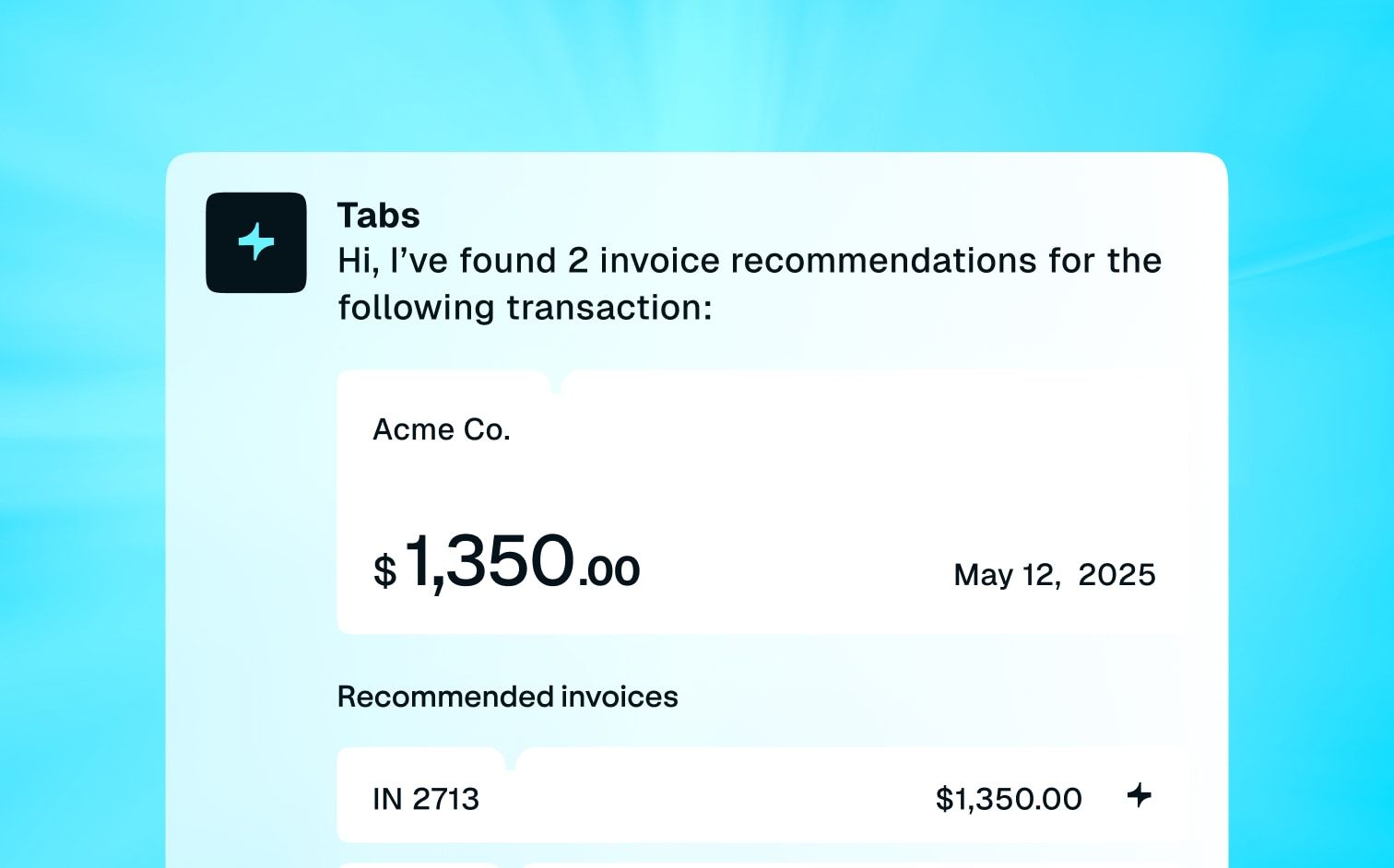
| Cash application | Manual matching | AI-powered auto-matching |
| Analytics | Static aging reports | Predictive DSO forecasting |
| Integrations | Single ERP connector | Bidirectional sync with CRM, ERP, payments |
Automated invoicing and scheduling
Automated invoicing removes the need to manually create PDFs or copy data between systems. The software handles scheduling logic for recurring invoices, milestone-based bills, and renewal triggers.
Tabs generates invoices directly from executed contracts—capturing terms automatically rather than requiring manual configuration.
Why it matters: Eliminates manual contract re-keying and downstream billing errors.
Usage-based billing and metering
Usage-based billing charges customers based on actual consumption. The software connects to metering infrastructure that tracks usage and a rating engine that calculates cost.
This capability is essential for hybrid models that combine flat subscriptions with variable overage fees.
Why it matters: Supports modern pricing models without custom engineering work.
Cash application and error resolution
Cash application is the process of matching incoming payments to open invoices. Automation handles most matches, but errors still occur—partial payments, overpayments, missing remittance details.
Robust software routes these mismatches to exception queues with clear resolution workflows.
Why it matters: Speeds up reconciliation and keeps your AR balance accurate.
Analytics and AR forecasting
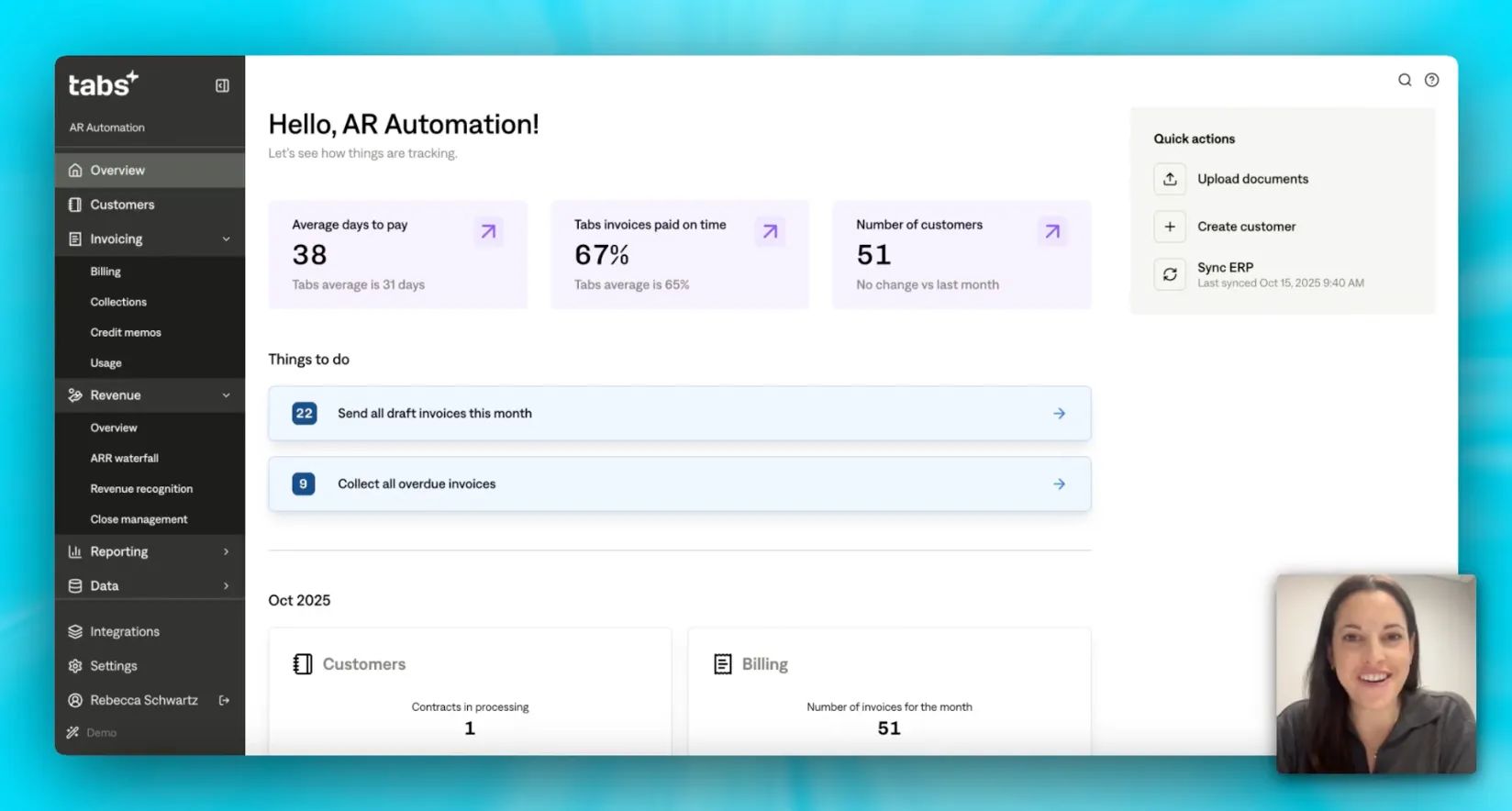
Standard analytics provide aging reports and track days sales outstanding (DSO). But modern revenue automation platforms don't just show when invoices are due—they forecast when cash will actually land based on historical payment behavior and contract terms.
Why it matters: Gives finance leaders a realistic view of future cash flow.
ERP integrations and data sync
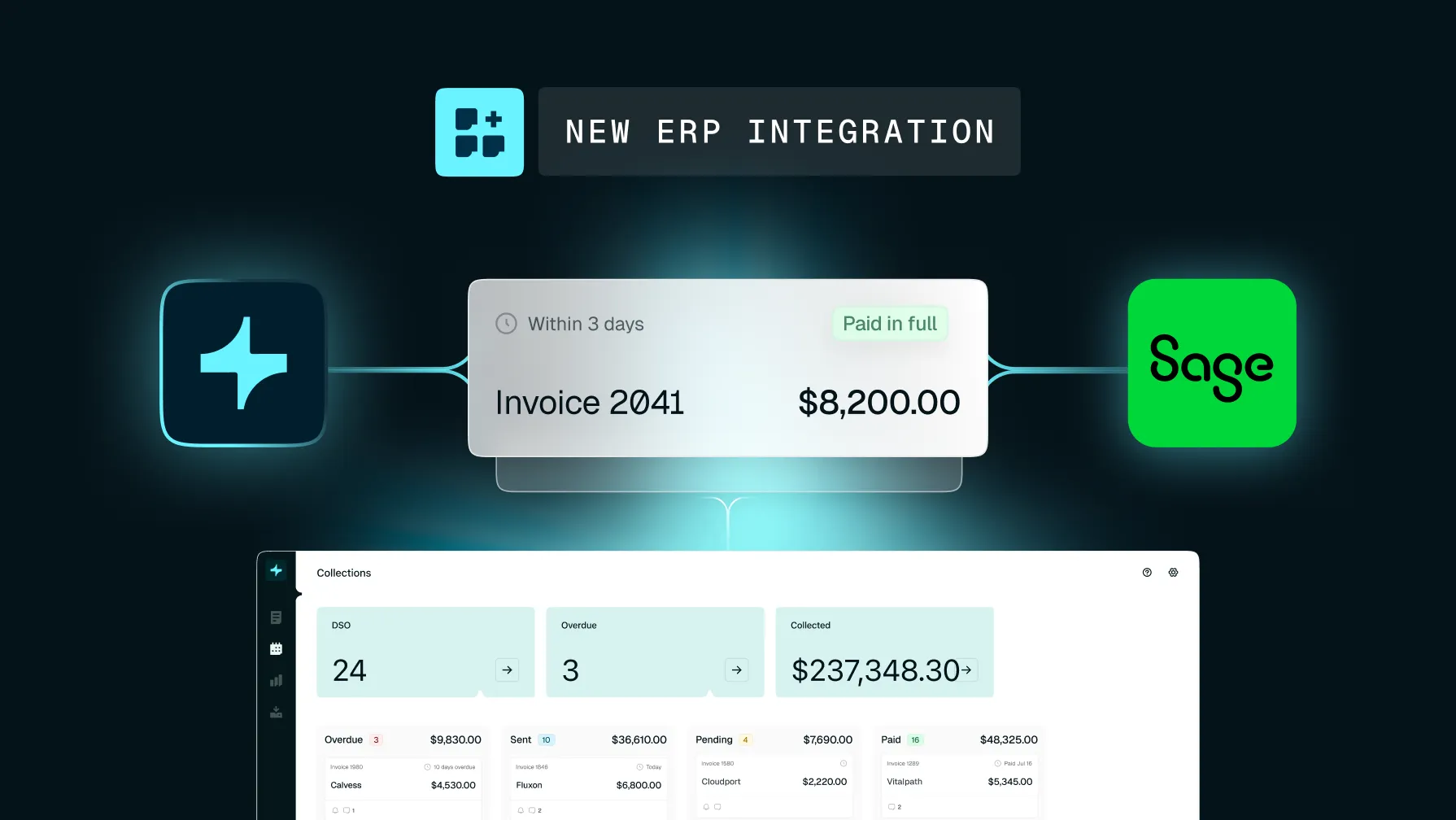
Your billing system must sync with your general ledger. Look for bidirectional integration with ERPs like NetSuite, QuickBooks, and Sage Intacct.
The system should also sync the required account and opportunity context from your CRM so billing workflows start automatically when a contract is executed.
Why it matters: Eliminates manual data entry between systems.
How billing and collections software improves cash flow
The right software drives immediate improvements in cash flow and reduces DSO. PYMNTS research shows 62% of firms implementing AR automation see measurable DSO reductions. By automating the mechanical parts of collections, finance teams can focus on high-value accounts.
- Faster invoice delivery: Invoices generate immediately after contract execution rather than waiting for manual processing
- Consistent follow-up: Automated dunning sequences ensure no overdue invoice falls through the cracks
- Reduced friction: Embedded payment links and multiple payment options increase first-attempt completion rates
- Earlier intervention: Real-time visibility into aging balances enables proactive outreach before accounts become delinquent
- Accurate billing: Contract-aware invoicing eliminates disputes caused by billing errors, which cause 61% of late payments
Some Tabs customers like Mode Mobile report materially reducing aged receivables and scaling invoice volume without adding headcount.
Cut DSO with AI-powered billing—see a demo
Contract-to-cash workflow in billing and collections software
The contract-to-cash workflow represents the complete lifecycle of revenue operations. Most billing errors and collection delays trace back to broken handoffs between contract, invoice, payment, and recognition. Here's how a modern workflow should operate in your billing and collections software.
Why this matters: A unified workflow eliminates the gaps where revenue leaks and errors hide.
Contract ingestion and validation
The process begins when a contract flows from your CRM into the billing system. The software validates that pricing terms, billing schedules, and payment terms match your configuration.
Tabs uses AI to extract terms directly from signed contracts. The platform interprets commercial context (e.g., ramp periods, escalators, and acceptance triggers) rather than only capturing raw text.
Why it matters: No more manual back-and-forth between tools to interpret contract language.
Invoice generation and delivery
Once validated, the system generates invoices based on specific contract terms. You configure delivery channels—email, customer portal, or API—to match customer preferences.
Why it matters: Invoices go out immediately and accurately. Tabs Billing cuts manual work by 80% while improving billing accuracy by 3x.
Dunning sequences and follow-ups
Dunning is the systematic process of communicating with customers about overdue payments. Effective software lets you design sequences with specific timing, escalation points, and channel mix.
You can segment these sequences based on customer risk or contract value.
Why it matters: Ensures consistent follow-up without manual tracking.
Payment capture and reconciliation
The system captures payments through saved methods and automatically charges cards for recurring invoices. Automated retry logic re-attempts failed charges based on configurable timing rules and payment-failure signals.
As payments arrive, the software matches them to invoices and reconciles with bank feeds.
Why it matters: Reduces manual work required to close the books.
Revenue recognition and reporting
Accurate billing data is the foundation for compliant revenue recognition under ASC 606 (the U.S. GAAP revenue recognition standard). The system feeds billing and contract data into recognition schedules automatically.
Real-time reporting provides visibility into Annual Recurring Revenue (ARR), cash position, and AR balances.
Why it matters: Reduces reliance on spreadsheet-based revenue recognition and supports confident board reporting.
Collections workflows that accelerate recovery
Effective collections require strategy, not just reminders. You need workflows that adapt to customer behavior and prioritize high-risk accounts.
- Segmentation rules: Group customers by risk score, invoice age, or account value to prioritize outreach
- Escalation paths: Define when to move from automated reminders to personal outreach to executive involvement
- Dispute queues: Route contested invoices to resolution workflows with clear ownership
- Promise-to-pay tracking: Log customer commitments and follow up automatically if payments don't arrive
- Payment plans: Offer structured arrangements for customers who need flexibility
This strategic approach transforms collections from an administrative task into a driver of financial health.
AI capabilities in modern billing and collections software
AI in billing and collections isn't about replacing finance teams. In fact, EY's 2025 survey shows 89% of finance leaders are upskilling their existing workforce rather than replacing them. It's about eliminating the repetitive, error-prone work that consumes their time while surfacing insights humans would miss.
AI contract ingestion and accuracy
AI extracts complex billing terms from contracts—pricing tiers, schedules, escalators. Unlike basic Optical Character Recognition (OCR), Tabs applies contract-aware extraction and validation to map those terms into executable billing logic.
Why it matters: Eliminates tedious contract review without sacrificing accuracy.
AI dunning sequences and prioritization
AI analyzes payment patterns to optimize the timing and content of collection outreach. It prioritizes accounts based on risk, directing attention to where it will have the highest impact.
Why it matters: Your team spends time on complex cases rather than routine follow-ups.
AI cash application and matching
AI-powered matching handles partial payments, missing references, and remittance variations by comparing payment amounts, payer identity, invoice history, and memo/remittance text patterns. The system assigns confidence scores and routes low-confidence exceptions to humans.
Why it matters: Speeds up reconciliation by auto-matching routine payments and routing only exceptions to your team.
AI insights and risk scoring
Predictive analytics identify accounts likely to become delinquent before a payment is missed. The software forecasts collection outcomes and recommends intervention strategies.
Why it matters: Shifts collections from reactive to proactive.
Dashboards finance teams use to manage AR risk
Finance leaders need real-time visibility into receivables. Static reports are insufficient for modern B2B companies with high transaction volumes.
- Aging analysis: Visual breakdown of AR by age bucket with drill-down to individual invoices
- DSO trending: Track days sales outstanding over time to identify patterns
- Risk scoring: Surface accounts with elevated delinquency risk for proactive intervention
- Cash forecasting: Project expected collections based on invoice schedules and payment behavior
- Exception monitoring: Track unresolved disputes, failed payments, and reconciliation issues
Integrations that connect CRM, ERP, and payments
No billing system operates in a vacuum. It must connect your sales data to your financial records seamlessly.
| Integration Type | Common Systems | Data Flow |
|---|---|---|
| CRM | Salesforce, HubSpot | Contracts and customer data to billing |
| ERP | NetSuite, QuickBooks, Sage Intacct | Invoices and payments bidirectionally synced with the general ledger |
| Payments | Stripe, bank feeds | Payment processing, reconciliation |
Tabs offers native integrations with major ERPs and CRMs, plus robust APIs for custom workflows.
Security and compliance for finance-grade systems
Security is non-negotiable when handling financial data and customer payments.
SOC 2 and audit readiness
SOC 2 Type II certification demonstrates that a vendor maintains rigorous security controls over time. Comprehensive audit trails document every change to billing data.
PCI and payment security
Any system handling credit card information must comply with PCI DSS. Tokenization replaces sensitive card data with unique identifiers, reducing your compliance scope.
Role-based access and audit trail
Role-based access controls enforce separation of duties within your finance team. The system logs every user action, creating a time-stamped audit trail to support internal controls.
How Tabs unifies billing and collections for B2B finance teams
Tabs addresses the fragmentation of finance stacks by providing a single platform for the entire contract-to-cash process. Instead of stitching together disparate tools, finance teams gain a unified system that automates workflows from the moment a contract is signed.
- Contract-aware billing: Tabs uses AI to extract terms directly from signed contracts and translate them into accurate billing logic—capturing commercial context (for example, proration, escalators, and milestone acceptance criteria), not just text
- Unified platform: Billing, collections, revenue recognition, and reporting in a single system
- AI built for B2B complexity: Trained to interpret subscription, usage-based, and hybrid contract structures and operationalize them in billing and collections workflows
- Native integrations: Bidirectional sync with NetSuite, QuickBooks, Sage Intacct, and CRM systems to keep invoices, payments, and customer records aligned
Frequently asked questions
What metrics should finance teams track to measure billing and collections software impact?
The primary metrics are Days Sales Outstanding (DSO), which measures speed of collection, and the Collection Effectiveness Index (CEI), which measures how well you collect what's owed. Time-to-invoice measures operational efficiency.
How does billing and collections software integrate with NetSuite, QuickBooks, and Sage Intacct?
Modern platforms offer native integrations that sync invoices, payments, and journal entries bidirectionally. This ensures your general ledger always matches your billing data without manual reconciliation.
How does AI improve billing accuracy without removing human oversight?
AI automates data extraction and payment matching but routes low-confidence exceptions to human reviewers. This maintains complete audit trails while eliminating manual data entry for standard transactions.