




B2B finance teams managing complex contracts need subscription management software that goes beyond basic billing to handle usage-based pricing, hybrid models, and ASC 606 compliance without manual workarounds. This guide breaks down the key features to evaluate, compares platforms by use case, and shows how AI-powered revenue automation helps you scale operations without scaling headcount.
What is subscription management software?
Subscription management software automates the entire lifecycle of recurring revenue—from billing and invoicing through payment collection and revenue recognition. For B2B finance teams, this means handling complex contract terms, usage-based components, and multi-year agreements that simple billing tools can't support.
It's worth separating two terms that often get used interchangeably. Subscription management covers the full recurring-revenue lifecycle—billing, collections, revenue recognition, and analytics—while subscription billing software (sometimes called recurring billing software) is narrower, focused on generating recurring invoices. The distinction matters for B2B teams, because invoice generation alone leaves collections, ASC 606 recognition, and reporting to solve elsewhere.
The core functions include billing automation, payment processing, dunning (recovering failed payments), revenue recognition, and analytics. But modern B2B companies need more than transaction processing. They need systems that capture commercial context from signed agreements and apply it consistently across billing, collections, and Revenue Recognition.
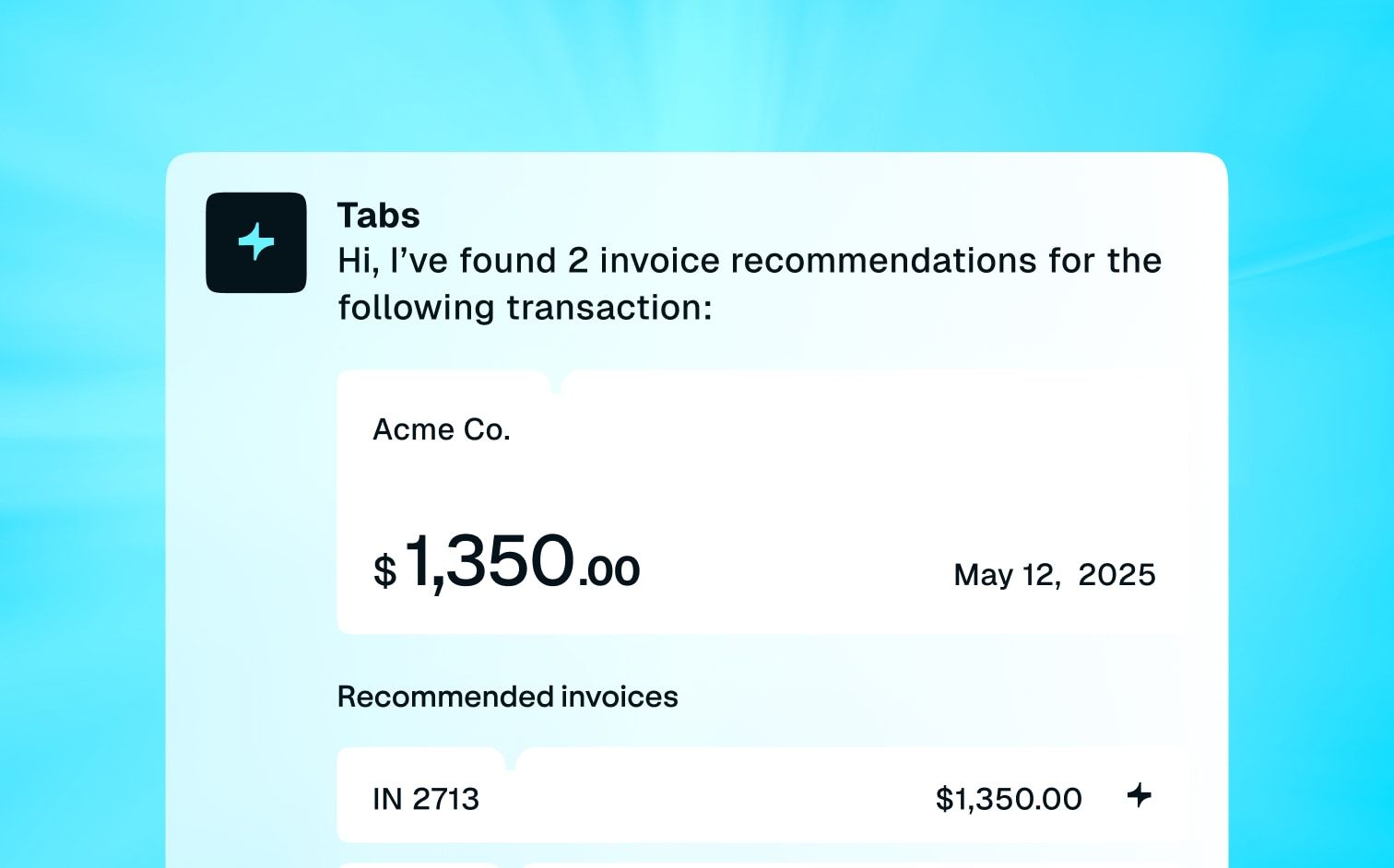
This is where most tools fall short. Generic billing platforms often run on a fixed cycle—generating the same invoice pattern regardless of what the contract actually requires. Tabs approaches this differently—using AI to extract terms from signed agreements and translate them into accurate billing workflows. Tabs sits downstream of your CRM and CPQ, operationalizing signed contracts rather than just processing transactions.
Benefits of subscription management software for B2B finance teams
Finance teams invest in subscription management to escape manual processes that slow down cash collection and introduce errors— Deloitte research shows B2B organizations with established RevOps models are 1.4 times more likely to exceed revenue targets by 10 percent or more. The right platform delivers a faster close, cleaner books, and lower days sales outstanding (DSO).
Here's what changes when you automate:
- Accelerated cash flow: Automated invoicing and dunning reduce the time between contract signature and payment.
- Reduced revenue leakage: Contract terms flow directly into billing logic, eliminating manual re-keying errors that put 4 to 7 percent of ARR at risk, per m3ter research conducted with PwC.
- Audit-ready compliance: Automated revenue recognition maintains ASC 606 standards without spreadsheet gymnastics.
- Scalable operations: Handle increased invoice volume without proportional headcount growth—critical given Deloitte's 2025 MarginPlus survey found 49 percent of organizations cite inability to scale digital infrastructure as a top barrier.
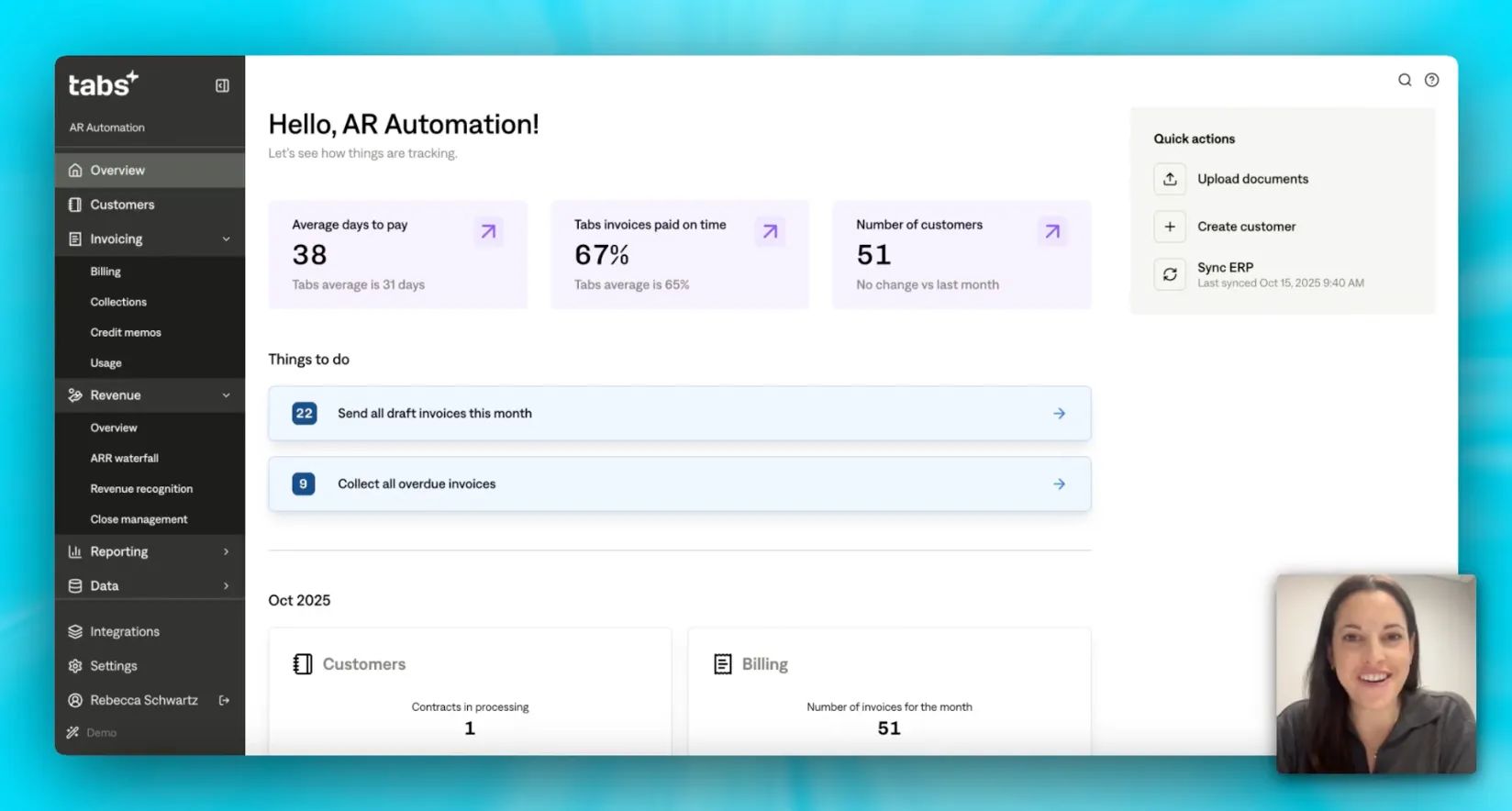
- Real-time visibility: Track ARR, collections, and renewals without waiting for month-end reconciliation.
The difference between a basic billing tool and a true Revenue Automation platform comes down to commercial context. Tabs doesn't just process invoices—it uses trained models to interpret contract terms, convert them into billing logic, and flag exceptions when the contract and the system-of-record data don't align. This means finance teams spend less time interpreting contracts and more time on strategic work.
See contract-accurate billing in action
Key features to evaluate in subscription management software
Not all platforms handle B2B complexity equally. The features that matter in a subscription management platform depend on your billing models, contract structures, and integration requirements.
Automated billing and invoicing
Automated billing eliminates manual invoice creation by pulling terms directly from signed contracts. For B2B companies, this means handling net terms, purchase order requirements, and custom billing schedules—not just credit card charges on a fixed cycle.
Look for platforms that can extract terms from signed agreements (PDFs, Word documents, and email threads) and generate invoices without manual data entry. The best systems handle nuances like co-termination, mid-cycle changes, and prorated adjustments automatically.
Why it matters: Eliminates manual contract re-keying and downstream billing errors.
Dunning and payment recovery
Dunning is the process of recovering overdue or failed payments—including invoices that slip past net terms, short-pays, and payment follow-ups. Effective dunning combines smart retry logic with customer communication to reduce involuntary churn—customers who leave simply because their payment failed.
Key capabilities to look for:
- Smart retries: Retry payments at optimal times based on payment method and historical patterns.
- Automated communication: Sends payment reminders before and after failures.
- Escalation workflows: Routes persistent failures to AR teams with full context.
Why it matters: Recovers revenue that would otherwise be lost to payment failures.
Revenue recognition and compliance
Accounting Standards Codification 606 (ASC 606) compliance requires recognizing revenue when performance obligations are satisfied—not when invoices are sent or payments are received. For B2B contracts with multiple deliverables, usage components, or milestone-based terms, this becomes complex.
The best platforms connect contract terms directly to billing events and maintain an audit trail from signature through recognition. This reduces reliance on spreadsheet-based processes that can introduce audit risk and manual rework.
Why it matters: Maintains compliance without manual journal entries or complex spreadsheets.
Analytics and reporting
Subscription analytics should provide real-time visibility into annual recurring revenue (ARR), monthly recurring revenue (MRR), churn, and collections without manual data pulls. For B2B finance teams, reporting must also support board presentations, investor updates, and audit requests.
Why it matters: Enables confident decision-making without waiting for month-end close.
Integrations and APIs
Subscription management software sits at the center of your finance stack. It must connect to your ERP, CRM, payment processors, and accounting systems.
| Integration Type | Examples | Why It Matters |
|---|---|---|
| ERP | NetSuite, QuickBooks, Sage Intacct | Syncs invoices, payments, and journal entries |
| CRM | Salesforce, HubSpot | Pulls contract data from closed deals |
| Payment processors | Stripe, Automated Clearing House (ACH), wire | Processes and reconciles payments |
| Data warehouse | Snowflake, BigQuery | Enables custom reporting and analysis |
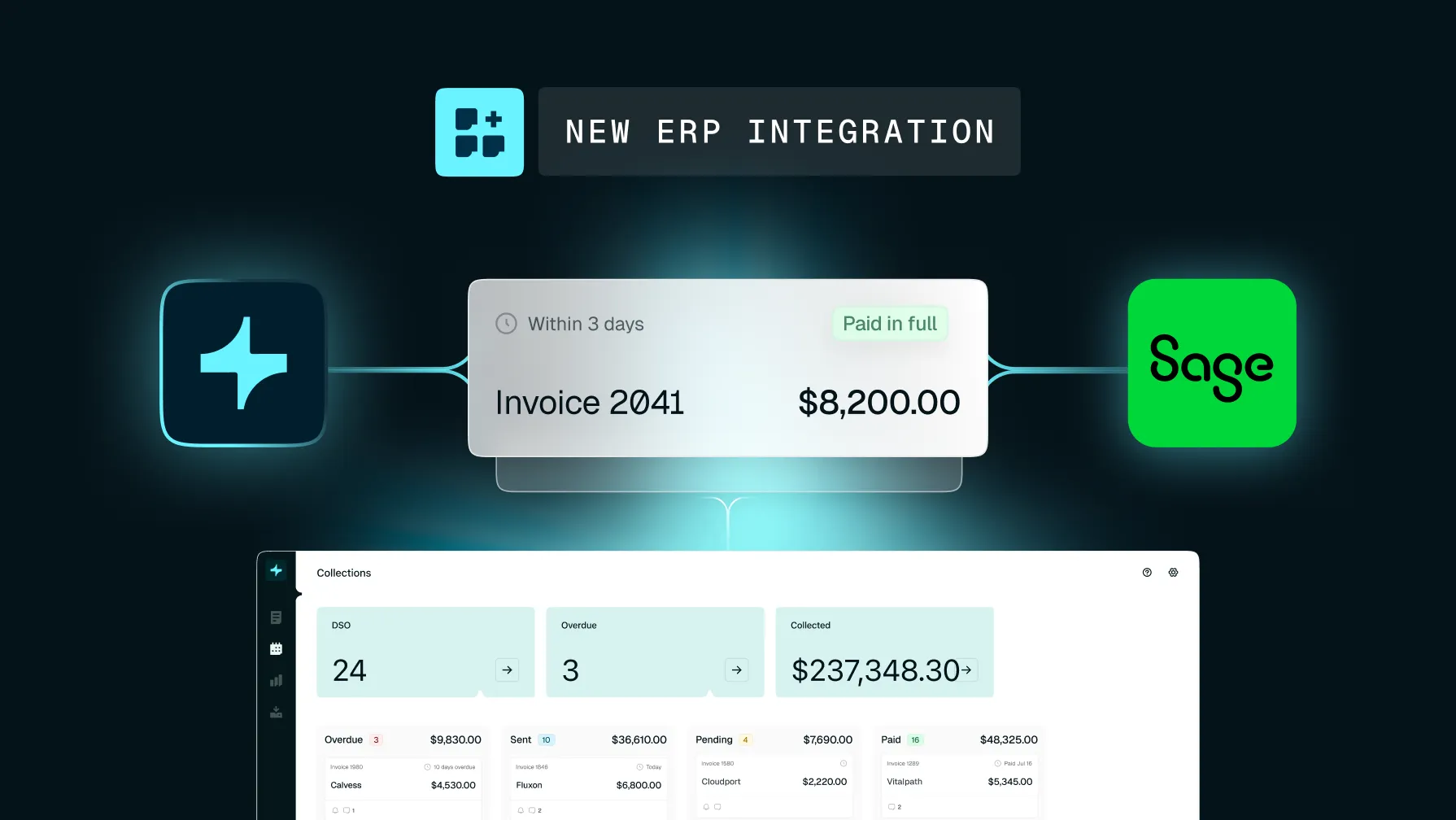
Tabs offers native ERP integrations and developer-friendly APIs, so you can push contract-accurate invoices and Revenue Recognition entries into your ERP and keep an audit trail without relying on brittle, custom glue code.
Why it matters: Ensures data flows seamlessly across your entire finance stack.
Best subscription management software by use case
The right platform depends on your billing complexity, contract structures, and where you sit in the finance stack. Rather than ranking tools generically, consider which use case matches your needs.
TLDR: If your contracts are negotiated and variable, prioritize commercial-context automation. If your billing logic lives in code, prioritize developer primitives.
Which platform fits AI-native B2B and complex contracts?
Companies with hybrid billing models, usage-based components, or complex contract terms need platforms built for B2B complexity—not consumer subscription tools adapted for enterprise use.
Tabs is purpose-built for B2B Revenue Automation, handling subscription, usage-based, and hybrid billing natively. Tabs uses AI to extract terms from contracts and translate them into billing logic—so clauses like usage caps, ramp pricing, milestone triggers, and co-termination don't get lost between the PDF and your invoices. Companies like Cursor, Statsig, and Cortex rely on Tabs to manage complex revenue operations.
Which platform fits developer-first billing teams?
Some companies prefer to build billing logic in-house using APIs and metering infrastructure. Platforms like Stripe Billing, Orb, and Metronome serve this use case with flexible primitives and developer tooling.
The tradeoff: developer-first platforms offer flexibility but require engineering resources to implement and maintain, and finance teams may lack visibility into billing logic embedded in code. With Tabs, finance can operationalize signed contract terms into billing and Revenue Recognition workflows—with an audit trail—without rewriting billing logic in application code.
Which platform fits merchant of record needs?
Merchant of record (MoR) platforms like Paddle handle global tax, compliance, and payment processing on behalf of the seller. This simplifies international expansion but limits control over the customer relationship.
MoR models work well for self-serve SaaS but may not fit B2B companies with negotiated contracts, custom terms, or enterprise sales motions.
Which platform fits ERP-led finance suites?
Some companies prefer subscription management within their ERP ecosystem—NetSuite SuiteBilling, Sage Intacct, or Salesforce Revenue Cloud. This consolidates vendors but may sacrifice specialized functionality.
The tradeoff: ERP-native billing works for straightforward subscriptions but often struggles with usage-based models, complex proration, or high invoice volumes.
How to choose subscription management software for your finance stack
Selecting subscription management software is a finance infrastructure decision—not just a billing tool purchase. The right choice depends on your contract complexity, integration requirements, and growth trajectory.
Define your contract-to-cash requirements
Start by mapping your current process: How do contracts get created? What terms vary? How are invoices generated today? Where do errors occur?
Questions to answer:
- Contract complexity: Do you have standard terms or heavily negotiated agreements?
- Billing models: Subscription-only, seat-based, usage-based, or hybrid?
- Invoice volume: How many invoices per month, and is that growing?
- Current pain points: Where do manual processes create delays or errors?
Validate pricing model flexibility
Your pricing strategy will evolve. The platform you choose should support that evolution without requiring re-implementation.
Ask vendors how they handle usage-based pricing and metered billing, hybrid models combining subscription and usage, mid-cycle upgrades and downgrades, and custom pricing for enterprise deals.
Tabs natively supports subscription, usage-based, and hybrid billing without custom development—so pricing changes don't cascade into manual invoice fixes, credit/rebill cycles, or Revenue Recognition rework.
Model total cost of ownership
Subscription management software costs extend beyond license fees. Consider implementation time, integration development, ongoing maintenance, and the operational cost of workarounds for missing functionality.
Evaluate implementation timeline, integration costs (native connectors vs. custom development), ongoing maintenance ownership, and opportunity cost—what your finance team spends time on today that you could automate.
Map integrations and data flow
Before selecting a platform, map how data should flow between systems: CRM to subscription management for contract data, subscription management to ERP for invoices and journal entries, payment processor to subscription management for payment events.
Tabs integrates natively with NetSuite, QuickBooks, Sage Intacct, and major CRMs—and fits downstream of CRM and CPQ—using APIs for custom workflows.
AI-powered revenue automation in subscription management
AI in subscription management goes beyond chatbots and basic automation. The most impactful applications automate work that previously required manual review: extracting and classifying contract terms, reconciling payments, and detecting billing or collections anomalies.
Practical AI applications include:
- Contract extraction: Parses terms from PDFs, Word docs, and emails without manual data entry.
- Payment reconciliation: Matches payments to invoices across methods and currencies.
- Anomaly detection: Flags unusual patterns in billing or collections for review.
- Cash forecasting: Predicts when payments will land based on historical behavior and contract terms.
Tabs uses AI trained specifically on B2B revenue operations—not generic document processing. Tabs adds commercial context by mapping extracted terms to billing and Revenue Recognition workflows, applying the right pricing logic, and flagging exceptions for review when something doesn't match the signed agreement. This commercial intelligence separates Revenue Automation from simple document extraction.
Next steps with Tabs
Subscription management software is foundational infrastructure for B2B finance teams. The choice affects cash flow, close speed, and audit readiness for years.
Tabs is built for B2B revenue complexity—combining automated billing, collections, Revenue Recognition, and reporting in one revenue automation workflow downstream of CRM and CPQ. Unlike tools that process transactions without understanding them, Tabs provides commercial context—translating contract terms into accurate billing workflows and revenue recognition entries.
Explore how Tabs can help you operationalize signed contracts—billing, collections, and Revenue Recognition included.
Frequently asked questions
Can subscription management software handle ASC 606 revenue recognition automatically?
Yes. Modern platforms connect contract terms and billing events to generate compliant revenue schedules automatically, maintaining audit trails without spreadsheet-based processes.
How long does it take to implement subscription management software for a B2B company?
Implementation timelines vary by complexity, but platforms with AI-powered contract extraction and native ERP integrations can reduce go-live from months to weeks. Depending on complexity, some teams can go live in
What billing models should subscription management software support for B2B companies?
Look for native support for subscription-based billing, usage-based and metered billing, and hybrid models that combine multiple approaches. The platform should handle these without requiring custom development or engineering workarounds.
What's the difference between subscription billing and subscription management software?
Subscription billing software generates recurring invoices, while subscription management covers the full lifecycle—billing, collections, revenue recognition, and analytics. Tabs operationalizes signed contracts across all of it, downstream of CRM and CPQ.
Do I need subscription management software if I already have an ERP or CRM?
ERPs and CRMs aren't built to operationalize negotiated contract terms into accurate billing and ASC 606 entries. Tabs sits downstream of CRM and CPQ, then feeds clean data back to the ERP.