





For finance teams at B2B companies managing complex billing models, manual invoice generation creates bottlenecks that slow collections, introduce errors, and drain time from higher-value work. This guide covers how intelligent invoice automation works, what to look for in a platform, and how to implement a system that scales with your business.
What is invoice automation?
Invoice automation refers to software and workflows that generate, send, and track customer invoices with minimal manual intervention. This means you spend less time rekeying contract terms into spreadsheets, manipulating PDFs by hand, and chasing down sales reps to confirm pricing details.
Basic automation simply digitizes existing processes. It might schedule a recurring invoice or auto-populate a template—but someone still has to manually enter the original contract terms. Intelligent invoice automation takes a fundamentally different approach.
Modern AI-powered platforms ingest signed contracts, extract the relevant billing terms, and generate billing logic from those terms with minimal manual setup. But intelligence alone isn't enough. The real differentiator is commercial context—understanding not just what the contract says, but what it means for billing and revenue recognition.
Tabs provides this commercial context. Tabs doesn't merely extract fields from a PDF—it uses trained models to identify clauses like escalators, usage thresholds, and milestone triggers, and then translates those terms into the billing logic required to generate accurate invoices. This is the difference between a system of record and a system of intelligence.
How automated invoice processing works
Automated invoice processing follows a logical contract-to-cash sequence—from signed contract to collected payment. The process begins once a deal is marked closed-won in your CRM and the signed agreement is available—so Tabs can operationalize the contract downstream of CRM and CPQ. Instead of a revenue operations (RevOps) manager pinging finance with a PDF link, the system automatically ingests the source data.
Here's how the core steps function:
- Contract ingestion: AI extracts billing terms, pricing schedules, and payment conditions directly from signed agreements—reducing manual review to exceptions.
- Invoice generation: The system applies your billing logic to create accurate invoices, handling prorations, discounts, and usage minimums automatically.
- Delivery and tracking: Invoices route to customers through their preferred channel with real-time status visibility.
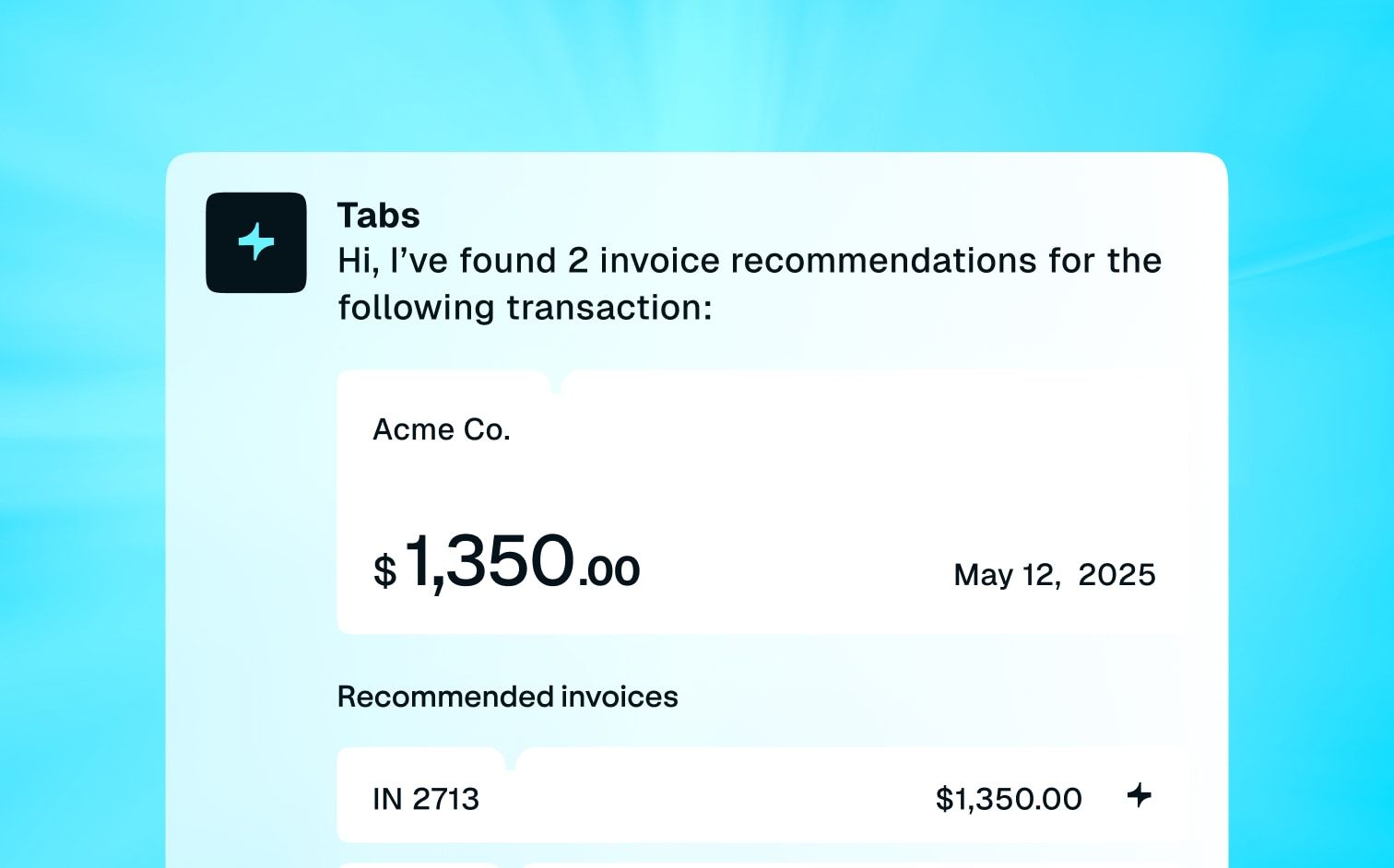
- Payment reconciliation: Incoming payments are matched to open invoices automatically, with exceptions routed for review.
This shift from reactive to proactive changes everything. You no longer chase down sales reps to clarify ambiguous terms. The system handles the heavy lifting while maintaining a complete audit trail from contract signature to cash collection.
Why B2B companies need invoice automation
B2B invoicing involves complexity that consumer billing never encounters. Enterprise contracts feature custom negotiated terms, hybrid pricing models, and multi-stakeholder approvals. When you manage these variables manually, errors compound downstream.
A single incorrect invoice creates collection delays, revenue recognition issues, and unnecessary customer friction. And generic tools fall short because they weren't built for this complexity.
Consider the challenges modern finance teams face:
- Manual processes don't scale: Finance teams spend hours re-keying contract terms into billing systems, creating bottlenecks as deal volume grows.
- Errors compound downstream: One wrong invoice triggers collection delays, revenue misstatements, and customer disputes.
- Visibility gaps: Disconnected systems hide cash flow problems until they become crises.
- Compliance complexity: ASC 606 and audit requirements demand traceable, accurate billing records that manual processes can't reliably produce.
Key features of invoice automation software
Effective invoice automation software does more than generate PDFs and send emails. The best platforms combine multiple capabilities into a cohesive system that handles the full spectrum of B2B billing complexity.
When evaluating automated billing software, look for capabilities that address both immediate operational needs and long-term strategic goals:
| Feature Category | What It Does | Why It Matters |
|---|---|---|
| Contract data extraction | Pulls billing terms from PDFs, Word docs, and emails | Eliminates manual review and data entry |
| Flexible billing logic | Supports subscription, usage-based, and hybrid models | Adapts to evolving pricing strategies |
| Multi-channel delivery | Sends invoices via email, portal, or EDI | Meets customer preferences |
| Payment tracking | Monitors invoice status and payment receipt | Provides real-time cash flow visibility |
| Automated collections | Triggers reminders and escalations | Reduces Days Sales Outstanding (DSO) |
| Revenue recognition | Generates compliant journal entries | Ensures ASC 606 compliance |
These features must work together seamlessly. Instead of stitching together a payment gateway with a separate dunning tool and a disconnected Revenue Recognition spreadsheet, you manage the entire lifecycle in one place.
Automate invoices from contract to cash—Get a demo
Invoice automation benefits for finance teams
The value of invoice payment automation extends far beyond saving time on data entry—Billtrust research found AI invoice automation saves mid-sized businesses $440,000 and 4,500 hours annually.
By eliminating administrative burden, you unlock capacity for higher-value strategic work.
Modern revenue automation platforms don't just show when invoices are due—they forecast when cash will actually land, based on historical payment behavior and contract terms. This level of insight allows controllers to manage working capital with precision rather than guesswork.
Here's what changes when intelligent systems handle the routine work:
- Faster invoice cycles: Invoices generate within hours of contract signature, not days or weeks of manual processing.
- Reduced errors: Automated data extraction eliminates the transcription mistakes that cause payment delays and customer disputes.
- Improved cash flow: Proactive collections and embedded payment links accelerate customer payments and reduce Days Sales Outstanding—by over 40% according to Vanson Bourne.
- Audit-ready records: Every invoice links back to source contracts with a complete, traceable audit trail.
- Scalable operations: Handle increased invoice volume without proportional headcount growth.
When you reduce the cost per invoice and slash processing time, finance transforms from a bottleneck into a strategic driver of growth.
How to choose invoice automation software
Selecting the right invoice management platform requires understanding your specific B2B complexities. Generic tools might look appealing, but they often break down when confronted with custom enterprise contracts.
Why this matters: The wrong invoice automation tool creates new problems—rigid billing logic that can't handle contract variations, integrations that require constant maintenance, or workflows that still demand manual intervention at critical points.
Your evaluation should prioritize these criteria:
- Billing model flexibility: Can the platform handle subscription, usage-based, and hybrid models natively—or will you need custom development?
- Contract intelligence: Does the system extract and interpret terms, or just digitize documents without understanding their implications?
- Integration depth: How does it connect with your CRM, ERP, and payment systems? Does it sync bidirectionally or require manual exports?
- Implementation timeline: What's the realistic path to go-live? Weeks or months?
- Compliance capabilities: Does it support your revenue recognition and audit requirements out of the box?
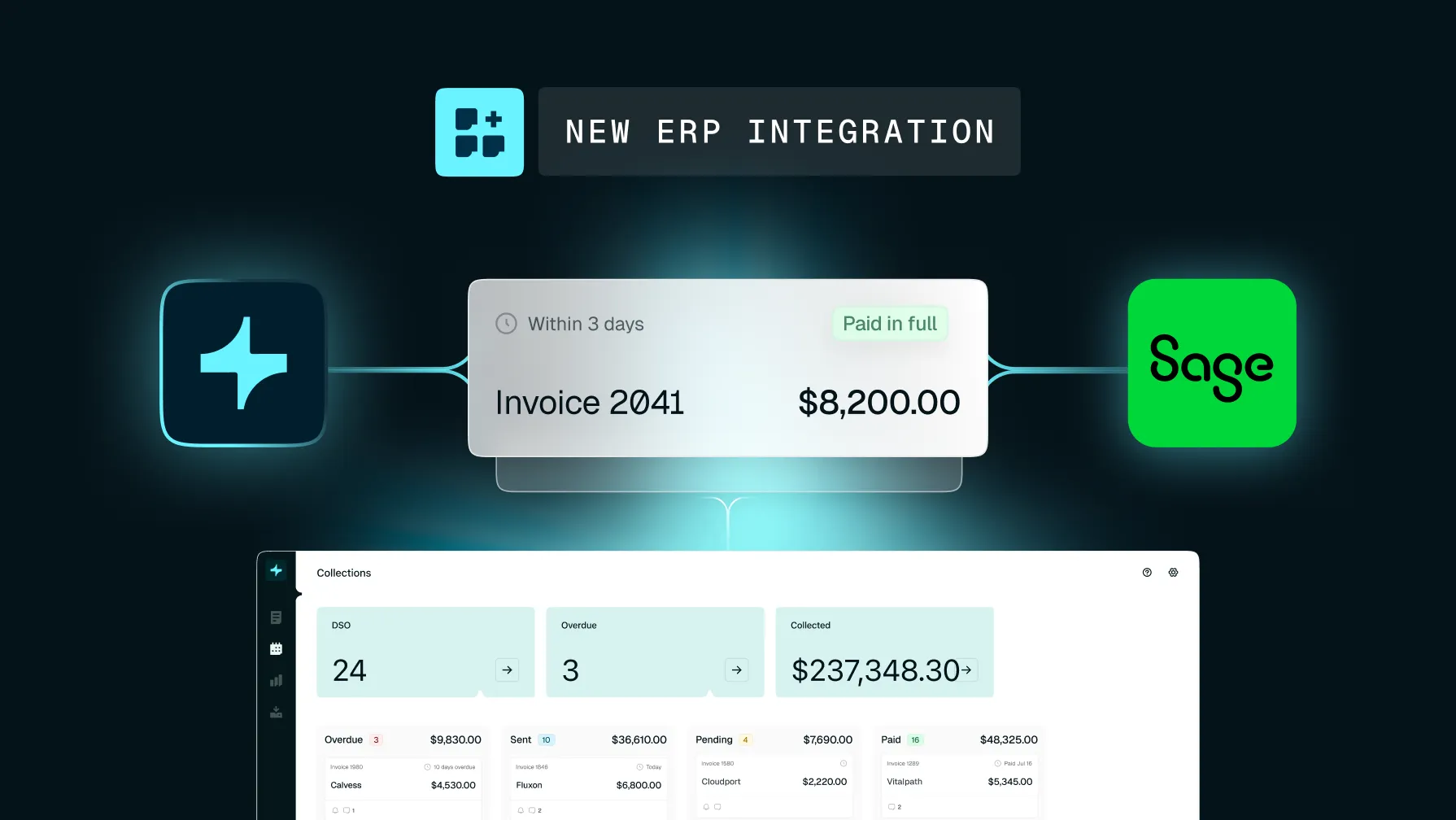
Tabs is purpose-built for B2B complexity. The platform offers native support for subscription, usage-based, and hybrid billing models without custom configuration. It integrates with major ERPs like QuickBooks, Oracle NetSuite, and Sage Intacct—providing the commercial context that generic automation tools lack.
Invoice automation implementation best practices
Successful invoice workflow automation requires careful preparation before you turn on the software. The pre-work you do to clean data and align stakeholders determines whether you automate good processes or bad ones.
Start by mapping your existing workflows. Identify where the manual touchpoints and bottlenecks actually live. Understand exactly how data flows from your CRM to your finance stack today. This process mapping highlights the edge cases your new system will need to handle.
Follow these steps for a smooth rollout:
- Audit current processes: Document existing invoice workflows, identify manual touchpoints, and quantify where errors occur most frequently.
- Clean contract data: Standardize how billing terms are captured and stored before migration—garbage in, garbage out.
- Define integration requirements: Map data flows between CRM, billing, ERP, and payment systems before implementation begins.
- Start with high-volume scenarios: Automate the most common invoice types first, then expand to edge cases.
- Establish success criteria: Define what improvement looks like before go-live so you can measure actual impact.
Change management matters as much as technical implementation. Ensure your team understands the goal is to elevate their roles, not replace them.
Automate invoices with Tabs
Tabs approaches AI invoice automation differently. The platform uses AI trained specifically for B2B revenue operations—extracting billing terms from contracts, interpreting complex pricing structures, and generating invoices that reflect the actual commercial relationship.
This isn't generic document processing. Tabs uses trained models to identify the nuances of enterprise agreements—from escalator clauses to usage thresholds and milestone triggers—so those terms map cleanly into billing workflows. By unifying signed contracts, usage inputs, invoice events, and payment status into a single commercial record, Tabs creates the Commercial Graph—the foundation for accurate, contextual decision-making across your finance organization.
Here's what Tabs delivers:
- AI contract ingestion: Automatically captures terms from signed agreements to generate invoices without manual data entry.
- Flexible billing models: Native support for subscription, seat-based, usage-based, and hybrid pricing without custom configuration.
- Integrated collections: Automated reminders and embedded payment links reduce DSO.
- Revenue recognition: ASC 606-compliant entries generated directly from billing data.
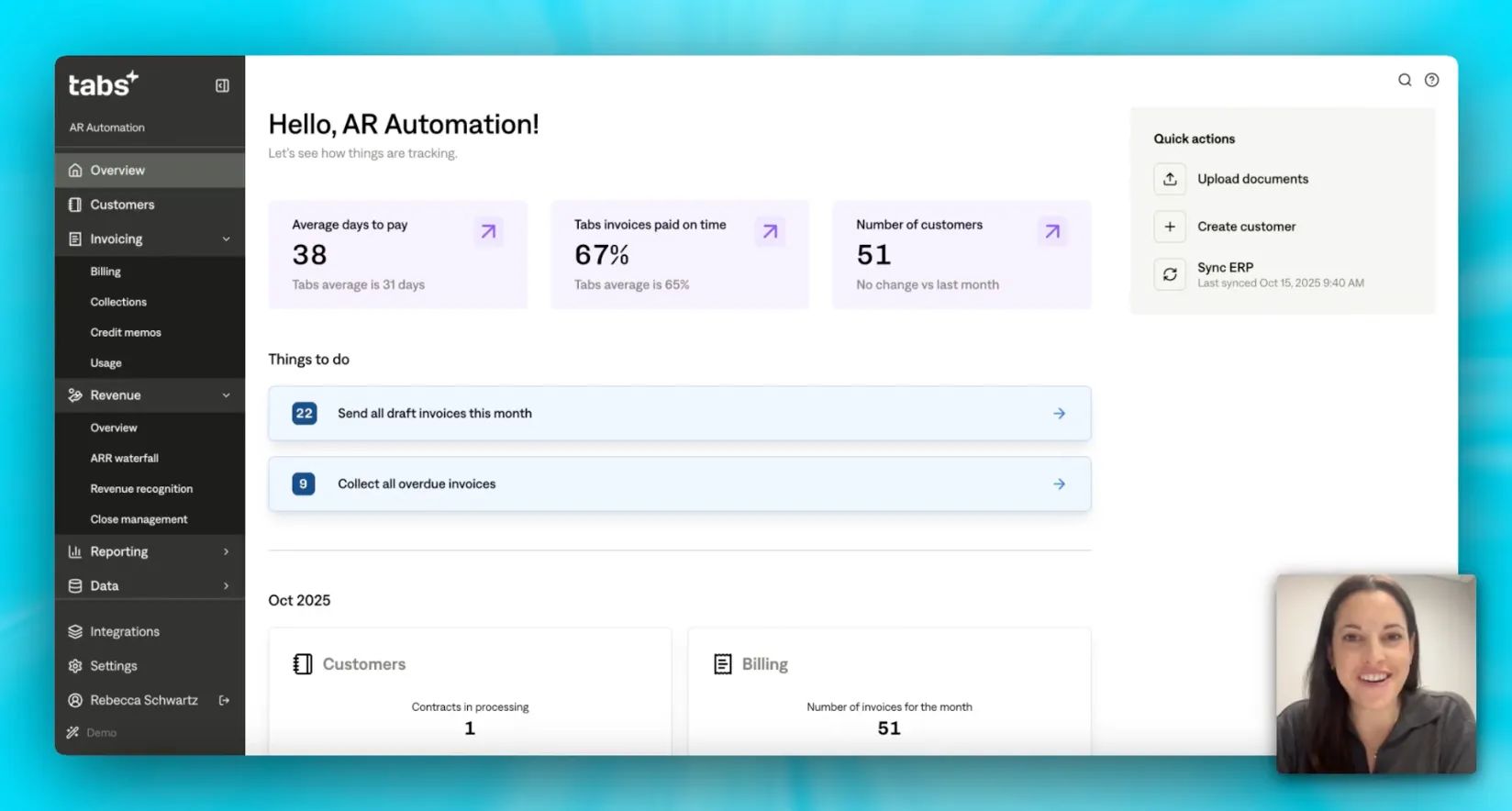
- Real-time reporting: Visibility into annual recurring revenue (ARR), cash, accounts receivable (AR) balance, and renewals—all in one place.
Explore how Tabs can help you go live in <30 days.
Frequently asked questions about invoice automation
What is the difference between invoice automation and accounts payable automation?
Invoice automation focuses on generating and sending invoices to your customers—managing accounts receivable. Accounts payable automation handles the opposite: processing incoming invoices from your vendors.
How long does it typically take to implement B2B invoice automation?
Implementation timelines vary based on complexity, but modern platforms can often go live in weeks rather than months. Depending on integration scope and contract complexity, teams can be live with Usage-Based Billing in <30 days.
Can invoice automation software handle multi-year enterprise contracts with custom terms?
Yes—purpose-built platforms support custom pricing, multi-year agreements, usage-based components, and milestone billing. The key is choosing software designed specifically for B2B complexity rather than tools adapted from B2C invoicing.
Does invoice automation integrate with existing ERP systems like NetSuite or QuickBooks?
Most invoice automation platforms offer integrations with major ERPs. Evaluate the depth of these integrations—some require manual data exports while others sync bidirectionally in real time.