





For finance teams managing complex B2B revenue—55.2% of the subscription economy—ARR is more than a metric; it's the foundation of forecasting, board reporting, and strategic planning. This guide breaks down how ARR billing software works, what to look for in a platform, and how to calculate and track ARR accurately across subscription, usage-based, and hybrid pricing models.
What is ARR billing software
ARR billing software automates how you track, calculate, and manage recurring revenue. ARR stands for Annual Recurring Revenue—the annualized value of your subscription contracts. This metric tells you how much predictable revenue your business generates each year from customers who pay on a recurring basis.
Manual ARR tracking breaks down fast. As your customer base grows and contracts get more complex, spreadsheets start to strain—especially when you're managing amendments, usage true-ups, and mid-cycle changes. You end up with mismatched data, delayed invoices, and finance teams spending hours reconciling numbers instead of analyzing them. According to m3ter, 4 to 7 percent of ARR is at risk from unsophisticated bookkeeping.
Modern ARR billing platforms go beyond basic invoicing.
Why it matters: If your contracts include ramps, amendments, usage minimums, or mid-cycle changes, your billing system has to reflect the contract—not just the invoice—so ARR, collections, and Revenue Recognition stay in sync.
They pull terms directly from signed contracts, generate invoices automatically, track revenue changes in real time, and surface the metrics your board actually cares about. The best platforms—like Tabs—don't just automate billing. They use trained models to capture the commercial context in your contracts (minimums, tiers, proration, escalators) and translate those terms into accurate billing workflows and Revenue Recognition entries.
Here's what ARR billing software typically handles:
- Contract ingestion: Extracting billing terms directly from signed agreements without manual data entry
- Automated invoicing: Generating recurring invoices based on contract schedules and pricing rules
- Revenue tracking: Monitoring ARR changes from new deals, expansions, downgrades, and churn
- Real-time reporting: Surfacing ARR, cash, and renewal metrics for finance and leadership
Why ARR matters for subscription and usage revenue
ARR is the north-star metric for subscription businesses. Investors use it to value your company. Your board uses it to measure growth. And your finance team uses it to forecast cash flow and plan resources.
Unlike one-time revenue from services or setup fees, ARR represents money you can count on. It's predictable. It compounds. And it tells a clearer story about your business health than total revenue ever could.
This visibility becomes critical as pricing models evolve. Many B2B companies now blend subscriptions with usage-based pricing—charging for API calls, compute cycles, or storage alongside flat platform fees. When consumption fluctuates, tracking ARR accurately requires more than invoice math. You need a system that annualizes recurring value using committed minimums, pricing tiers, ramp schedules, and contracted true-up mechanics—so your run rate matches how the deal is actually sold.
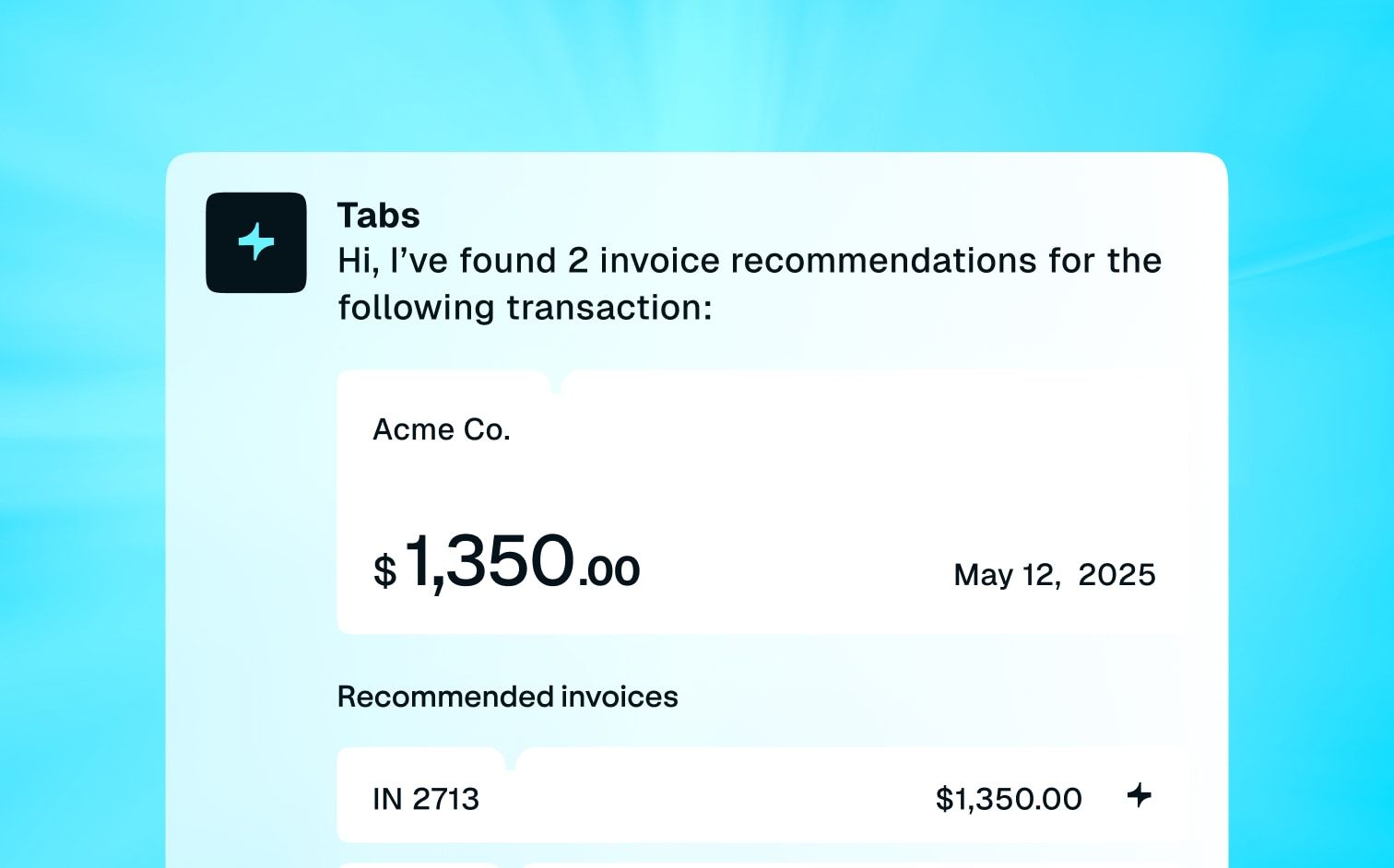
Generic billing tools often miss this nuance. They calculate ARR from invoice totals without understanding the underlying contract structure. Tabs sits downstream of your CRM and CPQ—where applicable—to operationalize signed contracts. Tabs uses AI to extract terms and structure them into billing-ready data (billing frequency, proration rules, minimum commitments, usage tiers, and renewal dates), then calculates ARR based on contracted recurring value—not just last month's invoice totals.
ARR vs MRR vs total revenue
Finance teams must distinguish between these metrics to avoid reporting errors. Mixing them up creates confusion during board meetings, fundraising, and audits.
ARR: Annualizes your recurring revenue. If a customer pays $10,000 per month for a subscription, their ARR is $120,000.
MRR (Monthly Recurring Revenue): Measures the same value on a monthly basis. That same customer contributes $10,000 MRR.
Total revenue: Includes everything—subscriptions, one-time fees, professional services, and hardware sales. It's what shows up on your income statement but doesn't isolate the recurring engine of your business.
| Metric | Definition | Best used for |
|---|---|---|
| ARR | Annualized value of recurring contracts | Long-term forecasting, valuation, board reporting |
| MRR | Monthly value of recurring contracts | Short-term trends, month-over-month growth |
| Total revenue | All revenue including one-time fees | GAAP reporting, cash flow analysis |
Use ARR when you're talking to investors or planning annual budgets. Use MRR for tracking monthly momentum. And use total revenue for accounting compliance.
How to calculate ARR for subscription and usage models
The core formula is simple: ARR equals the sum of all recurring charges normalized to a one-year period. In practice, that's annual contract value for annual plans, plus MRR × 12 for monthly plans. But real-world contracts rarely stay simple.
Use the core ARR formula
Start with your annual contracts. A customer on a $50,000 annual plan contributes $50,000 ARR. For monthly contracts, multiply MRR by 12. A customer paying $5,000 per month contributes $60,000 ARR.
This works cleanly for straightforward subscriptions. But it requires adjustment when you have multi-year deals, mid-cycle upgrades, or usage-based components.
Handle multi-year contracts
Multi-year contracts must be annualized. A three-year deal worth $150,000 contributes $50,000 ARR annually—not the full contract value.
Some teams track Contracted Annual Recurring Revenue (CARR) separately to capture total committed value. CARR shows what customers have signed for; ARR shows the annualized portion you recognize each year. Both matter, but they answer different questions.
Account for upgrades, downgrades, and churn
Break your ARR into components to understand what's driving growth:
- New ARR: Revenue from first-time customers
- Expansion ARR: Revenue from existing customers who upgraded or added seats
- Contraction ARR: Revenue lost from downgrades
- Churned ARR: Revenue lost from customers who canceled
Net ARR change equals new plus expansion, minus contraction and churn. This granularity reveals whether growth comes from landing new logos or expanding existing accounts.
What to include and exclude in ARR calculations
Getting this wrong inflates your metrics and erodes trust with investors. Precision matters.
Include recurring subscription and add-on fees
Only count revenue that's predictable and contractually obligated:
- Base subscription fees (monthly or annual)
- Recurring platform or seat-based add-ons
- Committed usage minimums written into contracts
- Annual maintenance or support agreements
These items renew automatically unless the customer actively cancels. That's what makes them recurring.
Exclude one-time services and setup fees
Implementation fees, training, and one-time integrations don't belong in ARR. Even if they appear on the same invoice as a subscription, you must separate them. Including non-recurring revenue artificially inflates your metrics and misrepresents your business model.
Apply discounts and late payments correctly
Discounts reduce ARR. Report the net contracted value, not list price. If you sell a $100,000 subscription with a 20% discount, your ARR is $80,000.
Late payments don't affect ARR. The metric measures contracted value, not collected cash. But if nonpayment leads you to terminate service or the customer cancels, you'll typically treat that as churn for internal ARR reporting—while the write-off itself is handled as bad debt in accounting.
Common ARR calculation mistakes to avoid
Even experienced finance teams make mistakes that compromise reporting integrity. So what should you watch for?
Avoid counting one-time revenue
Setup fees and professional services never belong in ARR. Teams often include them when they're invoiced alongside subscriptions. Strip them out to maintain an accurate run rate.
Avoid mixing ARR with cash flow
ARR reflects contracted recurring value—not when cash lands. A customer paying annually upfront contributes the same ARR as one paying monthly. The timing of cash receipts is a separate question from the annualized value of the contract.
Conflating these metrics distorts forecasting. Modern revenue automation platforms don't just show when invoices are due—they forecast when cash will actually land, based on historical payment behavior (for example, how specific customers pay against net terms) and contract terms.
ARR growth strategies for B2B finance teams
Finance teams don't just track ARR. They actively shape it through pricing, collections, and renewal processes.
- Incentivize annual prepay: Offer modest discounts for annual commitments to lock in ARR and improve cash predictability
- Automate renewal workflows: Reduce churn from missed renewal dates or lapsed contracts that slip through the cracks
- Surface expansion opportunities: Use billing data to identify accounts approaching usage thresholds who might upgrade
- Reduce involuntary churn: Implement smart dunning to recover failed payments before they become cancellations
The right billing infrastructure makes these strategies operational. Without automation, they remain good intentions buried in spreadsheets.
Operationalize signed contracts into ARR. See a demo
How ARR billing software supports finance teams
ARR billing software bridges the gap between complex contracts and clean financial data. It replaces manual processes with automated workflows that scale.
Here's what a comprehensive platform should include:
- Automated invoice generation: Creates invoices from contract terms without manual data entry
- Usage metering: Tracks consumption and applies pricing rules in real time for usage-based models
- Revenue Recognition sync: Supports ASC 606 workflows by generating Revenue Recognition schedules and journal entries from contract and billing data for review and posting
- Collections and dunning: Sends payment reminders and escalates overdue accounts
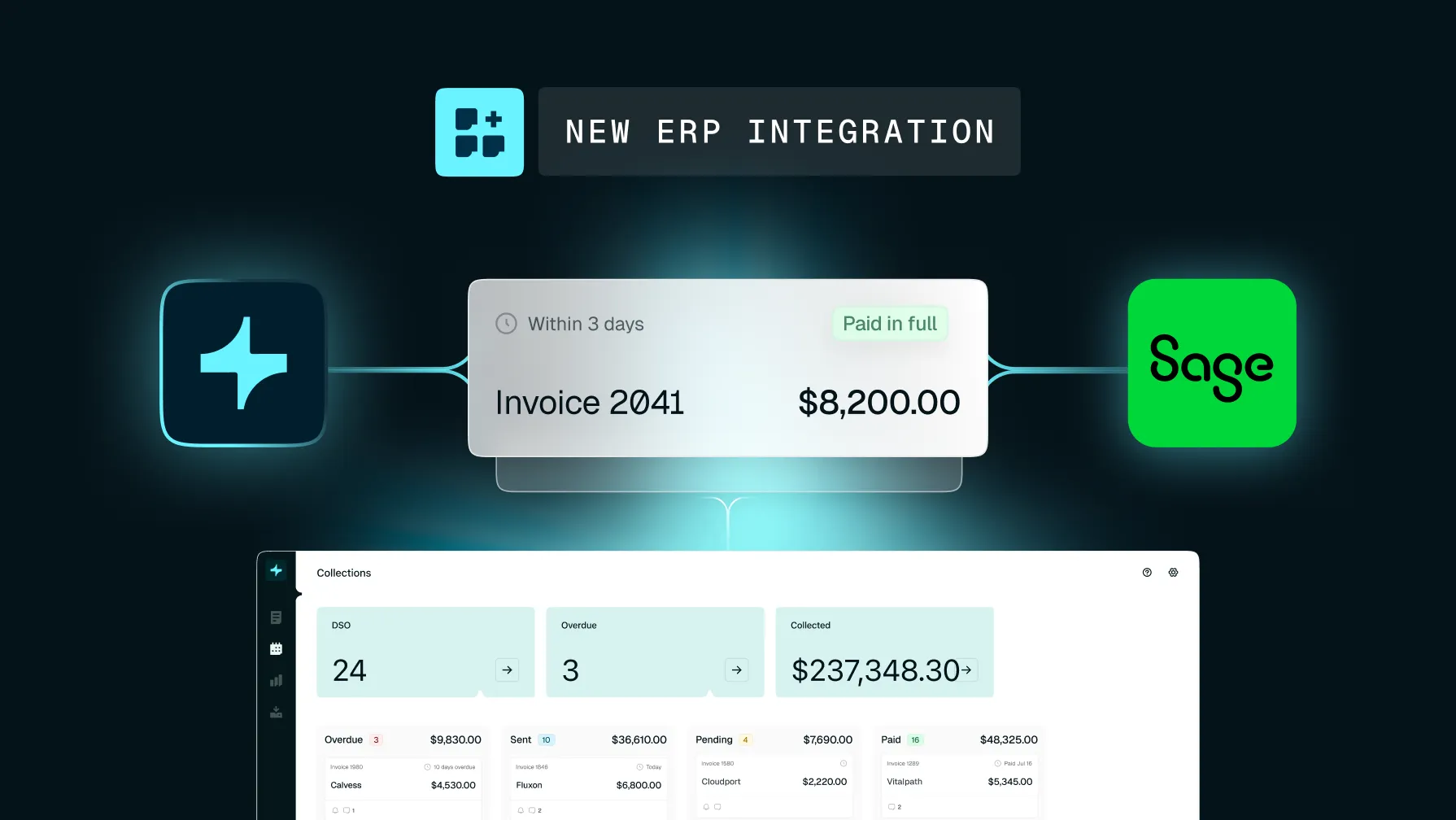
- ERP integration: Pushes clean data to NetSuite, QuickBooks, or Sage Intacct
- Real-time ARR reporting: Surfaces current ARR, net retention, and churn metrics on demand
These capabilities transform finance from a reactive function into a strategic partner. When your systems handle the manual work, your team can focus on analysis and decision-making.
How Tabs automates ARR billing for B2B companies
Tabs is an AI-powered Revenue Automation platform built for B2B complexity—sitting downstream of CRM and CPQ to operationalize signed contracts. It sits downstream of your CRM and CPQ—where applicable—to operationalize signed contracts—handling billing, collections, Revenue Recognition, and reporting in one unified system.
What makes Tabs different is commercial context. Tabs doesn't just extract contract data—it uses trained models to identify clauses (like minimums, tiers, proration, and escalators) and translate them into billing workflows that match the way the contract is written. Usage thresholds, escalator clauses, and hybrid pricing—Tabs converts that nuance into concrete outputs: invoice schedules, proration rules, collections timelines, and Revenue Recognition-ready entries.
Here's what that looks like in practice:
- AI-powered contract ingestion: Extracts billing terms and key commercial clauses from signed contracts, reducing manual PDF review
- Flexible billing models: Supports subscription, usage-based, and hybrid pricing natively
- Automated collections: Reduces days sales outstanding with embedded payment links and intelligent dunning
- ASC 606 Revenue Recognition: Generates compliant journal entries from contract and billing data
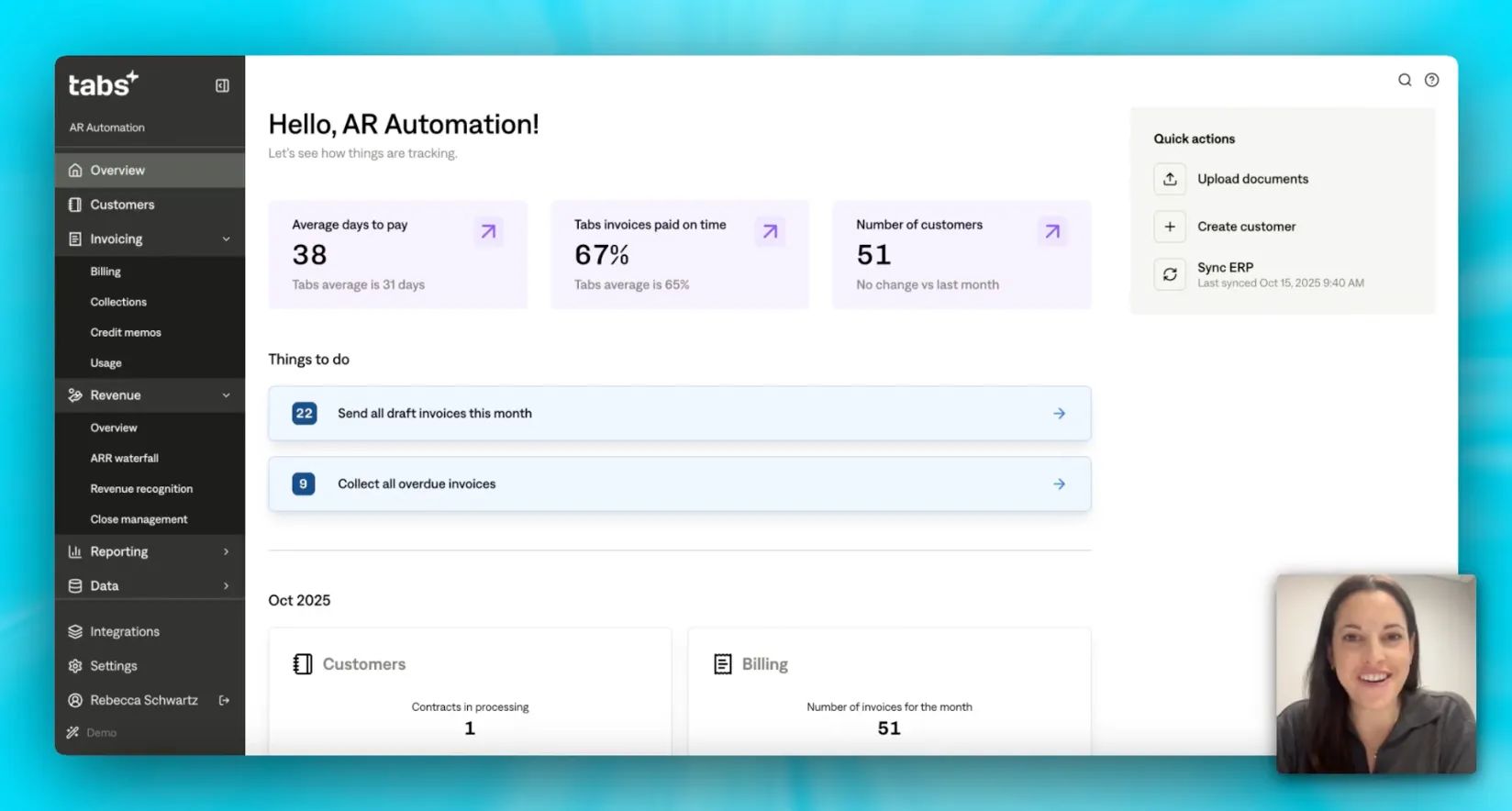
- Real-time visibility: Tracks ARR, renewals, and cash in a unified dashboard
After implementing Tabs, Statsig significantly reduced aged receivables—while handling a meaningful increase in invoice volume without adding headcount. Cortex reduced overdue invoices by about 50% after tightening billing and dunning workflows in Tabs. These results come from replacing fragmented tools with a system of intelligence that scales.
Frequently asked questions
What metrics should ARR billing software track beyond annual recurring revenue?
Beyond ARR, look for net revenue retention (NRR), gross revenue retention (GRR), expansion ARR, churned ARR, and days sales outstanding (DSO)—so you can separate growth, retention, and cash-collection performance.
How does ARR billing software handle usage-based pricing alongside subscriptions?
Modern platforms meter usage events in real time, calculate charges across tiers, minimums, and overages, and blend usage charges with subscription fees on a single invoice. This eliminates the spreadsheet reconciliation that hybrid models typically require.
Can ARR billing software automate ASC 606 revenue recognition?
Yes. The best platforms generate ASC 606-compliant journal entries from contract and billing data—supporting performance obligations, revenue allocation, and timing with far less manual spreadsheet work and fewer reconciliation cycles.