





For finance teams managing complex B2B revenue workflows, AI is transforming accounts receivable from a reactive, manual function into a strategic driver of cash flow and efficiency. This guide breaks down how AI works across the invoice-to-cash cycle, where it delivers the most value, and how to implement it in a way that connects billing, collections, and revenue recognition into a unified system.
What is AI in accounts receivable?
AI in accounts receivable uses machine learning and natural language processing to automate key steps in the contract-to-cash cycle—including invoice-to-cash. This means trained models use your payment history, customer behavior, and contract terms to recommend next steps and automate workflows—rather than relying only on rigid, pre-programmed rules.
Traditional AR processes force finance teams into a reactive loop. You generate invoices manually, track aging in spreadsheets, and chase late payments one by one. AI can change this by predicting which customers are likely to pay late, automating follow-ups, and matching payments to invoices with minimal human involvement—while routing exceptions to your team.
But here's what most AR automation tools miss: they extract data without mapping it to the billing and Revenue Recognition implications your team needs. They can pull a payment term from a contract, but they often don't translate that term into the billing schedule or Revenue Recognition treatment your business requires.
Tabs approaches this differently. Tabs provides commercial context—mapping the business implications of contract terms and translating them into accurate billing workflows. When the system identifies that a milestone payment triggers a specific Revenue Recognition event, you reduce the manual interpretation that creates downstream errors.
How AI works in accounts receivable
Knowing what's under the hood helps you separate real capabilities from marketing. Most systems rely on four core technologies:
- Machine learning (ML): Models analyze your payment history to predict when customers will actually pay—not just when invoices are due. This enables proactive collections rather than reactive chasing.
- Natural language processing (NLP): NLP parses contract and remittance email text to extract billing terms, dates, and relevant clauses automatically.
- Optical character recognition (OCR): OCR converts paper invoices and check stubs into digital data the system can process.
- Predictive analytics: These models forecast cash flow based on customer segments and historical patterns, giving you visibility into when cash will actually land.
Many AR tools stop at extraction. They pull fields from documents but still leave your team to translate those fields into billing and Revenue Recognition actions. Tabs goes further by applying commercial context to your contracts—milestone payments, usage thresholds, and escalator clauses—and translating those terms into billing logic aligned to your Revenue Recognition treatment.
This distinction matters. When the system detects a 90-day payment term with a 2% early payment discount, it doesn't just store the fields. It can update your cash forecast, trigger the appropriate collections sequence, and keep Revenue Recognition workflows aligned with ASC 606.
AI use cases across the invoice-to-cash cycle
AI delivers value at every stage of AR—from the moment a contract is signed to the day cash hits your account. Here's where it makes the biggest difference.
Automated invoicing and follow-ups
Invoice generation is where most AR bottlenecks begin. Someone has to read the contract, extract the billing terms, and manually create the invoice. AI can eliminate most of this manual work, especially for standardized contracts—while still surfacing exceptions for review.
The system parses signed contracts to extract billing schedules, payment terms, and pricing structures. It can generate invoices automatically—reducing PDF reviews, data entry, and back-and-forth between systems.
Follow-ups adapt based on customer behavior. Instead of sending the same reminder to every overdue account, automation can adjust cadence and messaging based on each customer's historical response patterns. A customer who always pays five days late gets a different cadence than one who's never been late before.
The system also flags discrepancies before invoices go out. If the contract says net-30 but someone entered net-60, you catch it before it creates a collections problem.
Why it matters: Eliminating manual invoice generation removes the single biggest source of billing errors and delays.
Cash application and reconciliation
Matching incoming payments to open invoices sounds simple until you're dealing with partial payments, missing remittance details, and customers who pay multiple invoices with a single check.
AI handles this by using customer identifiers, payment amounts, and historical patterns to match payments automatically—EY's AI-powered AR solution achieves over 90% auto-cash application.
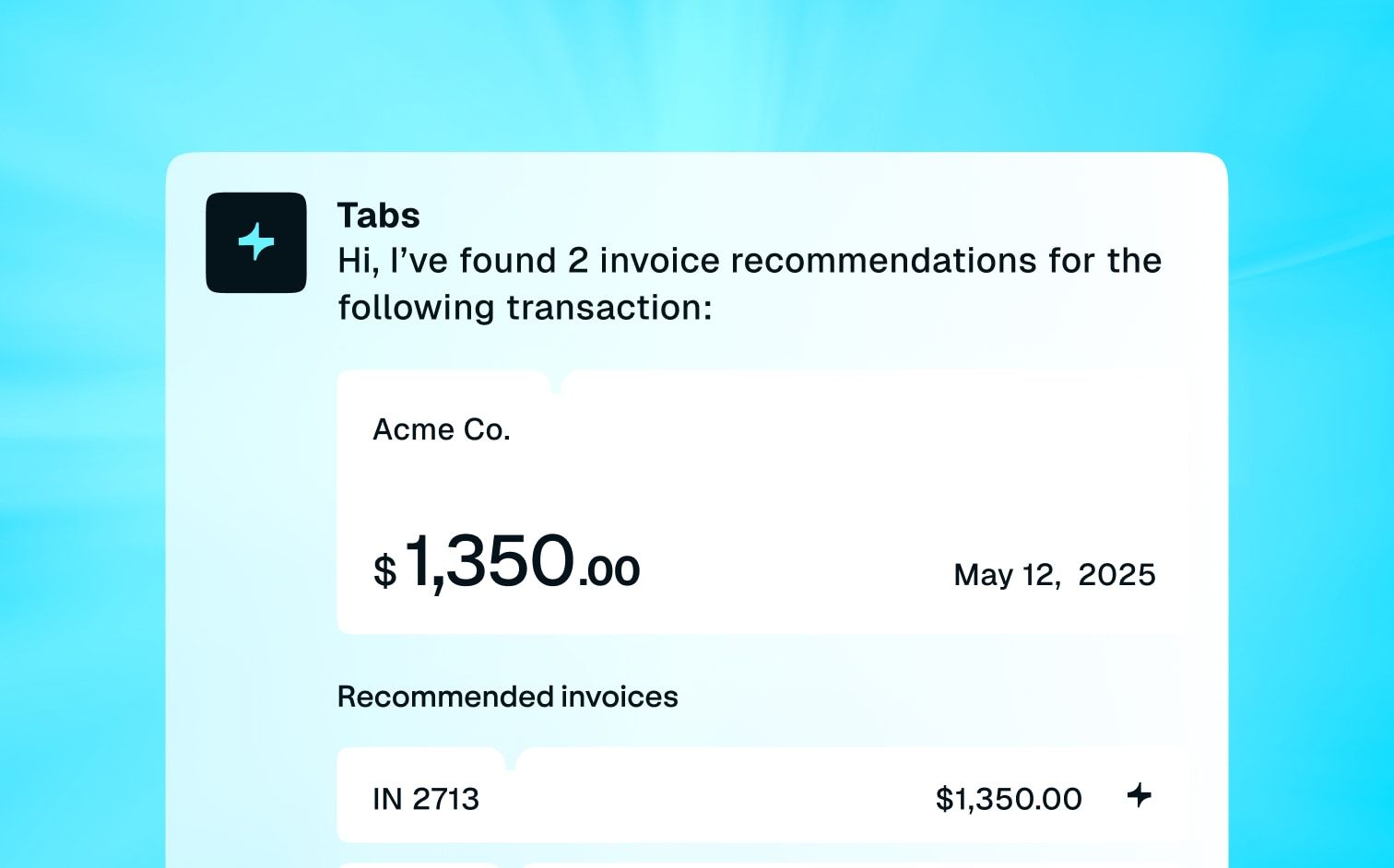
When remittance data is incomplete, the system can use probabilistic matching with confidence scoring based on prior payment patterns.
For partial payments, the system can allocate funds across multiple invoices based on defined policies (for example, oldest-first or customer-specific rules), and route exceptions for approval. When the system isn't confident in a match, it routes the exception to your team with context and suggested resolutions.
Why it matters: High auto-match rates free your team from reconciliation work and accelerate cash posting.
Collections and credit risk prioritization
Traditional collections work off aging reports. You sort by days overdue and start calling. This approach treats every customer the same, regardless of their actual likelihood to pay.
AI segments customers by risk and prioritizes your collectors' time accordingly. Models assess creditworthiness using payment history, industry data, and broader economic signals. This means your team focuses on accounts where intervention will actually make a difference.
The system also flags at-risk accounts before they become overdue. If a customer's payment behavior starts shifting—longer payment cycles, more partial payments—you know about it early enough to act.
Why it matters: Risk-based prioritization means your collectors spend time on accounts that need attention, not accounts that would have paid anyway.
Benefits of AI for accounts receivable teams
The operational and financial outcomes of AI adoption compound over time. Here's what changes when you move from manual processes to intelligent automation.
Faster collections. AI-powered prioritization and automated follow-ups can accelerate payment cycles—Billtrust's study of finance leaders found 99% of companies using AI reduced DSO. You're not waiting for invoices to age before taking action.
Reduced manual effort. High straight-through processing rates for cash application free your team from reconciliation work. They can focus on exceptions and strategic activities instead.
Improved forecast accuracy. Predictive models project cash inflows based on actual payment behavior, not invoice due dates—EY's 2025 Corporate Treasury Survey identified cash forecasting as the leading AI use case. You know when cash will actually land, not just when it's theoretically due.
Lower bad debt. Early intervention on at-risk accounts reduces write-offs. You catch problems before they become uncollectible.
Better customer experience. Personalized communication and self-service payment options reduce friction. Customers get the right message at the right time through the right channel.
| Dimension | Traditional AR | AI-powered AR |
|---|---|---|
| Invoice generation | Manual data entry from contracts | Automated extraction from signed agreements |
| Cash application | Rule-based matching, high exception rates | ML-based matching with confidence scoring |
| Collections | Reactive, aging-based prioritization | Proactive, risk-based segmentation |
| Forecasting | Based on invoice due dates | Based on predicted payment behavior |
Stop chasing invoices. Automate AR with Tabs.
Challenges with AI in accounts receivable
Implementing AI isn't without obstacles. Understanding these challenges upfront helps you plan for them.
Data quality. AI models are only as good as the data they learn from. Inconsistent customer records, duplicate invoices, and incomplete remittance details degrade performance. You may need to clean up your data before you can automate effectively.
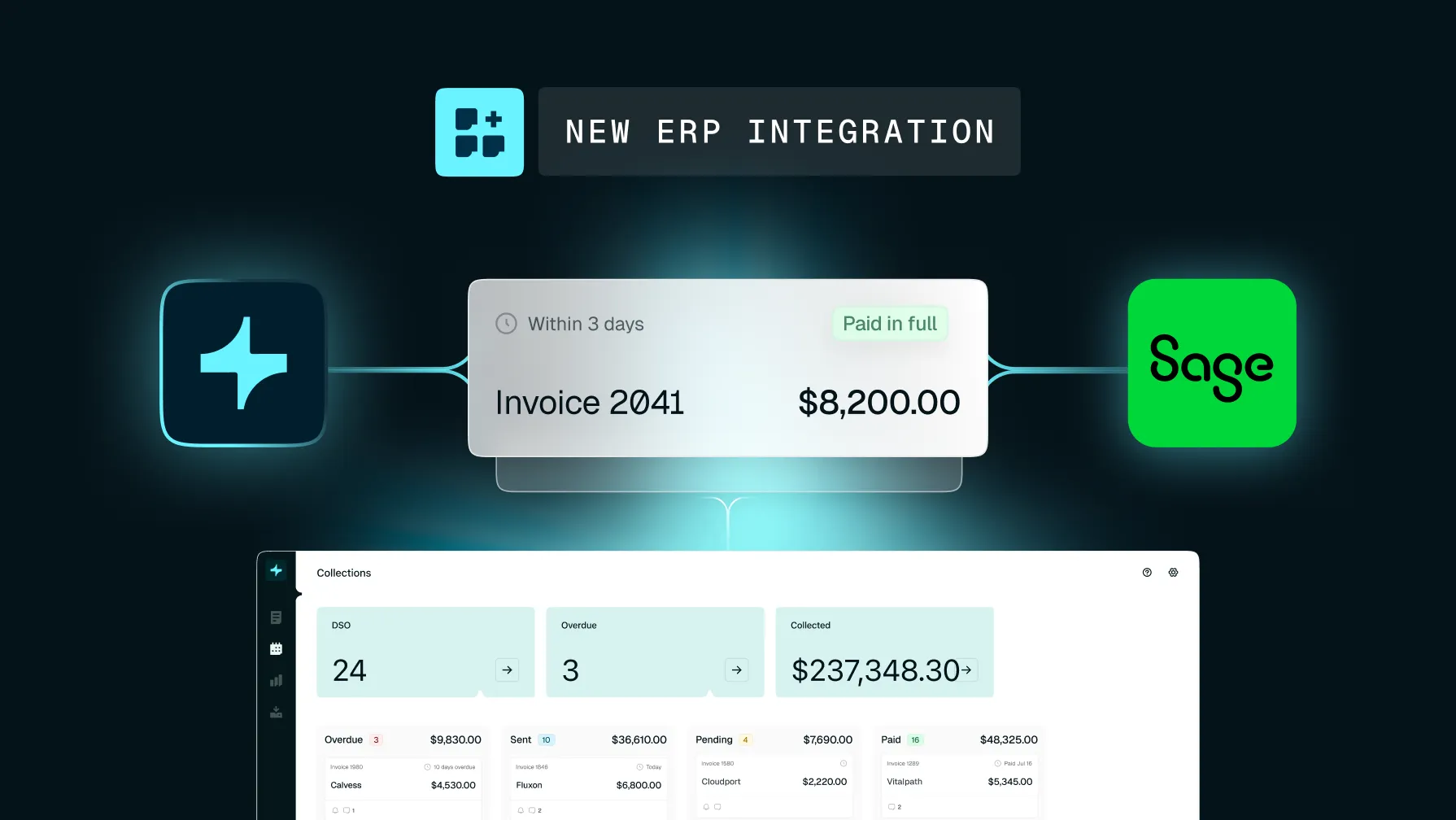
Integration complexity. AR AI must connect with your ERP, CRM, banking systems, and payment processors. Siloed data limits what the system can do. Platforms with native ERP connectors reduce this friction significantly.
Change management. Finance teams accustomed to manual processes may resist automation. Clear communication about what's changing—and why—helps smooth the transition.
Model explainability. Auditors and finance leaders need to understand why AI made specific decisions. Black-box models create compliance risk. Look for systems that provide clear audit trails.
Ongoing maintenance. Models require retraining as customer behavior and business conditions evolve. This isn't a set-and-forget implementation.
How to implement AI in accounts receivable
Moving from manual processes to AI-powered AR requires a structured approach. Start with process clarity, not technology selection.
Step 1: Audit AR workflows and data quality
Before evaluating vendors, map your current processes. Where are the bottlenecks? Which tasks consume the most time? Where do errors originate?
Assess your data readiness. Are your contracts structured consistently? Is your payment history clean? Document your exception handling workflows and identify manual touchpoints that create delays.
Why it matters: You can't automate a broken process. Understanding your current state ensures you're solving the right problems.
Step 2: Define outcomes and success metrics
Establish clear KPIs before implementation. Common metrics include days sales outstanding (DSO), auto-match rates, collector productivity, and days to close.
Set baselines so you can measure improvement. Align metrics with your business priorities—whether that's cash flow, efficiency, or customer experience.
Why it matters: Without clear success criteria, you can't evaluate whether your investment is paying off.
Step 3: Select vendors and integration architecture
Evaluate AR automation software based on integration capabilities, billing model support, and commercial context—not just feature checklists.
Ask vendors how their systems handle complex B2B scenarios: milestone billing, usage-based pricing, hybrid contracts. Assess native integrations with your ERP. Confirm ASC 606 compliance capabilities.
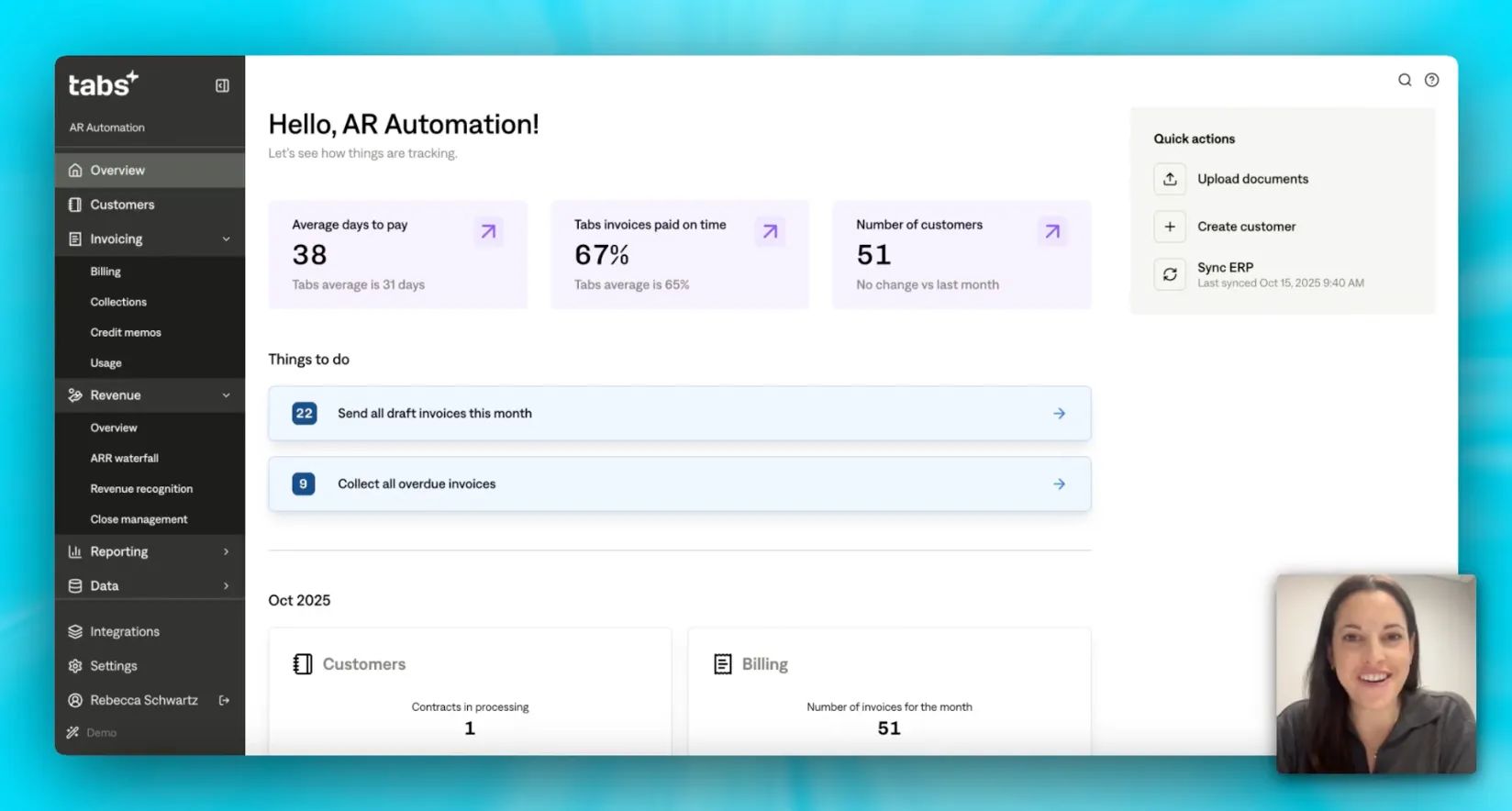
Sitting downstream of CRM and CPQ, Tabs connects to your CRM, CPQ, and ERP, ingests signed contracts, and translates terms into billing logic with minimal manual mapping. Tabs supports subscription billing, usage-based pricing, and hybrid models natively—so your contract-to-cash workflow isn't constrained as pricing evolves.
Why it matters: The right platform grows with your business instead of limiting your options.
Step 4: Pilot, measure, and scale
Start with a defined scope—a single customer segment, product line, or AR function. Measure against your baseline KPIs. Iterate before expanding.
Gather feedback from your AR team. What's working? What needs adjustment? Scale to additional segments once your pilot metrics validate the approach.
Why it matters: Phased rollouts reduce risk and build organizational confidence in the new system.
Future trends in AI for accounts receivable
The landscape is shifting toward fully integrated, intelligent systems. Manual intervention is becoming the exception rather than the rule.
Autonomous workflows. AI will increasingly automate more of the collections workflow—from initial outreach to payment confirmation—while keeping humans in the loop for exceptions, approvals, and high-risk accounts. Your team intervenes only when the system flags something unusual.
Real-time payment integration. As instant payment rails expand, cash reconciliation will move closer to real time, reducing reliance on batch processing. You'll know the moment cash lands.
Predictive credit management. Dynamic credit limits will adjust automatically based on customer behavior and market conditions. No more static credit policies that don't reflect current reality.
Unified revenue intelligence. AI will connect billing, collections, and Revenue Recognition into a single system of intelligence—linking signed contract terms to the operational workflows that drive invoices, cash, and compliance. Tabs is built for this future—unifying contracts, usage data, payments, and terms in a Commercial Graph that enables accurate, contextual decision-making across the entire invoice-to-cash cycle.
The finance teams that move first will have cleaner data, faster closes, and more strategic capacity. The ones that wait will keep fighting the same manual battles.