






For finance teams managing complex B2B revenue workflows, the aging of receivables method is one of the most practical tools for protecting cash flow and estimating bad debt. This guide covers how to build and use AR aging reports, calculate your allowance for doubtful accounts, turn aging data into faster collections, and reduce DSO.
What is the aging of receivables method?
The aging of receivables method is a process that sorts your unpaid invoices into buckets based on how long they've been outstanding. Finance teams use it to estimate how much of their accounts receivable (AR) will likely go uncollected—and to figure out which customers need collection attention right now. This organized view is called an accounts receivable aging report, or aging schedule.
The logic is simple: the older an invoice gets, the less likely you are to collect it. So you assign higher uncollectible percentages to older buckets. A current invoice might have a 1% chance of going unpaid. An invoice that's 90 days past due? That number jumps significantly. Dun & Bradstreet's Q1 2026 data shows 16 of 203 industry segments report 10% or more of their aging dollars are 91+ days past due.
For B2B companies, this method does more than just estimate bad debt. It becomes the foundation for prioritizing collections, adjusting credit terms, and forecasting when cash will actually hit your account.
Traditional finance teams treat aging as a static month-end report. Modern Revenue Automation platforms like Tabs sit downstream of CRM and CPQ to operationalize signed contracts—using aging data to trigger collection workflows, flag at-risk accounts, and forecast when cash will actually land based on payment behavior and contracted terms.
What's included in an AR aging report
An AR aging report groups every open invoice by customer and by how long it's been unpaid. You're looking at a snapshot of your entire receivables ledger, organized by risk level.
The core of the report is the aging brackets:
| Aging bracket | Days outstanding | What it signals |
|---|---|---|
| Current | 0–30 days | Invoice not yet due or recently issued |
| 31–60 days | 31–60 days | Slightly past due; needs a reminder |
| 61–90 days | 61–90 days | Elevated risk; escalate collection efforts |
| Over 90 days | 90+ days | High risk; consider reserve adjustment |
Beyond the buckets, a useful aging of receivables report includes:
- Customer name and ID: Who owes you money
- Invoice number and date: Traceability back to the original transaction
- Outstanding amount: Balance owed per invoice and per customer
- Collection notes: Payment promises, disputes, or partial payments
- Credit memos and unapplied cash: Adjustments that might offset balances
The report should always be generated as of a specific cutoff date. Without that consistency, you can't compare one period to the next.
How to create an AR aging report
Building an aging report means pulling data from your billing system or ERP, organizing it by customer and age, and making it actionable. Here's the process.
Step 1: Gather invoice data
Export all open invoices from your system of intelligence (typically your ERP or billing system). You need invoice number, customer name, invoice date, due date, and outstanding amount. Include credit memos and unapplied payments—otherwise your balances won't reflect reality.
Step 2: Set aging periods
Define your buckets based on your payment terms. Most companies use 30-day increments. But if your standard terms are Net 45 or Net 60, adjust your "Current" bucket accordingly. Document this so the report stays consistent month over month.
Step 3: Assign invoices to buckets
Calculate days outstanding by subtracting the due date from your report's as-of date. Slot each invoice into the right bucket. Flag any invoices with missing or incorrect due dates—these data issues will skew your results.
Step 4: Sum balances by customer and bucket
Aggregate the data so you can see totals by aging bracket and by customer. This gives you both the macro view (what percentage of AR is over 90 days?) and the micro view (which specific customers need attention?).
Step 5: Review exceptions and note status
Add collection notes for disputed invoices, promised payments, or accounts on payment plans. These annotations prevent your team from chasing accounts that are already being worked.
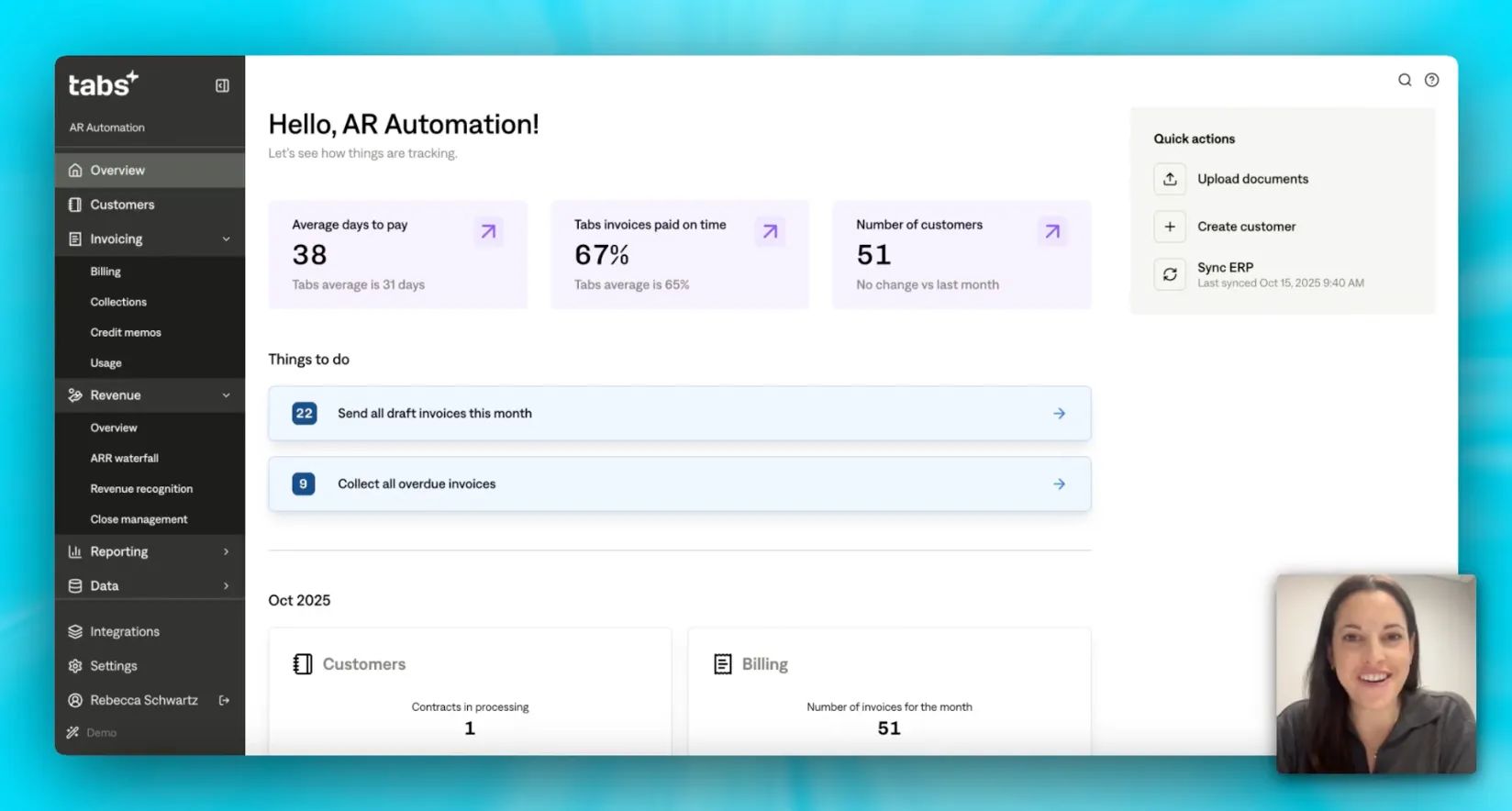
Why this matters: Spreadsheets work for small teams, but they lack the commercial context needed for complex B2B operations. Tabs generates aging reports automatically from signed contracts and billing or ERP data, so your team can spend less time on exports and pivots, and more time working exceptions. Payment terms are applied consistently based on the commercial agreement.
Automate AR aging and collections with Tabs
How to calculate bad debt with the aging of receivables method
The aging method is one of the primary ways to estimate your allowance for doubtful accounts under generally accepted accounting principles (GAAP). You're essentially predicting how much of your receivables won't convert to cash.
Assign uncollectible rates by bucket
Build a percentage matrix based on your historical collection data. Review your past write-offs to determine what percentage of invoices in each bucket typically go uncollected. Update these percentages periodically based on actual experience.
| Aging bucket | Relative uncollectible risk |
|---|---|
| Current | Low |
| 31–60 days | Moderate |
| 61–90 days | Elevated |
| Over 90 days | High |
Compute allowance and expense
Multiply each bucket's outstanding balance by its uncollectible rate. Sum the results. This total is your required allowance for doubtful accounts. Compare it to your existing allowance balance to determine the adjustment needed.
Here's how the math plays out with illustrative numbers:
| Aging bucket | Outstanding balance | Uncollectible rate | Estimated uncollectible |
|---|---|---|---|
| Current | $500,000 | 1% | $5,000 |
| 31–60 days | $120,000 | 3% | $3,600 |
| 61–90 days | $60,000 | 10% | $6,000 |
| Over 90 days | $40,000 | 35% | $14,000 |
| Required allowance | $28,600 |
The estimates sum to a required allowance of $28,600. If your existing allowance balance is $20,000, the adjustment is an $8,600 debit to Bad Debt Expense and an $8,600 credit to Allowance for Doubtful Accounts.
Post journal entry and validate audit trail
Record the adjustment: debit Bad Debt Expense, credit Allowance for Doubtful Accounts. Auditors will want to see the aging report, the percentage matrix, and your rationale for any changes. Modern platforms like Tabs maintain this audit trail automatically, linking every adjustment back to the underlying invoices and contracts.
How to use an AR aging report to improve cash flow
An aging report is only valuable if it drives action. Otherwise it's just a snapshot that gets filed away. Here's how to turn aging data into faster collections and lower days sales outstanding (DSO).
Prioritize oldest and largest balances
Focus collection effort where risk and dollar impact are highest. Oldest invoices are closest to becoming uncollectible. Largest balances have the biggest cash flow impact. A combined view helps you allocate limited time effectively.
Adjust credit terms by risk
Aging patterns should inform your credit policy. Customers who consistently pay late may need shorter terms, prepayment requirements, or credit holds on new orders. Customers with clean payment histories might qualify for extended terms as a relationship benefit.
Forecast cash inflows by bucket
Aging data, combined with historical payment patterns, enables more accurate cash forecasting. Modern revenue automation platforms don't just show when invoices are due. They predict when cash will actually land, based on each customer's payment behavior and contract terms.
Escalate high-risk accounts with controls
Define clear escalation workflows. When an account crosses a threshold—say, 60 days past due or over a certain dollar amount—it should trigger specific actions:
- Manager escalation: Include leadership for strategic accounts
- Service pause: Hold new orders until payment is received
- Collections handoff: Engage external resources for severely delinquent accounts
Automating these triggers ensures nothing falls through the cracks.
Common pitfalls in AR aging reports
Even with a defined process, data issues can undermine your aging report's accuracy. These problems lead to wasted collection effort and incorrect financial statements.
Timing bias around bill runs
If you generate an aging report right after a subscription billing run, many invoices will appear current even if they relate to services delivered weeks earlier. Generate reports at a consistent cutoff date, and account for how your billing cycles affect the snapshot.
Credit term mismatches
Reports often flag invoices as overdue when they're actually within negotiated terms. If a customer has Net 60 terms but your system defaults to Net 30, your aging will be artificially inflated. Tabs solves this by pulling terms from signed contracts—whether hybrid billing models, pure subscription, or usage-based—and translating them into billing schedules and due dates, so your aging reflects the commercial agreement consistently.
Unapplied credits and disputes
Unapplied cash, open credit memos, and disputed invoices distort your aging picture. An invoice might appear 90 days overdue when the customer already paid but the payment wasn't matched. Regular reconciliation and clear dispute tagging keep the report actionable.
Best practices for AR aging
To keep your receivables healthy, you need to move beyond basic reporting and implement rigorous operational practices.
Review cadence and owners
Establish a weekly aging of receivables review with clear ownership. Specify who's responsible for each aging bucket or customer segment. Document assignments so accountability is clear.
Credit policy alignment
Ensure credit policies are informed by aging data. If a customer segment consistently ages into the 60+ day bucket, revisit the terms you offer that segment. Build feedback loops between collections and credit decisions.
Dunning workflows and tone
Effective dunning balances firmness with relationship preservation. Start with friendly reminders for slightly past-due invoices. Escalate tone and channel as invoices age. Automate the sequence but allow human override on strategic accounts.
- Standardize definitions: Everyone uses the same buckets and cutoff dates
- Automate generation: Eliminate manual exports and reduce lag
- Track trends: Monitor DSO and collection effectiveness over time— PwC reports DSO has risen 5.7% over the past decade
- Document exceptions: Maintain notes on disputes and payment plans
AR aging process setup and governance
For companies scaling their finance function or preparing for audit, governance matters as much as execution.
Aging policy and definitions
Document your aging policy: which date triggers aging (invoice date vs. due date), how buckets are defined, and how disputes are handled. This ensures consistency and provides a clear reference for auditors.
Percentage matrix by bucket
Establish and maintain your uncollectible percentage matrix. Base initial estimates on industry benchmarks, then refine based on your own write-off history. Review at least annually.
Review committee and SLAs
For larger organizations, form a cross-functional review committee—finance, sales, customer success—that meets regularly to discuss high-risk accounts. Define SLAs for follow-up. For example, all accounts over 60 days should have a documented collection attempt within five business days.
Automation and tools for AR aging
Technology transforms aging from a static report into a dynamic workflow. For modern finance teams, automation isn't just about efficiency. It's about gaining the commercial context needed to make smarter decisions. Here's how Tabs helps.
ERP integration
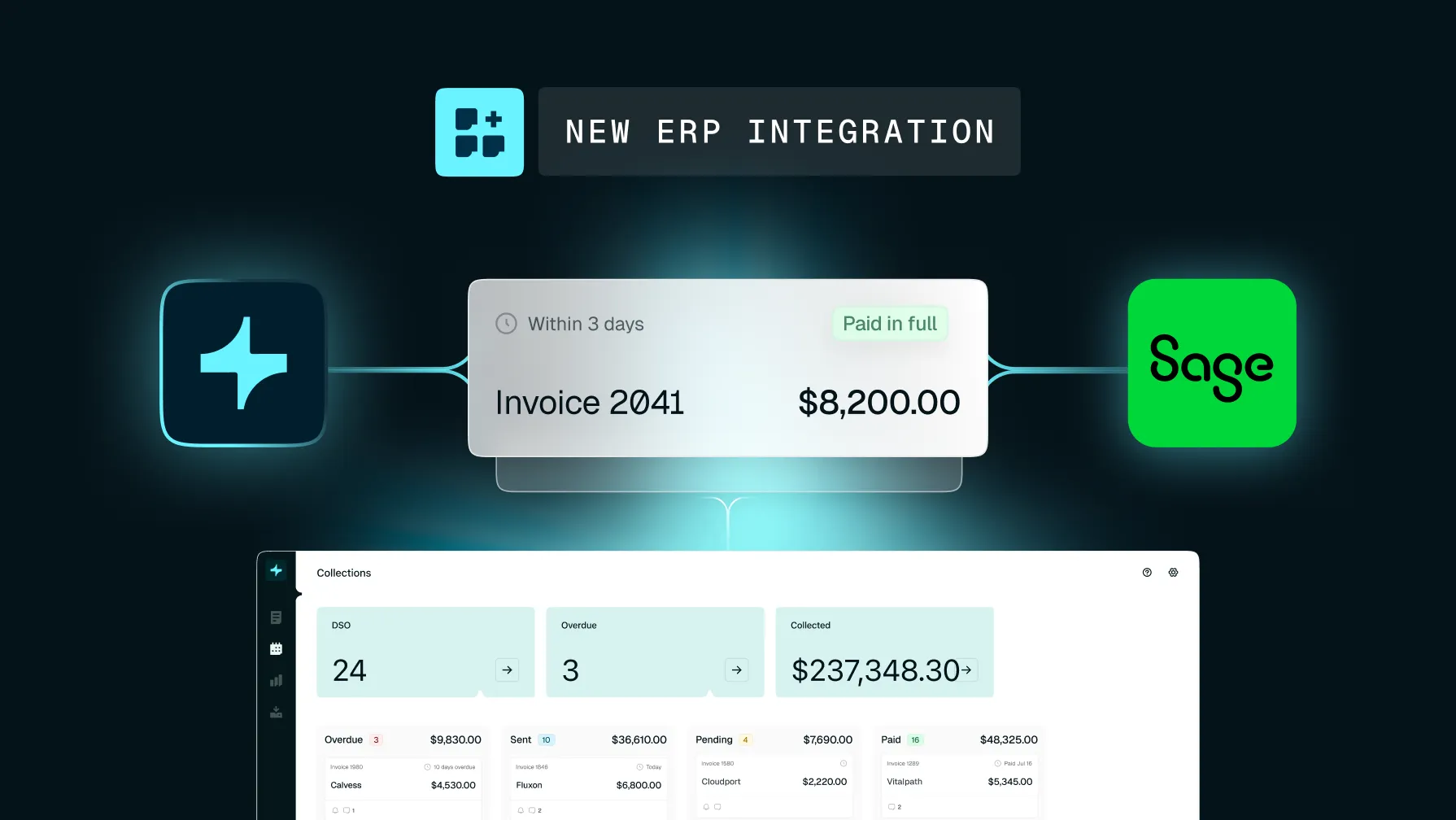
Pull aging data directly from your ERP or billing system. Manual exports introduce lag and error. Integrations with NetSuite, QuickBooks, and Sage Intacct help keep your aging report up to date, reducing lag and reconciliation gaps.
Automated reports and alerts
Modern platforms generate aging reports automatically and push alerts when thresholds are crossed. This shifts your team from reactive to proactive—acting on exceptions as they occur.
AI-powered collections and reconciliations
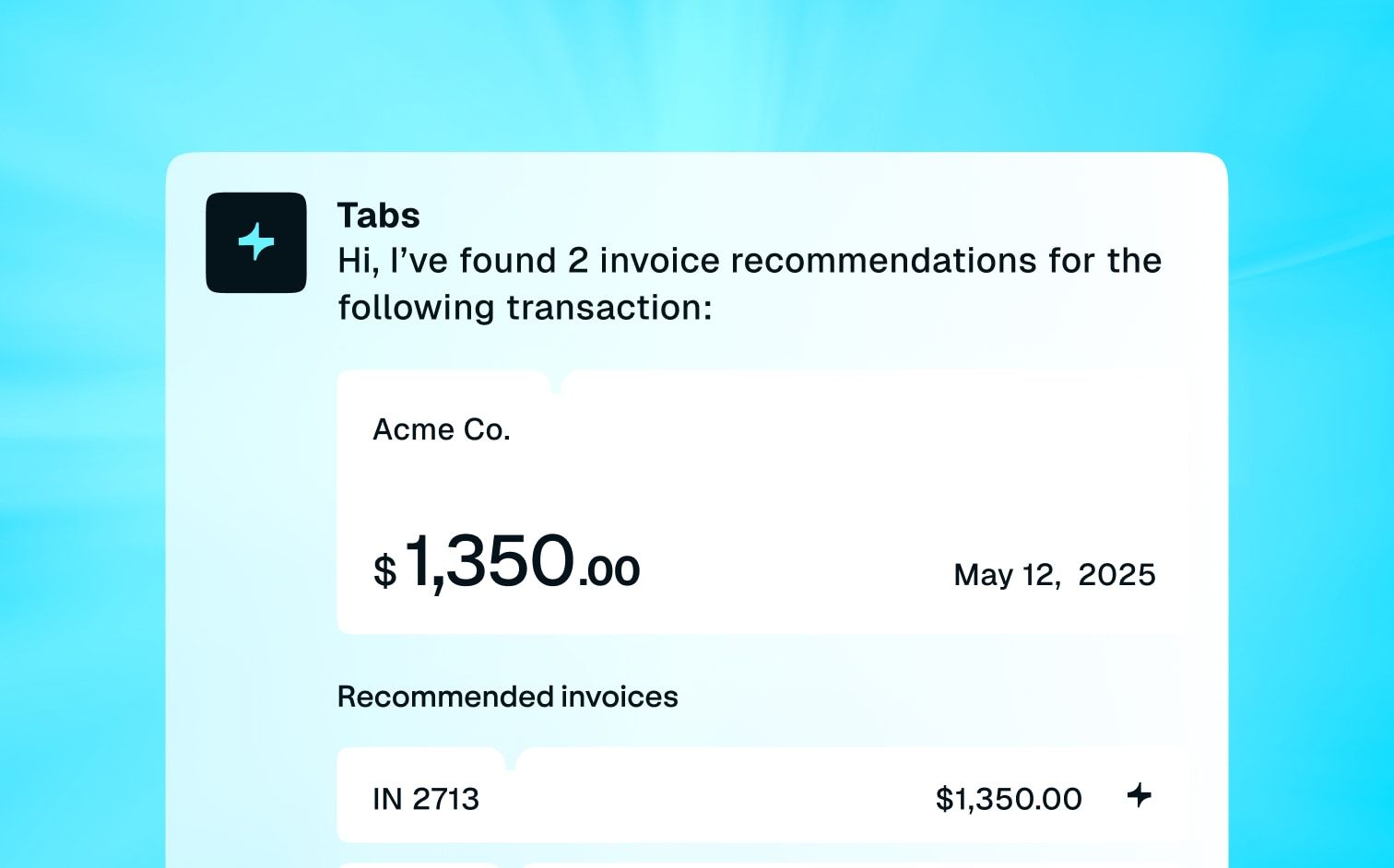
44% of CFOs now using gen AI for five or more use cases, according to McKinsey's 2025 survey. Tabs understands this new reality, using AI to automate repetitive collections work: translating signed contract terms into billing and follow-up workflows, matching payments to invoices, and triggering dunning sequences based on invoice status and customer history.
The key differentiator is commercial context. Using models trained on your billing, payment, and contract history, Tabs classifies why an invoice is overdue—dispute, pending usage true-up, or an active payment plan—and routes it into the right workflow (escalation, pause, or follow-up), with clear exceptions for human review.
| Capability | Manual process | With Tabs |
|---|---|---|
| Report generation | Weekly export and pivot table | Automated generation with up-to-date balances based on synced ERP and billing data |
| Dunning | Individual emails, inconsistent timing | Automated sequences with escalation |
| Payment matching | Manual reconciliation | AI-powered matching with exception flagging |
| Audit trail | Scattered across email and spreadsheets | Centralized and audit-ready |
Frequently asked questions
What AR aging percentage targets indicate healthy B2B collections?
Most healthy B2B companies keep the majority of receivables in the current bucket, with minimal balances over 90 days. Rising percentages in older buckets signal collection problems that need immediate attention.
How does AR aging affect the allowance for doubtful accounts under GAAP?
Aging directly determines your allowance for doubtful accounts. You apply uncollectible percentages to each bucket and sum the results to calculate the required reserve balance on your balance sheet.
Which finance roles should own AR aging reviews and collection follow-ups?
A collections specialist or AR manager should own day-to-day follow-up. The controller or CFO should review trends weekly. For strategic accounts, involve sales or customer success to preserve the relationship while pursuing payment.
How quickly can revenue automation reduce aged receivables?
Teams that implement Tabs often reduce preventable aging by removing manual bottlenecks—like delayed invoicing, term mismatches, and slow payment application—so you can address risk earlier and keep DSO trending in the right direction.
How does the aging of receivables method differ from the percentage-of-sales method?
The aging of receivables method estimates the allowance for doubtful accounts from the balance sheet, applying uncollectible rates to receivables by age. The percentage-of-sales method estimates bad debt expense from the income statement, as a share of credit sales.