




Growing B2B companies no longer need to choose between hiring full-time finance staff or accepting operational chaos. This guide shows controllers, CFOs, and finance leaders how to build accounting capability through outsourced services and intelligent automation, covering everything from bookkeeping and AR management to ASC 606-compliant revenue recognition.
What outsourced accounting services mean for B2B companies
Outsourced accounting services are third-party providers or software platforms that handle your financial operations. This means you get bookkeeping, invoicing, collections, and financial reporting without hiring internal staff.
The old playbook assumed you'd eventually hire a controller, then a CFO, then build out an accounting department. That assumption no longer holds. Modern B2B companies—especially those with subscription or usage-based revenue—can achieve the same outcomes through external partners and intelligent automation.
But not all outsourced options are equal. Generic accounting software stores your data. Tabs provides commercial context. The difference matters when your contracts include milestone payments, usage caps, or annual escalators. Tabs uses AI-powered models to classify contract terms—milestones, caps, and escalators—and map them to billing schedules and ASC 606 Revenue Recognition rules, generating the supporting invoices, schedules, and audit trail—not just extracting fields.
When to get accounting services without hiring
The decision to outsource depends on your operational pain points, not your company size. You hit a breaking point when DIY tools no longer support your growth. But that doesn't mean you're ready to hire.
Watch for these signals:
- Your close takes longer each month: Manual reconciliations compound as transaction volume grows.
- Cash flow surprises keep happening: Without real-time AR visibility, you're always reacting.
- Contract complexity is increasing: Hybrid pricing and custom terms require specialized handling.
- Audit prep consumes weeks: If pulling documentation requires heroic effort, your processes won't scale.
- You're hiring everywhere except finance: Engineering and sales are growing, but nobody wants to recruit for a controller role that might be redundant in two years.
These signals don't mean you need headcount. They mean you need capability—62% of CFOs plan to increase co-sourcing rather than hiring.
Accounting services you can get without hiring in-house
You can outsource nearly every core financial function. Here's what's available.
Bookkeeping and reconciliations
Bookkeeping is the daily recording of transactions. Reconciliations match your records against bank statements. Both can be fully outsourced. For B2B companies with high invoice volumes, automation is critical—manual bookkeeping doesn't scale.
Why it matters: Clean books are the foundation for everything else. Errors here cascade through reporting, tax prep, and audits.
AP and AR management
Accounts payable (AP) handles vendor invoices and payment scheduling. Accounts receivable (AR) covers invoice delivery, payment tracking, and collections. AR is where most B2B companies leak cash through slow collections and unclear aging visibility—over 50% of global B2B invoices are overdue.
Why it matters: AR management directly impacts your cash flow and runway.
Payroll processing
Payroll is commonly outsourced and often bundled with other services. It's well-served by existing providers and rarely requires specialized B2B expertise.
Why it matters: Payroll errors create compliance risk and employee trust issues.
Financial reporting
Growing companies need monthly financial statements, management reports, and cash flow forecasts. Modern platforms generate these automatically from transaction data rather than requiring manual compilation.
Why it matters: Real-time reporting replaces the waiting game at month-end.
Tax-ready financials
Outsourced accounting can prepare your books for tax filing without handling tax strategy directly. Clean financials that follow generally accepted accounting principles (GAAP) make tax prep faster and cheaper.
Why it matters: Messy books mean expensive accountant hours during tax season.
Controller and CFO advisory
Fractional controller or CFO services provide strategic guidance without a full-time executive. Some platforms now automate the operational work controllers traditionally handled, freeing advisory resources for higher-value analysis.
Why it matters: You get executive-level insight without executive-level overhead.
How AI and automation replace manual finance workflows
The choice isn't just between hiring and outsourcing to humans. Automation has created a third path—87% of CFOs predict AI will be extremely important to their finance operations in 2026.
TL;DR: If contracts drive your billing and revenue schedules, automation can replace manual ingestion, invoicing, collections follow-ups, and Revenue Recognition prep.
Modern Revenue Automation platforms handle work that previously required dedicated staff:
- Contract ingestion: Software extracts billing terms, payment schedules, and pricing structures directly from signed contracts—PDFs, Word docs, or email attachments—without manual data entry.
- Invoice generation: Invoices are created automatically based on contract terms, whether subscription, usage-based, or hybrid.
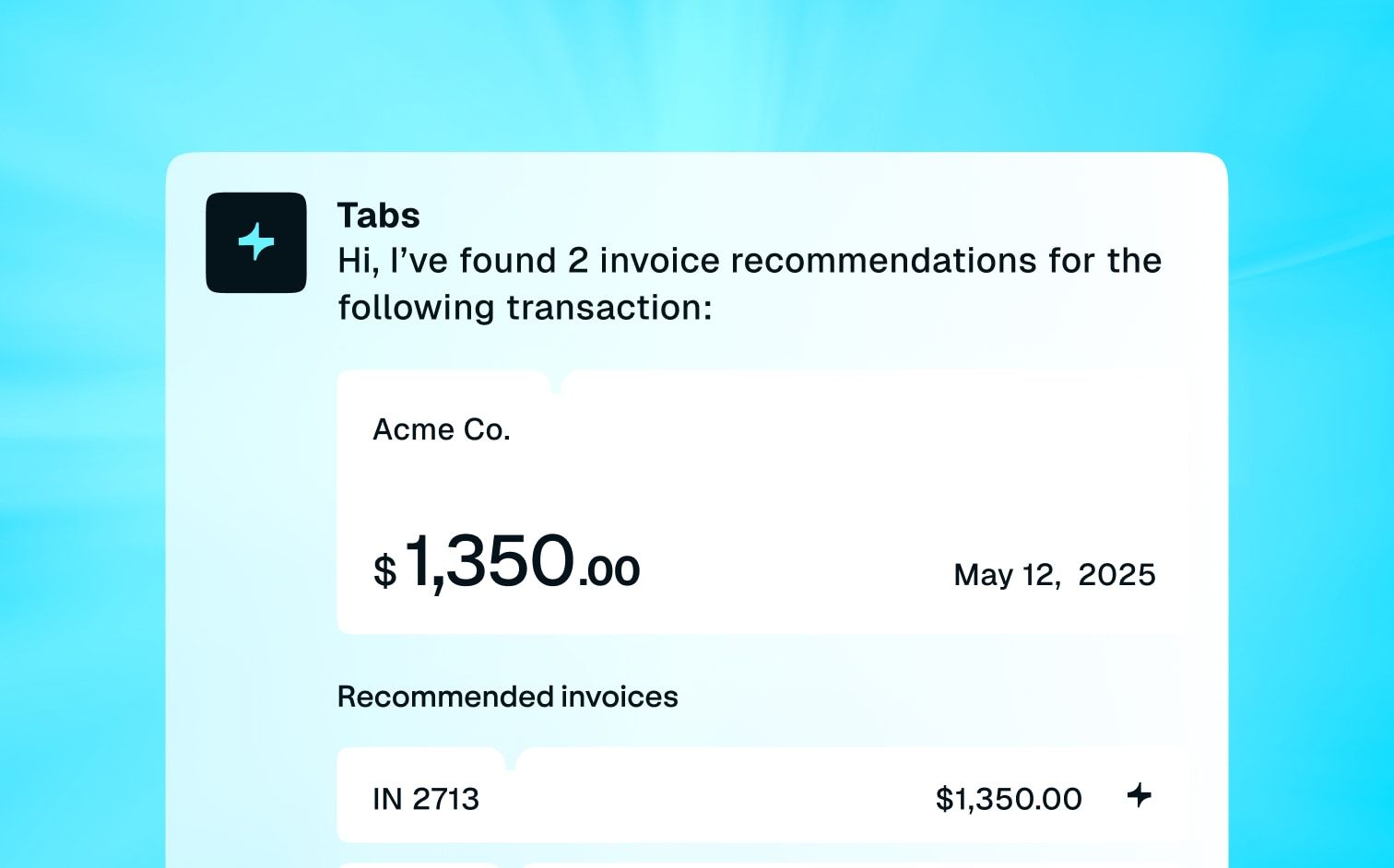
- Payment tracking: Cash application matches incoming payments to outstanding invoices, flagging discrepancies for review rather than requiring manual reconciliation.
- Collections workflows: Automated reminders, escalation sequences, and embedded payment links reduce days sales outstanding (DSO) without adding headcount.
- Revenue Recognition: Accounting Standards Codification 606 (ASC 606)–aligned schedules and journal entries are generated from contract and billing data, with an audit trail for review and approval.
Most automation tools rely on static rules—when a field matches a value, they trigger a predefined workflow. Tabs provides commercial context. A contract with milestone payments, usage caps, and annual escalators isn't just data to extract. It's a billing workflow to operationalize. Tabs translates complex terms into accurate invoices and compliant revenue recognition without requiring finance teams to build custom logic.
Automation doesn't eliminate human judgment. It eliminates the manual work that prevents you from exercising judgment on what matters.
Automate contract-to-cash in under 30 days
Benefits of getting accounting services without full-time hires
Building capability without headcount delivers specific operational outcomes beyond cost reduction.
- Cost structure shifts from fixed to variable: You pay for capability when you need it rather than carrying salary overhead during slow periods.
- Expertise scales with complexity: As your billing models evolve—adding usage-based components, international customers, or enterprise contracts—you access specialized knowledge without recruiting for niche skills.
- Continuity doesn't depend on individuals: When your only accountant leaves, operations don't stop. Outsourced services provide redundancy by design.
- Close cycles compress: Month-end close happens in days rather than weeks.
- Audit readiness becomes the default: When every transaction is logged and traceable to a contract, audit prep is a report pull rather than a fire drill.
For B2B companies with complex contracts, the biggest benefit isn't cost savings—it's accuracy. Tabs maintains a unified record of contracts, billing events, and payments. Every invoice reflects contracted terms. Every report ties back to what you've invoiced, collected, and recognized.
How to pick the right accounting partner or platform
The right choice depends on your complexity. Simple subscription businesses may be well-served by basic accounting software plus a bookkeeping service. Companies with usage-based pricing, enterprise contracts, or hybrid models need purpose-built infrastructure.
Software and ERP integration
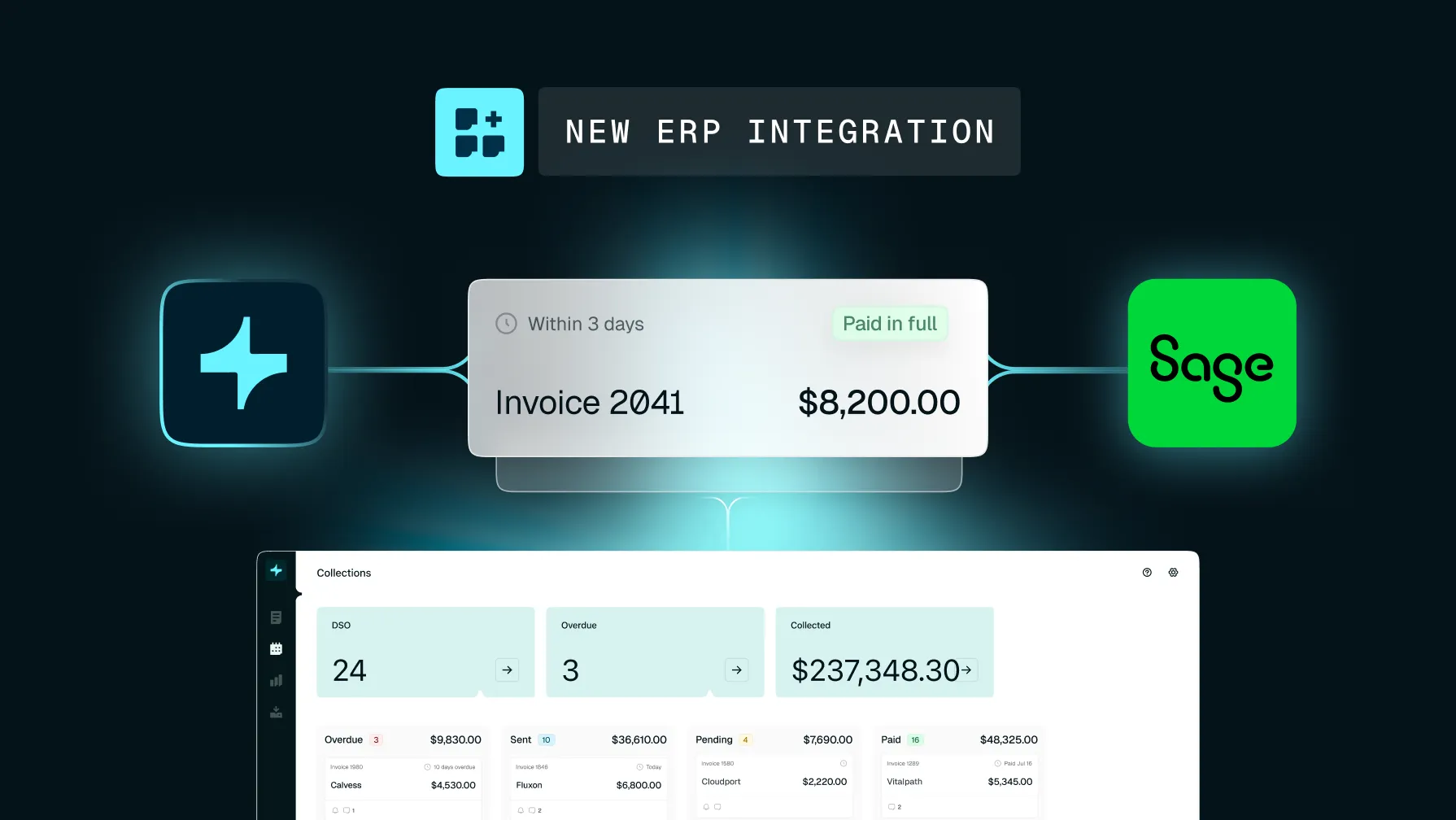
Any solution must connect to your existing systems—CRM, ERP, banking. Ask about native integrations versus custom builds. Tabs offers native integrations with QuickBooks, Oracle NetSuite, and Sage Intacct, plus APIs for extending functionality.
Why it matters: Disconnected systems create the same manual work you're trying to eliminate.
Security and compliance controls
Finance data requires enterprise-grade protection. Look for Service Organization Control 2 (SOC 2) compliance, encryption standards, and clear data residency policies. For B2B companies serving enterprise customers, your finance infrastructure's security posture affects your own sales cycles.
Why it matters: A security gap in your finance stack becomes a sales objection.
When evaluating providers, ask:
- Does the provider support your specific billing models?
- What's the onboarding timeline, and who owns data migration?
- How are exceptions handled—automated routing or manual escalation?
- What reporting and audit trail capabilities exist?
- Can the solution scale internationally?
Mistakes to avoid when outsourcing accounting
Moving away from in-house accounting introduces new risks if you don't manage the transition carefully.
- Treating it as cost-cutting only: The goal is capability, not just savings. The cheapest option often means outgrowing it within a year.
- Ignoring the handoff process: Without clear documentation of current processes and historical context, any transition creates risk.
- Assuming all revenue is the same: Generic services work for simple businesses. B2B companies with contract complexity need providers that understand subscription billing, usage metering, and revenue recognition rules.
- Fragmenting across too many tools: Using one service for bookkeeping, another for invoicing, and a third for collections creates the same integration headaches you were trying to avoid.
- Skipping the audit trail question: If you can't trace every transaction back to its source document, you're building technical debt that compounds at audit time.
What Tabs automates across contract to cash
Tabs is a Revenue Automation platform purpose-built for B2B companies with complex billing. It sits downstream of your CRM and CPQ, focused on operationalizing signed contracts.
Tabs automates the full contract-to-cash process:
- Billing: Automatically generates invoices from signed contracts—no manual PDF review or data entry. Supports subscription, usage-based, and hybrid models natively.
- Collections: Accelerates cash flow through automated reminders, embedded payment links, and real-time AR visibility.
- Revenue Recognition: Supports ASC 606 compliance by generating revenue schedules and journal entries from contract and billing data, with a traceable audit trail.
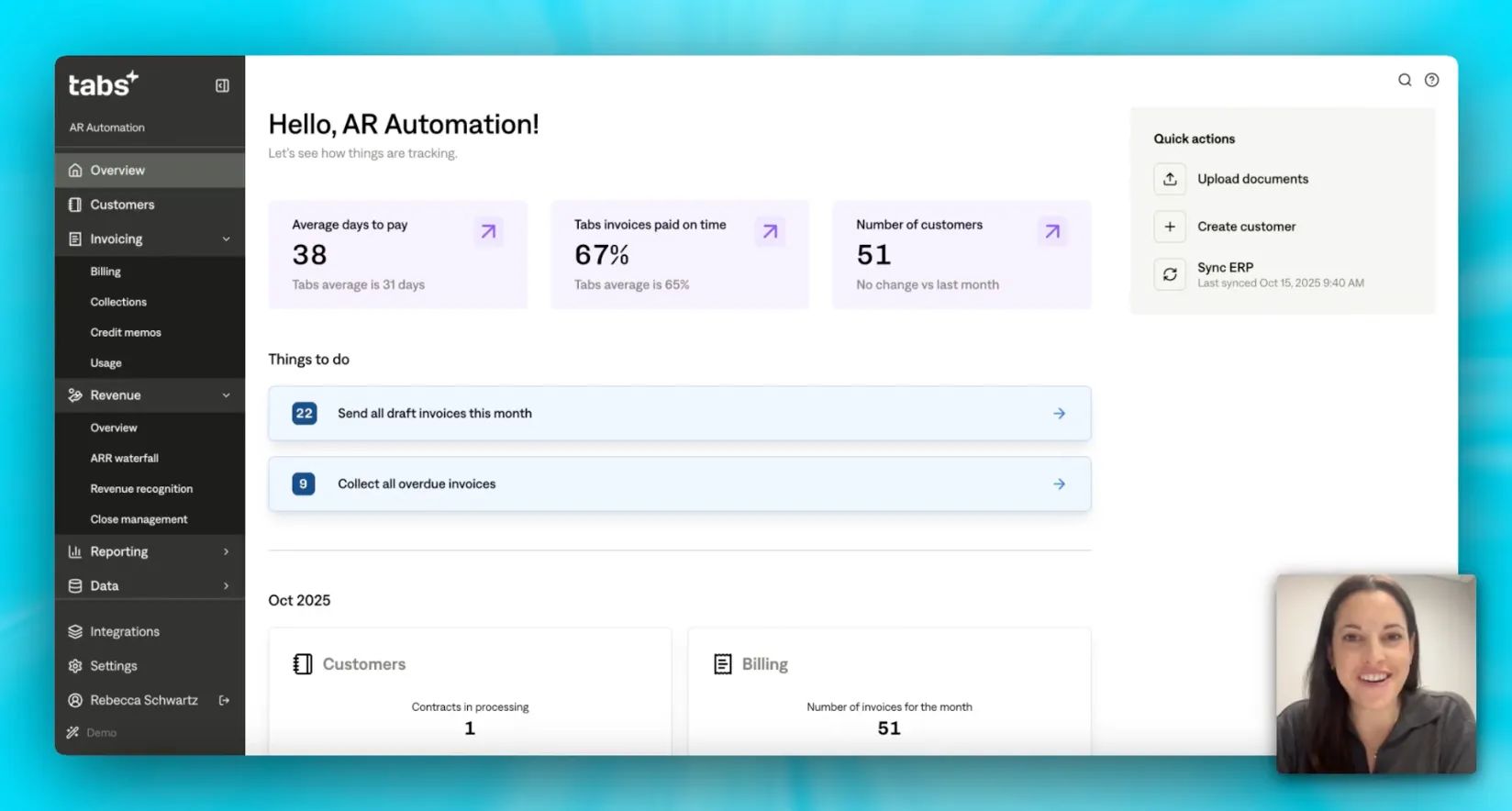
- Reporting: Provides real-time visibility into annual recurring revenue (ARR), cash, AR, and renewals—with transparency into what's been invoiced, collected, and recognized.
Tabs doesn't just automate tasks. It provides commercial context—using AI-powered models to interpret contract terms and convert them into billing workflows and ASC 606–aligned Revenue Recognition schedules, with exceptions routed for human review.
Pull quote: "Commercial context is the difference between extracting terms and operationalizing revenue."
This is what separates a system of intelligence from a system of record.
Explore how Tabs can help you go live in <30 days.