



Every collections process is working toward the same moment: getting paid successfully.
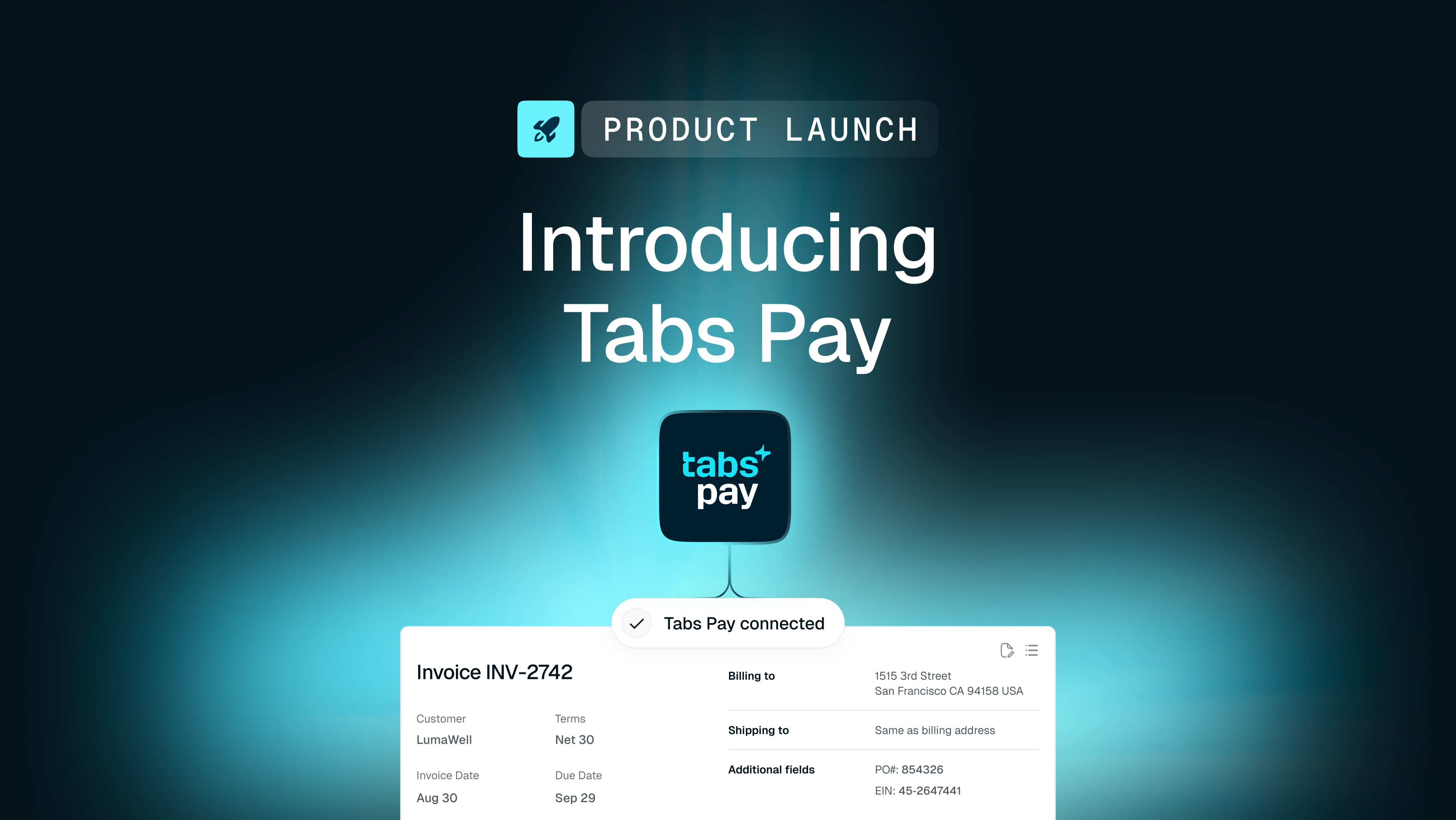
We recently launched Tabs Pay, embedded payments built directly into Tabs Collections. Customers can pay by card or ACH, and finance teams can track, refund, dispute, and reconcile those payments, in the same system that manages everything leading up to that moment.
The collections lifecycle starts long before payment. A commercial agreement establishes what a customer owes, an invoice makes that amount due, and from there, finance teams need to understand what is outstanding, decide where to focus, communicate with customers, and move each account toward resolution.
Tabs Collections already brings that work together around a shared understanding of the customer and the commercial relationship. Tabs Pay extends that experience through the moment the customer pays, whether they pay an invoice once or a saved payment method is charged automatically on the due date, and through what follows: payouts, refunds, and matching each payment to its invoice.
Payments complete the collections lifecycle, and businesses increasingly expect more ways to pay
The way businesses pay each other has changed significantly. ACH grew from 25% of U.S. B2B payments by number in 2015 to 41% in 2024, while checks fell from 32% to 13%. Credit cards already account for nearly 30% of B2B payments by number.¹
And businesses expect payment preferences to keep evolving. In a global survey of B2B suppliers, 48% said they expect buyers to ask to pay by card more often over the next five years. Among suppliers that accept cards, 34% reported faster receipt of funds as a benefit.²
For collections teams, this is not simply a payments trend. How a customer can pay is part of how an outstanding invoice gets resolved.
That is where Tabs Pay fits. By embedding payments in Collections, finance teams can move from understanding what is owed and managing the account to giving the customer a way to pay, all within the same experience.
Payment is not something that happens after collections, but it completes the collections lifecycle.
The value of embedded payments is the commercial context around the transaction
By the time a customer pays, there is already a history behind that transaction: the contract that established what they owe, the invoice that represents it, and the collections activity that followed.
Tabs already understands that history. At the foundation of Tabs is the Commercial Graph, our understanding of the relationships between customers, contracts, pricing and usage, invoices, payments, and accounting state. When payments become part of Tabs, that context can carry through the final step.
Tabs can understand which customer is paying, which invoice they are paying, why the amount is owed, what has happened during collections, and what the payment means for what comes next.
There is already sophisticated infrastructure designed to process transactions and move money. Our opportunity is not to recreate it. It is to connect that infrastructure to a system that understands why the transaction exists in the first place.
Tabs Pay gives the AI Operating System for Revenue a new way to act
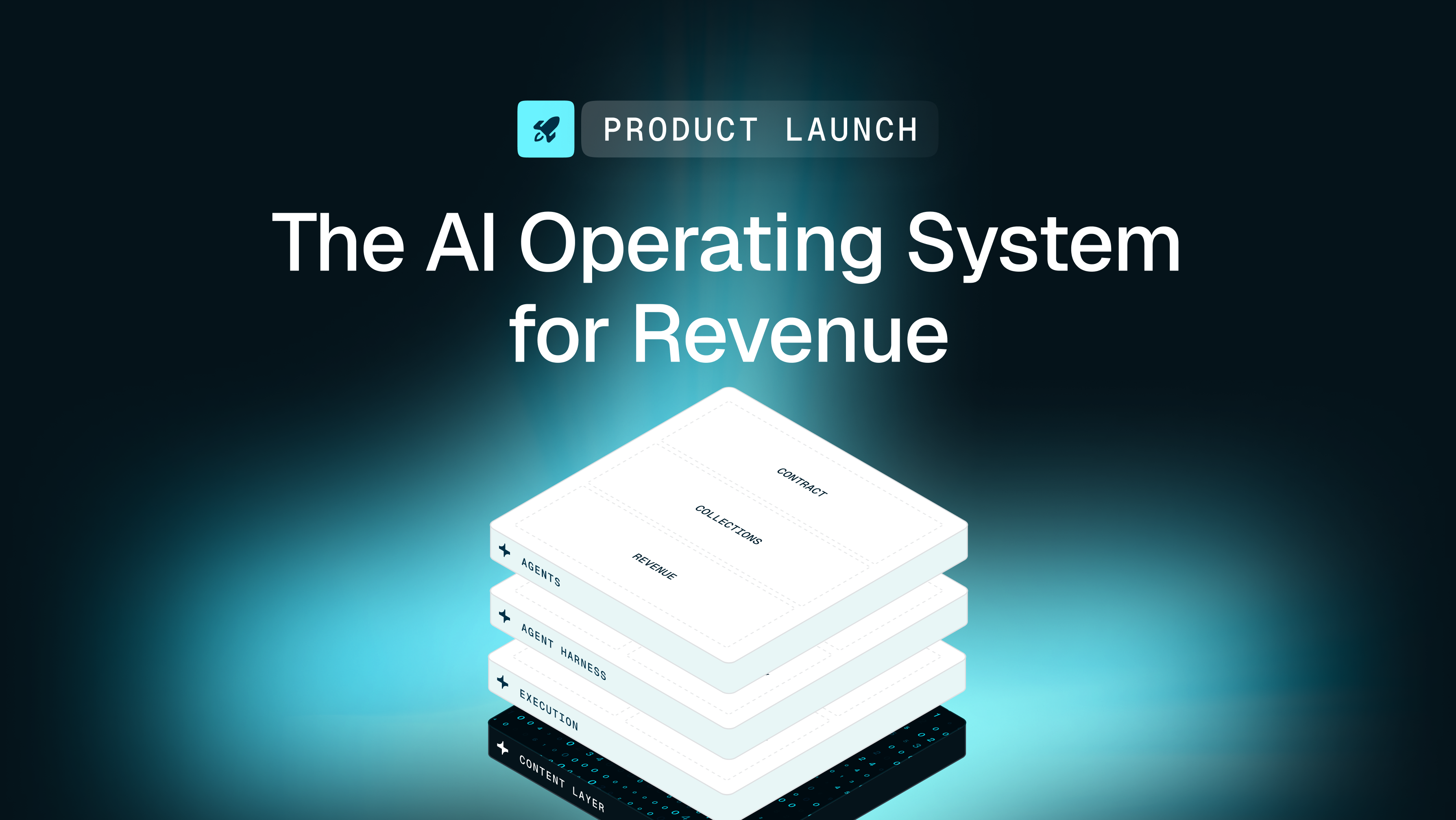
Tabs is building the AI Operating System for Revenue: a system that understands the commercial relationship and can increasingly coordinate the work required to turn that relationship into revenue.
The Commercial Graph provides the context. Applications and agents use it to carry out work across billing, collections, revenue recognition, and the broader revenue lifecycle. But there is a point where understanding what should happen is not enough. The system also needs access to the capabilities through which the outcome can happen.
Collections makes that clear, and Tabs can already understand that an invoice is overdue, determine what requires attention, and coordinate the work needed to move the account forward. But the lifecycle is not complete until the customer pays, so Tabs Pay introduces that financial capability into the platform.
We are building it as a payments layer within Tabs that can expand over time, with additional processors and capabilities underneath it while the customer experience remains centered on Tabs and the revenue workflow.
That creates a foundation for something larger. Tabs began by building the context required to understand commercial relationships. We built applications and agents that use that context to coordinate revenue work.
Now, with Tabs Pay, we are beginning to connect that system directly to the movement of money.
- Federal Reserve Bank of Kansas City, B2B Payments: A Gradual Shift from Checks to Electronic Payment Methods, 2026.
- Mastercard / The Harris Poll, research on B2B commercial card acceptance, 2025–2026.